
lovethailand home >Northeastern Travel Attractions >Amnat Charoen Travel Attractions >Senangkha Nikhom >Phon Thong > Phu Phon Thong
TL;DR: Phu Phon Thong is located at Phon Thong Subdistrict, Senangkhanikhom District, Amnat Charoen Province, open Daily, hours 06.00 – 18.00.
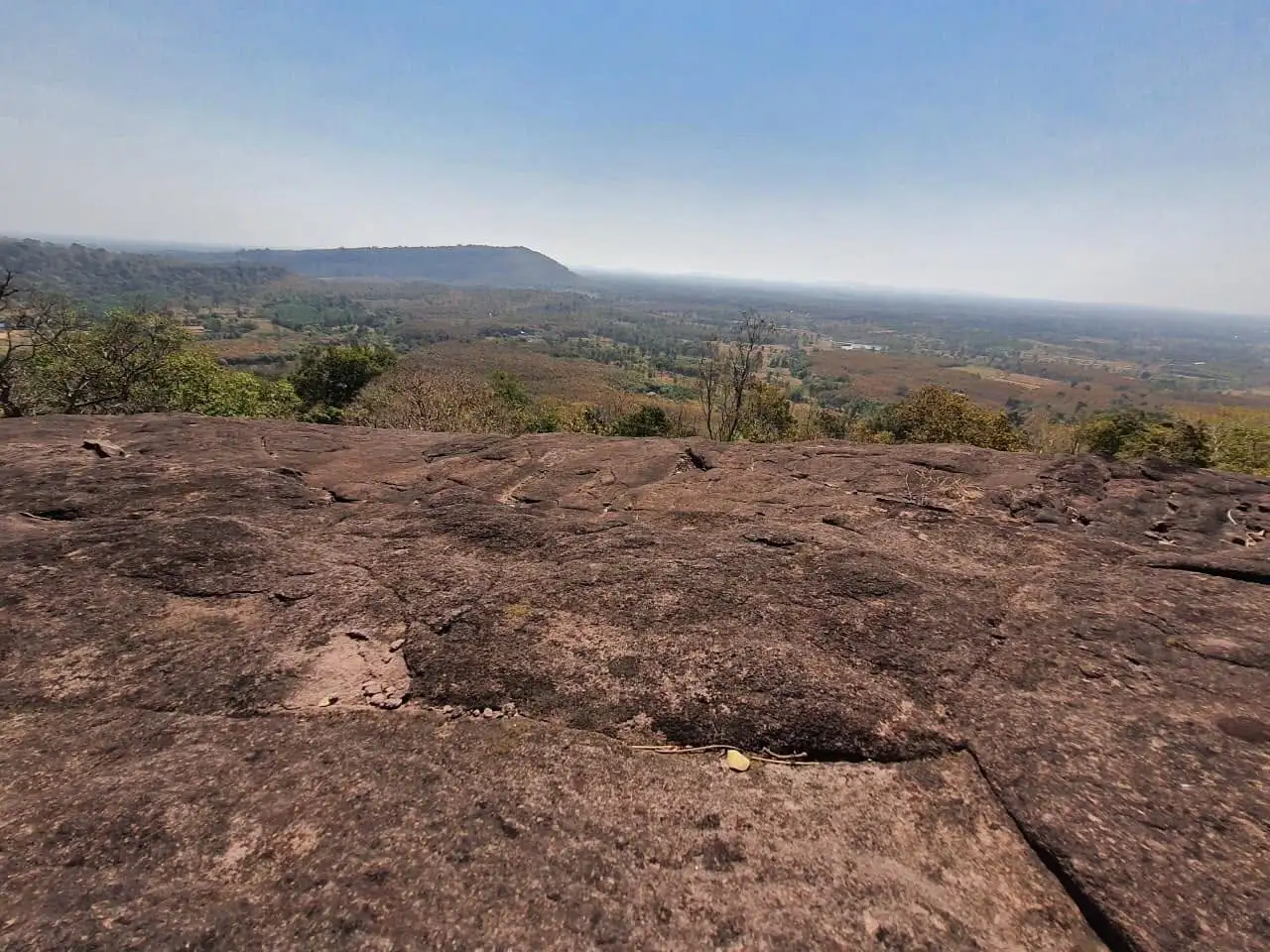
Phu Phon Thong
Open Days: Daily
Opening Hours: 06.00 – 18.00
Phu Phon Thong in Amnat Charoen Province is a steep mountain, natural viewpoint, and historically meaningful local attraction in Phon Thong Subdistrict, Senangkhanikhom District. The site is known for its high cliffs, wide natural views, forest atmosphere, wildlife, and traces of the past connected with people who held political views in opposition to the state during earlier periods. Important points mentioned in local tourism information include Khok, Chang Hin, a military map marker, and Aeokhan on a high cliff. Together, these elements make Phu Phon Thong a destination that combines nature, local history, landscape interpretation, and quiet adventure.
Phu Phon Thong is not a heavily developed commercial attraction. Its character comes from the steep mountain terrain, natural forest, cliffside atmosphere, and local memory. Travelers who visit this site experience a different side of Amnat Charoen, beyond city temples, agricultural communities, and mainstream provincial landmarks. It is suitable for visitors who enjoy mountains, viewpoints, natural trails, and places with deeper historical context.
The landscape of Phu Phon Thong is defined by steep slopes and high cliffs. From elevated points, visitors can look across the surrounding countryside, agricultural land, local communities, and forest patches in Senangkhanikhom District. The beauty of the site does not come from large buildings or built tourist facilities. It comes from the cliff, the wind, the sense of height, and the open view across the landscape.
One of the most important aspects of Phu Phon Thong is its historical background. Local information describes the mountain as a former place of residence or refuge for people with political conflicts in the past. This reflects a period when forested mountains in parts of northeastern Thailand were connected with social and political tension. Steep terrain, thick forest, and high viewpoints made such areas useful for hiding, observing, and surviving during unsettled times.
Today, Phu Phon Thong is remembered not only as a natural mountain but also as a landscape of historical memory. A visit here should be understood as more than a simple viewpoint trip. The mountain shows how geography, forest, and human history can be closely connected. The same terrain that now attracts visitors for scenery once had a different meaning for people living through political uncertainty.
The place known as “Khok” is one of the local points of interest. In a mountain context, the word may refer to an enclosed or used area connected with past human activity. Although detailed written records about this specific feature are limited in public tourism sources, its presence in local descriptions suggests that Phu Phon Thong contains traces of real human use, not only natural scenery.
“Chang Hin,” or the stone elephant, is another memorable feature. This name suggests a natural rock formation that resembles an elephant or invites visitors to imagine the form of an elephant. In many parts of northeastern Thailand, unusual rock shapes are often named after animals, mythical creatures, or sacred figures. Chang Hin therefore adds a sense of discovery and imagination to the visit.
The military map marker is an especially interesting feature because it gives the site geographical and historical significance. Such markers are generally connected with location reference, survey work, or terrain control. The presence of a military-related map marker on a high mountain suggests that Phu Phon Thong was important not only as a natural feature but also as a reference point in the landscape.
Aeokhan on the high cliff is one of the most distinctive local points of Phu Phon Thong. The name has a local character and may refer to the shape, position, or form of a cliffside rock feature. Because it is located on a high cliff, visitors should approach the area carefully. Cliff viewpoints can be beautiful, but they also require caution. Travelers should not stand too close to the edge or climb in areas without a clear and safe path.
Phu Phon Thong is also described as an area with abundant wildlife. The forested and relatively quiet mountain environment provides habitat for birds, insects, reptiles, small animals, and other living creatures. This natural value makes responsible travel important. Visitors should avoid loud noise, never chase or feed wildlife, and should not leave rubbish in the area.
In the early morning, Phu Phon Thong can be especially atmospheric. During the late rainy season and cool season, mist may form in the lower areas around the mountain, giving the cliff and viewpoint a softer and more dramatic appearance. Travelers who want to experience the morning atmosphere should plan carefully and begin their visit during daylight hours from 06.00 onward for safer visibility.
Phu Phon Thong is suitable for travelers who prefer authentic natural places over highly serviced tourist attractions. Visitors should bring drinking water, proper shoes, sun protection, and lightweight outdoor clothing. In the rainy season, trails and rocks may be slippery. In the dry season, the heat and sun can be strong. Careful preparation makes the visit safer and more enjoyable.
A steep mountain like Phu Phon Thong should not be visited carelessly. Travelers should stay on visible paths, avoid separating from the group, and should not enter deep forest areas without local guidance. If visitors want to explore points such as Khok, Chang Hin, the military map marker, or Aeokhan, they should ask local residents or local authorities for current route information first.
Phu Phon Thong is located in Phon Thong Subdistrict, Senangkhanikhom District, Amnat Charoen Province. The most practical way to visit is by private car or rental car. This allows travelers to reach the local community area, continue toward the mountain, and adjust travel time according to weather and road conditions. The Phon Thong Subdistrict Administrative Organization is the local administrative body connected with the area and can serve as a useful reference for local information.
Getting There can be done from Amnat Charoen town by traveling toward Senangkhanikhom District and continuing into Phon Thong Subdistrict by local roads. A private car is the most convenient option because Phu Phon Thong is a mountain and forest attraction rather than a highly serviced public transport destination. Having a vehicle also makes it easier to combine the visit with nearby attractions.
A one-day route can include Phu Phon Thong in the morning, followed by Phu Wat, which is very close to the site, or a continuation to Phu Phanom Di, Phu Kaset, and Phra Mongkhon Ming Mueang in Amnat Charoen town. This kind of route gives travelers a varied experience of mountains, cliffs, forest temples, historical traces, and the province’s important Buddhist landmarks.
Phu Wat is one of the most relevant nearby attractions because it is located about 1 km north of Phu Phon Thong. It has a similar natural character and is described as a sandstone mountain with tree cover. Visiting both Phu Phon Thong and Phu Wat in the same trip helps travelers understand the mountain landscape of Phon Thong Subdistrict more clearly.
Other nearby places can be connected depending on time and interest. Travelers who enjoy temple-and-nature routes can continue to Phu Phanom Di or Wat Tham Hua Nak Phu Kaset. Those who prefer a more comfortable end to the day may return to Amnat Charoen town for food, accommodation, and services.
Phu Phon Thong is currently a local natural attraction, not a national park or a major tourist facility. Visitors should not expect extensive services. It is better to prepare personal supplies such as water, snacks, medicine, a hat, sun protection, and a personal rubbish bag. Good preparation reduces risk and helps protect the area.
The suitable visiting time is 06.00 to 18.00 because this period provides enough daylight for walking, observing cliff areas, and moving through natural routes safely. Visiting after sunset is not suitable for general travelers because the site includes steep terrain, forest, natural paths, and cliff areas that require caution.
Because Phu Phon Thong is a natural attraction rather than a temple, there is no abbot associated with the site. The relevant local administrative organization is the Phon Thong Subdistrict Administrative Organization in Senangkhanikhom District. For updated local information, visitors should start by contacting local officials or community leaders in Phon Thong Subdistrict.
Restaurants near Phu Phon Thong are mostly located in Senangkhanikhom District or along the route back to Amnat Charoen town. Travelers should plan meals in advance, especially when traveling as a family or group. Local choices may include Thai food, northeastern food, noodle shops, cafés, and simple local eateries. More options are available in Amnat Charoen town.
Accommodation near Phu Phon Thong is limited. Many visitors may prefer staying in Amnat Charoen town and visiting the mountain as a day trip. The provincial town provides more hotel, restaurant, fuel, and service options. Those who want to stay closer to the local area should check accommodation in Senangkhanikhom or nearby districts before traveling.
From a conservation perspective, Phu Phon Thong should be treated carefully because it includes forest, wildlife, cliffs, and historical traces. Visitors should not remove stones or natural objects, damage the military map marker or any old traces, write on rocks, or leave rubbish. The site’s value depends on both its natural condition and the memory held in the landscape.
Phu Phon Thong can also serve as an outdoor learning site for those interested in local history, geography, and ecology. Students, community groups, and independent travelers can use the mountain as a case study in how upland terrain, forest, political history, and tourism are connected. In this sense, the site is more than a viewpoint; it is a landscape that helps visitors understand place, memory, and nature together.
Families and elderly travelers should evaluate the route before going up the mountain. Some areas may be steep, uneven, or close to cliff edges. Children should remain under adult supervision at all times, and elderly visitors should choose only safe and accessible areas. The goal should be a safe and meaningful visit, not reaching every point at all costs.
The best time to visit Phu Phon Thong is in the morning or late afternoon when the sun is not too strong. The late rainy season and cool season are especially suitable for scenic views and misty atmosphere. The rainy season offers green forest scenery but may make paths slippery, while the dry season is easier for walking but can be hot.
In summary, Phu Phon Thong in Amnat Charoen Province is a multi-layered local attraction with steep mountain terrain, high cliffs, beautiful views, wildlife, and historical traces related to political conflict in the past. Its key points include Khok, Chang Hin, the military map marker, and Aeokhan on the cliff. It is best suited for travelers who enjoy nature, viewpoints, local history, and quiet outdoor experiences. The site is accessible by private car, but visitors should prepare carefully and travel responsibly to help preserve its natural and historical value.
| Name | Phu Phon Thong |
| Location | Phon Thong Subdistrict, Senangkhanikhom District, Amnat Charoen Province |
| Address | Phon Thong Subdistrict, Senangkhanikhom District, Amnat Charoen Province 37290 |
| Highlights | Steep mountain, high cliffs, wide views, Khok, Chang Hin, military map marker, Aeokhan, wildlife, and historical traces from past political conflict |
| History | Formerly used as a residence or refuge by people with political conflicts in earlier periods, giving the mountain both natural and historical significance |
| Name Origin | The name Phu Phon Thong is connected with the mountain in Phon Thong Subdistrict, Senangkhanikhom District |
| Distinctive Features | Steep mountain with forest, wildlife, high cliffs, scenic viewpoints, and local historical traces |
| Travel Information | Travel from Amnat Charoen town toward Senangkhanikhom District, then continue to Phon Thong Subdistrict by local roads. Private car or rental car is recommended. |
| Current Status | Local natural attraction and viewpoint in Phon Thong Subdistrict |
| Open Days | Daily |
| Opening Hours | 06.00 – 18.00 |
| Facilities | Natural area; visitors should bring drinking water, proper walking shoes, a hat, sun protection, and a personal rubbish bag |
| Main Areas / Zones | 1. High cliff viewpoint 2. Khok 3. Chang Hin 4. Military map marker 5. Aeokhan 6. Forest and wildlife area 7. Nature walking route on the mountain |
| Caretaker / Local Authority | Phon Thong Subdistrict Administrative Organization, Senangkhanikhom District, Amnat Charoen Province, Tel. 083-939-8555 |
| Official Website / Official Page | Phon Thong Subdistrict Administrative Organization website |
| Nearby Tourist Attractions | 1. Phu Wat, about 2 km 2. Sok Hang Waterfall, about 5 km 3. Phu Phanom Di / Wat Hin Lan Kon, about 35 km 4. Phu Kaset / Wat Tham Hua Nak Phu Kaset, about 40 km 5. Phra Mongkhon Ming Mueang and Phuttha Utthayan, about 45 km |
| Nearby Restaurants | 1. Srabai Jai Cafe, about 30 km, Tel. 081-079-6855 2. Cafe Thanai Zaap, about 32 km, Tel. 064-086-2424 3. Krua Phet Nam Ngoen, about 30 km 4. Kuai Tiao Ruea Tang Khong, about 31 km 5. Jungle Cafe Senangkhanikhom Branch, about 32 km |
| Nearby Accommodations | 1. Zwa Hotel Amnat Charoen, about 45 km 2. Baan Ing Daan, about 46 km 3. Penphit Hotel, about 46 km 4. Nakarin Hotel, about 47 km 5. Baan Na Resort Grand, Pathum Ratchawongsa District, about 55 km, Tel. 083-629-8797, 063-989-3454, 080-992-6529 |
Frequently Asked Questions (FAQ)
Q: Where is Phu Phon Thong located?
A: Phu Phon Thong is located in Phon Thong Subdistrict, Senangkhanikhom District, Amnat Charoen Province. It is a steep mountain and local natural viewpoint.
Q: What are the opening days and hours of Phu Phon Thong?
A: Phu Phon Thong is open daily from 06.00 to 18.00, which is the suitable daylight period for walking, viewing cliffs, and exploring natural routes safely.
Q: What makes Phu Phon Thong special?
A: Its highlights include steep cliffs, wide views, Khok, Chang Hin, a military map marker, Aeokhan, wildlife, and historical traces related to past political conflict.
Q: How is Phu Phon Thong related to political history?
A: Local information describes the mountain as a former place of residence or refuge for people with political conflicts in earlier periods, giving the site historical meaning beyond its natural scenery.
Q: When is the best time to visit Phu Phon Thong?
A: Morning, late afternoon, the late rainy season, and the cool season are suitable times, especially for scenic views, cooler weather, and possible misty atmosphere.
Q: How do I get to Phu Phon Thong?
A: Travel from Amnat Charoen town toward Senangkhanikhom District, then continue into Phon Thong Subdistrict by local roads. A private car or rental car is the most convenient option.
Q: Who is Phu Phon Thong suitable for?
A: It is suitable for travelers who enjoy nature, mountains, cliffs, viewpoints, local history, wildlife, and quiet outdoor exploration.
Q: What should visitors prepare before going to Phu Phon Thong?
A: Visitors should wear proper walking shoes, bring drinking water, a hat, sun protection, and a personal rubbish bag, and avoid walking near cliff edges or risky areas.
 Category: ●Nature and Wildlife
 Group: ●Mountain (Doi)
Last Update : 2 MonthAgo
 Last Update : 2 MonthAgo
 Click to Access the Navigation Map GPS
 Art, Culture and Heritage
 Historical Sites and Monuments(1)
 Art, Craft Centres, Tradition(3)
 Museums(1)
 Places of Worship
 Temple(30)
 Other Sacred Sites(7)
 Suburban Living
 Village, Community(3)
 National Parks and Marine Reserves(3)
Mountain (Doi)(5)
National Parks and Marine Reserves(3)
Mountain (Doi)(5)
 Dam, Reservoir, Lake(5)
 Waterfalls(3)
 Caves(2)
 River, Canal(3)
 Other natural attractions(5)
 Entertainment and Agricultural
 Zoos and Aquariums(1)
 Farms, Parks and Ecotourism(4)
 Shopping
 Shopping and Night Market(1)


