
lovethailand home >Northeastern Travel Attractions >Amnat Charoen Travel Attractions >Hua Taphan >Kheng Yai > Bueng Non Ngio
TL;DR: Bueng Non Ngio is located at Moo 7, Ban Chad, Kheng Yai Subdistrict, Hua Taphan District, Amnat Charoen Province, open Open Daily, hours No Official Opening Hours Published.
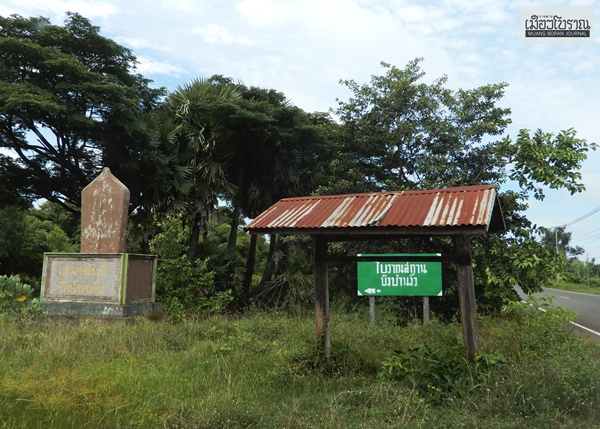
Bueng Non Ngio
Open Days: Open Daily
Opening Hours: No Official Opening Hours Published
Bueng Non Ngio, also known in archaeological records as Mueang Ngio or Wat Non Bueng Silaram, is an important archaeological site in Ban Chad, Kheng Yai Subdistrict, Hua Taphan District, Amnat Charoen Province. The site is best known for its large ancient boundary stones, or bai sema, scattered across the sacred community area known as Don Pu Ta. These stones are valuable evidence of early Buddhist belief, settlement patterns, ritual space, and ancient cultural development in the Lam Sebok river basin of northeastern Thailand.
Bueng Non Ngio is located in Moo 7, Ban Chad, Kheng Yai Subdistrict. The area has the form of an ancient earthen mound with traces of surrounding moats and embankments. This landscape shows that the settlement was once planned and used in an organized way, both for community life and ritual activities. Archaeological evidence found here includes sandstone and laterite boundary stones, pottery fragments, bronze ornaments, traces of metal smelting, and burial-related evidence. Together, these findings show that Mueang Ngio was occupied and used from the late prehistoric period into the early historic period.
Local narratives sometimes describe the site as an old Khmer-period temple. However, current archaeological information identifies the most important evidence at Bueng Non Ngio, especially the bai sema stones, as being associated with the Dvaravati cultural period in northeastern Thailand, around the 12th to 16th Buddhist centuries. These boundary stones were not merely decorative objects. They marked sacred Buddhist space and reflected the spread of Buddhist ritual culture into ancient communities in the region.
The bai sema stones at Bueng Non Ngio appear in several forms. Some are large sandstone slabs still partly embedded in the ground, while others have been moved or gathered together within the site. Their designs include raised central ridges, lotus motifs, bead-like bands, stupa patterns, and other symbolic carvings connected to Buddhist belief. The importance of these stones lies in the way they preserve both artistic and religious meaning. They help modern visitors understand how ancient communities defined sacred space and expressed faith through stone monuments.
The site also reveals the relationship between ancient settlement and natural geography. Mueang Ngio is located within the river systems of Lam Sebok and Lam Sebai, with smaller waterways nearby. The ancient community selected a raised mound surrounded by water features, which was practical for agriculture, local movement, and territorial definition. The moat traces also reflect how ancient communities shaped their environment for both practical and symbolic purposes.
Don Pu Ta remains culturally meaningful to the local community. Local stories say that Mueang Ngio was once an old town that later became abandoned after conflict and disease. Survivors moved away and established nearby communities such as Ban Chad, Ban Samakkhi, and Ban Du. The belief in ancestral spirits who protect the area led villagers to maintain a Pu Ta shrine within the site. This continuing belief makes Bueng Non Ngio more than an archaeological ruin; it remains part of the living cultural landscape of the community.
For cultural travelers, Bueng Non Ngio is interesting because it has not been heavily commercialized. Visitors can still experience the site as a community-based archaeological landscape, where ancient stones, woodland, moats, shrines, and village life remain closely connected. The best way to visit is to walk slowly, observe the forms and positions of the stones, and read the landscape as a whole rather than focusing only on one object.
The site is also valuable for those interested in the study of bai sema stones in northeastern Thailand. Boundary stones are among the most significant archaeological indicators of Dvaravati Buddhist culture in the region. The large number of stones at Mueang Ngio suggests that this place had strong religious importance and may have functioned as a sacred site rather than a simple residential settlement.
Key points of interest include the large bai sema stone groups, Don Pu Ta, the ancient mound, moat traces, and the area associated with Wat Non Bueng Silaram or Wat Pa Bueng Silaram. Visitors should avoid climbing, leaning on, touching excessively, or moving any ancient stones. These objects are historical evidence and can be damaged by careless handling.
Getting There is most convenient by private car. From Amnat Charoen town, take Chayangkun Road on the Amnat Charoen–Ubon Ratchathani route, then turn toward Kheng Yai Subdistrict and Ban Chad. The site is suitable for a half-day cultural trip or a short day trip from Amnat Charoen town. Public transport access is limited, so travelers should plan their route in advance.
The best time to visit Bueng Non Ngio is in the morning or late afternoon, when the weather is more comfortable for walking around the outdoor archaeological area. Visitors should bring drinking water, wear comfortable shoes, and prepare sun protection. During the rainy season, some parts of the ground may be damp or harder to walk on.
Respectful behavior is important when visiting this site. The area includes both archaeological remains and a local sacred space. Visitors should keep the area clean, avoid loud behavior, respect the Pu Ta shrine, and ask local people politely if they need guidance. Visiting with care helps protect the site and supports responsible cultural tourism in Amnat Charoen Province.
Bueng Non Ngio is therefore much more than a small local attraction. It is a place where archaeology, Buddhist history, community memory, and local belief meet in one landscape. For travelers who want to understand a quieter and deeper side of Amnat Charoen, this ancient site offers a meaningful experience beyond ordinary sightseeing.
| Name | Bueng Non Ngio / Mueang Ngio / Wat Non Bueng Silaram |
| Location | Moo 7, Ban Chad, Kheng Yai Subdistrict, Hua Taphan District, Amnat Charoen Province |
| Address | Ban Chad, Kheng Yai Subdistrict, Hua Taphan District, Amnat Charoen Province 37240, Thailand |
| Coordinates | 15.76015, 104.592403 |
| Highlights | Large ancient bai sema boundary stones, ancient town mound, moat traces, Don Pu Ta sacred area, and archaeological evidence of an early community in the Lam Sebok basin |
| History | The site shows evidence from the late prehistoric period and important remains associated with Dvaravati culture around the 12th–16th Buddhist centuries |
| Name Origin | Mueang Ngio and Non Ngio are names connected to the ancient site in Ban Chad, while Bueng Non Ngio is commonly used locally for the thousand-year-old bai sema site |
| Distinctive Features | An ancient mound with moat remains, numerous sandstone and laterite bai sema stones, pottery fragments, bronze ornaments, and evidence of metal smelting |
| Travel Information | From Amnat Charoen town, follow Chayangkun Road toward the Amnat Charoen–Ubon Ratchathani route, then continue toward Kheng Yai Subdistrict and Ban Chad. A private car is the most convenient option. |
| Current Status | Registered archaeological site and cultural-historical attraction open for public visits |
| Open Days | Open Daily |
| Main Areas / Zones | Don Pu Ta, bai sema stone groups, ancient mound, moat and embankment traces, and the area associated with Wat Non Bueng Silaram / Wat Pa Bueng Silaram |
| Caretaker | Fine Arts Department and Wat Non Bueng Silaram |
| Nearby Tourist Attractions | 1. Wat Pa Bueng Silaram, about 1 km 2. Wat Kheng Yai, about 4 km 3. Wat Bo Chaneng, about 10 km 4. Wat Ku Chan, about 18 km 5. Phra Chao Yai Lue Chai at Wat Amnat, about 20 km 6. Phuttha Utthayan Phra Mongkhon Ming Mueang, about 18 km |
| Nearby Restaurants | 1. Pa Dong Yai Cafe' Amnat Charoen, about 15 km, Tel. 092-904-4405 |
| Nearby Accommodations | 1. Pim & Phu Resort, about 15 km, Tel. 092-299-1788, 065-625-0444 2. Witchaya Resort Hotel, about 15 km 3. Leelawadee Resort, about 15 km 4. Suksamran Resort, about 18 km |
Frequently Asked Questions (FAQ)
Q: Where is Bueng Non Ngio located?
A: Bueng Non Ngio is located in Moo 7, Ban Chad, Kheng Yai Subdistrict, Hua Taphan District, Amnat Charoen Province.
Q: Why is Bueng Non Ngio important?
A: It is an archaeological site with many ancient bai sema boundary stones, moat traces, and evidence of an early community in the Lam Sebok basin.
Q: What period are the bai sema stones from?
A: The main archaeological evidence is associated with Dvaravati culture around the 12th–16th Buddhist centuries.
Q: Is Bueng Non Ngio a Khmer-period site?
A: Local narratives may describe it as an old Khmer-period temple, but current archaeological information identifies the main bai sema evidence as Dvaravati-related.
Q: Can visitors enter Bueng Non Ngio every day?
A: Yes. The site can be visited daily, but no official opening hours are published, so daytime visits are recommended.
Q: What should visitors avoid doing at the site?
A: Visitors should not climb, lean on, move, or damage the ancient stones. They should also respect the Pu Ta shrine and keep the area clean.
Q: What is the best way to get to Bueng Non Ngio?
A: A private car is the most convenient option. Travelers can drive from Amnat Charoen town toward Kheng Yai Subdistrict and Ban Chad.
 Category: ●Art, Culture and Heritage
 Group: ●Historical Sites and Monuments
Last Update : 4 MonthAgo
 Last Update : 4 MonthAgo
 Click to Access the Navigation Map GPS
 Historical Sites and Monuments(1)
 Art, Craft Centres, Tradition(3)
 Museums(1)
 Places of Worship
 Temple(30)
 Other Sacred Sites(7)
 Suburban Living
 Village, Community(3)
 Nature and Wildlife
 National Parks and Marine Reserves(3)
 Mountain (Doi)(5)
 Dam, Reservoir, Lake(5)
 Waterfalls(3)
 Caves(2)
 River, Canal(3)
 Other natural attractions(5)
 Entertainment and Agricultural
 Zoos and Aquariums(1)
 Farms, Parks and Ecotourism(4)
 Shopping
 Shopping and Night Market(1)


