
lovethailand home >Northeastern Travel Attractions >Amnat Charoen Travel Attractions >Hua Taphan >Chik Du > Ubosot of Wat Pho Si Jik Du
TL;DR: Ubosot of Wat Pho Si Jik Du is located at Wat Pho Si, Ban Jik Du, Jik Du Subdistrict, Hua Taphan District, Amnat Charoen Province, open Daily, hours No Official Opening Hours Specified.
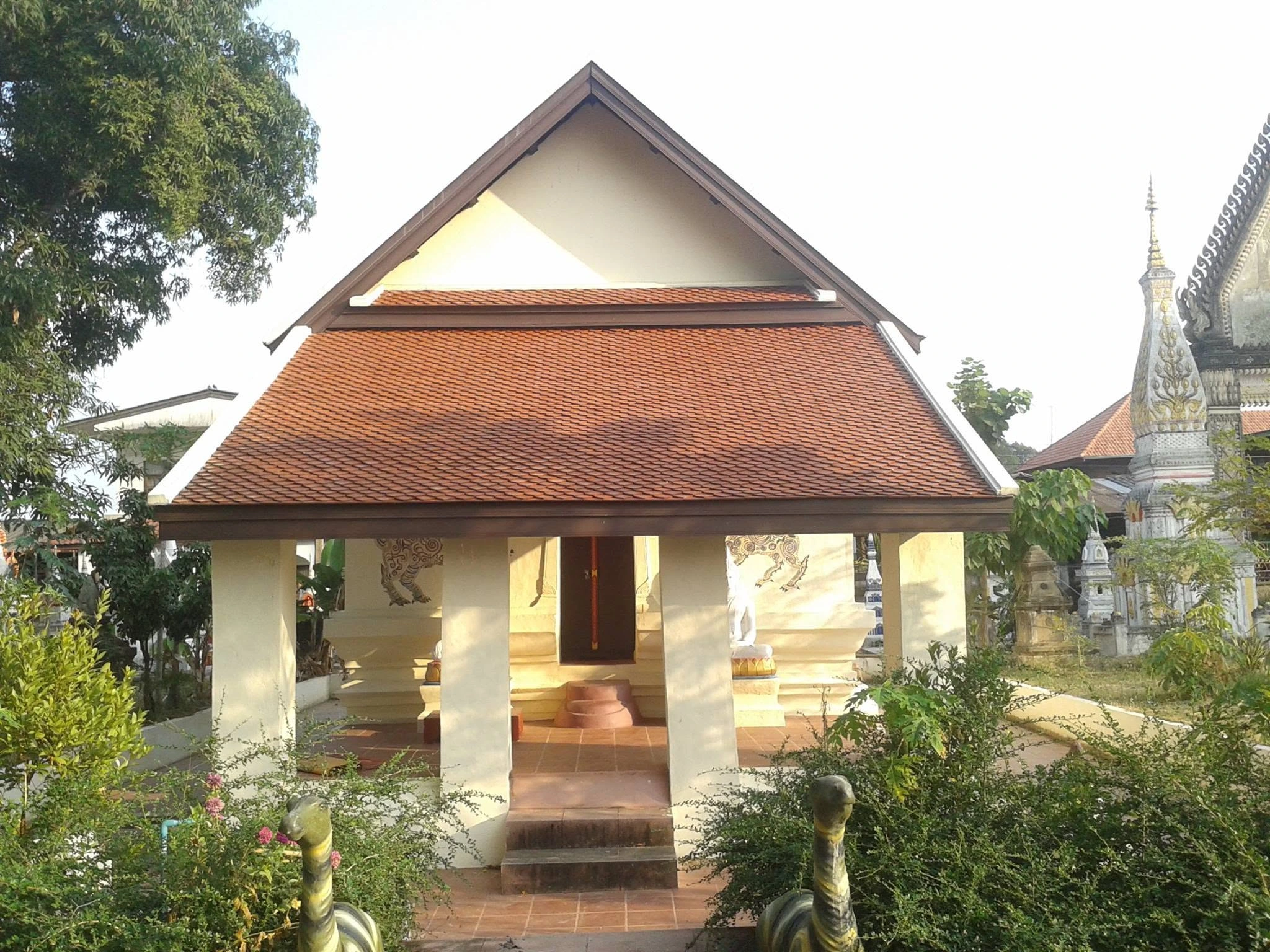
Ubosot of Wat Pho Si Jik Du
Open Days: Daily
Opening Hours: No Official Opening Hours Specified
The Ubosot of Wat Pho Si Jik Du in Amnat Charoen Province is an important local religious building and cultural heritage site in Ban Jik Du, Jik Du Subdistrict, Hua Taphan District. The old ordination hall, locally known in northeastern Thailand as a sim, is notable for its Vietnamese craftsmanship, rectangular plan, single entrance, naga-shaped pediment above the doorway, and an inscription above the door that reads “completed after the Buddhist era had passed 2472 years.” These features make the building a valuable record of local Buddhist architecture, community faith, and cross-cultural craftsmanship in the Isan region.
This site is suitable for travelers interested in old temples, Isan-style ordination halls, local architecture, and lesser-known cultural places in Amnat Charoen. Although it is not a large commercial tourist attraction, the ubosot is highly meaningful as a historical and artistic structure. It shows how a rural Buddhist community created a sacred space for monastic rituals and religious life, while also preserving traces of craftsmanship from Vietnamese artisans who contributed to temple architecture in the region.
The rectangular form of the ubosot reflects a simple and functional approach to sacred architecture. Unlike many large modern ordination halls, this building is compact, modest, and focused on ritual purpose. The single entrance gives the space a ceremonial quality, as visitors pass through one defined doorway into the sacred interior. This design is common in many traditional Isan sim buildings, where simplicity, sacred function, and community devotion are more important than monumental scale.
One of the most distinctive elements of the ubosot is the naga-shaped pediment above the doorway. In the cultural world of the Mekong and northeastern Thailand, the naga is a powerful symbol associated with protection, water, fertility, and the guardianship of Buddhism. Placing a naga form above the entrance gives the doorway a sacred meaning. It marks the transition from the ordinary temple ground into a space dedicated to Buddhist ritual and spiritual discipline.
The inscription above the door is especially important because it provides a clear historical reference. The text records that the building was completed in the Buddhist year 2472, corresponding to 1929 CE. This makes the ubosot an important cultural document in architectural form. It allows visitors and researchers to connect the building with a specific period in Thai and local history, when communities in the Isan region still relied on local and migrant craftsmen to build temples, halls, and ordination spaces.
The Vietnamese craftsmanship associated with this ubosot adds another layer of cultural interest. Vietnamese artisans were active in several parts of northeastern Thailand, especially in masonry, plasterwork, and architectural finishing. Their work often shows careful proportions, clean wall surfaces, and distinctive decorative details. At Wat Pho Si Jik Du, this craftsmanship appears within a Buddhist structure that still belongs strongly to the local Isan religious landscape, creating a rare example of artistic blending at the community level.
Wat Pho Si in Ban Jik Du continues to function as a local Buddhist temple. Like many rural temples in northeastern Thailand, it is more than a place of worship. It serves as a community center for merit-making, Buddhist ceremonies, Kathin offerings, and local religious gatherings. The old ubosot therefore represents not only architecture but also the shared effort of monks, villagers, and craftsmen who created and maintained a sacred space for the community.
The value of the old ubosot also lies in its vulnerability. Historic sim and ubosot buildings can be affected by weather, humidity, repairs, and inappropriate use. Visitors should therefore treat the building with care. They should not touch old surfaces unnecessarily, write on walls, climb on architectural elements, or disturb inscriptions and decorative details. Respectful tourism helps preserve the structure and encourages the local community to continue valuing its cultural heritage.
For photography, the ubosot offers several important details to observe: the rectangular building form, the single entrance, the naga-shaped pediment, the inscription above the doorway, and the temple atmosphere around the structure. Photographs should be taken respectfully, especially when monks or local residents are present. Visitors should avoid using strong flash near old surfaces and should not pose in ways that reduce the dignity of the sacred building.
Getting There is most convenient by private car or hired local transport. From Amnat Charoen city, travel toward Hua Taphan District, then continue to Jik Du Subdistrict and Ban Jik Du. Wat Pho Si is located within the local community. Travelers can ask local residents for directions once they arrive in the village, as the temple is a known community landmark. Those starting from Hua Taphan District can reach the Jik Du area more easily and include the temple as part of a cultural route in southern Amnat Charoen.
Visitors using public transportation should first reach Amnat Charoen town or Hua Taphan District, then hire local transport to Ban Jik Du. Because the temple is located in a community area rather than on a major tourist route, return transport should be arranged in advance. Travelers planning several stops in one day may combine this temple with other religious and cultural places in Hua Taphan, Phana, and Mueang Amnat Charoen.
The best time to visit is in the morning or late afternoon, when the light is suitable for observing the pediment and inscription, and the weather is more comfortable. Visitors interested in architecture should allow at least 45 minutes to 1 hour to study the building, take respectful photographs, and walk around the temple area. A slow visit allows the details of the ubosot to be appreciated more deeply than a quick stop.
Culturally, the ubosot of Wat Pho Si Jik Du reveals a deeper side of Amnat Charoen. The province is often known for major religious landmarks, local temples, and peaceful rural communities, but small heritage sites like this old ubosot show how much history is preserved within village temples. These buildings may not be widely famous, yet they carry strong evidence of community devotion, craftsmanship, and local identity.
The building also provides a useful introduction to the word sim, the local Isan term for an ordination hall or ubosot. Many Isan sim buildings are small, simple, and deeply connected to village life. They often include local symbols such as naga motifs, compact plans, and handmade decorative details. The ubosot at Wat Pho Si Jik Du is especially interesting because it combines this local religious function with Vietnamese craft influence.
When compared with modern Thai ordination halls, this old ubosot shows a very different architectural character. Modern ubosot buildings are often larger, more elaborate, and built with contemporary materials. The ubosot at Wat Pho Si Jik Du remains compact, focused, and historically expressive. Its single doorway and pediment create a strong visual and ritual emphasis, while the inscription above the entrance anchors the building in a specific historical moment.
Preserving this type of building requires attention to original form, materials, and historical evidence. The inscription above the doorway, the naga pediment, and the proportions of the building are all part of its cultural value. Visitors can support preservation simply by behaving respectfully, avoiding damage, and recognizing the building as an important local heritage site rather than a casual photo location.
Travelers planning a cultural route in Amnat Charoen can combine Wat Pho Si Jik Du with nearby religious destinations such as Wat Phra Lao Thep Nimit in Phana District, Phra That Na Pa Saeng at Wat Sutthikawat, Buddha Park and Phra Mongkhon Ming Mueang, and sacred places in Mueang Amnat Charoen. This type of itinerary allows visitors to see different layers of local faith, from ancient-style ordination halls to major provincial Buddhist landmarks.
Overall, the Ubosot of Wat Pho Si Jik Du is a small but significant cultural destination. Its Vietnamese craftsmanship, rectangular form, single entrance, naga-shaped pediment, and 1929 inscription make it one of the most interesting local heritage sites in Hua Taphan District. For travelers who appreciate old temples, regional architecture, and quiet cultural places, a respectful visit to this temple offers a meaningful understanding of Amnat Charoen beyond its best-known attractions.
| Name | Ubosot of Wat Pho Si Jik Du / Sim of Wat Pho Si Jik Du |
| Location | Wat Pho Si, Ban Jik Du, Jik Du Subdistrict, Hua Taphan District, Amnat Charoen Province |
| Address | Jik Du Subdistrict, Hua Taphan District, Amnat Charoen Province 37240, Thailand |
| Coordinates | 15.590407, 104.536768 |
| Highlights | An old ubosot built by Vietnamese craftsmen, featuring a single entrance, naga-shaped pediment, and a 1929 inscription above the doorway |
| History | The inscription above the doorway records the Buddhist year 2472, corresponding to 1929 CE, making the building an important local religious and architectural heritage site. |
| Name Origin | Wat Pho Si Jik Du refers to Wat Pho Si in Ban Jik Du, while sim is the local Isan term for an ubosot or ordination hall. |
| Distinctive Features | Rectangular building, single entrance, naga-shaped pediment above the door, and the inscription “completed after the Buddhist era had passed 2472 years” |
| Travel Information | From Amnat Charoen city, travel toward Hua Taphan District, then continue to Jik Du Subdistrict and Ban Jik Du. Wat Pho Si is located within the local community and can be reached by private car, hired vehicle, or local transport from Hua Taphan. |
| Current Status | A local Buddhist temple and cultural heritage site in Jik Du Subdistrict, Hua Taphan District, Amnat Charoen Province |
| Open Days | Daily |
| Opening Hours | No Official Opening Hours Specified |
| Facilities | Temple grounds, worship area, old ubosot viewing area, and parking depending on temple and village conditions |
| Main Areas / Zones | Old ubosot, naga pediment, doorway inscription, Wat Pho Si temple area, and community religious activity area |
| Abbot / Caretaker | Phra Athikan Sawai Sirichanto |
| Resident Monks | 7 monks |
| Temple Type | Local Buddhist Temple |
| Related Tradition / Ritual | Temple merit-making, Kathin offerings, Buddhist worship, and local religious activities of Ban Jik Du community |
| Nearby Tourist Attractions | 1. Jik Du Subdistrict Administrative Organization, about 1 km 2. Hua Taphan District Center, about 10 km 3. Wat Phra Lao Thep Nimit, about 20 km 4. Phra That Na Pa Saeng at Wat Sutthikawat, about 32 km 5. Buddha Park and Phra Mongkhon Ming Mueang, about 38 km |
| Nearby Restaurants | 1. Local Restaurants in Jik Du Subdistrict, about 1 km 2. Local Restaurants in Hua Taphan District, about 10 km 3. Local Restaurants in Phana District, about 20 km 4. Baan Pinto 1984, Mueang Amnat Charoen, about 37 km, Tel. 097-141-6966 5. Mum Ocha, Mueang Amnat Charoen, about 38 km, Tel. 080-150-5666, 097-057-1678 |
| Nearby Accommodations | 1. Accommodations in Hua Taphan District, about 10 km 2. Accommodations in Phana District, about 20 km 3. Nakarin Hotel, Mueang Amnat Charoen, about 38 km 4. Faikid Hotel, Mueang Amnat Charoen, about 38 km 5. L.J. The Emerald Hotel Amnat Charoen, about 39 km |
Frequently Asked Questions (FAQ)
Q: Where is the Ubosot of Wat Pho Si Jik Du located?
A: It is located inside Wat Pho Si in Ban Jik Du, Jik Du Subdistrict, Hua Taphan District, Amnat Charoen Province.
Q: Why is the ubosot important?
A: It is an old ordination hall built by Vietnamese craftsmen, with a 1929 inscription and significant local architectural value.
Q: What are the main features of the ubosot?
A: The building has a rectangular plan, a single entrance, a naga-shaped pediment above the doorway, and an inscription above the door.
Q: What does the inscription above the doorway say?
A: The inscription states that the building was completed after the Buddhist era had passed 2472 years, corresponding to 1929 CE.
Q: Who is the abbot of Wat Pho Si Jik Du?
A: The abbot is Phra Athikan Sawai Sirichanto.
Q: Is there an admission fee?
A: No confirmed admission fee was found. Visitors should enter respectfully and treat the old building with care.
Q: What is the best time to visit?
A: Morning and late afternoon are the best times because the natural light makes the pediment and inscription easier to see.
Q: What nearby places can be visited in the same trip?
A: Nearby and connecting places include Hua Taphan District Center, Wat Phra Lao Thep Nimit, Phra That Na Pa Saeng, Buddha Park and Phra Mongkhon Ming Mueang, and attractions in Mueang Amnat Charoen.
 Category: ●Places of Worship
 Group: ●Other Sacred Sites
Last Update : 3 MonthAgo
 Last Update : 3 MonthAgo
 Click to Access the Navigation Map GPS
Ubosot of Wat Pho Si Jik Du Map

 Art, Culture and Heritage
 Historical Sites and Monuments(1)
 Art, Craft Centres, Tradition(3)
 Museums(1)
 Temple(30)
Other Sacred Sites(7)
Temple(30)
Other Sacred Sites(7)
 Suburban Living
 Village, Community(3)
 Nature and Wildlife
 National Parks and Marine Reserves(3)
 Mountain (Doi)(5)
 Dam, Reservoir, Lake(5)
 Waterfalls(3)
 Caves(2)
 River, Canal(3)
 Other natural attractions(5)
 Entertainment and Agricultural
 Zoos and Aquariums(1)
 Farms, Parks and Ecotourism(4)
 Shopping
 Shopping and Night Market(1)


