
lovethailand home >Northeastern Travel Attractions >Amnat Charoen Travel Attractions >Phana >Mai Klon > Wat Chaiyatikaram
TL;DR: Wat Chaiyatikaram is located at Ban Phon Mueang, Mai Klon Subdistrict, Phana District, Amnat Charoen Province, open Daily, hours Daytime visits are recommended.
Wat Chaiyatikaram
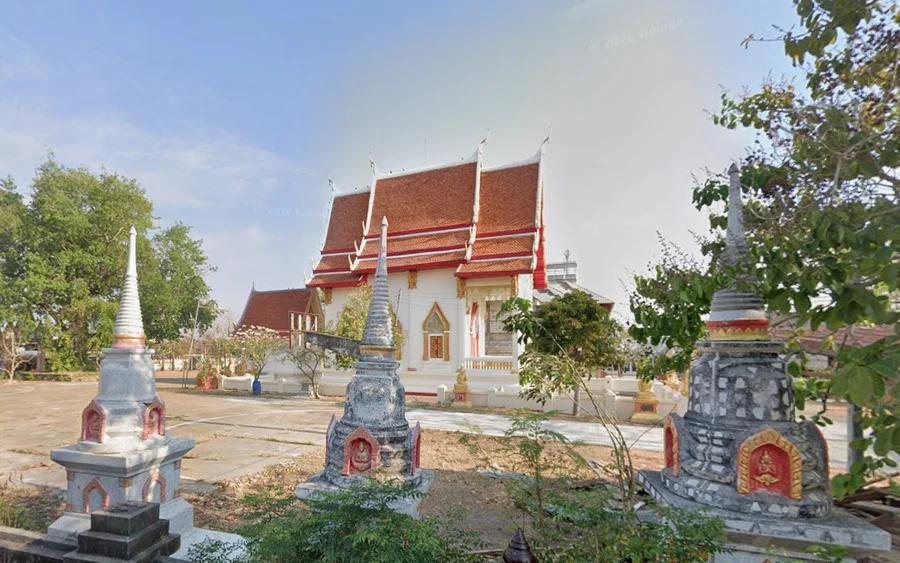
Open Days: Daily
Opening Hours: Daytime visits are recommended
Wat Chaiyatikaram in Amnat Charoen Province is an important local Buddhist temple in Ban Phon Mueang, Mai Klon Subdistrict, Phana District. The temple is especially valuable because it houses an ancient bronze Buddha image seated in the meditation posture with legs folded evenly, in the posture of subduing Mara. The image is 55 centimeters high and belongs to the Lao Vientiane school of Buddhist art. This makes Wat Chaiyatikaram not only a community temple but also a meaningful site for studying local Buddhist art, Mekong cultural connections, and the religious heritage of Phana District.
The main significance of Wat Chaiyatikaram lies in its bronze Buddha image. Although the image is not large, its artistic value is considerable. The seated posture, the subduing Mara gesture, and the bronze material connect the image with the broader Buddhist art tradition of the Lao cultural world. It can be compared with Buddha images in the corridor of Ho Phra Kaew in Vientiane and with images at Wat Visoun in Luang Prabang. These comparisons place the image within a wider network of Buddhist art from the late 17th to early 18th century Buddhist cultural sphere.
Wat Chaiyatikaram is located in Ban Phon Mueang, Mai Klon Subdistrict, Phana District, an area of Amnat Charoen with several important religious and cultural sites. The presence of a Vientiane-school bronze Buddha image in a village temple shows that Phana District has long been connected with the artistic and religious traditions of the Mekong region. The temple therefore helps visitors understand that local temples can preserve historical art of regional importance.
The bronze Buddha image at Wat Chaiyatikaram is small in scale but rich in meaning. In many rural temples, sacred images of this size often remain close to community life. They are not isolated museum objects but living religious images used for worship and merit-making. This gives the image a dual importance: it is both an object of devotion and a valuable piece of cultural heritage.
The name Wat Chaiyatikaram suggests a blessed monastery associated with auspicious victory and spiritual strength. This meaning fits the role of the temple as a spiritual center for Ban Phon Mueang. Local residents use the temple for Buddhist holy day activities, merit-making, community ceremonies, and the continuation of inherited faith. The ancient bronze Buddha image strengthens the temple’s identity as a place where local devotion and historical memory meet.
Visitors interested in Buddhist art should observe the image carefully. The subduing Mara posture represents the Buddha’s victory over temptation and inner obstacles. The seated posture communicates stability, concentration, and spiritual firmness. The overall form reflects the aesthetic language of the Lao Vientiane school, part of the wider Mekong Buddhist artistic tradition. Seeing the image with attention helps visitors understand its value beyond its physical size.
The comparison with Ho Phra Kaew in Vientiane and Wat Visoun in Luang Prabang is especially important. These places are major Buddhist and artistic centers in Lao cultural history. The relationship suggests that the bronze image at Wat Chaiyatikaram belongs to a larger regional tradition of sacred image-making. It preserves evidence of artistic exchange, religious connection, and cultural movement between communities along the Mekong and present-day northeastern Thailand.
Wat Chaiyatikaram also reflects the everyday role of temples in rural Isan society. A temple like this connects past and present through a sacred image that continues to be respected by local people. The Buddha image is not separate from community life; it remains part of worship, merit-making, memory, and identity. This is why small village temples can carry deep cultural meaning even when they are not large tourist landmarks.
For travelers visiting Phana District, Wat Chaiyatikaram can be included in the same cultural route as Wat Phra Lao Thep Nimit, another major temple in Phana known for important Buddhist art. Visiting both temples allows travelers to see different scales of Buddhist heritage: a bronze image preserved in a village temple and a major revered Buddha image in a distinguished ordination hall. Together, they reveal the richness of Buddhist art in Amnat Charoen.
Wat Chaiyatikaram is also suitable for visitors who prefer quiet community temples. The experience here is not about crowds or large architecture. It is about paying respect, observing an ancient sacred image, and understanding a local temple’s role in preserving religious heritage. Visitors should move slowly, speak quietly, and avoid disturbing monks, worshippers, or temple activities.
The subduing Mara posture has a powerful Buddhist meaning. It symbolizes the Buddha’s victory over fear, desire, and obstacles through spiritual perfection. Worshippers often pray before images in this posture for strength, stability, courage, and success in overcoming difficulties. This meaning gives the bronze image at Wat Chaiyatikaram a strong spiritual relevance for visitors as well as local residents.
Visitors should dress modestly and behave respectfully when visiting the temple. The bronze Buddha image should not be touched without permission. Photography should be done carefully and politely, especially near sacred objects. Wat Chaiyatikaram is a living religious place, not only a cultural attraction, so temple etiquette remains important.
Getting There is most convenient by private car, motorcycle, or local hired transport. Set the destination to Ban Phon Mueang, Mai Klon Subdistrict, Phana District, Amnat Charoen Province. From Phana District center, visitors can follow local roads to Mai Klon Subdistrict and Ban Phon Mueang. Those unfamiliar with the route should ask local residents or use an online map together with the temple and village names.
From Mueang Amnat Charoen, travelers can first head to Phana District and continue to Mai Klon Subdistrict and Ban Phon Mueang. The temple can be visited as part of a half-day or full-day route together with Wat Phra Lao Thep Nimit, Wat Phra Mongkhon Ming Mueang, Phuttha Utthayan Reservoir, and Ming Mueang Chalerm Phrakiat Park. This route combines community temples, Buddhist art, and major provincial landmarks.
The best time to visit Wat Chaiyatikaram is in the morning or late afternoon, when the weather is more comfortable and the atmosphere is calm. Visitors interested in Buddhist art should allow enough time to observe the bronze image and understand its artistic context within the Lao Vientiane-school tradition.
Wat Chaiyatikaram is therefore a worthwhile destination for travelers interested in Lao Vientiane-school Buddhist art, ancient bronze Buddha images, and community temples in Amnat Charoen. It may not be a large tourist site, but its cultural depth is significant. The temple shows that important heritage can be preserved in local village temples where faith, art, and community memory continue to live together.
| Name | Wat Chaiyatikaram |
| Location | Ban Phon Mueang, Mai Klon Subdistrict, Phana District, Amnat Charoen Province |
| Address | Ban Phon Mueang, Mai Klon Subdistrict, Phana District, Amnat Charoen Province |
| Coordinates / Map Location | Ban Phon Mueang, Mai Klon Subdistrict, Phana District, Amnat Charoen Province |
| Highlights | Ancient bronze Buddha image seated in the subduing Mara posture, 55 cm high, belonging to the Lao Vientiane school of Buddhist art |
| Distinctive Features | The bronze image can be compared with Buddha images at Ho Phra Kaew in Vientiane and Wat Visoun in Luang Prabang |
| History | The bronze Buddha image belongs to the Lao Vientiane-school tradition and dates to around the late 22nd to 23rd Buddhist century. |
| Name Origin | The temple name suggests an auspicious monastery associated with spiritual victory and local faith in Ban Phon Mueang. |
| Main Areas / Zones | Bronze Buddha worship area, temple courtyard, merit-making area, and community religious space of Ban Phon Mueang |
| Travel Information | Travel to Phana District, then continue to Mai Klon Subdistrict and Ban Phon Mueang. Private cars, motorcycles, or local hired vehicles are recommended. |
| Current Status | Community temple and local Buddhist art learning site in Phana District, Amnat Charoen Province |
| Open Days | Daily |
| Opening Hours | Daytime visits are recommended, especially morning or late afternoon. |
| Fees | No admission fee |
| Facilities | Worship area, temple courtyard, merit-making area, and parking space within the temple grounds |
| Nearby Tourist Attractions | 1. Wat Phra Lao Thep Nimit, about 8 km 2. Phana District and Phana community area, about 8 km 3. Wat Phra Mongkhon Ming Mueang, about 40 km 4. Phuttha Utthayan Reservoir, about 41 km 5. Ming Mueang Chalerm Phrakiat Park, about 42 km |
| Nearby Restaurants | 1. Local restaurants in Phana District center, about 8 km 2. Local Isan food shops in Phana community, about 8 km 3. Noodle and made-to-order food shops near Phana District center, about 8 km 4. B'More Love Bakehouse & Café Amnat Charoen, about 42 km 5. Arabus Experience Café, about 42 km |
| Nearby Accommodations | 1. Faikid Hotel, about 42 km, Tel. 045-511222, 045-511888, 045-511999 2. LJ The Emerald Hotel, about 42 km, Tel. 045-271000 3. Nakarin Hotel, about 42 km 4. Chitsakon Park View, about 43 km 5. Baan Ramiandao Hotel, about 43 km |
Frequently Asked Questions (FAQ)
Q: Where is Wat Chaiyatikaram located?
A: Wat Chaiyatikaram is located in Ban Phon Mueang, Mai Klon Subdistrict, Phana District, Amnat Charoen Province.
Q: What is the main highlight of Wat Chaiyatikaram?
A: The main highlight is an ancient bronze Buddha image seated in the subduing Mara posture, 55 cm high, belonging to the Lao Vientiane school of Buddhist art.
Q: How old is the bronze Buddha image at Wat Chaiyatikaram?
A: The image dates to around the late 22nd to 23rd Buddhist century.
Q: Which Buddha images can it be compared with?
A: It can be compared with Buddha images in the corridor of Ho Phra Kaew in Vientiane and images at Wat Visoun in Luang Prabang.
Q: Is there an admission fee?
A: No. Visitors can enter the temple and pay respect to the bronze Buddha image without an admission fee.
Q: How can travelers get to Wat Chaiyatikaram?
A: Travel to Phana District in Amnat Charoen Province, then continue to Mai Klon Subdistrict and Ban Phon Mueang. Private cars, motorcycles, or local hired vehicles are recommended.
Q: What is the best time to visit?
A: Morning and late afternoon are recommended because the weather is more comfortable and suitable for a quiet temple visit.
Q: What nearby places can visitors continue to after Wat Chaiyatikaram?
A: Visitors can continue to Wat Phra Lao Thep Nimit, Wat Phra Mongkhon Ming Mueang, Phuttha Utthayan Reservoir, and Ming Mueang Chalerm Phrakiat Park depending on available time.
 Category: ●Places of Worship
 Group: ●Temple
Last Update : 4 MonthAgo
 Last Update : 4 MonthAgo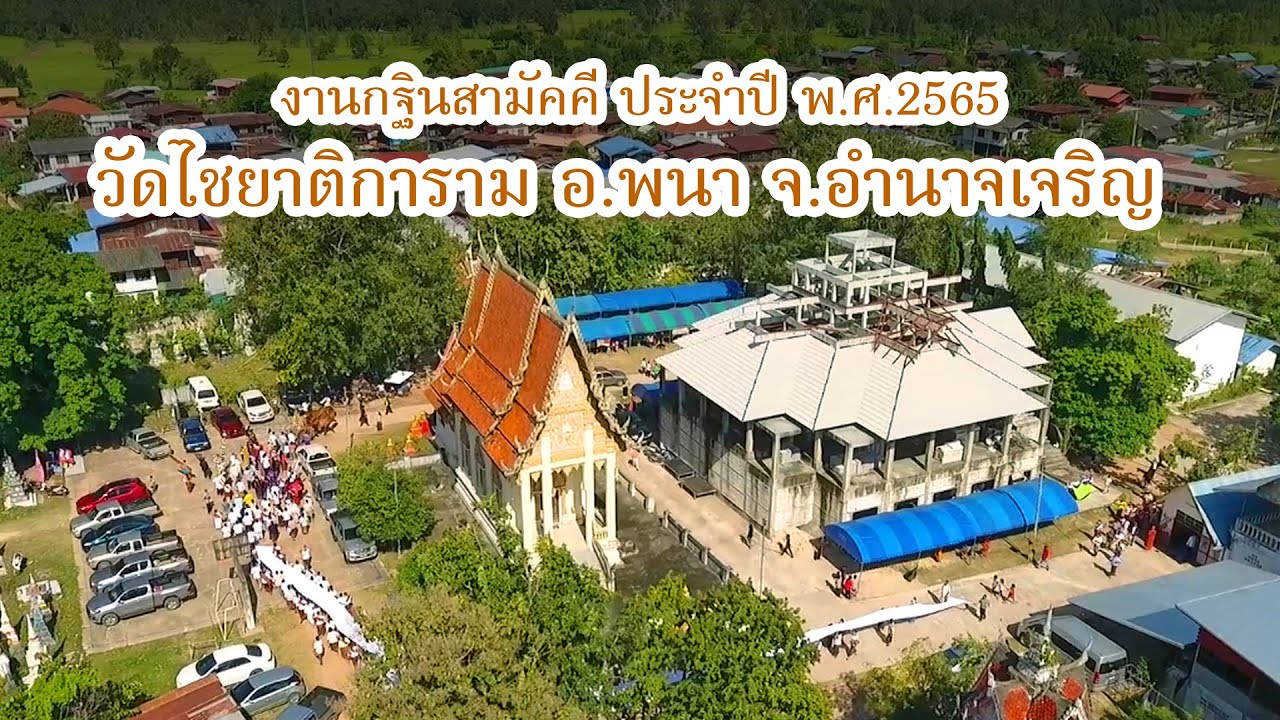
 Click to Access the Navigation Map GPS
 Art, Culture and Heritage
 Historical Sites and Monuments(1)
 Art, Craft Centres, Tradition(3)
 Museums(1)
Temple(30)
Museums(1)
Temple(30)
 Other Sacred Sites(7)
 Suburban Living
 Village, Community(3)
 Nature and Wildlife
 National Parks and Marine Reserves(3)
 Mountain (Doi)(5)
 Dam, Reservoir, Lake(5)
 Waterfalls(3)
 Caves(2)
 River, Canal(3)
 Other natural attractions(5)
 Entertainment and Agricultural
 Zoos and Aquariums(1)
 Farms, Parks and Ecotourism(4)
 Shopping
 Shopping and Night Market(1)


