
lovethailand home >Northeastern Travel Attractions >Amnat Charoen Travel Attractions >Senangkha Nikhom >Senangkha Nikhom > Wat Na Rai Yai
TL;DR: Wat Na Rai Yai is located at Moo 5, Senangkhanikhom Subdistrict, Senangkhanikhom District, Amnat Charoen Province, open Daily, hours 08.00 – 17.00. Highlights include A historic community temple founded in 1940 by Phra Soi Phanthamukkho.
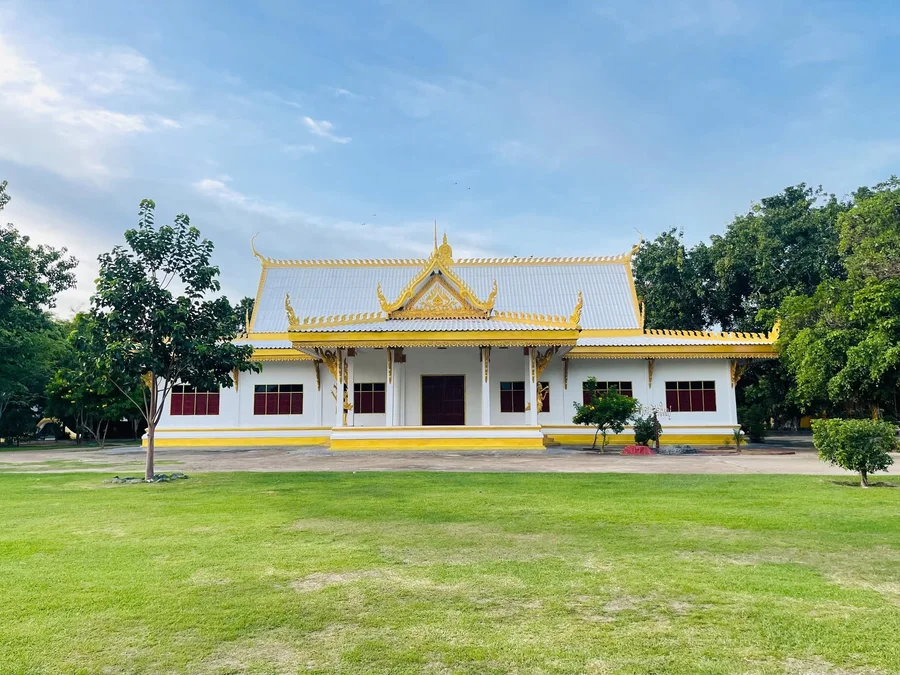
Wat Na Rai Yai
Open Days: Daily
Opening Hours: 08.00 – 17.00
Wat Na Rai Yai is an important local Buddhist temple in Moo 5, Senangkhanikhom Subdistrict, Senangkhanikhom District, Amnat Charoen Province. Founded in 1940, the temple is closely connected with Ban Na Rai Yai and the religious life of the local community. It is not a large commercial tourist attraction, but a meaningful community temple where visitors can observe the quiet continuity of Buddhism in rural northeastern Thailand.
The temple was founded by Phra Soi Phanthamukkho, whose original family name was Khrueadi. He was the pioneering monk who established Wat Na Rai Yai in its present location. His role is central to the temple’s identity because the creation of a rural temple required more than the construction of buildings. It required spiritual leadership, community trust, local cooperation, and a long-term commitment to creating a religious center for villagers.
When Wat Na Rai Yai was established in 1940, local temples in northeastern Thailand played a vital role in daily life. A temple was a place for merit-making, Buddhist ceremonies, moral guidance, community gatherings, and the transmission of local customs. Wat Na Rai Yai developed within this social and cultural setting, serving not only monks but also families, elders, children, and lay Buddhists who relied on the temple as a spiritual anchor.
Phra Soi Phanthamukkho later became the abbot of Wat Na Rai Yai and also served as the ecclesiastical head of Senangkhanikhom Subdistrict. In 1964, he received the title Phra Khru Phisan Lilawat. This title reflects the importance of his religious service, his contribution to the temple, and his role in strengthening the Buddhist community of Senangkhanikhom. His life and work remain an essential part of the temple’s history.
During the early development of the temple, one of the important monastic structures was a monks’ residence measuring 6 meters wide and 9 meters long. Built with hardwood and costing 23,500 baht, this building represented both practical needs and local devotion. A monks’ residence is essential in a Thai temple because it supports monastic life, study, meditation, and the daily practice of monks who remain at the temple throughout the year.
In 1974, Wat Na Rai Yai built an ordination hall measuring 7 meters wide and 15 meters long. The structure was built with reinforced concrete, brick, and plaster, with a construction cost of 537,410 baht. The ordination hall is one of the most important buildings in a Buddhist temple because it supports formal monastic ceremonies, including ordination and other Sangha activities that require a sacred boundary.
The construction of the ordination hall marked a major step in the temple’s development. For a community temple, such a building represents the collective faith of monks and villagers. It also shows that the temple had reached a level of stability that allowed it to support important religious functions. The ordination hall of Wat Na Rai Yai therefore carries both architectural and spiritual significance.
Phra Khru Phisan Lilawat, formerly Phra Soi Phanthamukkho, passed away on 12 May 1983 at the age of 72, after 51 years in the monkhood. His passing was a major moment in the history of Wat Na Rai Yai because he had been the pioneering monk who laid the foundation of the temple. His legacy remains visible through the temple’s history, religious structures, and the continued devotion of the local community.
In 1984, Phra Ajahn Phuttha Thitapanyo was appointed abbot of Wat Na Rai Yai. He later received the title Phra Khru Worapanyaphiwat. Under his leadership, the temple continued to develop and maintain its religious role in the community. One of the major developments during this period was the construction of a new sermon hall, which continues to serve the temple today.
The sermon hall is an important space in Thai temple life. It is used for Dhamma talks, merit-making, community meetings, Buddhist ceremonies, and seasonal events such as Kathin and robe-offering ceremonies. The new sermon hall at Wat Na Rai Yai helped expand the temple’s capacity to serve villagers and visitors, especially during major religious occasions when many people gather at the temple.
Historical temple records identify Wat Na Rai Yai as a temple located at Ban Na Rai Yai, Moo 5, Senangkhanikhom Subdistrict, Senangkhanikhom District, Amnat Charoen Province. It belongs to the Mahanikaya order of Thai Buddhism. The temple land covers 11 rai and 73 square wah, with additional monastic land. This landholding reflects the temple’s long-term role as a religious institution and community space.
Within the temple grounds, the key areas include the ordination hall, sermon hall, monks’ residences, merit-making area, and religious activity spaces. Each area supports a different function. The ordination hall is used for formal monastic ceremonies, the sermon hall gathers laypeople for Buddhist activities, and the monks’ residences support the daily life and practice of monks living at the temple.
The name “Wat Na Rai Yai” reflects the identity of Ban Na Rai Yai. The Thai words “na” and “rai” are associated with rice fields, farms, and agricultural landscapes, which are closely tied to rural life in northeastern Thailand. The word “yai,” meaning large or great, helps distinguish the community and gives the temple a strong local identity. The name therefore preserves a link between the temple, the land, and the way of life of local villagers.
The atmosphere of Wat Na Rai Yai is peaceful, simple, and community-oriented. Visitors should see it as a living Buddhist temple rather than a staged tourist site. Appropriate clothing, quiet behavior, and respect for monks and local worshippers are important. Travelers should avoid entering monastic areas without permission and should be mindful when taking photographs, especially during ceremonies.
Wat Na Rai Yai remains important during the Buddhist calendar year. Local people gather at the temple for Makha Bucha Day, Visakha Bucha Day, Asalha Bucha Day, Buddhist Lent, the end of Buddhist Lent, Kathin ceremonies, and robe-offering events. These activities keep the temple active and preserve the connection between Buddhism, family life, and local culture in Ban Na Rai Yai.
For travelers interested in temples around Senangkhanikhom District, Wat Na Rai Yai can be included in a route with nearby cultural and natural attractions. These include Phra Phuttha Nat Muni Udom Chok at Wat Photharam archaeological site, Phu Wat, Phu Phon Thong, Chedi Hin Phan Lan Kon, Sok Hang Waterfall, and Phuttha Utthayan with Phra Mongkhon Ming Mueang in Mueang Amnat Charoen District.
Getting There is most convenient by private car or rental car. From central Amnat Charoen, travelers can drive toward Senangkhanikhom District and continue to Moo 5, Ban Na Rai Yai, in Senangkhanikhom Subdistrict. Using a navigation map is recommended, especially for visitors who are not familiar with local village roads.
The best time to visit Wat Na Rai Yai is in the morning or late afternoon when the weather is more comfortable. Visitors should allow enough time to walk quietly around the temple, pay respect, and observe the atmosphere without rushing. A visit to this temple offers a deeper understanding of Amnat Charoen beyond major landmarks, focusing instead on community faith, local history, and the enduring presence of Buddhism in everyday life.
Wat Na Rai Yai is therefore more than a village temple. It is a record of religious continuity, beginning with Phra Soi Phanthamukkho’s pioneering work in 1940, continuing through the development of Phra Khru Phisan Lilawat and Phra Khru Worapanyaphiwat, and remaining active today as a place for merit-making, ceremonies, and local Buddhist practice in Senangkhanikhom District.
| Name | Wat Na Rai Yai |
| Location | Moo 5, Senangkhanikhom Subdistrict, Senangkhanikhom District, Amnat Charoen Province |
| Address | Ban Na Rai Yai, Moo 5, Senangkhanikhom Subdistrict, Senangkhanikhom District, Amnat Charoen Province, Thailand |
| Highlights | A historic community temple founded in 1940 by Phra Soi Phanthamukkho |
| History | Founded in 1940; Phra Soi Phanthamukkho received the title Phra Khru Phisan Lilawat in 1964; the ordination hall was built in 1974; Phra Ajahn Phuttha Thitapanyo was appointed abbot in 1984 |
| Name Origin | The name is connected with Ban Na Rai Yai. “Na” and “rai” refer to agricultural landscapes, while “yai” helps identify the local community. |
| Distinctive Features | A peaceful local Buddhist temple with a clear founding history and an important role in merit-making and community religious life |
| Main Religious Structures | Ordination hall measuring 7 meters wide and 15 meters long, hardwood monks’ residence measuring 6 meters wide and 9 meters long, and a new sermon hall |
| Main Areas / Zones | Ordination hall, sermon hall, monks’ residences, merit-making area, and religious activity areas |
| Abbot / Caretaker | Phra Maha Chokthawi Yasintharo |
| Main Contact Number | 095-602-8392 |
| Travel Information | Best reached by private car or rental car from central Amnat Charoen toward Senangkhanikhom District, then to Moo 5, Ban Na Rai Yai |
| Current Status | Open as a local Buddhist temple under the Mahanikaya order and used for community religious activities |
| Open Days | Daily |
| Opening Hours | 08.00 – 17.00 |
| Fees | No admission fee |
| Facilities | Parking area, merit-making area, sermon hall, and religious activity space |
| Nearby Tourist Attractions | 1. Phra Phuttha Nat Muni Udom Chok, Wat Photharam Archaeological Site, about 3 km 2. Phu Wat, about 7 km 3. Phu Phon Thong, about 8 km 4. Chedi Hin Phan Lan Kon, about 12 km 5. Sok Hang Waterfall, about 15 km 6. Phuttha Utthayan And Phra Mongkhon Ming Mueang, about 28 km 7. Wat Tham Saeng Phet, about 30 km |
| Nearby Restaurants | 1. Cafe Thanai Zab, about 2 km, Tel. 064-086-2424 2. Krua Phet Nam Ngoen, about 2 km 3. Kuay Teow Ruea Thang Khong, about 2 km 4. Wichian Buri Grilled Chicken Senangkhanikhom, about 3 km 5. Jungle Cafe Senangkhanikhom Amnat Charoen, about 3 km 6. Suan Ahan Ban Na Rai Yai, about 2 km 7. Suan Ahan Pho Thong, about 3 km |
| Nearby Accommodations | 1. Zwa Hotel Amnat Charoen, about 28 km, Tel. 082-867-6150 2. Ramiarndao Boutique Place Hotel, about 28 km, Tel. 081-067-4149 3. Baan Ing Daan Hotel, about 29 km 4. Nakarin Hotel, about 29 km 5. Penphit Hotel, about 30 km 6. LJ The Emerald Hotel, about 30 km |
Frequently Asked Questions (FAQ)
Q: Where is Wat Na Rai Yai located?
A: Wat Na Rai Yai is located in Moo 5, Ban Na Rai Yai, Senangkhanikhom Subdistrict, Senangkhanikhom District, Amnat Charoen Province.
Q: When was Wat Na Rai Yai founded?
A: Wat Na Rai Yai was founded in 1940 by Phra Soi Phanthamukkho, the pioneering monk who established the temple in its present location.
Q: Why is Phra Soi Phanthamukkho important to Wat Na Rai Yai?
A: He founded the temple, later became its abbot, served as ecclesiastical head of Senangkhanikhom Subdistrict, and received the title Phra Khru Phisan Lilawat in 1964.
Q: What are the main religious structures at Wat Na Rai Yai?
A: The main structures include an ordination hall measuring 7 meters wide and 15 meters long, a hardwood monks’ residence measuring 6 meters wide and 9 meters long, and a new sermon hall.
Q: What are the opening hours of Wat Na Rai Yai?
A: Wat Na Rai Yai is open daily from 08.00 to 17.00.
Q: Is there an admission fee for Wat Na Rai Yai?
A: No. There is no admission fee for visiting the temple.
Q: Who is the current abbot of Wat Na Rai Yai?
A: Recent public temple activity information lists Phra Maha Chokthawi Yasintharo as the abbot of Wat Na Rai Yai.
Q: What nearby places can travelers visit with Wat Na Rai Yai?
A: Travelers can combine the visit with Phra Phuttha Nat Muni Udom Chok, Wat Photharam Archaeological Site, Phu Wat, Phu Phon Thong, Chedi Hin Phan Lan Kon, Sok Hang Waterfall, and Phuttha Utthayan with Phra Mongkhon Ming Mueang.
 Category: ●Places of Worship
 Group: ●Temple
Last Update : 2 MonthAgo
 Last Update : 2 MonthAgo
 Click to Access the Navigation Map GPS
 Art, Culture and Heritage
 Historical Sites and Monuments(1)
 Art, Craft Centres, Tradition(3)
 Museums(1)
Temple(30)
Museums(1)
Temple(30)
 Other Sacred Sites(7)
 Suburban Living
 Village, Community(3)
 Nature and Wildlife
 National Parks and Marine Reserves(3)
 Mountain (Doi)(5)
 Dam, Reservoir, Lake(5)
 Waterfalls(3)
 Caves(2)
 River, Canal(3)
 Other natural attractions(5)
 Entertainment and Agricultural
 Zoos and Aquariums(1)
 Farms, Parks and Ecotourism(4)
 Shopping
 Shopping and Night Market(1)


