
lovethailand home >North Travel Attractions >Uthai Thani Travel Attractions >Nong Khayang >Tha Pho > Tha Pho Folk Song Conservation Group
TL;DR: Tha Pho Folk Song Conservation Group is located at Ban Tha Pho, Tha Pho Subdistrict, Nong Khayang District, Uthai Thani Province, open Daily, hours Best Visited During Daytime; Advance Contact Is Recommended For Demonstrations.
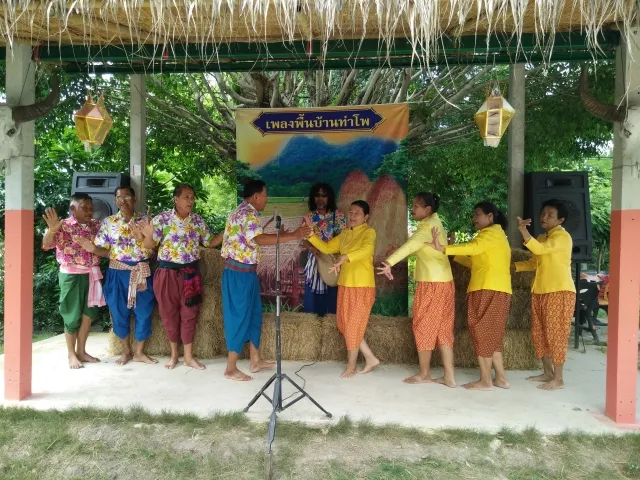
Tha Pho Folk Song Conservation Group
Open Days: Daily
Opening Hours: Best Visited During Daytime; Advance Contact Is Recommended For Demonstrations Or Group Visits
Tha Pho Folk Song Conservation Group in Uthai Thani Province is a community-based cultural learning group dedicated to preserving the folk songs of Ban Tha Pho in Nong Khayang District. The group represents a living heritage of local music, oral tradition, village play, agricultural life, belief, love, humor, and community identity. Important songs associated with Tha Pho include Phitsathan songs, tug-of-war songs, Lom songs, Krun songs, rice-harvesting songs, ordination songs, and ancient ramwong songs. With Ajarn Samroeng Rongthong as a key community leader, these songs continue to be taught, performed, and passed on to younger generations.
Ban Tha Pho is not just an ordinary rural village. It is a community where music has long been part of everyday life. The folk songs did not originate from formal concert halls, but from rice fields, temple grounds, ordination ceremonies, village festivals, playful gatherings, and shared labor. Their melodies and words grew from real life. This is why Tha Pho folk songs still feel warm, direct, humorous, and emotionally close to the people who sing and listen to them.
The value of Tha Pho folk songs lies in their ability to reflect community life. Each type of song has its own role and setting. Phitsathan songs are linked with faith, blessings, and auspicious wishes. Tug-of-war songs are connected with folk games and group energy. Lom and Krun songs often express love, affection, and playful relationships between young men and women. Rice-harvesting songs tell stories of hard work in the fields, while ancient ramwong songs bring joy to festivals and communal celebrations.
These songs are more than entertainment. They are a form of oral record. Before modern media became part of daily life, villagers used songs to communicate, relax, tease one another with wit, teach social values, and maintain relationships between generations. Folk singing therefore functions as art, language, memory, and local wisdom at the same time.
The formation of the Tha Pho Folk Song Conservation Group is especially important because many traditional songs are at risk of disappearing. Social life has changed, entertainment has moved to digital platforms, agricultural work has become different, and older master singers are fewer in number. By gathering people who care about this heritage, the group helps protect an intangible cultural treasure that cannot be preserved by buildings alone. It must live through voices, memory, performance, and transmission.
Ajarn Samroeng Rongthong plays an important role as a leader and knowledge holder. His work involves collecting, teaching, encouraging, and helping local people recognize the value of their own songs. Reviving old songs is not simply a matter of remembering lyrics. It requires understanding melody, rhythm, performance style, vocal delivery, interaction between singers, and the social context of each song. A master singer is therefore essential for keeping the tradition meaningful and accurate.
Wat Tha Pho is an important community space connected with the group’s activities. As a temple, it has long served as the religious and social center of the village. Using the temple as a place for gathering, practicing, teaching, or organizing cultural activities makes it easier for children, youth, adults, and elders to take part. The temple therefore functions not only as a place of worship, but also as a living cultural classroom.
The charm of Tha Pho folk songs comes from natural local language. The lyrics are often simple enough to understand, yet full of wordplay, dialogue, wit, teasing, and storytelling. Singers must have memory, quick thinking, timing, and sensitivity to the audience. Folk songs are not rigid recitations; they are living performances that depend on voice, mood, interaction, and understanding of village life.
Phitsathan songs carry a devotional and auspicious tone. They reflect a way of thinking in which life is connected with faith, blessings, and good wishes. Such songs may appear in ceremonial or merit-making contexts. Listeners receive not only melody, but also a shared sense of hope, protection, and spiritual reassurance.
Tug-of-war songs reflect playfulness and unity. Tug-of-war is not only a test of strength; it is a social activity that creates laughter, cheering, rhythm, and collective energy. The songs make the game more lively and help participants move together. They show that old village entertainment was highly participatory, with many people involved rather than simply watching from a distance.
Lom and Krun songs are memorable for their emotional warmth. They often involve affection, courtship, playful teasing, and relationships between young people. Through these songs, one can see how rural communities once used language and music to express feelings within accepted social boundaries. Singing became a refined and culturally appropriate way to communicate emotion.
Rice-harvesting songs clearly reflect agricultural life. Harvesting rice required many people working together for long hours in the field. Songs helped reduce fatigue, create rhythm, and strengthen the feeling of shared labor. These songs preserve images of rice fields, sweat, teamwork, and the joy of completing work as a community.
Ancient ramwong songs are connected with festivals, temple fairs, and joyful gatherings. Ramwong is accessible to people of many ages and helps create a warm communal atmosphere. In a village setting, dancing and singing together are not only entertainment. They are ways of meeting, communicating, and reaffirming one’s place within the community.
One of the important strengths of the Tha Pho Folk Song Conservation Group is that it keeps the tradition relevant. The group does not simply store songs as old memories. It presents them through festivals, community activities, educational demonstrations, youth learning, cultural tourism, and modern communication channels. This adaptation helps folk songs remain alive rather than becoming frozen in the past.
Passing the songs to young people is one of the group’s most important missions. Children and youth must learn not only the lyrics, but also the meaning, rhythm, local language, respect for master singers, and the confidence to perform. Through this learning process, young people gain more than musical skill. They gain a stronger understanding of their roots and community identity.
The group also strengthens community unity. Rehearsals, performances, and cultural events require cooperation among master singers, elders, youth, monks, local leaders, and community organizations. Folk songs become a reason for people to gather, speak to one another, and take pride in their shared heritage. In this way, music helps maintain social bonds.
For cultural travelers, visiting the Tha Pho Folk Song Learning Center offers a different experience from visiting a monument or museum. The heart of the place is not a large building, but people, voices, stories, and memory. Visitors should listen carefully, speak respectfully with the singers or group members, and see the performance as cultural heritage rather than short-term entertainment.
Getting There is convenient by private car from Uthai Thani town to Nong Khayang District and then to Tha Pho Subdistrict. Visitors may use Wat Tha Pho or the Tha Pho Folk Song Learning Center as the main destination. Because the area is not far from Uthai Thani town, it can be combined with attractions such as Uthai Thani City Pillar Shrine, Trok Rong Ya Walking Street, the Sakae Krang River, and Wat Uposatharam.
Visitors who want to watch a demonstration or come as a group should contact the community in advance. Folk song activities are not available continuously every day like a shop or a conventional museum. Advance contact allows the group to prepare master singers, participants, demonstrations, and suitable activities for the number of visitors. This makes the experience more useful for both guests and the community.
Visitors should come with the intention to learn rather than to expect a commercial stage show. Tha Pho folk songs are rooted in community context. Their charm lies in sincerity, informality, participation, and local feeling. Visitors may hear songs, learn gestures, try singing short parts, or ask about the meaning of each song. With an open mind, they will discover that these songs carry far more depth than the melody alone suggests.
Respectful behavior is important. Visitors should honor the master singers and performers, avoid interrupting during singing, avoid mocking local accents or traditional words, and ask permission before recording or sharing videos. Respecting folk artists is part of cultural preservation because these people are living archives of community knowledge.
Ban Tha Pho and its folk song conservation group are valuable examples of community-based cultural tourism. The experience does not only present something beautiful to watch. It helps visitors understand the relationship between art and real life. The songs speak about love, belief, farming, play, cooperation, and pride in local identity.
Overall, the Tha Pho Folk Song Conservation Group is central to preserving the cultural heritage of Ban Tha Pho in Uthai Thani Province. Songs that once echoed through rice fields, temple grounds, ordination ceremonies, and festivals continue to be passed on because local people still care for them. Visitors who come here will encounter not only melodies, but also the living spirit of a community that proudly protects its roots.
| Name | Tha Pho Folk Song Conservation Group / Tha Pho Folk Song Learning Center |
| Location | Ban Tha Pho, Tha Pho Subdistrict, Nong Khayang District, Uthai Thani Province |
| Highlights | Community learning center for Tha Pho folk songs, including Phitsathan songs, tug-of-war songs, Lom songs, Krun songs, rice-harvesting songs, ordination songs, and ancient ramwong songs |
| History / Importance | Tha Pho folk songs are local cultural expressions sung and performed by villagers for many generations and are now preserved through community-based conservation activities |
| Name Origin | The name comes from Ban Tha Pho, a community in Nong Khayang District where villagers formed a group to preserve their local folk songs |
| Distinctive Features | Songs reflect daily life, love, belief, farming, folk games, merit-making, village festivals, and community unity |
| Travel Information | Best reached by private car from Uthai Thani town to Nong Khayang District and Tha Pho Subdistrict, using Wat Tha Pho or the learning center as the destination |
| Current Status | Active community group and local cultural learning center with conservation, teaching, and demonstration activities arranged by schedule |
| Open Days | Daily |
| Opening Hours | Best Visited During Daytime; Advance Contact Is Recommended For Demonstrations Or Group Visits |
| Facilities | Community activity area, folk song learning area, Wat Tha Pho area, and visitor reception space according to activity arrangements |
| Main Areas / Zones | 1. Folk Song Practice And Transmission Area 2. Community Cultural Activity Area 3. Wat Tha Pho As The Community Center 4. Youth And Visitor Learning Area 5. Cultural Tourism Reception Area By Activity Schedule |
| Caretaker / Contact Person | Ajarn Samroeng Rongthong / Tha Pho Folk Song Conservation Group |
| Wat Tha Pho | Abbot: Phra Khru Uppakit Thammasan Suntharathammamo |
| Official Website / Official Page | Tha Pho Folk Song Conservation Group / Tha Pho Subdistrict Administrative Organization / Nong Khayang Community Development Office |
| Nearby Tourist Attractions | 1. Wat Tha Pho, about 0 km 2. Wat Nong Phluang, about 8 km 3. Uthai Thani City Pillar Shrine, about 12 km 4. Trok Rong Ya Walking Street, about 13 km 5. Wat Uposatharam, about 14 km |
| Nearby Restaurants | 1. P.Garden Cafe, about 8 km, Tel. 097-054-6535 2. Ruean Chao Nang, about 8 km 3. Duck Rice And Duck Noodle Restaurant, Nong Khayang, about 8 km 4. Auntie Arun's Rad Na, about 8 km 5. Krua Yang Na, about 9 km |
| Nearby Accommodations | 1. Uthai Thani Resort, about 1 km, Tel. 061-592-7033 2. P.Garden Cafe & Whitehouse Resort, about 8 km, Tel. 097-054-6535 3. Dee Prom Resort Uthai Thani, about 12 km, Tel. 084-379-3496 4. Tara Hill Hotel Uthai Thani, about 15 km, Tel. 086-400-4445, 080-850-5455 5. Uthai River Lake Resort, about 18 km, Tel. 056-980-044, 081-886-5793 |
Frequently Asked Questions (FAQ)
Q: Where is Tha Pho Folk Song Conservation Group located?
A: It is located in Ban Tha Pho, Tha Pho Subdistrict, Nong Khayang District, Uthai Thani Province, with Wat Tha Pho serving as an important community activity area.
Q: What songs are associated with Tha Pho folk music?
A: Important songs include Phitsathan songs, tug-of-war songs, Lom songs, Krun songs, rice-harvesting songs, ordination songs, and ancient ramwong songs.
Q: Who is an important leader of the Tha Pho Folk Song Conservation Group?
A: Ajarn Samroeng Rongthong is a key leader who helps revive, teach, and promote appreciation of Tha Pho folk songs within the community.
Q: Can visitors watch a folk song demonstration?
A: Demonstrations may be arranged according to activity schedules or advance appointments. Group visitors should contact the community in advance.
Q: Why are Tha Pho folk songs important?
A: They are cultural heritage that reflects local life, love, belief, agriculture, folk games, community unity, and the identity of Ban Tha Pho.
Q: What kind of travelers should visit this cultural group?
A: It is suitable for travelers interested in Thai culture, folk music, community-based tourism, students, researchers, and those who want to learn about local intangible heritage.
Q: What nearby places can travelers visit after Ban Tha Pho?
A: Nearby places include Wat Tha Pho, Uthai Thani City Pillar Shrine, Trok Rong Ya Walking Street, Wat Uposatharam, and Uthai Thani old town.
 Category: ●Suburban Living
 Group: ●Village, Community
Last Update : 4 MonthAgo
 Last Update : 4 MonthAgo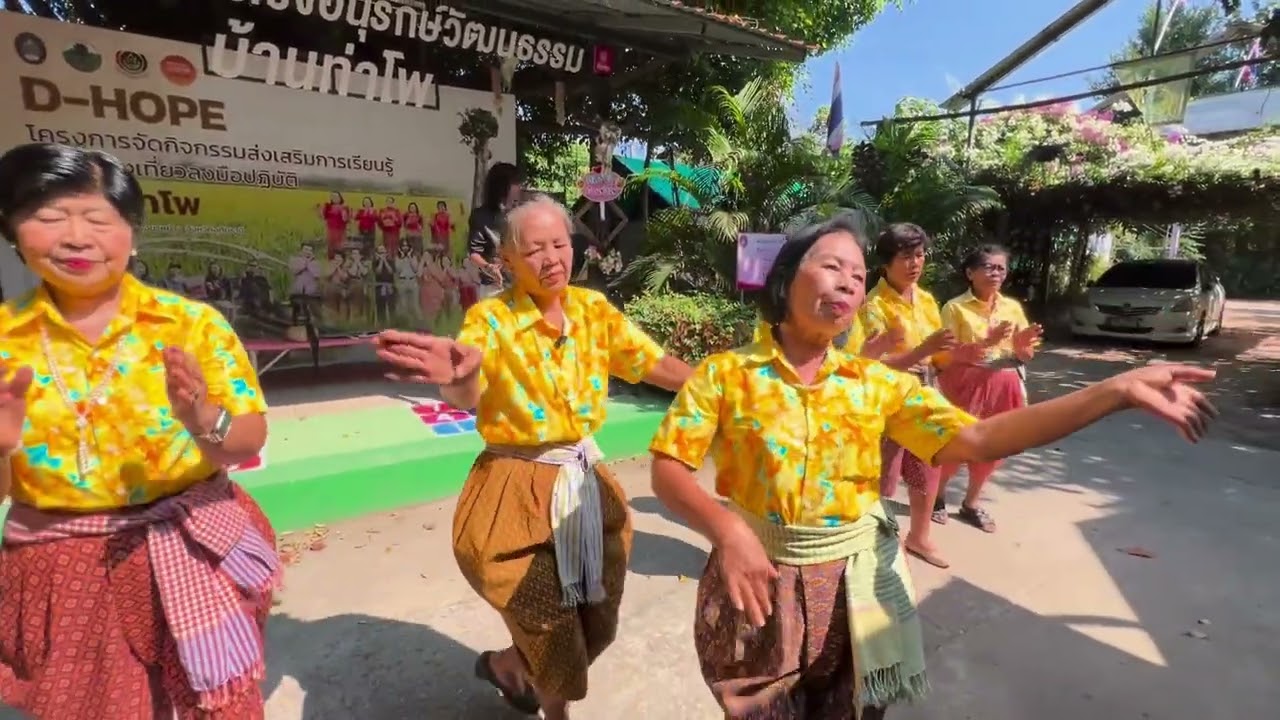
 Click to Access the Navigation Map GPS
Tha Pho Folk Song Conservation Group Map
Recommend

 Art, Culture and Heritage
 Historical Sites and Monuments(3)
 Landmarks and Memorials(1)
 Art, Craft Centres, Tradition(5)
 Museums(1)
 Places of Worship
 Temple(31)
 Other Sacred Sites(3)
Village, Community(4)
Other Sacred Sites(3)
Village, Community(4)
 Local Market(1)
 Nature and Wildlife
 National Parks and Marine Reserves(2)
 Mountain (Doi)(7)
 Dam, Reservoir, Lake(5)
 Waterfalls(5)
 Hot Springs(1)
 Caves(9)
 Flower Field(2)
 River, Canal(2)
 Islands(1)
 Other natural attractions(1)
 Entertainment and Agricultural
 Farms, Parks and Ecotourism(2)
 Shopping
 Shopping and Night Market(1)


