
lovethailand home >North Travel Attractions >Uthai Thani Travel Attractions >Lan Sak >Thung Na Ngam > Hup Pa Tat
TL;DR: Hup Pa Tat is located at Thung Na Ngam Subdistrict, Lan Sak District, Uthai Thani Province, Thailand, open Daily, hours 08.30 – 16.00.

Hup Pa Tat
Open Days: Daily
Opening Hours: 08.30 – 16.00
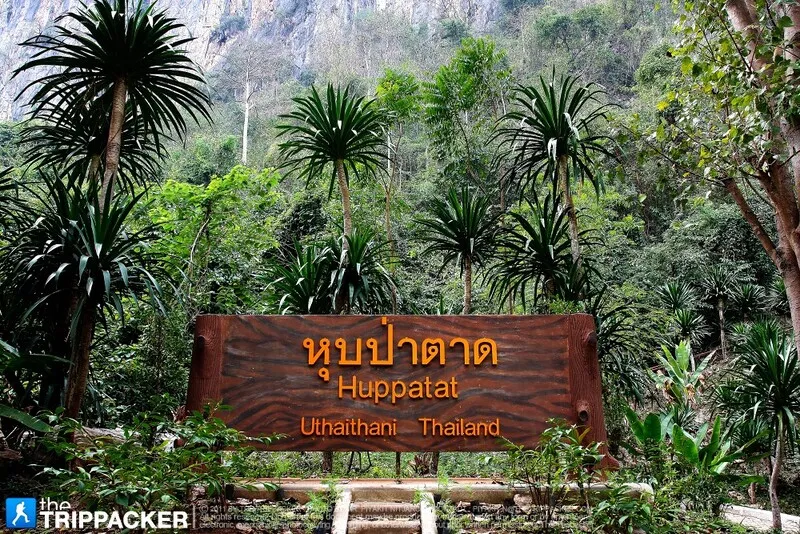
Hup Pa Tat in Uthai Thani Province is one of Thailand’s most unusual natural attractions. Located in Lan Sak District under the care of Tham Pra Thun Non-Hunting Area, this hidden limestone valley contains an ancient-looking forest dominated by Tat palms. Visitors enter through a dark cave passage before emerging into a sunlit sinkhole-like valley filled with large-leaved plants, cool humidity, limestone cliffs, and a quiet atmosphere that feels separate from the outside world. For foreign travelers who want a short but memorable nature experience in Uthai Thani, Hup Pa Tat is one of the province’s most distinctive destinations.
Hup Pa Tat is not an ordinary forest trail. From outside, the area appears to be part of a limestone mountain landscape, but inside the cave opening lies a protected world of its own. The route begins with a walk through a dark limestone tunnel. As the light fades behind visitors, the air becomes cooler and more humid. After a short walk, the cave opens into a large natural skylight where sunlight reaches the forest floor. The sudden transition from darkness to a green hidden valley is the experience that makes Hup Pa Tat so memorable.
The site was discovered in 1979 by Phra Khru Santi Tham Koson, also known as Luang Pho Thong Yot, the abbot of Wat Tham Thong. He climbed down into the valley and found that it was filled with Tat palms, an ancient plant in the palm family. The discovery quickly attracted interest because of the rare landscape and the unusual concentration of old plant species. In 1984, a cave passage was opened as an official entrance, allowing visitors to access the valley more safely and systematically.
Later, the Royal Forest Department, now under the Department of National Parks, Wildlife and Plant Conservation, declared the area a protected site under Tham Pra Thun Non-Hunting Area. This protection is important because Hup Pa Tat is an ecologically sensitive place. Its limestone geography, enclosed humidity, limited light, and rare plants create a special microenvironment. Species such as Tat palms, fishtail palms, Croton species, small climbing plants, and humidity-loving vegetation grow in the valley. Protecting the site helps maintain this fragile natural system.
The geology of Hup Pa Tat explains why it looks so unusual. The area is part of a limestone formation shaped by natural processes over a very long period of time. Rainwater slowly dissolved the limestone, creating underground cavities and cave chambers. When part of the cave roof collapsed, sunlight entered the interior, and plants were able to grow inside the enclosed space. Over time, the valley became a living forest surrounded by limestone cliffs, with a natural opening above acting as the main source of light.
The entrance route is one of the highlights. Visitors first pass through a cave corridor that is dark enough to require a flashlight. The feeling is quiet and slightly mysterious, but the trail is short and manageable for most visitors. At the end of the tunnel, the darkness gives way to a bright opening, and the dense Tat palm forest appears ahead. This moment of transition is the strongest visual experience of Hup Pa Tat and explains why many travelers describe it as entering a prehistoric world.
The nature trail inside Hup Pa Tat is about 700 meters round trip and usually takes about 30 minutes to walk. The route is not long, and compared with many cave or mountain trails, it is relatively easy. However, visitors should still walk carefully because the cave and forest areas can be humid, dim, and slippery in some sections. Staying on the designated path is essential because small plants, roots, rock surfaces, and damp soil can be easily damaged by careless walking.
The Tat palm is the heart of Hup Pa Tat. This ancient-looking plant belongs to the palm family and has large leaves that form dense clusters. When many Tat palms grow together inside the enclosed valley, they create a distinctive landscape unlike ordinary Thai forests. The large leaves filter sunlight, creating a cool and shaded atmosphere. This is why the valley feels calm, moist, and almost untouched, even though the walking trail is accessible and relatively short.
In addition to Tat palms, Hup Pa Tat contains other plants adapted to limestone and humid conditions. These include various palms, shrubs, vines, ferns, and moisture-loving plants. Their survival depends on the special conditions of the valley: limited sunlight, high humidity, limestone soils, and protection from harsh wind and direct exposure. For visitors interested in ecology, the site is a natural classroom showing how plants adapt to very specific environments.
The best time to visit the inner valley is around 11.00 to 13.00, when sunlight can shine down through the natural opening more clearly. During this period, the light reaches the forest floor and reveals the texture of the limestone walls, the green leaves, and the layered depth of the valley. The light may also create beautiful reflections on some rock surfaces. Although midday can be hot outside, the valley itself remains cooler and more shaded, making this timing especially rewarding for photography and nature observation.
Many people compare Hup Pa Tat to a prehistoric forest because of its atmosphere. High limestone walls, a dark cave entrance, filtered sunlight, large-leaved plants, and high humidity all create the feeling of a world hidden from time. This comparison is not only poetic; it also helps visitors understand why the site feels so different from open forests, mountain viewpoints, or ordinary caves. Hup Pa Tat is powerful because it is enclosed, quiet, and visually unexpected.
From a conservation perspective, Hup Pa Tat is extremely valuable. The area is small compared with large forests, but its ecosystem is delicate. Litter, plant damage, loud noise, off-trail walking, and disturbance to animals can affect the balance of the site. Visitors should understand that entry is a privilege. The valley remains beautiful because it is protected, managed, and visited under clear rules. Responsible behavior helps ensure that future visitors can experience the same hidden forest.
The area is also home to various animals and insects. One of the most famous small creatures associated with Hup Pa Tat is the pink dragon millipede, a striking species that may be seen more easily during humid periods, especially around the rainy season and early cool season. Not every visitor will see it, but knowing that rare and specialized life exists in the valley adds to the importance of the site. Visitors should never touch, collect, or disturb insects and animals.
Hup Pa Tat is suitable for many types of travelers. Families can bring children to learn about nature because the route is short and exciting. Photographers can capture cave openings, limestone walls, skylight effects, and dense Tat palms. Travelers interested in geology can observe limestone cave formation and collapsed cave structures. Nature lovers can experience a rare enclosed forest ecosystem without needing to undertake a long trek. The site is therefore both accessible and educational.
Although the route is short, preparation is still important. Visitors should wear comfortable shoes with good grip, carry or use a flashlight, bring drinking water, and apply mosquito repellent if needed. Clothing should be practical and easy to move in. Because the cave and valley are humid, visitors should be prepared for damp air and insects. A small bag for carrying rubbish back out is also recommended.
Inside the cave, visitors should walk slowly and allow their eyes to adjust to the low light. Groups should move in an orderly line, avoid pushing or overtaking in narrow spaces, and keep voices low because sound echoes inside the cave. Once inside the valley, visitors should stay on the nature trail and avoid stepping into fragile plant areas. The best way to enjoy Hup Pa Tat is to move slowly and observe the details rather than rush through the route.
Hup Pa Tat is located close to Khao Pla Ra, and both places can be planned together. However, the experience is different. Hup Pa Tat is easier, shorter, and suitable for general visitors, while Khao Pla Ra is more physically demanding and focused on prehistoric rock paintings and hiking. Travelers with limited time often choose Hup Pa Tat as the main stop and combine it with nearby cafés, Ban Chai Khao, or easier viewpoints in the area.
The surrounding area also includes other natural attractions within or near Tham Pra Thun Non-Hunting Area, such as Khao Pla Ra, Khao Khong Chai, and Tham Pra Thun. Each site reflects the limestone landscape of Lan Sak District in a different way. Khao Pla Ra is known for ancient rock paintings and a steep trail. Khao Khong Chai offers limestone scenery. Tham Pra Thun represents another cave-based natural area. Understanding these nearby places helps visitors see Hup Pa Tat as part of a broader limestone conservation landscape.
Getting There from Uthai Thani town is most convenient by private car. Take Highway 333 through Nong Chang District, then continue onto Highway 3438 on the Nong Chang-Lan Sak route. This is the same general route used to reach Khao Pla Ra, with the entrance to Hup Pa Tat located about 1 kilometer before Khao Pla Ra. Travelers without a private car should plan local transport in advance because regular public transport does not run frequently directly to the attraction.
The drive from Uthai Thani town usually takes about 1 hour, depending on the starting point and road conditions. The route is not complicated, but visitors should drive carefully near local communities, junctions, and smaller roads. It is wise to prepare fuel, drinking water, and cash before leaving town. Visitors arriving in the afternoon should check the opening time carefully and allow enough time to complete the trail without rushing.
The current visitor fee found in tourism information is 30 baht for Thai adults, 20 baht for Thai children, 200 baht for foreign adults, and 100 baht for foreign children. Visitors should prepare cash because natural attractions may not always support electronic payment. The fee helps support site management, trail maintenance, visitor services, and conservation work in the protected area.
Good visitor behavior is essential from the parking area to the inner valley. Do not litter, collect plants, break Tat palm leaves, touch animals, write on cave walls, make loud noise, or walk off the designated route. Photography should be done from the trail. Visitors should not climb rocks, roots, or fragile surfaces just to get a better angle. The beauty of Hup Pa Tat depends on everyone helping to keep it intact.
Hup Pa Tat is also a strong educational site. It can be used to explain limestone geology, cave formation, collapsed cave roofs, enclosed valley ecosystems, plant adaptation, wildlife protection, and responsible tourism. Students, nature lovers, and travelers can learn more by observing the actual landscape rather than reading about it only from a distance. This makes the site valuable not only as an attraction, but also as a natural learning space.
For photography, Hup Pa Tat offers several distinctive scenes: the cave entrance, the dark tunnel, the bright natural skylight, large Tat palm leaves, tall limestone walls, and the shaded forest path. Midday offers the strongest light inside the valley, while morning may be better for a quieter visit. Flash photography should be used carefully and should not disturb animals in the cave.
Although Hup Pa Tat is famous as an Unseen Thailand destination, its real appeal lies in the balance between surprise and simplicity. The trail is short, but the atmosphere changes dramatically from open daylight to dark cave and then to a hidden green valley. This shift in light, temperature, and sound makes the experience feel much longer and richer than the actual walking distance.
A half-day trip from Uthai Thani town is practical. Travelers can leave in the morning, enter Hup Pa Tat around late morning, enjoy the best light near midday, and then have lunch or coffee near the site. The trip can also be combined with Ban Chai Khao, Khao Pla Ra, or a return to Uthai Thani town for the Sakae Krang riverside area and Trok Rong Ya Walking Street. For a slower trip, staying near Hup Pa Tat or in Lan Sak District allows more time to explore nearby nature sites.
For international travelers, Hup Pa Tat is easy to appreciate even without deep knowledge of Thai language or culture. The experience of walking through a dark cave into a hidden prehistoric-looking forest is visually clear and memorable. With a little explanation about Tat palms, limestone geology, and conservation, visitors can understand why this small valley is much more than a photo spot. It is a rare ecological pocket that deserves respect.
Hup Pa Tat is therefore one of Uthai Thani’s most worthwhile natural attractions. It combines limestone cliffs, cave atmosphere, ancient-looking plants, filtered sunlight, rare ecology, and conservation management in one compact experience. A visit here offers beauty, learning, and a reminder that even small natural places can hold extraordinary value when protected carefully.
| Name | Hup Pa Tat |
| Thai Name | หุบป่าตาด |
| Location | Thung Na Ngam Subdistrict, Lan Sak District, Uthai Thani Province, Thailand |
| Address | Tham Pra Thun Non-Hunting Area, Moo 1, Pa O Subdistrict, Lan Sak District, Uthai Thani 61160, Thailand |
| Highlights | Hidden Tat palm forest inside a limestone valley, dark cave entrance, natural skylight, ancient-looking plants, humid micro-ecosystem, and prehistoric forest atmosphere |
| History | Discovered in 1979 by Phra Khru Santi Tham Koson, also known as Luang Pho Thong Yot, the abbot of Wat Tham Thong. A cave passage was opened as an official entrance in 1984. |
| Name Origin | The name refers to a hidden valley filled with Tat palms, which are the signature plants of the site. |
| Distinctive Features | An enclosed limestone valley reached through a dark cave, with a 700-meter round-trip nature trail that takes about 30 minutes to walk |
| Interesting Plants And Wildlife | Tat palms, fishtail palms, Croton species, small climbing plants, jackfruit-like ground plants, ferns, humidity-loving vegetation, bats, and pink dragon millipedes in suitable humid conditions |
| Travel Information | From Uthai Thani town, take Highway 333 through Nong Chang District, then Highway 3438 on the Nong Chang-Lan Sak route. The entrance is about 1 km before Khao Pla Ra. |
| Current Status | Open to visitors during official hours under the care of Tham Pra Thun Non-Hunting Area |
| Open Days | Daily |
| Opening Hours | 08.30 – 16.00 |
| Fees | Thai Adults 30 Baht, Thai Children 20 Baht / Foreign Adults 200 Baht, Foreign Children 100 Baht |
| Main Areas / Zones | 1. Visitor Service And Ticket Area 2. Cave Entrance Walkway 3. Dark Cave Tunnel 4. Natural Skylight Opening 5. Nature Study Trail 6. Tat Palm Forest Inside The Valley 7. Ancient Plant And Humid Ecosystem Area 8. Tham Pra Thun Non-Hunting Area Service Zone |
| Facilities | Visitor service point, parking area, toilets, local shops near the entrance, and flashlights for the cave route depending on site service arrangements |
| Caretaker | Tham Pra Thun Non-Hunting Area, Department of National Parks, Wildlife and Plant Conservation |
| Main Contact Number | Tham Pra Thun Non-Hunting Area, Tel. 056-989127 |
| Official Website / Official Page | Tham Pra Thun Non-Hunting Area Official Facebook Page and TAT STAR listing for Tham Pra Thun Non-Hunting Area |
| Nearby Tourist Attractions | 1. Khao Pla Ra, about 1 km 2. Tham Pra Thun Non-Hunting Area, about 1 km 3. Khao Khong Chai, about 5 km 4. Ban Chai Khao, about 7 km 5. Khao Pathawi, about 40 km |
| Nearby Restaurants | 1. At The Mountain Hup Pa Tat, about 1 km, Tel. 087-784-2525, 099-951-6653 2. Hup Pa Tad Bike Camp, about 2 km, Tel. 081-902-7175 3. Ban Chai Khao, about 7 km, Tel. 096-008-9949 4. Krua Lung Yan, Lan Sak District, about 12 km, Tel. 084-942-7233 5. Taen Restaurant, Lan Sak, about 20 km, Tel. 087-201-5878, 056-537-074 |
| Nearby Accommodations | 1. At The Mountain Hup Pa Tat, about 1 km, Tel. 087-784-2525, 099-951-6653 2. Hup Pa Tad Bike Camp, about 2 km, Tel. 081-902-7175 3. Baan Chai Khao Homestay, about 7 km, Tel. 096-008-9949 4. Baan Phupha, about 7 km, Tel. 081-303-8801 5. Khao Namna Resort, Lan Sak District, about 25 km, Tel. 092-257-6030, 097-109-6498 |
Frequently Asked Questions (FAQ)
Q: Where is Hup Pa Tat located?
A: Hup Pa Tat is located in Thung Na Ngam Subdistrict, Lan Sak District, Uthai Thani Province. It is managed by Tham Pra Thun Non-Hunting Area and is about 1 km before Khao Pla Ra.
Q: What is special about Hup Pa Tat?
A: It is famous for a hidden Tat palm forest inside a limestone valley. Visitors walk through a dark cave before entering a humid, ancient-looking forest with a natural skylight.
Q: What are the opening hours of Hup Pa Tat?
A: Hup Pa Tat is open daily from 08.30 to 16.00. The best light inside the valley is usually around 11.00 to 13.00.
Q: How much is the entrance fee for Hup Pa Tat?
A: The fee is 30 baht for Thai adults, 20 baht for Thai children, 200 baht for foreign adults, and 100 baht for foreign children.
Q: How long does it take to walk through Hup Pa Tat?
A: The round-trip nature trail is about 700 meters and usually takes around 30 minutes, but visitors should allow extra time for photography and nature observation.
Q: What should visitors prepare before visiting Hup Pa Tat?
A: Visitors should wear comfortable shoes, bring or use a flashlight, carry drinking water, apply mosquito repellent, and bring a small bag for taking rubbish back out.
Q: Is Hup Pa Tat suitable for children and elderly visitors?
A: Yes, it is suitable for children and elderly visitors who can walk comfortably. They should be supervised in the dark cave section and on humid or dim parts of the trail.
Q: What nearby places can be visited with Hup Pa Tat?
A: Nearby places include Khao Pla Ra, Tham Pra Thun Non-Hunting Area, Khao Khong Chai, Ban Chai Khao, and Khao Pathawi.
 Category: ●Nature and Wildlife
 Group: ●Mountain (Doi)
Last Update : 4 MonthAgo
 Last Update : 4 MonthAgo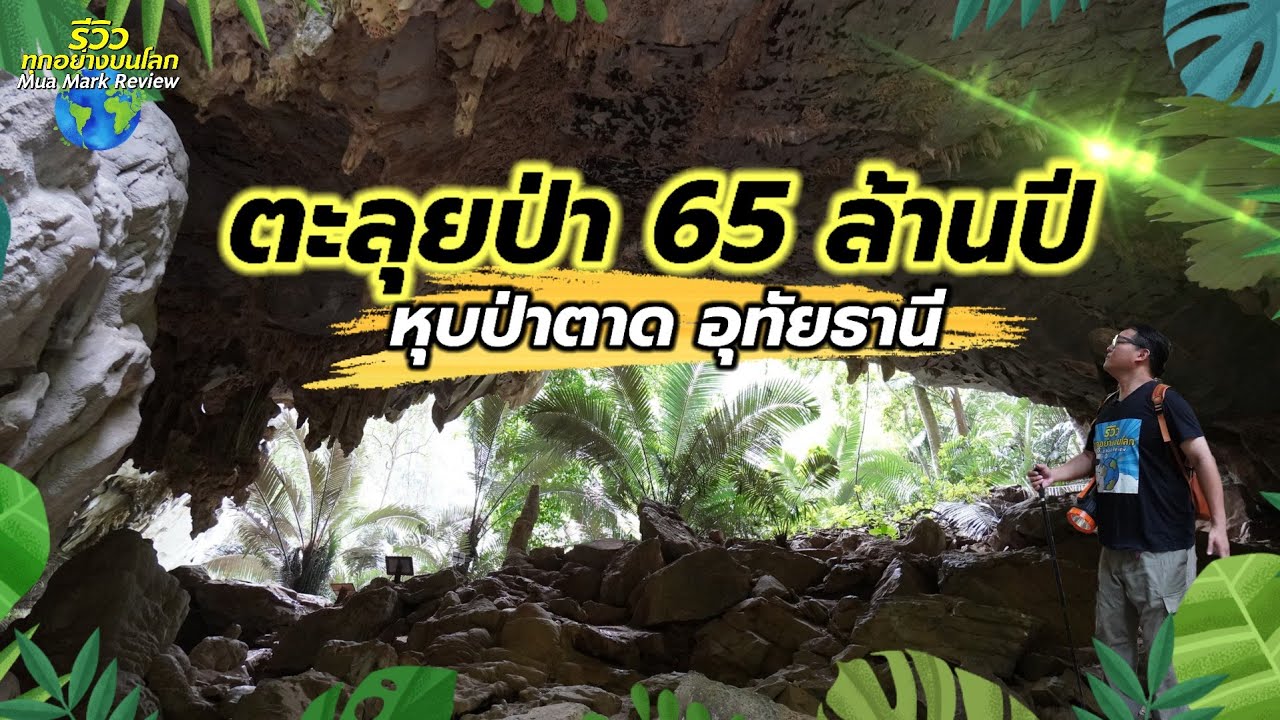
 Click to Access the Navigation Map GPS
Hup Pa Tat Map
Recommend

 Art, Culture and Heritage
 Historical Sites and Monuments(3)
 Landmarks and Memorials(1)
 Art, Craft Centres, Tradition(5)
 Museums(1)
 Places of Worship
 Temple(31)
 Other Sacred Sites(3)
 Suburban Living
 Village, Community(4)
 Local Market(1)
 National Parks and Marine Reserves(2)
Mountain (Doi)(7)
National Parks and Marine Reserves(2)
Mountain (Doi)(7)
 Dam, Reservoir, Lake(5)
 Waterfalls(5)
 Hot Springs(1)
 Caves(9)
 Flower Field(2)
 River, Canal(2)
 Islands(1)
 Other natural attractions(1)
 Entertainment and Agricultural
 Farms, Parks and Ecotourism(2)
 Shopping
 Shopping and Night Market(1)


