
lovethailand home >North Travel Attractions >Uthai Thani Travel Attractions >Muang Uthai Thani >Nam Suem > Wat Chantharam (Wat Tha Sung)
TL;DR: Wat Chantharam (Wat Tha Sung) is located at Nam Suem Subdistrict, Mueang Uthai Thani District, Uthai Thani Province, open Daily, hours 09.00 – 11.30 And 14.00 – 16.00.
Wat Chantharam (Wat Tha Sung)
Open Days: Daily
Opening Hours: 09.00 – 11.30 And 14.00 – 16.00
Wat Chantharam, widely known as Wat Tha Sung, is one of the most important Buddhist temples in Uthai Thani Province. Located in Nam Suem Subdistrict, Mueang Uthai Thani District, the temple stands near the cultural landscape of the Sakae Krang River and has become a major destination for Thai pilgrims, cultural travelers, architecture lovers, and international visitors who want to experience one of Thailand’s most visually remarkable temple complexes. Wat Tha Sung is not only famous for its glittering glass sanctuary, but also for its long history, its connection with Luang Pho Ruesi Ling Dam, and its role as a center of Buddhist faith and meditation practice.
The temple is suitable for travelers who want more than a quick photo stop. Within its large compound, visitors will find old temple remains, mural paintings, traditional craftsmanship, newly built sacred structures, meditation halls, the famous 100-meter Crystal Hall, the Golden Castle, the Viharn of Somdet Ong Pathom, and areas dedicated to venerating important Buddhist masters. Because the main buildings are spread across the temple grounds and some areas open only during specific time periods, visitors should plan their schedule carefully and allow enough time to explore the temple at a respectful pace.
Wat Chantharam has historical roots dating back to the Ayutthaya period. In its earlier form, the temple had a small ordination hall decorated with folk-style murals depicting scenes from the life of the Buddha. These paintings are valuable because they reflect the artistic language of local craftsmen rather than the highly formal style of royal workshops. Although some details were later restored or altered, the murals still preserve the atmosphere of old community-based Buddhist art. They show how local people expressed devotion through visual storytelling that was simple, direct, and accessible to the community.
Besides the old ordination hall, the temple preserves several objects of religious and artistic value, including an old pulpit associated with Luang Pho Yai, stucco Buddha images inside the viharn, and remaining carved wooden decorative elements on the gable frames. These details are important because they remind visitors that Wat Tha Sung is not only a modern spectacular temple known for sparkling glass and gold. Beneath its famous contemporary structures lies an older layer of local history, Buddhist craftsmanship, and community devotion that deserves close attention.
The most transformative period in the temple’s history came through the work of Phra Ratchaphromyan, better known as Luang Pho Ruesi Ling Dam. He was a highly respected Thai monk whose teachings, meditation guidance, and temple development work attracted followers from across the country. Under his leadership, Wat Tha Sung expanded into a large religious and meditation complex. Many visitors come to the temple not only to admire its architecture but also to pay respect to Luang Pho Ruesi Ling Dam and reflect on his role as a spiritual teacher.
The 100-meter Crystal Hall is the most iconic building at Wat Tha Sung. Its interior is decorated with white glass, mirrors, and shimmering mosaics that create a luminous, almost celestial atmosphere when light reflects across the surfaces. Inside the hall, visitors can pay respect to a replica of Phra Phuttha Chinnarat and the glass coffin containing the preserved body of Luang Pho Ruesi Ling Dam. The beauty of the hall is not simply decorative. It creates a powerful atmosphere of reverence, silence, and devotion, making it one of the most memorable religious spaces in Uthai Thani.
The newer ordination hall is another important structure. Its interior is richly decorated, while the window and door panels feature painted images of celestial beings by skilled artists. The building carries both religious and historical significance, including its association with a royal ceremony for cutting the boundary stones. Around the ordination hall are glass boundary walls and large statues of revered monks, including Luang Pho Pan and Luang Pho Yai. Together, these elements create a sacred environment that connects Buddhist images, teacher lineage, monastic tradition, and architectural beauty.
The Viharn of Somdet Ong Pathom is another key area for worship. Its design reflects the temple’s signature emphasis on grandeur, symmetry, and devotional atmosphere. Visitors often come here to pay respect, make merit, and spend time in quiet reflection. The building is especially meaningful for pilgrims because it is part of the spiritual route within the temple, linking the Crystal Hall, the Golden Castle, the ordination hall, and other sacred areas into a continuous journey of faith.
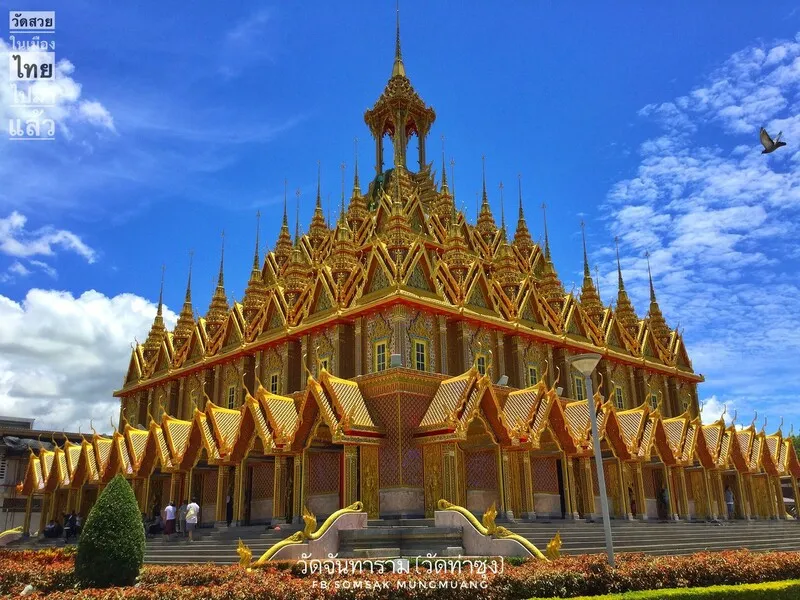
The Golden Castle, also known as Prasat Thong, is one of the most visually striking structures at Wat Tha Sung. Its golden exterior, layered Thai-style roof forms, and detailed decorative work make it a favorite location for photography. However, visitors should remember that it is still a sacred place, not merely a photo backdrop. The most meaningful way to appreciate the Golden Castle is to see its beauty together with the faith, craftsmanship, and Buddhist symbolism that shaped its construction.
Wat Tha Sung is also closely associated with meditation practice. Several halls and buildings within the temple compound are used for Buddhist practice, meditation, and religious activities. This is an important reason why some buildings close during the middle of the day or follow specific visiting hours. Travelers should respect the temple’s atmosphere by dressing modestly, speaking softly, and following the instructions of temple staff. The temple remains a living place of worship and practice, not just a tourist attraction.
The opening hours of key buildings are important for trip planning. The 100-meter Crystal Hall is generally open in two main periods: 09.00 to 11.30 and 14.00 to 16.00. The midday break allows the temple to maintain religious activities and meditation practice. Visitors arriving between sessions may use the time to rest, have lunch, explore the outer areas respectfully, or plan visits to nearby attractions. Those traveling from Bangkok or other provinces should arrive early to avoid missing the morning session.
A typical visit begins with the Crystal Hall, where visitors pay respect to Phra Phuttha Chinnarat and Luang Pho Ruesi Ling Dam. From there, they can continue to the Viharn of Somdet Ong Pathom, the Golden Castle, the newer ordination hall, the old temple area, and the meditation halls. The experience combines visual beauty, sacred atmosphere, local history, and personal reflection. For many Thai visitors, Wat Tha Sung is both a pilgrimage destination and a place of deep emotional connection with the teachings of Luang Pho Ruesi Ling Dam.
The riverside setting adds another layer to the experience. The area near Wat Tha Sung connects with the Sakae Krang River, which is central to the identity of Uthai Thani. Travelers can combine a temple visit with a route along the river, floating houses, local communities, and the slower rhythm of this small riverside province. This makes Wat Tha Sung a strong starting point for understanding Uthai Thani beyond its famous temples.
Getting There is most convenient by private car. From Uthai Thani town, visitors can drive along the Uthai Thani – Manorom route or Highway 3265 for about 12 km to reach the temple. The route is straightforward and suitable for a half-day or full-day trip. Travelers without a private car can use local transport from Uthai Thani town, including local songthaew services on the Uthai Thani – Tha Sung route or hired local vehicles. A private car is recommended for visitors who want to combine Wat Tha Sung with other nearby attractions such as Wat Sangkat Rattana Khiri, Khao Sakae Krang, Trok Rong Ya Walking Street, and the Sakae Krang River community.
For visitors traveling from Bangkok, it is best to leave early in the morning and plan the arrival time around the temple’s opening sessions. A relaxed visit should allow at least 2 to 3 hours. Those who want to explore Uthai Thani more deeply can stay overnight in town or near the riverside. The province offers resorts, small hotels, and guesthouses with a calm local atmosphere, making it possible to combine temple visits, riverside dining, local markets, and old-town walking routes in one trip.
Wat Tha Sung also works well as part of a wider cultural itinerary in Uthai Thani. Nearby places include Wat Sangkat Rattana Khiri on Khao Sakae Krang, Trok Rong Ya Walking Street, Baan Jongrak, the morning market, and the floating-house communities along the Sakae Krang River. These attractions help travelers see the province as a whole: a quiet riverside destination with strong Buddhist heritage, local food culture, traditional communities, and a slower pace of travel.
Artistically, Wat Tha Sung is a rare example of a temple that combines old and new layers in a highly visible way. On one side, it preserves traces of an old Ayutthaya-period temple, including folk murals, stucco images, old religious objects, and carved wooden elements. On the other side, it presents large-scale modern religious architecture using glass, mosaics, gold, and carefully arranged sacred spaces. This combination gives the temple a distinct identity. It is neither only an ancient temple nor simply a newly built attraction, but a living religious complex shaped by history, devotion, and continuous development.
For travelers interested in Luang Pho Ruesi Ling Dam, the temple is one of the most important places in Thailand. The buildings, meditation spaces, and devotional routes within the compound reflect the continuing faith of his disciples and followers. A visit here offers insight into how a Thai temple can become a spiritual center, an architectural landmark, and a cultural memory for generations of believers.
In summary, Wat Chantharam or Wat Tha Sung is a must-visit destination in Uthai Thani for travelers seeking Buddhist heritage, remarkable architecture, spiritual atmosphere, and local cultural context. Its Crystal Hall, Golden Castle, ordination hall, old murals, meditation areas, riverside setting, and connection with Luang Pho Ruesi Ling Dam make it one of the most distinctive temples in central-northern Thailand. For international visitors, it offers a powerful introduction to the beauty, devotion, and complexity of Thai temple culture.
| Name | Wat Chantharam, Also Known As Wat Tha Sung |
| Location | Nam Suem Subdistrict, Mueang Uthai Thani District, Uthai Thani Province |
| Address | 60 Moo 1, Uthai Thani – Manorom Road, Nam Suem Subdistrict, Mueang Uthai Thani District, Uthai Thani 61000, Thailand |
| Coordinates | Approximately 15.3437, 100.0718 |
| Highlights | 100-Meter Crystal Hall, Phra Phuttha Chinnarat Replica, Preserved Body Of Luang Pho Ruesi Ling Dam, Golden Castle, Viharn Of Somdet Ong Pathom, New Ordination Hall, And Meditation Areas |
| History | An old temple dating back to the Ayutthaya period, later greatly developed under Phra Ratchaphromyan, widely known as Luang Pho Ruesi Ling Dam |
| Name Origin | The official name is Wat Chantharam, while Wat Tha Sung is the widely known local name associated with the riverside community area |
| Distinctive Features | A combination of Ayutthaya-period temple heritage, folk murals, carved woodwork, glass mosaic interiors, and large-scale modern Thai Buddhist architecture |
| Travel Information | From Uthai Thani town, take the Uthai Thani – Manorom route or Highway 3265 for about 12 km. Visitors can travel by private car, hired local vehicle, or local songthaew on the Uthai Thani – Tha Sung route |
| Current Status | Open To Visitors And Worshippers According To The Opening Hours Of Each Building |
| Open Days | Daily |
| Opening Hours | The 100-Meter Crystal Hall Is Generally Open From 09.00 – 11.30 And 14.00 – 16.00. Some Buildings May Follow Different Opening Periods |
| Fees | No Admission Fee |
| Facilities | Parking Area, Restrooms, Pavilions, Meditation Areas, Worship Areas, Waiting Areas, And Riverside Pier Area Along The Sakae Krang River |
| Main Areas / Zones | 1. 100-Meter Crystal Hall 2. Viharn Of Somdet Ong Pathom 3. Golden Castle 4. New Ordination Hall 5. Old Ordination Hall And Historical Art Area 6. Mondop And Teacher Veneration Areas 7. Meditation Halls 8. Wat Tha Sung Pier And Sakae Krang Riverside Area |
| Abbot / Caretaker | Phra Khru Palat Suwat Rattanakhun, Abbot Of Wat Chantharam (Wat Tha Sung) |
| Main Contact Number | 0 5650 2655 |
| Official Website / Official Page | www.watthasung.com / Facebook: Wat Chantharam Tha Sung |
| Nearby Tourist Attractions | 1. Floating Village And Sakae Krang River Community, About 3 km 2. Wat Sangkat Rattana Khiri And Khao Sakae Krang, About 8 km 3. Trok Rong Ya Walking Street, About 8 km 4. Baan Jongrak, About 8 km 5. Sakae Krang Riverside Morning Market, About 8 km |
| Nearby Restaurants | 1. Tha Sung Coffee, About 1 km 2. Krua Ahan Lin, About 4 km 3. Pa Samran Restaurant, About 7 km 4. Krua Rim Suan Uthai Thani, About 8 km 5. Nok Noi Restaurant Uthai Thani, About 8 km |
| Nearby Accommodations | 1. Uthai River Lake Resort, About 7 km, Tel. 081-886-5793 2. River Marina Resort, About 8 km 3. Sunray Guesthouse, About 8 km 4. Comeneetee Uthai, About 8 km 5. Payamai Resort, About 9 km |
Frequently Asked Questions (FAQ)
Q: Where is Wat Chantharam or Wat Tha Sung located?
A: Wat Chantharam, commonly known as Wat Tha Sung, is located in Nam Suem Subdistrict, Mueang Uthai Thani District, Uthai Thani Province.
Q: What is Wat Tha Sung famous for?
A: It is famous for the 100-meter Crystal Hall, the Phra Phuttha Chinnarat replica, the preserved body of Luang Pho Ruesi Ling Dam, the Golden Castle, and its richly decorated Buddhist architecture.
Q: What are the opening hours of the Crystal Hall at Wat Tha Sung?
A: The 100-meter Crystal Hall is generally open from 09.00 to 11.30 and from 14.00 to 16.00.
Q: Is there an admission fee at Wat Tha Sung?
A: No. There is no admission fee for visiting the temple.
Q: Who is the abbot of Wat Tha Sung?
A: The abbot of Wat Chantharam, or Wat Tha Sung, is Phra Khru Palat Suwat Rattanakhun.
Q: What should visitors wear when visiting Wat Tha Sung?
A: Visitors should dress modestly, wear clothing that covers the shoulders and knees, and behave respectfully inside sacred buildings.
Q: How long should visitors spend at Wat Tha Sung?
A: Visitors should allow at least 2 to 3 hours to explore the Crystal Hall, Golden Castle, Viharn of Somdet Ong Pathom, ordination hall, and other key areas without rushing.
Q: What nearby places can visitors combine with Wat Tha Sung?
A: Nearby places include Wat Sangkat Rattana Khiri, Khao Sakae Krang, Trok Rong Ya Walking Street, Baan Jongrak, and the Sakae Krang River floating-house community.
Mobile : 0899581479, 0875272243
 Mobile : 0899581479, 0875272243
 Category: ●Places of Worship
 Group: ●Temple
Last Update : 1 WeekAgo
 Last Update : 1 WeekAgo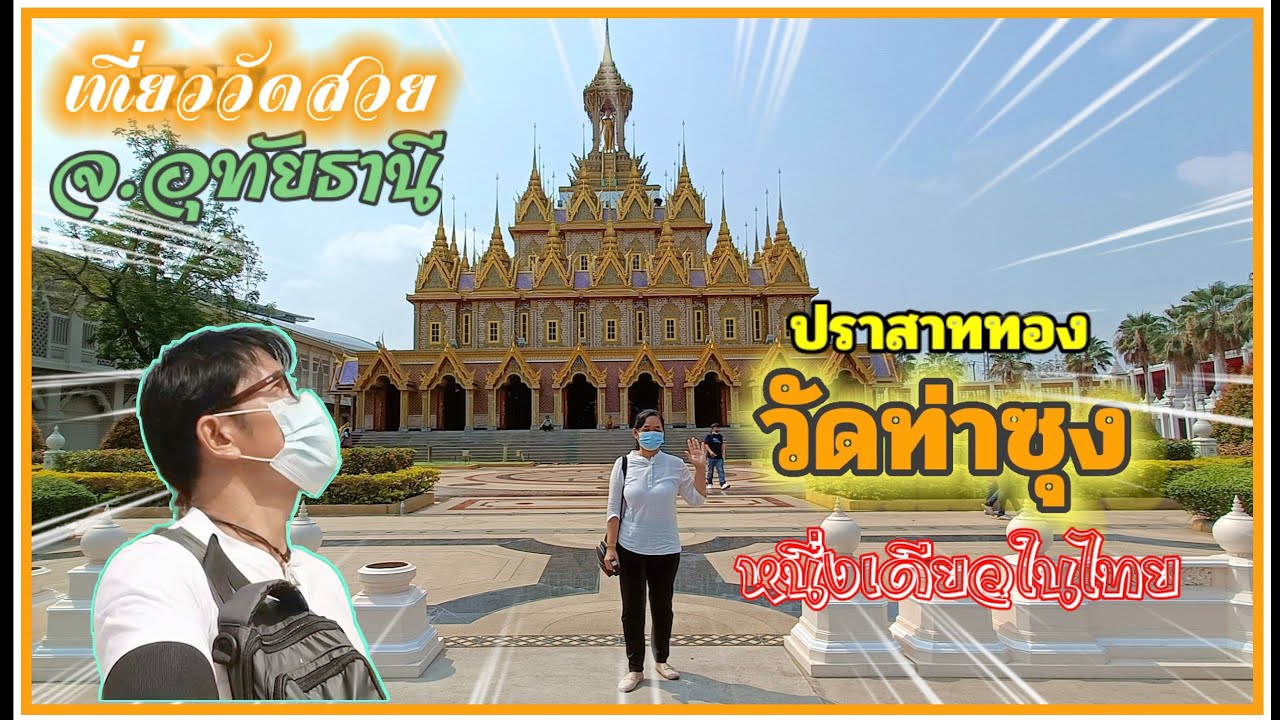
 Click to Access the Navigation Map GPS
Wat Chantharam (Wat Tha Sung) Map
Recommend

 Art, Culture and Heritage
 Historical Sites and Monuments(3)
 Landmarks and Memorials(1)
 Art, Craft Centres, Tradition(5)
 Museums(1)
Temple(31)
Museums(1)
Temple(31)
 Other religious and spiritural sites(3)
 Suburban Living
 Village, Community(4)
 Local Market(1)
 Nature and Wildlife
 National Parks and Marine Reserves(2)
 Mountain (Doi)(7)
 Dam, Reservoir, Lake(5)
 Waterfalls(5)
 Hot Springs(1)
 Caves(9)
 Flower Field(2)
 River, Canal(2)
 Islands(1)
 Other natural attractions(1)
 Entertainment and Agricultural
 Farm, Parks, Gardens and Ecotourism(2)
 Shopping
 Shopping and Night Market(1)


