lovethailand home >North Travel Attractions >Uthai Thani Travel Attractions >Muang Uthai Thani >Uthai Mai > Phrasaeng Dap of Uthai Thani City
TL;DR: Phrasaeng Dap of Uthai Thani City, Uthai Thani attractions : Art, Culture and Heritage, Landmarks and Memorials.

Uthai Thani

Phrasaeng Dap of Uthai Thani City

Phrasaeng Dap of Uthai Thani City

Open Days: Not Open For Regular Public Viewing
Opening Hours: Displayed Only On Important Royal Ceremonies Or Official Occasions
 
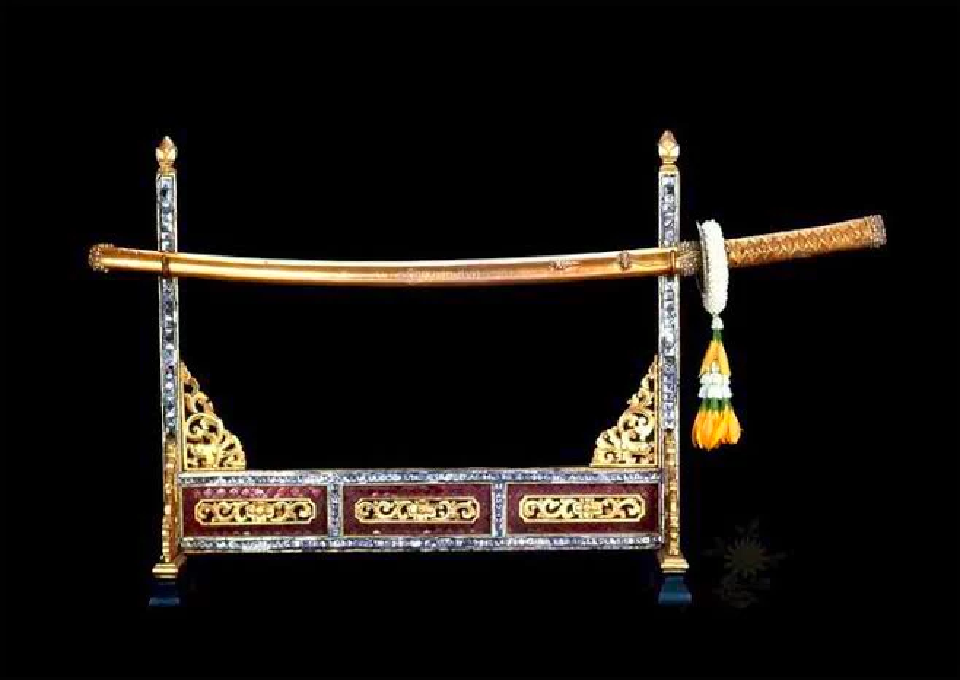
The Royal Sword Of Uthai Thani, also known as the Royal City Sword or Phra Saeng Dap Sattrawut of Uthai Thani, is one of the province’s most important historical and artistic treasures. It was granted by King Chulalongkorn, Rama V, during his royal visit to the northern provinces when he reached Uthai Thani in B.E. 2449. The sword is regarded as the third royal city sword granted after those of Ayutthaya and Chai Nat. For Uthai Thani, this royal sword is not merely a ceremonial weapon. It is a symbol of royal grace, civic honor, artistic excellence, and the historical relationship between the Siamese royal court and the provincial towns.
 
The Royal Sword Of Uthai Thani carries a meaning far beyond its physical beauty. In traditional Thai political culture, royal swords were associated with royal authority, dignity, and ceremonial legitimacy. A sword granted by the king to a town was not an ordinary object. It represented the monarch’s recognition of that town and reflected the close bond between the center of royal power and the provincial administration. For this reason, the sword has become one of the most meaningful symbols of Uthai Thani’s identity.
 
Historically, the sword belongs to the wider context of King Chulalongkorn’s reign, a period of administrative reform, modernization, and closer integration between Bangkok and the provincial towns. Royal visits to the provinces were significant events. They allowed the king to meet local officials and residents, strengthen loyalty, and affirm the relationship between the monarchy and regional centers. The granting of the royal sword to Uthai Thani therefore marked the town as a place of importance within the historical structure of the kingdom.
 
The sword itself is a Thai sword made from fine white steel. It has a sharp pointed blade with a single cutting edge and a refined, lightweight form. The blade is not only functional in shape but also graceful in design. Its spine is decorated with beautiful patterns, including ivory inlay in the form of falling flowers. This delicate detail demonstrates the skill of Thai craftsmen, who combined technical precision with artistic sensitivity. The inlay work required great control, knowledge of materials, and a refined sense of proportion.
 
Both edges of the blade spine are decorated with gold patterns in the form of curling stems. Such motifs are commonly associated with classical Thai ornament and royal craftsmanship. The curling-stem pattern gives the sword a sense of movement and elegance. These decorative elements do more than beautify the weapon. They transform it into a royal object of prestige, revealing that it was created as an emblem of honor rather than as a weapon for ordinary use.
 
At the base of the blade is an inscription reading “Phra Saeng Samrap Mueang Uthai Thani,” meaning “the royal sword for the town of Uthai Thani.” This inscription is highly significant because it directly identifies the sword with the province. It turns the object into a historical document in material form. Through this inscription, the sword is not anonymous. It belongs to Uthai Thani, carries the town’s name, and preserves a direct connection between the royal grant and the local identity of the province.
 
The handle is made of hardwood covered with gold enamel work. At the base of the handle are kanok-style motifs, including the pattern known as kanok ta-oi. Thai enamel work requires careful handling of color, line, and surface. The decorated handle gives the sword a ceremonial appearance and confirms its status as an object of royal craftsmanship. Its beauty is not excessive but carefully balanced, showing the discipline and sophistication of traditional Thai design.
 
The end of the handle is shaped like a three-tiered inverted lotus finial, set with various colored gemstones. The lotus form is deeply meaningful in Thai and Buddhist art, often associated with purity, elevation, and sacred beauty. The use of gemstones adds brilliance and ceremonial value. This part of the sword shows how symbolic form and precious materials were combined to create an object worthy of royal presentation and provincial honor.
 
The upper part of the scabbard is made of gold and decorated with gemstone settings. It is covered with fine kanok and curling-stem patterns, along with floral and leaf motifs. The scabbard itself is made of gold with embossed patterns on both sides. Embossed goldwork requires high technical ability, as the craftsman must raise and shape the design without damaging the surface. The scabbard therefore represents one of the finest artistic aspects of the sword.
 
From an artistic perspective, the Royal Sword Of Uthai Thani is a remarkable example of Rattanakosin craftsmanship. It combines several branches of Thai artistry: metalwork, goldsmithing, enamel work, ivory inlay, gemstone setting, woodwork, and ornamental design. Every part of the sword, from the blade to the handle and scabbard, was carefully conceived. The result is an object that is simultaneously a weapon, a ceremonial treasure, a royal emblem, and a work of art.
 
The term “Phra Saeng” itself indicates a special status. In Thai royal language, it refers to a weapon associated with the monarchy. It is not used for ordinary weapons. This linguistic distinction reflects the cultural meaning of the object. A royal sword is treated with reverence because it is connected to the king, royal authority, and state ceremony. For this reason, the Royal Sword Of Uthai Thani is approached not as a museum object alone, but as a symbol of honor and sacred civic memory.
 
For the people of Uthai Thani, the sword is a source of pride. It shows that the town was recognized by King Chulalongkorn and honored with a royal object of exceptional importance. Being the third town to receive such a sword, after Ayutthaya and Chai Nat, gives Uthai Thani a distinctive place in this tradition. The sword therefore functions as a historical anchor, linking local identity with the national story of the monarchy and provincial administration.
 
Today, the Royal Sword Of Uthai Thani is preserved at the Uthai Thani Provincial Office of the Comptroller General, located within Uthai Thani Provincial Hall on Si Uthai Road, Uthai Mai Subdistrict, Mueang Uthai Thani District. It is not displayed regularly for general public viewing. Instead, it is brought out only for important royal ceremonies or official occasions. This limited display practice reflects the sword’s special status and the need for careful preservation.
 
Travelers should understand that this is not a regular tourist attraction where visitors can walk in and see the object every day. Those who wish to see the sword should follow official provincial announcements related to royal ceremonies or important public events. This distinction is important for planning a visit. The story of the sword can be studied at any time, but the actual object is viewed only on special occasions.
 
Although the sword is not on permanent public display, its story is closely connected with cultural travel in Uthai Thani. The Provincial Hall area is located within the town center, near several important attractions such as Sakae Krang Hill, Wat Sangkat Rattana Khiri, the Sakae Krang riverside community, Wat Uposatharam, and Trok Rong Ya old market street. Travelers interested in the sword can use it as a starting point for understanding Uthai Thani’s deeper historical identity before exploring the town’s temples, viewpoints, old streets, and river communities.
 
The sword also helps foreign visitors understand the role of ceremonial weapons in Thai culture. In many cultures, weapons can symbolize power, protection, justice, and authority. In the Thai royal context, a royal sword carries an even deeper meaning because it is linked to kingship, legitimacy, and the relationship between ruler and territory. The Royal Sword Of Uthai Thani therefore helps explain how art, politics, ceremony, and local identity can be combined in a single object.
 
Studying the sword also reveals the richness of Thai decorative arts. The white steel blade, ivory inlay, gold patterns, enamel work, gemstones, hardwood handle, lotus-shaped finial, and embossed gold scabbard all demonstrate the refinement of Rattanakosin-era craftsmanship. These materials were not chosen randomly. Each material contributed to the dignity, beauty, and symbolic value of the sword. The object reflects a world in which craftsmanship served both aesthetic and ceremonial purposes.
 
For heritage interpretation, the Royal Sword Of Uthai Thani is especially valuable because it connects a specific object with a specific place. Many historic artifacts are admired for their beauty, but this sword also carries the name of the town in its inscription. It directly belongs to Uthai Thani’s historical memory. This makes it a powerful cultural symbol for the province and an important topic for anyone studying Thai provincial identity.
 
Getting There for travelers interested in the sword’s custodial location is straightforward. Uthai Thani Provincial Hall is located on Si Uthai Road in Uthai Mai Subdistrict, Mueang Uthai Thani District. The Provincial Office of the Comptroller General is within this government complex. Visitors can reach the area by private car, local transport, or from hotels in the town center. However, visiting the office does not guarantee access to the sword, as it is not open for regular viewing.
 
A meaningful cultural route can begin with the story of the royal sword and continue to nearby places connected with Uthai Thani’s civic and spiritual identity. Travelers may visit Wat Sangkat Rattana Khiri on Sakae Krang Hill, explore the Sakae Krang riverside community, visit Wat Uposatharam, walk through Trok Rong Ya, and continue to Wat Tha Sung. Together, these places help visitors understand Uthai Thani through royal history, Buddhist faith, local architecture, river life, and community heritage.
 
The best time to explore the nearby town area is in the morning or late afternoon, when the weather is more comfortable. Travelers should dress respectfully when visiting temples or government areas. If planning a trip specifically to see the sword, it is essential to check official provincial announcements about ceremonies or public events. The sword’s limited public appearance is part of its ceremonial character and preservation practice.
 
In summary, the Royal Sword Of Uthai Thani is one of the province’s most important cultural treasures. It is a royal gift from King Chulalongkorn, an emblem of provincial honor, a symbol of royal authority, and a masterpiece of Thai craftsmanship. Its blade, goldwork, enamel decoration, gemstones, inscription, and scabbard all reflect the elegance of Rattanakosin art. More importantly, the sword represents the identity and pride of Uthai Thani, preserving the connection between the province, the monarchy, and Thailand’s historical tradition.
 
NameRoyal Sword Of Uthai Thani
LocationUthai Thani Provincial Office of the Comptroller General, Uthai Thani Provincial Hall, Si Uthai Road, Uthai Mai Subdistrict, Mueang Uthai Thani District, Uthai Thani Province
AddressUthai Thani Provincial Hall, Si Uthai Road, Uthai Mai Subdistrict, Mueang Uthai Thani District, Uthai Thani 61000, Thailand
Coordinates Of The Provincial Treasury Office15.373074, 100.040117
HighlightsRoyal city sword granted by King Chulalongkorn, Rama V, and regarded as the third city sword granted after Ayutthaya and Chai Nat
HistoryGranted during King Chulalongkorn’s royal visit to the northern provinces when he reached Uthai Thani in B.E. 2449
Important InscriptionThe base of the blade is inscribed with the phrase “Phra Saeng Samrap Mueang Uthai Thani,” meaning the royal sword for the town of Uthai Thani
Distinctive FeaturesWhite steel Thai sword with a single cutting edge, ivory inlay, gold decoration, hardwood handle covered with gold enamel, gemstone ornaments, and embossed gold scabbard
Materials And CraftsmanshipWhite steel, ivory, gold, enamel work, gemstones, embossed goldwork, kanok motifs, curling-stem patterns, and high-level Thai royal craftsmanship
ImportanceSymbol of royal authority, provincial honor, the relationship between the royal court and provincial towns, and the civic pride of Uthai Thani
Viewing InformationNot displayed for regular public viewing; brought out only on important royal ceremonies or official occasions
Open DaysNot Open For Regular Public Viewing
Opening HoursDisplayed Only On Important Royal Ceremonies Or Official Occasions
Travel InformationTravel to Uthai Thani Provincial Hall on Si Uthai Road, Uthai Mai Subdistrict, Mueang Uthai Thani District, where the Provincial Office of the Comptroller General is located
Current StatusPreserved at the Uthai Thani Provincial Office of the Comptroller General and used on important official occasions
Main Areas / Related PlacesUthai Thani Provincial Office of the Comptroller General, Uthai Thani Provincial Hall, ceremonial event areas, and cultural travel routes in Mueang Uthai Thani
Caretaker / Main ContactUthai Thani Provincial Office of the Comptroller General, Tel. 0-5651-1592, 0-5651-2468, 0-5651-2469
Nearby Tourist Attractions1. Trok Rong Ya Old Market Street, about 1 km
2. Wat Sangkat Rattana Khiri And Sakae Krang Hill, about 2 km
3. Sakae Krang Riverside Community, about 2 km
4. Wat Uposatharam, about 3 km
5. Wat Chantharam Or Wat Tha Sung, about 7 km
Nearby Restaurants1. Nok Noi Restaurant, about 1 km, Tel. 087-197-2794, 056-511-952
2. Ko Ti Khao Man Kai Uthai Thani, about 1 km, Tel. 080-688-0883
3. Je Da Pla Luak, about 2 km, Tel. 056-571-409
4. Ruean Phae Pramong Restaurant, about 4 km, Tel. 056-511-996
5. Lek Som Tam Near Uthai Thani Post Office, about 1 km
Nearby Accommodations1. TJ Mansion Uthai Thani, about 0 km, Tel. 081-909-0437
2. Sam Num Resort Uthai Thani, about 1 km, Tel. 090-697-9969
3. MY UTHAI HOTEL, about 2 km, Tel. 061-262-6936
4. Uthai Heritage Hotel, about 2 km, Tel. 082-623-9426
5. Payamai Resort Uthai Thani, about 3 km
 
Frequently Asked Questions (FAQ)
Q: What is the Royal Sword Of Uthai Thani?
A: It is an important royal city sword granted by King Chulalongkorn, Rama V, and is considered one of Uthai Thani’s most significant historical and artistic treasures.
 
Q: When was the sword granted to Uthai Thani?
A: The sword was granted during King Chulalongkorn’s royal visit to the northern provinces when he reached Uthai Thani in B.E. 2449.
 
Q: Why is the Royal Sword Of Uthai Thani important?
A: It is important as a symbol of royal authority, provincial honor, the relationship between the royal court and provincial towns, and the pride of the people of Uthai Thani.
 
Q: Where is the Royal Sword Of Uthai Thani kept?
A: It is preserved at the Uthai Thani Provincial Office of the Comptroller General within Uthai Thani Provincial Hall on Si Uthai Road.
 
Q: Can visitors see the sword every day?
A: No. The sword is not displayed regularly for public viewing. It is brought out only on important royal ceremonies or official occasions.
 
Q: What are the sword’s main artistic features?
A: The sword features a white steel blade, ivory inlay, gold decoration, enamel work, gemstones, an embossed gold scabbard, and an inscription identifying it as the royal sword for Uthai Thani.
 
Q: What nearby attractions can travelers visit after learning about the sword?
A: Travelers can visit Trok Rong Ya, Wat Sangkat Rattana Khiri, Sakae Krang Hill, the Sakae Krang riverside community, Wat Uposatharam, and Wat Tha Sung.

Art, Culture and HeritageCategory: ●Art, Culture and Heritage

Landmarks and MemorialsGroup: ●Landmarks and Memorials

Last Update : 6 DayAgo

Historical Sites and Monuments Historical Sites and Monuments(3)
Landmarks and Memorials Landmarks and Memorials(1)
Art, Craft Centres, Tradition Art, Craft Centres, Tradition(5)
Museums Museums(1)
Temple Temple(31)
Other religious and spiritural sites Other religious and spiritural sites(3)
Village, Community Village, Community(4)
Local Market Local Market(1)
National Parks and Marine Reserves National Parks and Marine Reserves(2)
Mountain (Doi) Mountain (Doi)(7)
Dam, Reservoir, Lake Dam, Reservoir, Lake(5)
Waterfalls Waterfalls(5)
Hot Springs Hot Springs(1)
Caves Caves(9)
Flower Field Flower Field(2)
River, Canal River, Canal(2)
Islands Islands(1)
Other natural attractions Other natural attractions(1)
Farm, Parks, Gardens and Ecotourism Farm, Parks, Gardens and Ecotourism(2)
Shopping and Night Market Shopping and Night Market(1)