
lovethailand home >Central Travel Attractions >Suphan Buri Travel Attractions >Muang Suphan Buri >Sa Kaeo > Sa Saksit (Sacred Ponds)
TL;DR: Sa Saksit (Sacred Ponds) is located at Ban Tha Sadet, Sa Kaeo Subdistrict, Mueang Suphan Buri District, Suphan Buri Province, open Daily, hours Daytime hours are recommended for visiting the archaeological site and sacred.
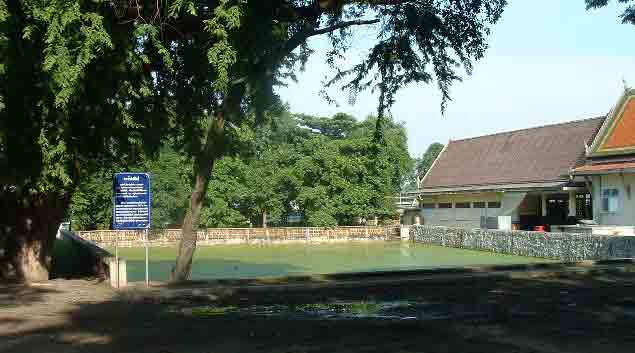
Sa Saksit (Sacred Ponds)
Open Days: Daily
Opening Hours: Daytime hours are recommended for visiting the archaeological site and sacred ponds
The Sacred Ponds of Suphan Buri Province are among the most important sacred water sites in Thailand. They are located at Ban Tha Sadet, Sa Kaeo Subdistrict, Mueang Suphan Buri District, along Highway 322, the Don Chedi–Suphan Buri route, around kilometer markers 7–8, opposite the entrance to Tha Sadet Bird Conservation Area. The site is about 13 km from Suphan Buri town. These ponds are important because their water has been used in major royal ceremonies, including the oath-taking ceremony, the royal purification rite, and the royal coronation ceremony according to ancient Thai court tradition.
The sacred ponds were originally known as 4 main ponds: Sa Kaeo, Sa Kha, Sa Yomana, and Sa Ket. Later, 2 additional ponds were identified, known as Sa Amarit 1 and Sa Amarit 2. Together, they form a sacred water landscape with deep historical, archaeological, ritual, and folkloric meaning. The names of the 4 main ponds are also connected with local legends, especially the story of 4 princesses named Kaeo, Kha, Yomana, and Ket.
The 4 sacred ponds of Suphan Buri have long been associated with Thai royal ritual. In Brahmanical and royal court traditions, water is not merely a natural element. It represents purity, legitimacy, blessing, and sacred power. When water from selected sacred sources is gathered for royal ceremonies, it symbolizes the collection of auspicious power from different parts of the kingdom. The water of Suphan Buri’s sacred ponds has therefore held a special place in the ritual geography of Thailand.
One of the most important uses of the water is in the royal purification rite known as Muratha Phisek. In this ceremony, sacred water is used in a high royal ritual connected with kingship and spiritual purification. Water for such a ceremony must come from places recognized as sacred, historically meaningful, and ritually pure. The inclusion of Sa Kaeo, Sa Kha, Sa Yomana, and Sa Ket in these traditions shows that the ponds were regarded as more than ordinary water sources.
The water was also used in the oath-taking ceremony known as Thin Nam Phiphat Satya. This ceremony was historically connected with loyalty, political order, and the sacred weight of an oath. In such a ritual, water functions as a medium of truth and moral obligation. The sacred nature of the water gives the oath spiritual force. The ponds of Suphan Buri therefore played a role in linking water, loyalty, royal authority, and social order.
King Chulalongkorn, Rama V, once visited the sacred ponds in Sa Kaeo Subdistrict. This royal visit became an important part of local memory and led to the village being known as Ban Tha Sadet, meaning the royal landing or royal visit place. The name is not merely a geographical label. It preserves the memory of a royal visit and connects the local community with national history.
King Rama V recorded observations about the ponds in a royal letter. He noted the mystery of why the ponds were considered so powerful, suggested that important spiritual teachers may have been associated with them, and observed that local people did not use the water or eat the fish from the ponds. He also described the ponds as overgrown with grass and inhabited by crocodiles. The water of Sa Kha and Sa Yomana was reddish and not very clear, while the water of Sa Ket and Sa Kaeo was clear. This royal observation is valuable because it preserves both the physical condition of the ponds and the beliefs surrounding them.
The royal letter shows that the sacred ponds were treated differently from ordinary water sources. Their water was not used for daily life, fish were not caught for food, and the ponds retained a semi-natural condition. This restraint reflects a system of sacred protection. Because people believed the ponds were powerful and sacred, they avoided disturbing them. In this sense, belief helped preserve the water landscape.
From a cultural geography perspective, the sacred ponds reveal the deep connection between water and sacredness in Thai society. Water is essential for life, but certain water sources become special when they are connected with legends, royal rituals, and long-term cultural memory. Sa Kaeo, Sa Kha, Sa Yomana, and Sa Ket are examples of natural features elevated into national sacred heritage.
The name Sa Kaeo suggests clarity, brightness, and preciousness. In Thai, kaeo can mean crystal, jewel, or something pure and valuable. Sa Kaeo is therefore remembered as a pond associated with clear and auspicious water. Sa Kha and Sa Yomana carry older and more local-sounding names, while Sa Ket is especially connected with the legend of Princess Ket and the white monkey king. These names give the ponds individual identities within the same sacred landscape.
Local legend tells of a ruler who had 4 daughters named Kaeo, Kha, Yomana, and Ket. The first 3 daughters married ordinary men, while the youngest daughter, Ket, married a white monkey. When the ruler became old, he set a challenge: the daughters had to dig ponds within 7 days, and the husband of the daughter who created the largest pond would inherit the kingdom. The first 3 daughters had help, while Ket was left to dig alone and was mistreated by the others. In the final night, she asked the white monkey for help.
The white monkey king brought an army of monkeys to help Ket dig the pond. By morning, her pond was larger than those of her sisters. An island was also made in the middle of the water, where a ket tree was planted as a symbol. After the ruler died, the officials agreed that Ket’s pond was the largest, and the kingdom was given to Ket and the white monkey. The story reflects values of endurance, justice, hidden virtue, and unexpected help from a figure underestimated by others.
The legend continues with the jealous elder sisters and their husbands stealing a sacred sword. The white monkey king followed them to Sa Ket. The elder sisters threw the sword into the pond, and it struck the ket tree, cutting it down before sinking into the water. Since then, the pond has been regarded as sacred because the sacred sword was believed to remain in it. This legend gives the ponds a dramatic story of power, justice, envy, and sacred objects hidden beneath the water.
The Sacred Ponds of Suphan Buri are important because they combine several layers of meaning. In royal tradition, they are sources of water for major state ceremonies. In archaeology, they are registered ancient monuments. In local folklore, they are connected with princesses, a white monkey king, and a sacred sword. In tourism, they help visitors understand how water, ritual, and belief are woven into the identity of Suphan Buri.
The Fine Arts Department registered the ponds as nationally important ancient monuments. Later, the protected area was defined, the ponds were dredged and conserved, and the landscape was improved. Maintenance responsibilities were transferred to Tha Sadet Subdistrict Municipality. These conservation efforts are important because sacred ponds require care not only as physical water bodies, but also as cultural and ritual heritage.
Visitors should understand that this is an archaeological and sacred site, not a recreational pond. It is not a place for swimming, fishing, or ordinary water use. Visitors should walk calmly, avoid littering, stay out of the ponds, and avoid disturbing plants, animals, or the landscape. The best way to visit is to observe the ponds, read the historical information, learn about their role in royal ceremonies, and take photographs respectfully.
The site is suitable for travelers interested in Thai history, royal ceremonies, cultural landscapes, and sacred geography. Standing beside Sa Kaeo, Sa Kha, Sa Yomana, and Sa Ket helps visitors understand that Thai royal rituals are not connected only with palaces or royal temples. They also draw meaning from sacred places across the country, including water sources in provincial landscapes.
The Ban Tha Sadet and Sa Kaeo area can be combined with nearby attractions such as Tha Sadet Bird Conservation Area, Wat Pa Lelai Worawihan, Suphan Buri City Pillar Shrine, Heavenly Dragon Park, Banharn-Jamsai Tower, and Suphan Buri National Museum. A half-day trip can focus on the sacred ponds and Tha Sadet Bird Conservation Area, while a full-day trip can continue into Suphan Buri town for temples, museums, and city landmarks.
Getting There is most convenient by private car. From Suphan Buri town, take Highway 322, the Don Chedi–Suphan Buri route, toward Sa Kaeo Subdistrict and Ban Tha Sadet. The ponds are located around kilometer markers 7–8, opposite the entrance to Tha Sadet Bird Conservation Area, about 13 km from town. The bird conservation area is a useful landmark because the sacred ponds are located across from its entrance.
The best time to visit is in the morning or late afternoon, when the weather is more comfortable and the light is suitable for viewing the pond landscape. Evening visits are not recommended because the site is an outdoor archaeological area and is best appreciated in daylight. During the rainy season, visitors should be careful of wet ground and stay on proper walking areas.
For international travelers, the Sacred Ponds of Suphan Buri are an excellent example of a Thai sacred water landscape. The site explains the relationship between water, monarchy, Brahmanical ritual, Buddhism, folklore, and local memory. It shows that in Thai culture, some water sources are not simply natural places, but part of the country’s ritual and historical identity.
Overall, the Sacred Ponds of Suphan Buri are far more than a roadside attraction. They are nationally important ancient monuments, royal ritual water sources, the place connected with King Rama V’s visit, the origin of the name Ban Tha Sadet, and a landscape shaped by the legend of 4 princesses, a white monkey king, and a sacred sword. Visitors who come here will gain a deeper understanding of the relationship between royal tradition and local belief in Suphan Buri Province.
| Name | The Sacred Ponds of Suphan Buri Province |
| Location | Ban Tha Sadet, Sa Kaeo Subdistrict, Mueang Suphan Buri District, Suphan Buri Province |
| Address | Along Highway 322, the Don Chedi–Suphan Buri route, around kilometer markers 7–8, opposite the entrance to Tha Sadet Bird Conservation Area, Sa Kaeo Subdistrict, Mueang Suphan Buri District, Suphan Buri Province |
| Highlights | Four main sacred ponds: Sa Kaeo, Sa Kha, Sa Yomana, and Sa Ket, used in royal purification ceremonies, oath-taking ceremonies, and other important royal rituals |
| History | Ancient sacred water sources of Suphan Buri used in royal ceremonies from the Ayutthaya period through the Rattanakosin period, registered as nationally important ancient monuments by the Fine Arts Department |
| Name Origin | The name Ban Tha Sadet is linked to the royal visit of King Chulalongkorn, Rama V, who came to view the sacred ponds in this area |
| Distinctive Features | An ancient sacred water landscape connected with royal ceremonies, Brahmanical ritual, King Rama V’s royal letter, and the legend of 4 princesses and the white monkey king |
| Tradition / Rituals | Water from the ponds has been used in the oath-taking ceremony, royal purification rite, and royal coronation ceremony according to ancient Thai royal tradition |
| Travel Information | From Suphan Buri town, take Highway 322 toward Sa Kaeo Subdistrict and Ban Tha Sadet for about 13 km. The ponds are around kilometer markers 7–8, opposite the entrance to Tha Sadet Bird Conservation Area |
| Current Status | A nationally important ancient monument and learning site for the sacred water heritage of Suphan Buri, maintained by local authorities under Fine Arts Department heritage status |
| Open Days | Daily |
| Opening Hours | Daytime hours are recommended for visiting the archaeological site and sacred ponds |
| Fees | No admission fee |
| Facilities | Walking areas, pond viewpoints, information signs, parking depending on site conditions, and nearby attractions along Highway 322 |
| Main Areas / Zones | Sa Kaeo Sa Kha Sa Yomana Sa Ket Sa Amarit 1 and Sa Amarit 2 area Walking and surrounding landscape areas |
| Caretaker | Tha Sadet Subdistrict Municipality and related local authorities, under Fine Arts Department heritage status |
| Nearby Tourist Attractions | 1. Tha Sadet Bird Conservation Area, about 1 km 2. Wat Pa Lelai Worawihan, about 12 km 3. Suphan Buri City Pillar Shrine and Heavenly Dragon Park, about 13 km 4. Banharn-Jamsai Tower, about 13 km 5. Chalerm Patthara Rachini Park, about 13 km 6. Suphan Buri National Museum, about 15 km |
| Nearby Restaurants | 1. Local restaurants around Ban Tha Sadet, about 2 km 2. Roadside restaurants along the Don Chedi–Suphan Buri route, about 3 km 3. Café Amazon on the route toward Suphan Buri town, about 8 km 4. Restaurants in Suphan Buri town, about 13 km 5. Khua Restaurant on Nang Phim Road, about 13 km, Tel. 035-521-045 6. Restaurants around Heavenly Dragon Park, about 13 km |
| Nearby Accommodations | 1. Lert Sri Hotel, about 6 km 2. Muaan Resort, about 8 km 3. Lamoon Boutique Hotel, about 10 km 4. Songphanburi Hotel, about 12 km, Tel. 035-522-555-7 5. Sri U-Thong Grand Hotel, about 13 km, Tel. 035-501-290 6. HOP INN Suphanburi, about 14 km, Tel. 065-945-9006 |
Frequently Asked Questions (FAQ)
Q: Where are the Sacred Ponds of Suphan Buri located?
A: They are located at Ban Tha Sadet, Sa Kaeo Subdistrict, Mueang Suphan Buri District, along Highway 322 around kilometer markers 7–8, opposite the entrance to Tha Sadet Bird Conservation Area.
Q: What are the names of the sacred ponds?
A: The 4 main ponds are Sa Kaeo, Sa Kha, Sa Yomana, and Sa Ket. Later, 2 additional ponds were identified: Sa Amarit 1 and Sa Amarit 2.
Q: Why are the Sacred Ponds important in Thai royal ceremonies?
A: Their water has been used in the oath-taking ceremony, royal purification rite, and royal coronation ceremony according to ancient Thai royal tradition.
Q: Why is the village called Ban Tha Sadet?
A: The name is linked to the royal visit of King Chulalongkorn, Rama V, who came to view the sacred ponds in this area.
Q: Is there an admission fee?
A: No admission fee is collected. Visitors may walk around the ancient monument area respectfully, but should not enter the ponds or disturb the environment.
Q: When is the best time to visit?
A: Morning or late afternoon is recommended because the weather is more comfortable and suitable for viewing the outdoor pond landscape.
Q: What nearby attractions can be visited with the Sacred Ponds?
A: Nearby attractions include Tha Sadet Bird Conservation Area, Wat Pa Lelai Worawihan, Suphan Buri City Pillar Shrine, Heavenly Dragon Park, Banharn-Jamsai Tower, and Suphan Buri National Museum.
 Category: ●Places of Worship
 Group: ●Other Sacred Sites
Last Update : 4 MonthAgo
 Last Update : 4 MonthAgo
 Click to Access the Navigation Map GPS
Sa Saksit (Sacred Ponds) Map
Recommend

 Art, Culture and Heritage
 Historical Sites and Monuments(2)
 Landmarks and Memorials(4)
 Art, Craft Centres, Tradition(2)
 Museums(5)
 Educational Places
 Educational Gardens, Farm(4)
 Training Center(2)
 Temple(36)
Other Sacred Sites(4)
Temple(36)
Other Sacred Sites(4)
 Suburban Living
 Village, Community(6)
 Local Market(7)
 Floating Market(1)
 Nature and Wildlife
 National Parks and Marine Reserves(4)
 Mountain (Doi)(2)
 Dam, Reservoir, Lake(3)
 Caves(1)
 Bays and Beaches(1)
 Entertainment and Agricultural
 Farms, Parks and Ecotourism(6)
 Theater(1)
 Travel Articles, Recipes
 Travel Review, Food Review(1)


