
lovethailand home >Central Travel Attractions >Suphan Buri Travel Attractions >U Thong >Phlap Phla Chai > Agricultural Occupation Promotion and Development ..
TL;DR: Agricultural Occupation Promotion and Development Center is located at Phlapphla Chai Subdistrict, U Thong District, Suphan Buri Province, open Advance Contact Recommended Before Visiting, hours Advance Contact Recommended Before Visiting.
Agricultural Occupation Promotion and Development Center
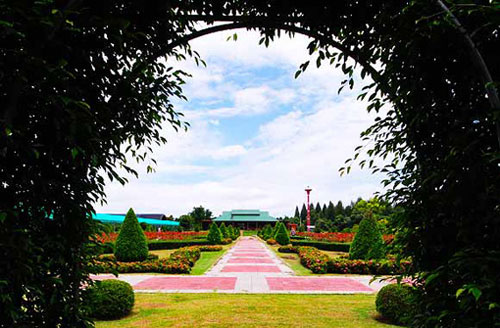
Open Days: Advance Contact Recommended Before Visiting
Opening Hours: Advance Contact Recommended Before Visiting
The Agricultural Occupation Promotion and Development Center in Suphan Buri, also known as the Agricultural Occupation Promotion and Development Center for Tissue-Cultured Plant Varieties or Plant Propagation Center No. 9 Suphan Buri Province, is an important agricultural learning center in Phlapphla Chai Subdistrict, U Thong District, Suphan Buri Province. The center was established to support plant variety development, agricultural career training, plant propagation, tissue culture technology, nursery management, and the distribution of quality plant materials. For international visitors interested in Thai agriculture, this center offers a practical view of how modern plant propagation supports farmers and agricultural production.
The center is important because planting material is the starting point of agricultural success. If farmers begin with strong, healthy, disease-free, and well-prepared plantlets, they have a much better chance of achieving good yields. If the planting material is weak or diseased, field management becomes more difficult, costs increase, and crop losses may occur early in the production cycle. The center therefore works at the foundation of agriculture: producing, acclimatizing, multiplying, demonstrating, and transferring knowledge about quality plant varieties.
The main mission of the center is to develop plant varieties and train people in agricultural occupations, especially through tissue culture production in laboratory conditions. After small plantlets are produced in tissue culture bottles, they must be moved carefully into nursery houses where they can adapt to external conditions. This transition is delicate because tissue-cultured plantlets are small, sensitive, and need controlled humidity, temperature, light, sanitation, water, and nutrient management before they are ready for planting.
Tissue culture is a plant propagation technology that uses selected plant parts, such as shoots, buds, or tissues, grown under sterile conditions on a nutrient medium. Once plantlets multiply and grow to a suitable stage, they are removed from culture bottles and transferred to nursery houses for acclimatization. This technology can produce many uniform plantlets within a controlled process and can help reduce some disease risks compared with certain conventional propagation methods. It is especially useful when large numbers of quality plantlets are needed.
One of the center’s most distinctive features is its system of 7 nursery and tissue-cultured plant production houses controlled by computer systems. These houses are not all the same. Each has a specific role in the plant production process, from the first acclimatization of plantlets taken from culture bottles to further nursery stages, multiplication, demonstration planting, disease-free mother plant management, and seedling production. This system shows that quality plant production is not a single step, but a continuous process requiring careful environmental control.
House 1 is a nursery house for very small plantlets newly removed from tissue culture bottles. These plants need special care because they are still adapting from a laboratory environment to external growing conditions. Humidity, light, temperature, cleanliness, and watering must be carefully managed. Too much light, dryness, heat, or contamination can easily damage the plantlets. House 1 therefore acts as the first acclimatization stage.
House 2 is used for plantlets that have already passed the first nursery stage. At this stage, plants are stronger but still require close attention. The goal is to support root, leaf, and stem development while reducing stress from environmental transition. The controlled conditions in House 2 help plantlets continue growing before moving to the next nursery level.
House 3 is used for plants that have passed House 2 and need further nursery care until they are ready for planting. This stage is important because the plants must become strong enough to move into field conditions or production systems outside the nursery. Proper care in House 3 helps reduce losses after planting and improves the chance that farmers receive usable, well-prepared planting material.
House 4 is a multiplication house. It receives plant varieties from disease-free mother plant houses or main plant stock areas and increases the number of plants. This house is important for distribution because once quality mother plants are available, multiplication must be done under controlled conditions to maintain consistency, reduce contamination, and produce enough plant materials for users.
House 5 is a demonstration house used for testing and demonstrating the use or planting of tissue-cultured plants. This is important for technology transfer because farmers do not need only plantlets; they also need to know how to plant, manage, water, fertilize, protect, and evaluate them. Demonstration helps users understand what to do after receiving plant materials and how to adapt them to real production systems.
House 6 is the disease-free mother plant house. It has strict disease and insect control systems and is used to keep or prepare mother plants for further tissue culture or multiplication. This house is central to the reliability of plant production because if the mother plants are unhealthy, the quality of the entire propagation process may be affected. Sanitation, pest control, and environmental control are therefore especially strict.
The seedling production house is used for plants propagated by seed or cuttings. This shows that the center does not work only with tissue culture. It also supports other propagation methods suitable for different plant types. The presence of a seedling production house allows visitors to learn about multiple ways of producing plant materials, from modern laboratory-based propagation to nursery-based seedling and cutting systems.
The nursery house systems reflect the technical strength of the center. These include cooling systems, misting systems, temperature control, light intensity control, artificial or supplemental lighting, pest control, plant placement systems, irrigation systems, fertilization systems, sterilization systems for equipment and nursery materials, equipment transfer systems, and computer-based control systems. Together, these systems create suitable environments for plant growth at different stages.
Temperature and humidity control are especially important because tissue-cultured plantlets newly removed from bottles are sensitive to water loss. Misting systems help increase humidity and reduce stress. Cooling systems and temperature control help prevent heat accumulation inside nursery houses. These factors directly affect plant survival, root development, and healthy growth during acclimatization.
Light control is also essential. Different plant species and different growth stages require different light levels. Newly acclimatized plantlets may not tolerate strong direct light, so light intensity must be managed carefully. As plants become stronger, they can gradually adapt to higher light levels. Proper light control reduces plant stress and supports uniform growth.
Watering and fertilization systems help ensure that plantlets receive suitable growth inputs. Too much water can lead to root problems or disease, while too little water can cause wilting and growth delay. Fertilizer concentration must also match the growth stage. Small plantlets cannot always tolerate the same nutrient levels as stronger plants. Controlled irrigation and fertilization therefore help standardize plant care and reduce management errors.
Pest control and sterilization systems are critical in plant production. Diseases and insects can damage large numbers of plants quickly, especially in warm and humid nursery conditions. Cleaning tools, sterilizing materials, controlling pests, and managing sanitation are basic but essential measures for producing reliable plant materials. These practices help protect the quality of plants before they are distributed or used for demonstration.
The center also provides training in plant production and agricultural careers. Farmers can learn about tissue culture principles, nursery management, post-transplant care, greenhouse systems, and the use of quality planting materials in real production. Students can use the center as a field classroom for plant science, biotechnology, and modern agriculture. Study groups can understand how scientific systems support practical farming.
As an agro-tourism and agricultural learning destination, the center is suitable for visitors who want knowledge rather than ordinary sightseeing. Visitors can see the journey of a plant from laboratory propagation to nursery acclimatization and demonstration planting. They can understand the technology behind quality plantlets and the role of controlled environments in modern agriculture. This type of visit is useful for families, students, young farmers, plant lovers, and visitors interested in flowers, fruit plants, ornamental plants, and agricultural innovation.
Visitors should contact the center in advance before traveling. Some areas are working facilities, especially tissue culture laboratories and disease-free mother plant houses, where cleanliness, pest control, and access rules are important. Advance coordination helps confirm suitable visiting times, available staff, accessible areas, and proper visitor practices so that the visit does not disturb plant production.
Getting There from U Thong District follows the U Thong – Dan Chang road for about 6 kilometers. At the sugar factory area, turn left, cross the irrigation canal bridge, then turn right and continue along the irrigation canal for about 10 kilometers. The center is on the left-hand side. From Bangkok, travelers can take Highway 340 toward Suphan Buri, continue to U Thong District, and proceed to Phlapphla Chai Subdistrict. Private car or rental vehicle travel is recommended because the center is located in an agricultural area outside the main town.
The center can be combined with nearby attractions in U Thong District, such as U Thong National Museum, Ancient U Thong City, Wat Khao Phra Si Sanphetchayaram, Phra Phuttha Pushaya Khiri Si Suvarnabhumi, Wat Khao Tham Thiam, and Phu Muang National Park. Visitors interested in agriculture can also combine it with the Biological Pest Management Center to understand both plant propagation and pest management in one educational route.
The Agricultural Occupation Promotion and Development Center in Suphan Buri is therefore a valuable learning site because it shows how modern agriculture depends on science, technology, careful management, and practical training. Strong plant materials do not happen by accident. They come from selection, tissue culture, nursery care, environmental control, sanitation, and knowledge transfer. For visitors who want to understand the future of Thai agriculture, this center provides a clear and practical introduction to plant propagation and quality seedling production.
| Name | Agricultural Occupation Promotion and Development Center, Suphan Buri / Agricultural Occupation Promotion and Development Center for Tissue-Cultured Plant Varieties / Plant Propagation Center No. 9 Suphan Buri Province |
| Location | Phlapphla Chai Subdistrict, U Thong District, Suphan Buri Province |
| Address | 1 Moo 12, Phlapphla Chai Subdistrict, U Thong District, Suphan Buri 72160, Thailand |
| Coordinates | Latitude 14.416404, Longitude 99.972468 |
| Highlights | A plant propagation and agricultural career learning center focused on tissue culture, nursery houses, plant multiplication, demonstration planting, disease-free mother plants, and agricultural training |
| Distinctive Features | 7 nursery and tissue-cultured plant production houses controlled by computer systems, covering plantlets from bottle removal to multiplication and demonstration planting |
| Travel Information | From U Thong District, follow the U Thong – Dan Chang road for about 6 km. At the sugar factory area, turn left, cross the irrigation canal bridge, then turn right and continue along the canal for about 10 km. The center is on the left. |
| Current Status | An agricultural learning and plant propagation center in Suphan Buri Province; advance contact is recommended before visiting |
| Open Days | Advance Contact Recommended Before Visiting |
| Opening Hours | Advance Contact Recommended Before Visiting |
| Facilities | Administration building, tissue culture laboratory, nursery houses, multiplication house, demonstration house, disease-free mother plant house, seedling production house, training areas, demonstration areas, and parking area according to the facility |
| Main Areas / Zones | 1. Administration Building 2. Tissue Culture Laboratory 3. House 1: Newly Deflasked Plantlet Nursery 4. House 2: Intermediate Nursery House 5. House 3: Pre-Planting Nursery House 6. House 4: Plant Multiplication House 7. House 5: Demonstration and Test Planting House 8. House 6: Disease-Free Mother Plant House 9. Seedling Production House for Seeds and Cuttings 10. Computer-Controlled Greenhouse System Zone |
| Key Greenhouse Systems | Cooling system, misting system, temperature control, light intensity control, lighting system, pest control, plant placement system, irrigation system, fertilization system, sterilization system for equipment and nursery materials, equipment transfer system, and computer-based control system |
| Caretaker / Related Organization | Department of Agricultural Extension, Ministry of Agriculture and Cooperatives / Plant Propagation Center No. 9 Suphan Buri Province |
| Main Contact Number | 035-440360, 061-3868815, 089-8373277 |
| Nearby Tourist Attractions | 1. Biological Pest Management Center / Suphan Buri Plant Protection Center, about 1 km 2. U Thong National Museum, about 12 km 3. Ancient U Thong City, about 13 km 4. Wat Khao Phra Si Sanphetchayaram, about 14 km 5. Phra Phuttha Pushaya Khiri Si Suvarnabhumi / Luang Pho U Thong, about 16 km 6. Wat Khao Tham Thiam, about 17 km 7. Thai Farmer’s Way of Life and Spirit Learning Center, Na Hia Chai, about 22 km |
| Nearby Restaurants | 1. Local Restaurants in U Thong District, about 12 km 2. The Little Hut Cafe U Thong, about 13 km 3. GreenBough Cafe U Thong, about 15 km, Tel. 064-661-4936 4. Restaurants Around Phra Phuttha Pushaya Khiri Si Suvarnabhumi, about 16 km 5. Restaurants Along the U Thong – Suphan Buri Route, about 15 km 6. Restaurants in Suphan Buri Town, about 30 km |
| Nearby Accommodations | 1. Prem Mansion U Thong, about 12 km, Tel. 099-481-8899, 090-880-9997 2. U Thong Hotel, about 13 km 3. Tolopoti Hotel & Resort, about 14 km, Tel. 082-333-3308 4. Hotels and Resorts in U Thong District, about 15 km 5. Accommodations Along the U Thong – Suphan Buri Route, about 20 km 6. Hotels in Suphan Buri Town, about 30 km |
Frequently Asked Questions (FAQ)
Q: Where is the Agricultural Occupation Promotion and Development Center in Suphan Buri located?
A: It is located at 1 Moo 12, Phlapphla Chai Subdistrict, U Thong District, Suphan Buri Province 72160, Thailand.
Q: Why was the center established?
A: It was established to develop plant varieties, train agricultural careers, produce plants through tissue culture technology, acclimatize plantlets, multiply plant materials, and transfer agricultural knowledge to farmers and interested visitors.
Q: How many nursery and production houses are inside the center?
A: The center has 7 nursery and tissue-cultured plant production houses, including nursery houses, multiplication house, demonstration house, disease-free mother plant house, and seedling production house.
Q: What is plant tissue culture?
A: Plant tissue culture is a propagation method that grows selected plant parts under sterile conditions on nutrient media to produce many uniform and high-quality plantlets.
Q: Why is the disease-free mother plant house important?
A: It keeps and prepares mother plants under strict disease and insect control conditions, helping protect the quality of plant propagation from the beginning of the production process.
Q: Who should visit this center?
A: It is suitable for farmers, students, study groups, plant lovers, people interested in tissue culture, seedling production, agricultural careers, and agro-tourism.
Q: Should visitors contact the center before visiting?
A: Yes. Advance contact is recommended because some areas are working facilities and require sanitation, pest control, and access coordination.
Q: What nearby attractions can be visited with the center?
A: Nearby attractions include the Biological Pest Management Center, U Thong National Museum, Ancient U Thong City, Wat Khao Phra Si Sanphetchayaram, Phra Phuttha Pushaya Khiri Si Suvarnabhumi, Wat Khao Tham Thiam, and Na Hia Chai learning center.
Tel : 035551399
 Tel : 035551399
 Category: ●Educational Places
 Group: ●Educational Gardens, Farm
Last Update : 1 MonthAgo
 Last Update : 1 MonthAgo
 Click to Access the Navigation Map GPS
Agricultural Occupation Promotion and Development Center Map
Recommend

 Art, Culture and Heritage
 Historical Sites and Monuments(2)
 Landmarks and Memorials(4)
 Art, Craft Centres, Tradition(2)
 Museums(5)
Educational Gardens, Farm(4)
Museums(5)
Educational Gardens, Farm(4)
 Training Center(2)
 Places of Worship
 Temple(36)
 Other Sacred Sites(4)
 Suburban Living
 Village, Community(6)
 Local Market(7)
 Floating Market(1)
 Nature and Wildlife
 National Parks and Marine Reserves(4)
 Mountain (Doi)(2)
 Dam, Reservoir, Lake(3)
 Caves(1)
 Bays and Beaches(1)
 Entertainment and Agricultural
 Farms, Parks and Ecotourism(6)
 Theater(1)


