
lovethailand home >Central Travel Attractions >Suphan Buri Travel Attractions >Doem Bang Nang Buat >Bo Kru > Ancient Lao Si-Lao Khrang Traditional Weaving Grou..
TL;DR: Ancient Lao Si-Lao Khrang Traditional Weaving Group, Suphan Buri attractions : Suburban Living, Village, Community.
Ancient Lao Si-Lao Khrang Traditional Weaving Group
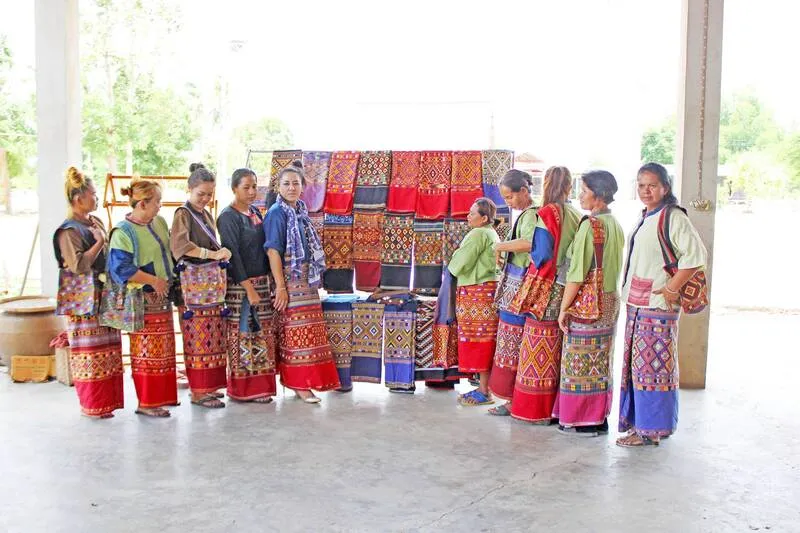
Open Days: Please contact the weaving group in advance before visiting
Opening Hours: Please contact the weaving group in advance before visiting
The Ancient Lao Si-Lao Khrang Traditional Weaving Group of Ban Thung Kan Lueang in Suphan Buri Province is an important community-based textile learning center in Pa Sakae Subdistrict, Doem Bang Nang Buat District, Suphan Buri Province. Located at 25/1 Moo 5, Ban Thung Kan Lueang, Pa Sakae Subdistrict, Doem Bang Nang Buat District, Suphan Buri 72120, the group serves as a local cultural conservation center dedicated to preserving, reviving, and passing on the ancient weaving wisdom of the Lao Si and Lao Khrang ethnic communities. These communities have their own language, traditions, rituals, and distinctive dress culture, especially handwoven cotton textiles, chok weaving, khit weaving, mudmee textiles, red-hemmed sinh skirts, loincloths, ceremonial naga headcloths, and household textiles once used in everyday life.
The Lao Si and Lao Khrang communities in Doem Bang Nang Buat District are Thai people of Lao ancestry whose oral history says they migrated from Vientiane before settling in Pa Sakae, Bo Kru, and Nong Krathum subdistricts in Suphan Buri Province. Over many generations, these communities have preserved traces of their distinctive identity through language, ritual, belief, food culture, and especially textile traditions. Their clothing culture is not merely decorative; it is a visual record of migration, family memory, women’s craftsmanship, and community identity.
The most distinctive quality of Lao Si-Lao Khrang textiles lies in their refined patterns and the cultural meanings embedded in each piece of cloth. A textile is not only something worn on the body. It can identify the wearer’s community, social context, ritual role, age, and relationship with tradition. In the past, women in each household wove textiles for family use, including sinh skirts, loincloths, plain cloth, ceremonial headcloths for ordination candidates, pillows, decorative bolsters, mosquito-net curtains, mosquito nets, and 5-color loincloths. These woven pieces functioned as household necessities, ritual objects, symbols of beauty, and cultural records preserved through cotton threads and handwoven patterns.
The 2 major techniques in this weaving tradition are chok and khit. Chok is a supplementary-weft technique in which the weaver uses a pointed tool, traditionally sometimes a porcupine quill or a similar implement, to lift selected threads and create intricate patterns. It requires concentration, precision, and long experience because the pattern emerges gradually through the movement of the weaver’s hand. Khit is a patterned lifting technique that creates repeated motifs with rhythmic structure. When these techniques are combined with natural dyes and old Lao Si-Lao Khrang motifs, the result is a textile with strong cultural identity and high craftsmanship value.
Natural dyeing is another element that gives Lao Si-Lao Khrang textiles their depth. Natural colors create soft, layered, and harmonious tones. They may come from lac, indigo, bark, leaves, or local plants. These colors are usually less harsh than chemical dyes and often show subtle variations from thread to thread. Such variation is not a defect; it is part of the beauty of handmade textiles. Even if 2 pieces use the same motif, the tone, hand tension, weaving density, and mood of the weaver can make each textile unique.
The legend of Ban Thung Kan Lueang helps explain the roots of the community. According to elders, the area where the village now stands once had a large pond and a large tree known as the kan lueang tree growing in the middle of the fields. People therefore called the place Ban Thung Kan Lueang. The name reflects the close relationship between people and landscape, as many Thai village names originate from natural landmarks such as trees, ponds, rice fields, forests, or features remembered collectively by the community.
Ban Thung Kan Lueang is an old community whose ancestors were Lao Si and Lao Khrang people. The village is believed to have existed for more than 200 years. Today, it is located in Moo 5, Pa Sakae Subdistrict, with a rural road connecting it to other parts of the subdistrict. The village has an old Buddhist temple, Wat Khwang Weluwan, which serves as a spiritual center for the community. Most local people work in rice farming, sugarcane farming, livestock raising, trading, and supplementary occupations such as weaving, dyeing, sewing, and growing indigo or dye plants.
Weaving in Ban Thung Kan Lueang originally belonged to domestic life. Women wove cloth for household use, ritual use, and community dress rather than for commercial sale. Cloth was connected with life from birth to death. It was used in welcoming newborns, ordination ceremonies, merit-making events, weddings, household decoration, and family exchanges. In this sense, weaving was a cultural language through which Lao Si-Lao Khrang women recorded their world, values, and emotional ties to family and community.
The red-hemmed sinh skirt is one of the most distinctive garments associated with Lao Khrang and Lao Si identity. The red section at the hem gives the skirt a strong visual character. In many local cultures, red suggests vitality, auspiciousness, warmth, and strength. When combined with refined chok or khit patterns, the red-hemmed sinh becomes both beautiful and meaningful. A woman wearing such a textile is not simply dressing elegantly; she is wearing the identity of her ancestors and expressing pride in her community.
The 5-color loincloth is another product that reflects the creativity of the community. A loincloth is one of the most versatile textiles in Thai and Lao rural life. It can be worn, wrapped, used as a waist cloth, head covering, carrying cloth, or even as part of certain rituals. A 5-color loincloth shows the weaver’s sense of color rhythm and balance. The colors are not placed randomly; they reflect experience, taste, auspicious meaning, and practical understanding of how colors work together in daily use.
The naga headcloth is significant in ordination ceremonies. In Thai and Lao Buddhist culture, the ordination candidate is often called a naga before entering the monkhood. A headcloth used for the naga is not only decorative but also marks a ritual transition. It identifies the candidate as someone about to enter religious life. Preserving the knowledge of ceremonial headcloth weaving therefore helps preserve the relationship between textile culture, Buddhist ritual, and community life.
Household textiles such as pillows, bolsters, mosquito-net curtains, and mosquito nets show that the weaving tradition extended beyond clothing. Woven objects shaped the interior life of the home. Many were made carefully because they represented household skill, care, and dignity. Some were used for guests, some for rituals, and some were passed down within families. These items show that Lao Si-Lao Khrang textiles are not only handicrafts, but also family heritage and domestic memory.
The Ancient Lao Si-Lao Khrang Traditional Weaving Group of Ban Thung Kan Lueang formally established its group office on 15 October 1998. Its purpose was to become a community learning center, a training and study-visit venue, a place for knowledge exchange, a center for reviving ancient textile production, a platform for promoting Lao Si-Lao Khrang culture, and an occupational training space for disadvantaged people and elderly residents. The group is therefore not simply a production unit. It is a community-owned cultural preservation system.
The group plays a crucial role because modern lifestyles have gradually drawn younger generations away from looms and traditional handcrafts. Without an organized learning center, many patterns, techniques, and stories could disappear with the older generation. Here, knowledge once held by mothers, grandmothers, and village elders is passed on more systematically. Visitors and trainees can learn about thread preparation, natural dyeing, loom setup, chok weaving, khit weaving, pattern reading, and textile care. This helps keep weaving alive as a practical body of knowledge rather than a memory stored in old cloth alone.
Under the leadership of Mrs. Somchit Pharueang, the group functions as a center for weavers, a place for selling members’ products, and a welcoming space for visitors. Interested visitors can contact the group at 25/1 Moo 5, Ban Thung Kan Lueang, Pa Sakae Subdistrict, Doem Bang Nang Buat District, Suphan Buri 72120, Tel. 089-926-2864. Advance contact is important because this is a community center, not a commercial tourist attraction with fixed daily visitor rounds. Making an appointment helps ensure that visitors can meet local members, observe demonstrations, and receive proper cultural context.
The appeal of visiting the weaving group lies in seeing the real process behind the textiles. Visitors do not see only finished products; they can learn about the idea behind each motif, thread preparation, natural dyeing, loom preparation, and handweaving. Each weaver works with patience and discipline. A single textile may take days or weeks depending on size, technique, and pattern complexity. Observing the process helps visitors understand that handwoven cloth is measured not only by material cost, but also by time, skill, memory, and cultural meaning.
Seeing the weaving process in person also changes the way visitors understand price and value. A handwoven textile is not a machine-made object. It cannot be rushed or reproduced in completely identical form. Small differences between pieces are part of the charm of handmade work. They reveal that the textile passed through human hands, eyes, concentration, and emotion. Every thread carries the presence of the weaver.
The weaving group also welcomes visitors through the bai si su khwan ceremony, a traditional Thai-Lao welcoming ritual. The ceremony is performed to call back the khwan, or vital spirit, to bless and strengthen the person being welcomed. It is used to honor respected guests, elders, and visitors. For the community, the ceremony is not a staged performance alone; it expresses hospitality, goodwill, and the belief that visitors should be received with care and blessing.
Another important ritual is the rice-spirit calling ceremony, held on the 3rd waxing day of the 3rd lunar month after harvested rice has been brought from the fields into storage. Before the rice is stored or sold, villagers perform a ritual to call the spirit of the rice and pay respect to Mae Phosop, the Rice Mother. This ceremony reflects the community’s view of rice as a living source of life, not merely an economic crop. It expresses gratitude toward the fields, nature, labor, and the spiritual power that sustains the community.
The weaving group exists within an agricultural community, and this makes the connection between rice fields, textiles, and rituals especially clear. Many local residents farm rice, grow sugarcane, raise animals, and trade, while weaving, dyeing, sewing, and growing dye plants provide supplementary income. This shows that the local economy is not separate from culture. Textile work is not only a product line; it is part of the rhythm of life after the farming season and a way for elderly people to continue contributing to the community.
The group also creates value for elderly residents and people with limited income. Older weavers who carry knowledge of patterns and techniques are not left behind as their knowledge fades. They become teachers, knowledge holders, and guardians of community memory. Younger members can learn from them and develop contemporary products while still respecting the original roots. This intergenerational transfer is one of the most important reasons the weaving group remains culturally valuable.
The local travel route promoted by the weaving group includes more than weaving. Visitors are invited to explore Pa Sakae Subdistrict, see old boats aged around 100-120 years, pay respect to sacred Buddhist relic traces at Wat Don Makluea, and then continue to see ancient textiles estimated to be around 100-150 years old at the weaving group. This route connects religion, local history, riverside life, and textile wisdom in one community-based journey.
Wat Khwang Weluwan, located in Ban Thung Kan Lueang, is an old temple and the spiritual center of the community. Its presence shows the close relationship between temple, home, and craft culture. In Thai and Lao village life, temples, rituals, and textiles often intersect through merit-making events, clothing, offerings, and community gatherings. During important ceremonies, woven textiles may appear as clothing, gifts, ritual objects, or decorative elements.
Wat Don Makluea is another important stop in the cultural route because it is associated with sacred Buddhist relic traces revered by local people. Beginning a trip with a temple visit and then continuing to the weaving center helps visitors see the community from multiple angles: religion, local belief, women’s textile wisdom, and the continuity of Lao Si-Lao Khrang identity.
Visitors interested in buying textiles should ask about the origin of each motif and the production process. Questions such as the name of the pattern, the technique used, the time required for weaving, the source of the dye, and the recommended use of the textile can make the purchase more meaningful. Buying directly from the group also supports local weavers and helps sustain the continuation of traditional knowledge.
For cultural travelers, the Ban Thung Kan Lueang weaving group is best visited slowly. Visitors should allow time to talk with weavers, watch demonstrations, listen to pattern stories, and observe the community environment. Such a visit reveals that a single textile is the result of migration history, ancestral memory, women’s knowledge, agricultural life, ritual practice, and the community’s determination to preserve its roots.
For international visitors, the Ancient Lao Si-Lao Khrang Traditional Weaving Group can be understood as a community textile learning center preserving the heritage weaving traditions of the Lao Si and Lao Khrang ethnic communities. Its key features include handweaving, chok and khit techniques, natural dyeing, traditional dress, and the bai si su khwan welcoming ceremony. The site helps foreign travelers understand that Thai textiles are not merely souvenirs, but living cultural heritage still practiced by real communities.
Getting There is most convenient by private car. Travel to Doem Bang Nang Buat District in Suphan Buri Province, then continue to Pa Sakae Subdistrict and Ban Thung Kan Lueang, Moo 5. The group office is located at 25/1. Visitors should contact Mrs. Somchit Pharueang at 089-926-2864 before traveling to ask about visiting arrangements, weaving demonstrations, study visits, and group reception. A community trip can be combined with Wat Khwang Weluwan, Wat Don Makluea, Wat Bo Kru, and other attractions in Doem Bang Nang Buat District.
Daytime visits are recommended because natural light makes it easier to see textile colors, patterns, and weaving details. Groups should coordinate in advance so the community can prepare demonstrations or welcoming activities properly. Visitors should dress politely, respect private community spaces, avoid touching antique textiles or weaving tools without permission, and photograph demonstrations or ceremonies with courtesy.
Overall, the Ancient Lao Si-Lao Khrang Traditional Weaving Group of Ban Thung Kan Lueang is one of the most valuable cultural learning sites in Suphan Buri Province. It brings together the migration story of the Lao Si and Lao Khrang people, a community history of more than 200 years, the legend of Ban Thung Kan Lueang, handwoven textiles, natural dyeing, chok and khit techniques, bai si su khwan, the rice-spirit ceremony, and the community’s effort to create work for elderly and disadvantaged residents. Visitors will see that traditional textiles are not merely handicrafts, but living community history woven into every thread.
| Name | Ancient Lao Si-Lao Khrang Traditional Weaving Group, Ban Thung Kan Lueang |
| Location | Ban Thung Kan Lueang, Moo 5, Pa Sakae Subdistrict, Doem Bang Nang Buat District, Suphan Buri Province |
| Address | 25/1 Moo 5, Ban Thung Kan Lueang, Pa Sakae Subdistrict, Doem Bang Nang Buat District, Suphan Buri Province 72120 |
| Highlights | Lao Si-Lao Khrang ancient textile learning center, chok weaving, khit weaving, mudmee, handwoven cotton, natural dyeing, red-hemmed sinh skirts, 5-color loincloths, naga headcloths, and bai si su khwan ceremony |
| History / Importance | A Lao Si-Lao Khrang community that preserves ancestral textile wisdom. The group office was established on 15 October 1998 as a learning center, training venue, study-visit site, and center for reviving ancient weaving traditions |
| Origin Of Ban Thung Kan Lueang | According to local elders, the village name came from a large pond and a kan lueang tree that once stood in the middle of the fields |
| Distinctive Features | A community learning center that continues ancient Lao Si-Lao Khrang textile patterns in Suphan Buri, with weaving demonstrations, knowledge transmission, and community product sales |
| Traditions / Rituals | Bai si su khwan welcoming ceremony for visitors and respected guests, and the rice-spirit ceremony on the 3rd waxing day of the 3rd lunar month to call the spirit of the rice and pay respect to Mae Phosop |
| Travel Information | Travel to Doem Bang Nang Buat District, then continue to Pa Sakae Subdistrict and Ban Thung Kan Lueang, Moo 5. Contact the group in advance before visiting |
| Current Status | A community learning center, ancient Lao Si-Lao Khrang textile conservation site, vocational training space, and study-visit destination for local wisdom |
| Open Days | Please contact the group in advance before visiting |
| Opening Hours | Please contact the group in advance before visiting |
| Admission Fee | Please contact the group directly before visiting or arranging a study visit |
| Facilities | Learning center area, weaving demonstration area, textile sales area, community products, craft demonstrations, and group reception by prior arrangement |
| Main Areas / Zones | Weaving demonstration area Chok and khit learning area Natural dyeing area Ancient textile and community product display area Study-visit reception area Textile and souvenir sales area |
| Caretaker / Coordinator | Mrs. Somchit Pharueang |
| Main Contact Number | 089-926-2864 |
| Nearby Tourist Attractions | 1. Wat Khwang Weluwan, Ban Thung Kan Lueang, about 1 km 2. Wat Don Makluea, about 5 km 3. Wat Bo Kru, about 8 km 4. Sam Chuk Old Market, about 18 km 5. Bueng Chawak Chaloem Phrakiat, about 25 km 6. Wat Doem Bang, about 20 km |
| Nearby Restaurants | 1. Local restaurants in Pa Sakae Subdistrict, about 3 km 2. Restaurants in Doem Bang Nang Buat District, about 10 km 3. Restaurants around Sam Chuk Old Market, about 18 km 4. Restaurants near Bueng Chawak Chaloem Phrakiat, about 25 km 5. Restaurants in Sam Chuk District, about 18 km |
| Nearby Accommodations | 1. Tha Chang Vintage, about 18 km 2. Hotels and resorts in Sam Chuk District, about 18 km 3. Accommodations near Bueng Chawak Chaloem Phrakiat, about 25 km 4. Garden resorts in Doem Bang Nang Buat District, about 15-25 km 5. Accommodations in Suphan Buri town, about 55 km |
Frequently Asked Questions (FAQ)
Q: Where is the Ancient Lao Si-Lao Khrang Traditional Weaving Group located?
A: It is located at 25/1 Moo 5, Ban Thung Kan Lueang, Pa Sakae Subdistrict, Doem Bang Nang Buat District, Suphan Buri Province 72120.
Q: What makes Lao Si-Lao Khrang textiles distinctive?
A: Their distinctive features include handwoven cotton, ancient motifs, chok and khit techniques, mudmee, natural dyeing, red-hemmed sinh skirts, 5-color loincloths, and ritual textiles used in community ceremonies.
Q: When was the weaving group established?
A: The group office was established on 15 October 1998 as a learning center, ancient textile revival center, vocational training space, and cultural preservation site for Lao Si-Lao Khrang heritage.
Q: Can visitors watch weaving demonstrations?
A: Yes, visitors and study groups can observe weaving demonstrations, but they should contact the group in advance to confirm schedules, demonstrations, and community reception arrangements.
Q: How can visitors contact the weaving group?
A: Visitors can contact Mrs. Somchit Pharueang at 089-926-2864. The group office is located at 25/1 Moo 5, Ban Thung Kan Lueang, Pa Sakae Subdistrict, Doem Bang Nang Buat District, Suphan Buri Province.
Q: What is the bai si su khwan ceremony?
A: Bai si su khwan is a Thai-Lao welcoming ceremony performed to bless guests, elders, and visitors. It reflects the community’s belief in the khwan, or vital spirit, and expresses hospitality and goodwill.
Q: When is the rice-spirit ceremony held?
A: The rice-spirit ceremony is held on the 3rd waxing day of the 3rd lunar month after harvested rice is brought from the fields into storage, to call the spirit of the rice and pay respect to Mae Phosop.
Q: What nearby places can be visited with the weaving group?
A: Nearby places include Wat Khwang Weluwan, Wat Don Makluea, Wat Bo Kru, Sam Chuk Old Market, and Bueng Chawak Chaloem Phrakiat.
Mobile : 0899262864
 Mobile : 0899262864
 Category: ●Suburban Living
 Group: ●Village, Community
Last Update : 4 MonthAgo
 Last Update : 4 MonthAgo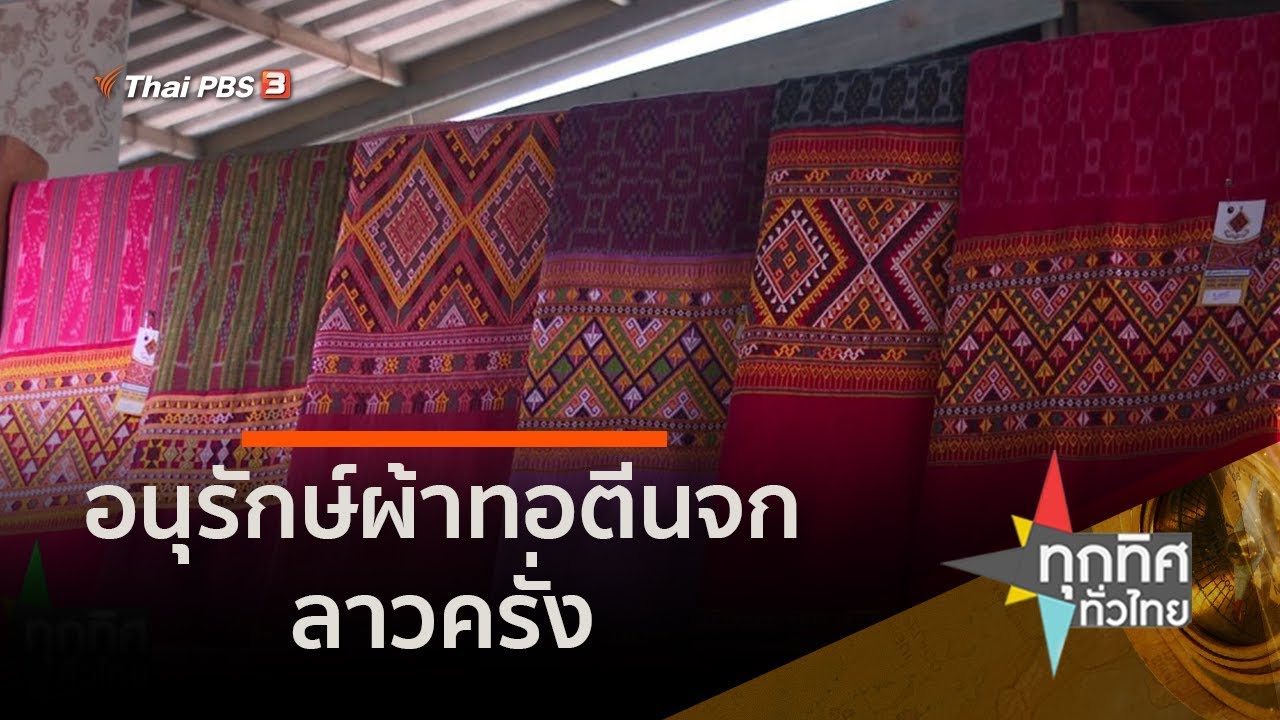
 Click to Access the Navigation Map GPS
Ancient Lao Si-Lao Khrang Traditional Weaving Group Map
Recommend

 Art, Culture and Heritage
 Historical Sites and Monuments(2)
 Landmarks and Memorials(4)
 Art, Craft Centres, Tradition(2)
 Museums(5)
 Educational Places
 Educational Gardens, Farm(4)
 Training Center(2)
 Places of Worship
 Temple(36)
 Other Sacred Sites(4)
Village, Community(6)
Other Sacred Sites(4)
Village, Community(6)
 Local Market(7)
 Floating Market(1)
 Nature and Wildlife
 National Parks and Marine Reserves(4)
 Mountain (Doi)(2)
 Dam, Reservoir, Lake(3)
 Caves(1)
 Bays and Beaches(1)
 Entertainment and Agricultural
 Farms, Parks and Ecotourism(6)
 Theater(1)


