
lovethailand home >Central Travel Attractions >Sing Buri Travel Attractions >Bang Ra Chan >Pho Chon Kai > Wat Laem Khang
TL;DR: Wat Laem Khang is located at Village No. 2, Mae La Subdistrict, Bang Rachan District, Sing Buri Province, Thailand, open Daily, hours Daytime and regular temple visiting hours.
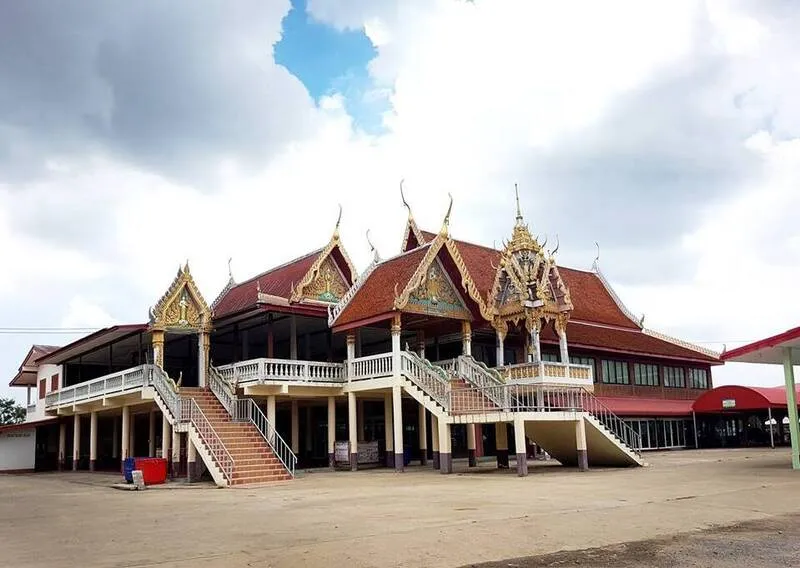
Wat Laem Khang
Open Days: Daily
Opening Hours: Daytime and regular temple visiting hours
Wat Laem Khang in Sing Buri Province is an old community temple in Mae La Subdistrict, Bang Rachan District. The temple is closely connected with the Mae La waterway and the lowland landscape of central Thailand. Its name reflects the geography of the site: the temple area lies on a bend of land that projects into the Mae La stream, while the surrounding area was once known for the presence of khang trees. For travelers seeking a quiet Buddhist temple, a local cultural site, and a deeper understanding of rural Sing Buri, Wat Laem Khang is a meaningful stop on a temple and community route in Bang Rachan.
Wat Laem Khang is located in Village No. 2, Mae La Subdistrict, Bang Rachan District, Sing Buri Province. It is a local temple under the Mahanikaya order of Thai Buddhism and stands on lowland terrain typical of the central region. Sing Buri has long been shaped by rivers, canals, rice fields, and rural settlements, and Wat Laem Khang reflects this connection clearly. The temple is not only a place of worship but also a cultural landmark that shows how Buddhist temples, waterways, local geography, and village life have grown together over time.
The name “Wat Laem Khang” is one of the most interesting aspects of the temple. The word “laem” means a pointed or projecting piece of land, while “khang” refers to trees that were once found in large numbers around the area. According to local explanation, the temple stands beside the Mae La stream where the land bends and extends into the water. This geographic feature was called a “laem” by local people, and because khang trees grew around the area, the temple became known as Wat Laem Khang. The name therefore preserves both the physical landscape and the ecological memory of the community.
Wat Laem Khang was established in 1913, making it more than 100 years old. Over the decades, it has served as a place for Buddhist ceremonies, a residence for monks, a center for local merit-making, and a shared community space. Like many rural temples in central Thailand, it has played an important role in village life. Local residents come to the temple for Buddhist holy days, annual merit-making events, Kathin ceremonies, robe-offering ceremonies, and family religious activities. The temple has therefore remained part of the social and spiritual structure of Mae La Subdistrict for generations.
The temple grounds are located on lowland terrain and are associated with the Mae La waterway. The original information describes the temple area as a flat lowland site with boundaries connected to the surrounding community and land extending toward the water. This setting gives Wat Laem Khang a quiet riverside atmosphere. Although it is not a large tourist-oriented temple, it has a distinctive sense of place because of the relationship between the temple compound, the stream, and the local settlement.
Important structures within the temple include monks’ residences, a meeting hall or public hall, concrete buildings, religious activity areas, and 2 chedis. The original description also mentions wooden structures and community-use buildings, suggesting that the temple has developed over time from more traditional local structures to permanent buildings that can support both monastic life and community gatherings. This kind of gradual development is common among local temples in rural central Thailand, where temples function as both sacred sites and practical community spaces.
Wat Laem Khang is important to local faith because it has long served as a spiritual center for Mae La residents. On Buddhist holy days and important religious occasions such as Makha Bucha Day, Visakha Bucha Day, Asalha Bucha Day, Buddhist Lent, the end of Buddhist Lent, and the Kathin season, local people come to make merit, offer food to monks, listen to sermons, and participate in temple activities. These events show how the temple continues to connect generations within the community, from elders who regularly make merit to children who learn temple manners through family participation.
Wat Laem Khang is also included among local attractions in Mae La Subdistrict, together with other well-known sites such as Wat Phra Non Chak Si Worawihan, Wat Phikun Thong, the Bang Rachan Heroes Monument, Wat Pho Kao Ton, Ban Khok Wat Community Market, Wat Sadao, and other temples in the area. This makes Wat Laem Khang suitable as part of a cultural route through Sing Buri, especially for travelers interested in temples, local history, waterways, and community-based travel.
One figure associated with the temple’s devotional memory is Luang Pho Chuang, a former respected monk connected with Wat Laem Khang. Stories of venerating Luang Pho Chuang add a spiritual dimension to the temple because local temples are often remembered not only through buildings but also through respected monks who served the community. In Thai Buddhist culture, the bond between monks, temples, and villagers is a key part of religious life, and Wat Laem Khang reflects this relationship clearly.
The current abbot listed for Wat Laem Khang is Phra Khru Singharattanatharn Prayoon. In a local temple, the abbot plays an essential role in maintaining the religious site, guiding ceremonies, coordinating merit-making activities, caring for temple buildings, and preserving the relationship between the temple and the community. For visitors who want to make merit or participate in temple activities, knowing the temple’s caretaker helps provide a clearer understanding of how the temple is currently administered.
The atmosphere of Wat Laem Khang is calm and local. It is not a commercialized tourist attraction, and that is part of its value. Visitors can experience a real community temple where monks live, villagers make merit, and the surrounding landscape still reflects the quiet character of Mae La Subdistrict. The beauty of Wat Laem Khang lies in its simplicity: the riverside setting, the old temple name, the lowland environment, and the feeling of a temple that has grown naturally with the community for more than a century.
For travelers interested in place names and local geography, Wat Laem Khang is especially meaningful. The name of the temple teaches visitors how Thai temple names often preserve geographic features, trees, people, events, or community memory. Understanding the meaning of “Laem Khang” turns a simple temple visit into a small lesson in local history. It shows that many Thai temples are not isolated religious buildings but cultural records embedded in the landscape.
Wat Laem Khang is also convenient for travelers exploring Bang Rachan and Sing Buri. The temple is about 7 km from Bang Rachan District and about 10 km from Sing Buri town. The road is paved throughout, making the journey suitable for private cars and local hired transport. Visitors can include Wat Laem Khang in a one-day route with Wat Phra Non Chak Si Worawihan, Wat Phikun Thong, Wat Pho Kao Ton, the Bang Rachan Heroes Monument, Wat Sadao, and other nearby attractions. This route combines Buddhist worship, local history, and the rural landscape of central Thailand.
Getting There is easiest by private car. From Bang Rachan District, the temple is about 7 km away, while from Sing Buri town it is about 10 km away. The road is paved for the entire route. Visitors can navigate to the approximate coordinates 14.94494, 100.33175. Travelers without a private vehicle can first travel to Sing Buri town or Bang Rachan District and then hire local transport to the temple. Planning the route in advance is recommended for visitors who want to combine the temple with nearby restaurants and cultural sites.
The best times to visit are in the morning or late afternoon, when the weather is more comfortable and the temple atmosphere is peaceful. During Buddhist holy days or local merit-making events, visitors may see more community activity. However, they should behave respectfully, avoid loud noise, and refrain from disturbing people who are praying or participating in ceremonies. Modest clothing is recommended. Shirts with sleeves, long trousers, or knee-covering skirts are appropriate for visiting an active Buddhist temple.
One of the most important things to observe at Wat Laem Khang is the relationship between the temple and the Mae La waterway. The lowland terrain and the land projecting into the stream give the temple a distinctive identity. Temples beside rivers and canals are common in central Thailand, but each temple has its own story. Wat Laem Khang is a good place to understand how geography, water, trees, temple names, and local memory come together in one cultural landscape.
A visit to Wat Laem Khang can also be combined with local food around Mae La and Sing Buri town. Nearby restaurants include Ban Suan Mae La Ka Rong, a Thai restaurant in a pleasant riverside atmosphere; Mae La Pla Phao, one of Sing Buri’s well-known fish restaurants; Phaibun Kai Yang; Ramphueng Restaurant; Charoen Thip Restaurant; and small local noodle shops around the temple area. This makes the trip suitable for travelers who want to combine temple visits with local cuisine.
For overnight stays, travelers can choose accommodation near Mae La, Bang Rachan, or Sing Buri town. Options include Ing Mae La Resort, Homestay Sing Buri Thailand, Golden Dragon Resort, Chaisaeng Palace Hotel, Chaisaeng Villa Hotel, and other hotels in Sing Buri town. Staying in town is convenient for visitors who want easy access to several attractions, while accommodation closer to Mae La offers a quieter local setting.
Overall, Wat Laem Khang is a temple with value in several dimensions: local history, geography, Buddhism, community life, and cultural travel. It may not be as nationally famous as some major temples in Sing Buri, but its authenticity is what makes it meaningful. The name rooted in the landscape, the riverside setting, the temple’s age of more than a century, and its role as a living religious center all make Wat Laem Khang a worthwhile stop for travelers who want to see a quieter, more local side of Sing Buri.
For foreign travelers exploring Sing Buri beyond the main historical landmarks, Wat Laem Khang offers a calm and approachable introduction to local temple culture. It shows how a Buddhist temple can function as a sacred place, a community center, a geographic memory, and a cultural landmark at the same time. Visiting Wat Laem Khang helps travelers understand that Sing Buri is not only a province of history and Mae La fish, but also a province where temples, waterways, and community faith continue to shape everyday life.
| Name | Wat Laem Khang |
| Location | Village No. 2, Mae La Subdistrict, Bang Rachan District, Sing Buri Province, Thailand |
| Address | Village No. 2, Mae La Subdistrict, Bang Rachan District, Sing Buri Province 16110 |
| Coordinates | 14.94494, 100.33175 |
| Highlights | An old community temple in Mae La Subdistrict, located near a bend of land projecting into the Mae La waterway |
| History | Established in 1913, Wat Laem Khang is a local temple under the Mahanikaya order and has served the Bang Rachan community for more than a century |
| Name Origin | The name comes from the temple’s location on a projecting bend of land beside the Mae La stream and from khang trees that once grew in the area |
| Distinctive Features | Community temple beside the Mae La waterway with lowland terrain, monks’ residences, a hall, concrete buildings, and 2 chedis |
| Spiritual Importance | A local Buddhist center for Mae La residents and associated with devotion to Luang Pho Chuang, a respected former monk of the temple |
| Travel Information | About 7 km from Bang Rachan District and about 10 km from Sing Buri town. The road is paved throughout and is suitable for private cars or local hired transport |
| Current Status | An active local temple under the Mahanikaya order and a community worship site in Mae La Subdistrict |
| Open Days | Daily |
| Opening Hours | Daytime and regular temple visiting hours |
| Fees | No admission fee |
| Facilities | Parking area, worship areas, hall, monks’ residences, community-use spaces, and quiet areas inside the temple |
| Main Areas / Zones | Main religious area, monks’ residences, meeting hall, concrete buildings, 2 chedis, and the Mae La riverside area |
| Abbot / Caretaker | Phra Khru Singharattanatharn Prayoon |
| Official Website / Related Page | Local information from Mae La Subdistrict Administrative Organization, temple directories, and public map listings |
| Nearby Tourist Attractions | 1. Wat Phra Non Chak Si Worawihan, about 6 km 2. Wat Phikun Thong, about 7 km 3. Wat Sadao, about 7 km 4. Bang Rachan Heroes Monument, about 9 km 5. Wat Pho Kao Ton, about 9 km 6. Ban Khok Wat Community Market, about 10 km 7. Wat Pho Rattanaram, also known as Wat Pho Chon Kai, about 12 km |
| Nearby Restaurants | 1. Mae Maliwan Noodle Shop near Wat Laem Khang, about 1 km 2. Ban Suan Mae La Ka Rong Restaurant, about 5 km, Tel. 036-501-047, 092-802-4928 3. Mae La Pla Phao, about 8 km, Tel. 036-813-701, 080-910-8563 4. Phaibun Kai Yang, about 8 km, Tel. 09-9104-0362, 0-3651-2132 5. Ramphueng Restaurant, about 9 km, Tel. 0-3652-0757 6. Charoen Thip Restaurant, about 9 km, Tel. 0-3651-2539 |
| Nearby Accommodations | 1. Ing Mae La Resort, about 1 km 2. Homestay Sing Buri Thailand, about 7 km 3. Golden Dragon Resort, about 9 km, Tel. 036-521-891, 089-801-9719 4. Chaisaeng Palace Hotel, about 10 km, Tel. 036-520-904, 084-541-4466 5. Chaisaeng Villa Hotel, about 10 km |
Frequently Asked Questions (FAQ)
Q: Where is Wat Laem Khang located?
A: Wat Laem Khang is located in Village No. 2, Mae La Subdistrict, Bang Rachan District, Sing Buri Province. It is a local temple under the Mahanikaya order.
Q: What is the history of Wat Laem Khang?
A: Wat Laem Khang was established in 1913 and has served the Mae La and Bang Rachan community for more than 100 years.
Q: What does the name Wat Laem Khang mean?
A: The name comes from the temple’s location on a projecting bend of land beside the Mae La stream and from khang trees that once grew around the area.
Q: How can visitors travel to Wat Laem Khang?
A: The temple is about 7 km from Bang Rachan District and about 10 km from Sing Buri town. The road is paved throughout, and private car travel is the most convenient option.
Q: Is there an admission fee for Wat Laem Khang?
A: There is no admission fee. Visitors can enter the temple to pay respect, make merit, and enjoy the peaceful atmosphere during regular visiting hours.
Q: What are the main areas inside Wat Laem Khang?
A: Main areas include the religious activity area, monks’ residences, meeting hall, concrete buildings, 2 chedis, and the Mae La riverside area.
Q: What should visitors wear when visiting Wat Laem Khang?
A: Visitors should dress modestly. Shirts with sleeves, long trousers, or knee-covering skirts are recommended, and respectful behavior is expected inside the temple.
Q: What nearby places can visitors see after Wat Laem Khang?
A: Nearby places include Wat Phra Non Chak Si Worawihan, Wat Phikun Thong, Wat Sadao, Bang Rachan Heroes Monument, Wat Pho Kao Ton, and Ban Khok Wat Community Market.
 Category: ●Places of Worship
 Group: ●Temple
Last Update : 4 MonthAgo
 Last Update : 4 MonthAgo
 Click to Access the Navigation Map GPS
 Art, Culture and Heritage
 Historical Sites and Monuments(4)
 Landmarks and Memorials(3)
 Art, Craft Centres, Tradition(3)
 Museums(1)
 Educational Places
 Library(1)
Temple(42)
Library(1)
Temple(42)
 Church(1)
 Other Sacred Sites(2)
 Research and Development
 Royal Project(3)
 Suburban Living
 Village, Community(1)
 Local Market(1)
 Nature and Wildlife
 National Parks and Marine Reserves(1)
 River, Canal(7)
 Bays and Beaches(1)
 Other natural attractions(2)
 Entertainment and Agricultural
 Animal camps and shows(1)
 Farms, Parks and Ecotourism(1)
 Travel Articles, Recipes
 Travel Review, Food Review(1)


