
lovethailand home >Central Travel Attractions >Saraburi Travel Attractions >Wihan Daeng >Charoen Tham > Phra Phutthachai Railway Tunnel
TL;DR: Phra Phutthachai Railway Tunnel is located at Khao Chong Ling area, at the boundary of Charoen Tham, Wihan Daeng, and Nong Pla Lai, Mueang Saraburi, Saraburi Province, open Open daily, hours Accessible throughout the day, though daytime visits are recommended.
Phra Phutthachai Railway Tunnel
Open Days: Open daily
Opening Hours: Accessible throughout the day, though daytime visits are recommended
Phra Phutthachai Railway Tunnel in Saraburi Province is one of the most striking railway landmarks in central Thailand. Located about 12 kilometers from the headquarters of Namtok Sam Lan National Park, the tunnel lies in the Khao Chong Ling area at the boundary between Charoen Tham Subdistrict in Wihan Daeng District and Nong Pla Lai in Mueang Saraburi District. It is a place where engineering, landscape, and travel photography come together in a memorable way.
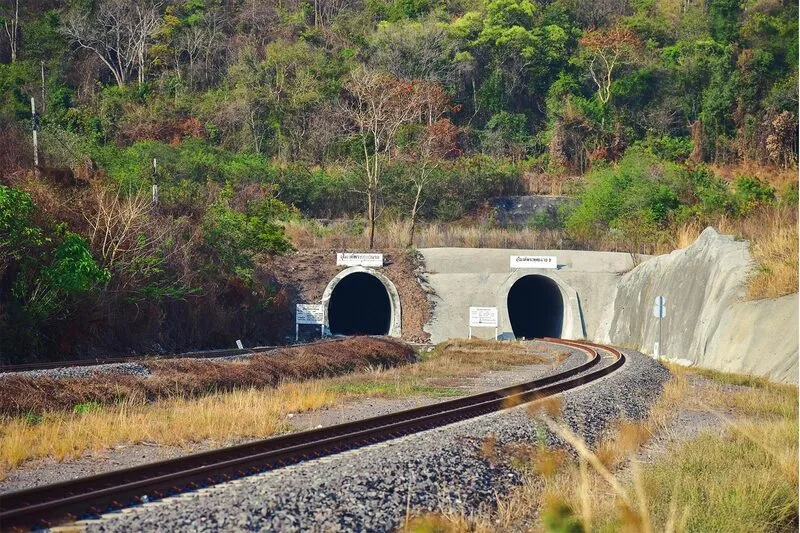
The tunnel is a single-track railway tunnel measuring 7 meters wide, 7 meters high, and 1,197 meters long. It was completed in 1994 and has long been recognized for its importance in Thai railway engineering. It was widely noted for being the longest railway tunnel in Thailand built by Thai engineers, and it remains one of the country’s most impressive railway tunnels today.
What makes Phra Phutthachai Railway Tunnel especially appealing to foreign travelers is not only its scale, but also its atmosphere. The concrete tunnel mouth, shaped like a horseshoe arch, frames the sky beautifully and creates a dramatic perspective for photography. The surrounding hills, railway lines, and quiet countryside give the place a cinematic quality that feels very different from the better-known urban attractions of Thailand.
The tunnel is part of an active railway line, which adds another layer of interest. It is not simply an abandoned structure or a decorative attraction. It is a working piece of transport infrastructure set within a natural landscape, allowing visitors to appreciate both its functional design and its visual impact. That balance between utility and beauty is one of the reasons the site has become increasingly popular among photographers and independent travelers.
Many people come here mainly for the visuals. Standing at one end of the tunnel and looking through the long dark interior toward the light at the far end creates a powerful sense of depth. From inside, the opening frames the blue sky and surrounding hills in a way that feels almost like a scene from a film. From outside, the arch itself becomes the central subject, especially when photographed with a person standing in scale beside it.
At the same time, the tunnel also appeals to travelers who are interested in infrastructure, railway history, and the development of transportation in Thailand. Railway tunnels are relatively rare and highly site-specific, shaped by geography and technical demands. Visiting this tunnel offers a closer understanding of how rail routes were designed to pass through mountainous terrain in Saraburi while maintaining operational efficiency.
Another advantage of visiting the tunnel is its proximity to other attractions in Saraburi. Travelers can easily combine it with a trip to Wat Phra Phutthachai, Namtok Sam Lan National Park, Tham Phothisat, and other nearby natural or cultural stops. This makes the tunnel a strong addition to a half-day or full-day Saraburi itinerary, especially for visitors who want more than the province’s standard waterfall or sunflower field circuit.
The atmosphere around the tunnel is simple and quiet. There are no major commercial facilities built directly around the structure, which is part of its charm. Visitors do not come here for shopping or entertainment complexes. They come for the landscape, the structure itself, and the experience of finding a place that still feels slightly hidden. That sense of discovery is part of what makes the tunnel memorable.
For photographers, timing matters. Early morning and late afternoon offer better light and a more comfortable temperature. Midday can still work for photos, but the area is exposed and can become very hot. Comfortable shoes, drinking water, sun protection, and caution around the railway are essential. Since this is an active rail line, visitors should never stand carelessly on the tracks or ignore safety awareness while taking pictures.
In broader travel terms, Phra Phutthachai Railway Tunnel shows another side of Saraburi. It is not a grand temple, not a market, and not a conventional scenic viewpoint. Instead, it is a place where the journey itself becomes part of the experience. The combination of rail engineering, natural surroundings, and a strong visual identity makes it an excellent stop for travelers looking for lesser-known destinations near Bangkok.
Getting There is easiest by private car. From Saraburi town, visitors usually drive toward the Wat Phra Phutthachai area and continue toward access roads leading into the Khao Chong Ling section. The tunnel can be reached from both the side associated with Phra Chai/Nong Pla Lai and the side connected to Charoen Tham in Wihan Daeng. Parking is generally done along access roads or local roadside areas before walking to the tunnel entrance. Because the railway is still in operation, caution is essential at all times.
| Name | Phra Phutthachai Railway Tunnel |
| Location | Khao Chong Ling area, at the boundary of Charoen Tham, Wihan Daeng, and Nong Pla Lai, Mueang Saraburi, Saraburi Province |
| Highlights | A 1,197-meter single-track railway tunnel, horseshoe-shaped entrance, scenic mountain setting, and a popular photography location |
| History / Period | Completed in 1994 and widely recognized as the longest railway tunnel in Thailand built by Thai engineers at the time |
| Distinctive Features | Single-track tunnel, 7 meters wide, 7 meters high, 1,197 meters long, surrounded by hills and natural scenery |
| Travel Information | About 12 km from Namtok Sam Lan National Park headquarters; best accessed by private car followed by a short walk |
| Current Status | Open-access photo spot, but the railway line remains active and visitors must be extremely careful |
| Open Days | Open daily |
| Opening Hours | Accessible throughout the day, though daytime visits are recommended |
| Fees | No admission fee information available |
| Nearby Tourist Attractions | 1. Wat Phra Phutthachai – 5 km 2. Namtok Sam Lan National Park – 12 km 3. Tham Phothisat – 14 km 4. Bu Yai Railway Station – 4 km 5. Chang Thong Kham Elephant Conservation Center – 3 km |
| Nearby Restaurants | 1. Tamlueng Phra Phut Chai Noodle – 6 km Tel. 036-302-700, 081-434-7664, 065-997-8297 2. Krua Papatsorn – 6 km Tel. 098-274-1628, 081-290-8565 3. Baan Jaosua – 7 km Tel. 036-712-649 4. BASKET COFFEE – 8 km Tel. 061-401-3792, 085-960-3943 5. Pinto Cafe & Eatery – 9 km Tel. 062-739-3567 |
| Nearby Accommodations | 1. Glai Gan Place Hotel – 16 km Tel. 090-249-2497 2. Chuan Chom The High Resort Saraburi – 18 km Tel. 036-222-533, 084-220-1999 3. Saraburi Garden Resort – 17 km Tel. 083-465-1464, 036-222-228 4. Baan Dara Resort – 19 km Tel. 036-222-875, 086-683-8501 |
Frequently Asked Questions (FAQ)
Q: Where is Phra Phutthachai Railway Tunnel?
A: It is in Saraburi Province, in the Khao Chong Ling area near the boundary between Wihan Daeng and Mueang Saraburi.
Q: How long is the tunnel?
A: The tunnel is 1,197 meters long, 7 meters wide, and 7 meters high.
Q: Is the railway still active?
A: Yes. It is still an operational railway line, so visitors must be very careful.
Q: When is the best time to visit?
A: Early morning or late afternoon is best for good light and cooler temperatures.
Q: What kind of travelers would enjoy this place?
A: It is ideal for photographers, railway enthusiasts, landscape lovers, and travelers looking for lesser-known attractions near Bangkok.
Q: Can I combine this visit with other places nearby?
A: Yes. It pairs well with Wat Phra Phutthachai, Namtok Sam Lan National Park, and other nearby attractions in Saraburi.
 Category: ●Art, Culture and Heritage
 Group: ●Landmarks and Memorials
Last Update : 7 MonthAgo
 Last Update : 7 MonthAgo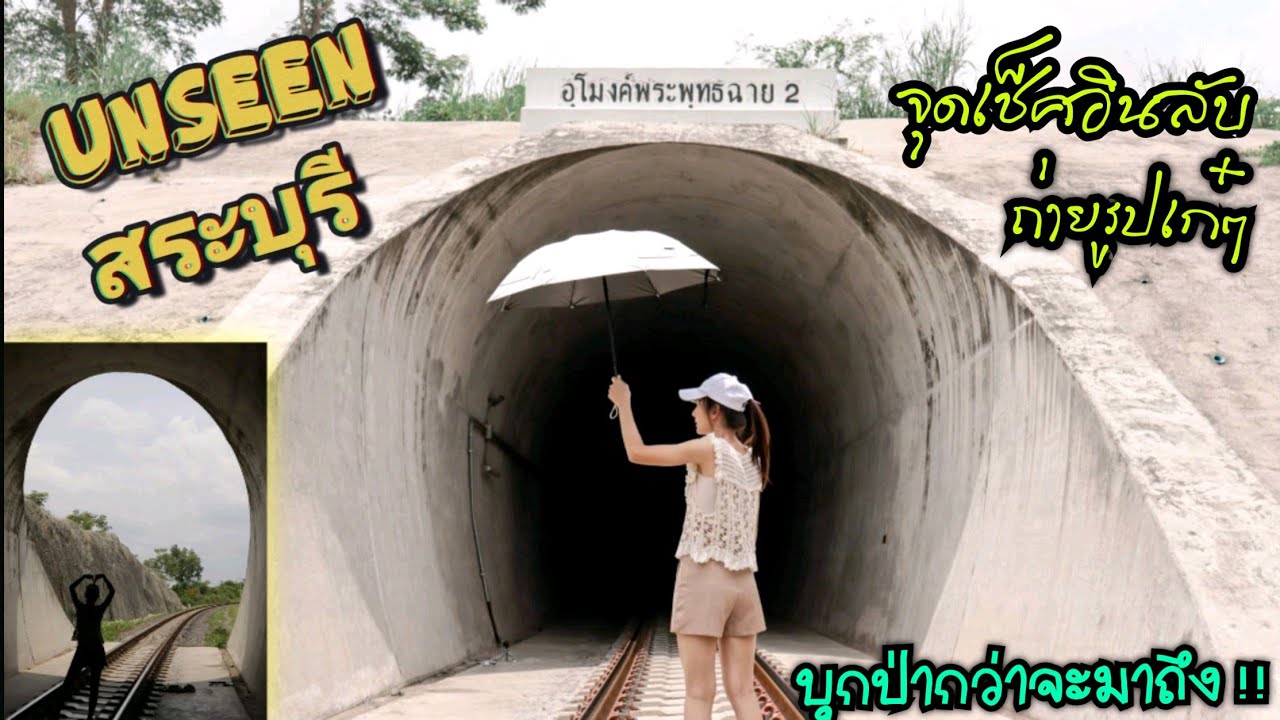
 Click to Access the Navigation Map GPS
Phra Phutthachai Railway Tunnel Map
Recommend

 Historical Sites and Monuments(2)
Landmarks and Memorials(2)
Historical Sites and Monuments(2)
Landmarks and Memorials(2)
 Royal Palace(4)
 Art, Craft Centres, Tradition(4)
 Museums(1)
 Educational Places
 Museum for Study(1)
 Educational Gardens, Farm(2)
 Places of Worship
 Temple(8)
 Other Sacred Sites(6)
 Research and Development
 Royal Project(1)
 Suburban Living
 Village, Community(3)
 Nature and Wildlife
 National Parks and Marine Reserves(3)
 Mountain (Doi)(3)
 Waterfalls(5)
 Caves(6)
 Flower Field(1)
 River, Canal(1)
 Bays and Beaches(1)
 Other natural attractions(2)
 Entertainment and Agricultural
 Zoos and Aquariums(1)
 Animal camps and shows(1)
 Farms, Parks and Ecotourism(8)
 Outdoor and Adventure Activities(1)
 Travel Articles, Recipes
 Travel Review, Food Review(1)


