
lovethailand home >Central Travel Attractions >Saraburi Travel Attractions >Sao Hai >Muang Kao > Wat Chanthaburi
TL;DR: Wat Chanthaburi is located at Mueang Kao Subdistrict, Sao Hai District, Saraburi, open Daily, hours 08:30 - 16:30. Highlights include Historic ubosot, Chinese ceramic stucco pediment, mural paintings of multi-ethnic life in early Rattanakosin central Thailand.
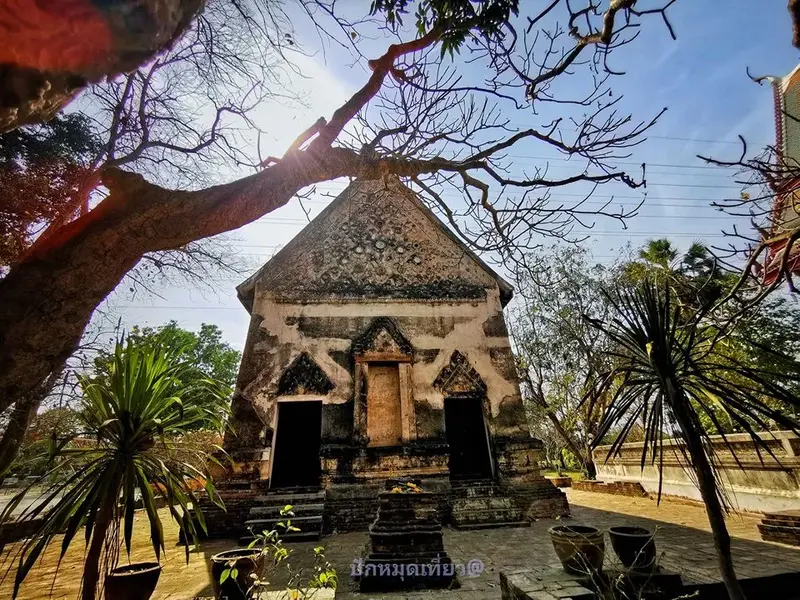
Wat Chanthaburi
Open Days: Daily
Opening Hours: 08:30 - 16:30
Wat Chanthaburi is located in Mueang Kao Subdistrict, Sao Hai District, Saraburi Province. It is a local temple of the Maha Nikaya order, but its significance reaches far beyond an ordinary community monastery. The temple is especially valued for its old ubosot and its rare mural paintings, which portray not only Buddhist themes but also the lives of different ethnic communities in central Thailand during the early Rattanakosin period. For travelers interested in history, architecture, and cultural heritage, this is one of the most rewarding old temples to visit in Saraburi.
The temple was officially established on March 15, 1892, and later received its royal boundary charter on October 14, 1982. Even so, the artistic character of its buildings clearly reflects older cultural layers within the Sao Hai–Mueang Kao community. This makes Wat Chanthaburi a place where formal temple history, local memory, and heritage architecture all meet in one setting.
The temple name is also historically meaningful. It is believed to be connected with the phrase “Chanthaburi Si Sattanak,” another name for Vientiane. This fits the settlement history of Lao communities in Saraburi, especially migrants who came from Vientiane during the reigns of King Rama I and King Rama III. Because of this, the temple is not only a religious site, but also a cultural marker of migration, settlement, and identity in central Thailand.
The heart of Wat Chanthaburi is its historic ubosot, built in 1893. It is a brick-and-plaster structure with a gabled roof, no chofa or bai raka, and traditional clay roof tiles. The pediment is decorated with stucco and Chinese ceramic ornament, reflecting the aesthetic preferences associated with the reign of King Nangklao. These details give the building a distinctive character and make it a valuable example of local temple craftsmanship shaped by royal-era artistic influence.
Inside, the ubosot is an open hall without an obvious internal row of columns. It spans seven bays and feels unexpectedly spacious for a temple of this scale. The principal Buddha image is seated in meditation, and in front of it stand two Mara-victory Buddha images and two smaller meditation images. Together, they create a calm and dignified devotional space.
What sets Wat Chanthaburi apart most clearly is its mural painting. The murals do not focus only on the life of the Buddha and celestial assemblies. They also depict the daily lives of different ethnic groups in central Thailand during the early Rattanakosin era, including Lao, Chinese, Yuan, and Siamese communities. This gives the temple unusual documentary value, because the paintings preserve visual evidence of clothing, behavior, local social life, and the multicultural atmosphere of the period.
The front wall of the ubosot features a double-layered ban thalaeng arch niche used for enshrining Buddha images, while the two entrance doors are placed on either side of the niche. This arrangement gives the facade a clear architectural rhythm and reflects the skill of craftsmen who balanced sacred symbolism with spatial design.
Wat Chanthaburi is therefore important not only as a functioning temple, but also as a registered historic monument under the Fine Arts Department. That status confirms the national value of its ubosot and mural paintings. For visitors who enjoy exploring old temples in Saraburi, this temple offers a quieter but deeper experience than many better-known sites, especially if your interest lies in mural art and local heritage.
The overall atmosphere is peaceful and understated. This is not a large, crowded temple complex, which actually makes it more appealing for slow cultural travel. You can spend time observing the ubosot, appreciating the structure and mural details, and absorbing the mood of an old riverside community landscape without feeling rushed.
In cultural terms, Wat Chanthaburi also reflects the identity of Sao Hai and old Saraburi as an area shaped by different communities over time. The murals are not simply decorative paintings. They are visual records of a mixed society in central Thailand and help modern visitors understand the region’s cultural layering much more clearly.
Travel Information From Saraburi town, travel toward Sao Hai District and continue into Mueang Kao Subdistrict. The temple stands in Ban Mueang Kao, Moo 6, along Highway 3041, about 1 km past the Sao Hai District Office. Clear signposts lead into the temple area. The easiest way to visit is by private car, and Wat Chanthaburi fits well into the same day trip as Wat Sao Hai Chonnaphan, Wat Khao Kaew Worawihan, Ban Ton Tan Market, and local cafés in Sao Hai.
If you want to continue exploring after your temple visit, the Sao Hai area offers more temples, riverside spots, cafés, local eateries, and small resorts nearby. That makes Wat Chanthaburi a strong stop on a half-day or full-day cultural itinerary in Saraburi, especially for travelers who prefer heritage places with depth rather than crowds.
| Name | Wat Chanthaburi |
| Location | Mueang Kao Subdistrict, Sao Hai District, Saraburi |
| Address | Moo 6, Mueang Kao, Sao Hai, Saraburi 18160 |
| Highlights | Historic ubosot, Chinese ceramic stucco pediment, mural paintings of multi-ethnic life in early Rattanakosin central Thailand |
| History | Officially established on March 15, 1892; ubosot built in 1893; royal boundary granted on October 14, 1982 |
| Name Origin | Likely linked to “Chanthaburi Si Sattanak,” an alternative name of Vientiane, reflecting Lao settlement history in Saraburi |
| Distinctive Features | Brick-and-plaster ubosot with clay roof tiles, no chofa or bai raka, open interior hall, important mural paintings, and Fine Arts Department registration |
| Travel Information | About 1 km past Sao Hai District Office along Highway 3041; easiest to reach by private car |
| Current Status | Open to visitors and worshippers as usual |
| Open Days | Daily |
| Opening Hours | 08:30 - 16:30 |
| Fees | No verified admission fee published |
| Facilities | Parking area, worship space, restrooms |
| Main Areas / Zones | Historic ubosot, principal Buddha image zone, mural viewing area, surrounding temple grounds in the old community quarter |
| Abbot / Caretaker | Phra Phairot Sajjawaro (latest publicly verifiable caretaker information from Wat Chanthaburi community activity records) |
| Main Contact Number | 036-332-741 |
| Nearby Tourist Attractions | 1. Wat Sao Hai Chonnaphan - 3 km 2. Wat Khao Kaew Worawihan - 4 km 3. Yonok Park and Sacred Riverside Landing - 5 km 4. Ban Ton Tan Ancient Floating Market - 9 km 5. Wat Pak Bang - 10 km |
| Nearby Restaurants | 1. Kuaitiao Yai Rak - 6 km - Tel. 061-417-1426, 061-565-9509 2. LaoVien Cafe & Eatery - 7 km - Tel. 088-664-6926 3. Khaona Cafe - 8 km - Tel. 062-795-5500 4. Baan Suan Phu Thong Restaurant - 8 km - Tel. 095-561-9282 5. Pa Piak Ban Khok - 6 km - Tel. 080-812-7107 |
| Nearby Accommodations | 1. Pasak River House - 7 km - Tel. 083-833-4449 2. Maai Horm Boutique Resort - 10 km - Tel. 097-999-5890 3. Grand Pruksa Siri Saraburi - 12 km - Tel. 091-009-4169 4. Ivy Cottage by Qiu - 13 km - Tel. 066-199-2321, 094-123-4800 5. Pasak River House Home Stay - 7 km |
Frequently Asked Questions (FAQ)
Q: Where is Wat Chanthaburi located?
A: It is in Mueang Kao Subdistrict, Sao Hai District, Saraburi Province, about 1 km past the Sao Hai District Office.
Q: What is the main highlight of Wat Chanthaburi?
A: The main highlight is its historic ubosot and the mural paintings showing both Buddhist subjects and the lives of different ethnic communities in central Thailand.
Q: What time is Wat Chanthaburi open?
A: It is open daily from 08:30 to 16:30.
Q: Why is Wat Chanthaburi historically important?
A: It reflects the cultural history of old Sao Hai, Lao migration into Saraburi, and preserves a registered historic ubosot with important mural art.
Q: Who would enjoy visiting this temple most?
A: It is especially suitable for visitors interested in old temples, Thai mural art, local history, and cultural travel.
Q: What can I visit after Wat Chanthaburi?
A: Nearby options include Wat Sao Hai Chonnaphan, Wat Khao Kaew Worawihan, Yonok Park, Ban Ton Tan Ancient Floating Market, and Wat Pak Bang.
Q: Are there restaurants and hotels nearby?
A: Yes. There are several nearby dining options and accommodations in the Sao Hai and Saraburi area, including LaoVien Cafe & Eatery, Khaona Cafe, Pasak River House, and Maai Horm Boutique Resort.
 Category: ●Places of Worship
 Group: ●Temple
Last Update : 6 MonthAgo
 Last Update : 6 MonthAgo
 Click to Access the Navigation Map GPS
Wat Chanthaburi Map
Gellery
Recommend

 Art, Culture and Heritage
 Historical Sites and Monuments(2)
 Landmarks and Memorials(2)
 Royal Palace(4)
 Art, Craft Centres, Tradition(4)
 Museums(1)
 Educational Places
 Museum for Study(1)
 Educational Gardens, Farm(2)
Temple(8)
Educational Gardens, Farm(2)
Temple(8)
 Other Sacred Sites(5)
 Research and Development
 Royal Project(1)
 Suburban Living
 Village, Community(3)
 Nature and Wildlife
 National Parks and Marine Reserves(3)
 Mountain (Doi)(3)
 Waterfalls(5)
 Caves(6)
 Flower Field(1)
 River, Canal(1)
 Bays and Beaches(1)
 Other natural attractions(2)
 Entertainment and Agricultural
 Zoos and Aquariums(1)
 Animal camps and shows(1)
 Farms, Parks and Ecotourism(8)
 Outdoor and Adventure Activities(1)
 Travel Articles, Recipes
 Travel Review, Food Review(1)


