
lovethailand home >Central Travel Attractions >Saraburi Travel Attractions >Phra Phuttha Bat >Khun Khlon > Phra Tamnak Thai Phikun (The Old Palace)
TL;DR: Phra Tamnak Thai Phikun (The Old Palace) is located at Khun Khlon Subdistrict, Phra Phutthabat District, Saraburi.

Phra Tamnak Thai Phikun (The Old Palace)
Operating day: Daily
Operating time: 08.30 - 16.30
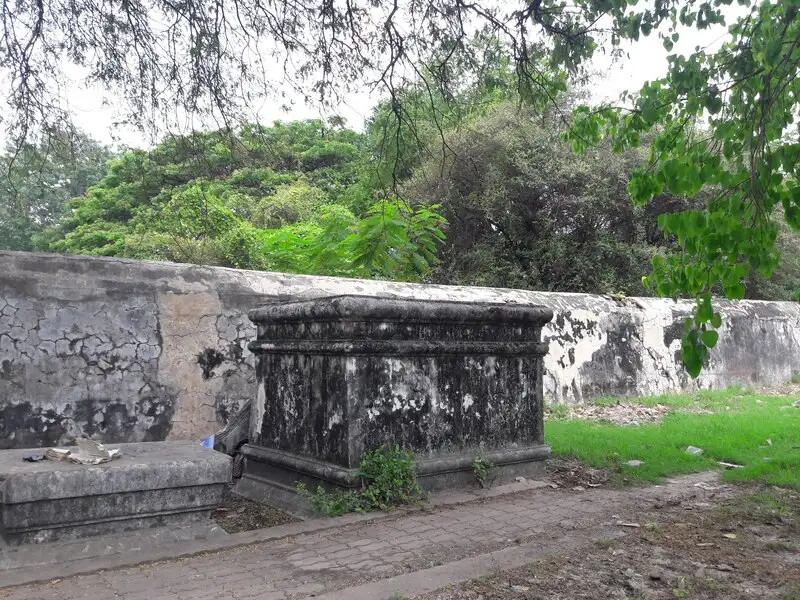
Phra Tamnak Thai Phikun, also known as Phra Ratchawang Thai Phikun, is an important historical ruin in Phra Phutthabat District, Saraburi. Its significance comes from its close connection to the royal pilgrimage route to the sacred Buddha’s Footprint. Although the palace buildings no longer survive, the site still preserves major historical traces, especially the elephant mounting platform, sections of the surrounding wall, and remains of the old foundations. These surviving elements make the site one of the most meaningful heritage stops in Saraburi for visitors interested in deeper Thai history.
The appeal of Phra Tamnak Thai Phikun lies in its quiet historical emptiness. This is not a fully restored royal complex with standing halls and elaborate decoration. Instead, it is a place where absence itself becomes part of the experience. The remaining walls, mounting platform, and ground plan allow visitors to imagine the former palace zone and understand how the royal court organized space around the sacred pilgrimage center of Phra Phutthabat.
The site is located in Khun Khlon Subdistrict, Phra Phutthabat District, Saraburi, within the wider historical landscape surrounding Wat Phra Phutthabat Ratchaworamahawihan. This area contains not only the temple itself, but also associated palaces, pavilions, and resting places that supported royal visits in different periods. Phra Tamnak Thai Phikun should therefore be seen as part of a larger sacred and royal network rather than as a stand-alone ruin.
Historically, the palace is associated with King Songtham, who ordered it built as a royal residence for his visits to worship the Buddha’s Footprint. This is a major point of importance because it shows how central the sacred site was to the Ayutthaya court. The palace was not simply a convenient resting place. It was part of a structured royal landscape created to support ceremonial travel, religious devotion, and royal presence in the area.
Later, in the Rattanakosin period, King Mongkut ordered a new palace structure to be built on the original foundations. This confirms that the site remained important long after the Ayutthaya period and continued to hold ceremonial and historical value. Even though those later structures have disappeared, the continuity of rebuilding shows that Thai Phikun was regarded as a meaningful royal site across multiple eras.
Today, the most striking surviving feature is the elephant mounting platform. This is a particularly valuable element because it directly reflects the ceremonial and practical life of the royal court. A mounting platform was used for royal boarding and dismounting from animals or vehicles, and its survival helps visitors visualize movement, processions, and the lived reality of royal presence in the sacred zone.
The ruin is also important from an archaeological perspective. Excavations have revealed multiple brick-and-mortar structural remains as well as an old ceramic water-pipe system connected from Than Thong Daeng. This detail is extremely significant because it shows that the palace area was not a simple temporary stop. It had a planned infrastructure, including water management, which reflects the sophistication of palace construction in the pilgrimage landscape of Phra Phutthabat.
The relationship with Than Thong Daeng adds another layer of meaning. Water was not merely a natural feature in this landscape. It played a practical, environmental, and aesthetic role in shaping where palaces and pavilions were built. In this sense, Phra Tamnak Thai Phikun was part of a carefully organized setting that combined sacred geography, natural water resources, and royal architecture.
Although no standing palace remains today, the site still has cultural life in the present. It continues to be recognized as the historic palace area of Thai Phikun and is still used as a venue for local cultural and tourism-related events in Phra Phutthabat. That present-day use is important because it confirms the place has not been erased from public memory. It remains an active heritage landscape rather than a forgotten ruin.
For cultural travelers, this is one of the most rewarding historical stops in Saraburi precisely because it requires interpretation. Visitors do not come here to admire a complete building. They come to read traces, connect them with the temple nearby, and reconstruct the historical landscape in their minds. That makes it especially suitable for people who enjoy serious heritage travel rather than quick sightseeing.
Phra Tamnak Thai Phikun also becomes more meaningful when compared with nearby sites such as Phra Tamnak Than Kasem and Phra Tamnak Sa Yo. Together, these places show how the royal court used different kinds of structures within the same sacred route. Thai Phikun carries the strongest sense of a royal palace zone close to the central pilgrimage destination, while the others reflect different parts of the wider support system around the sacred landscape.
The atmosphere today remains closely connected with Wat Phra Phutthabat Ratchaworamahawihan. Because of that, visitors can easily include both places in the same trip. Adding Than Thong Daeng, Chao Pho Khao Tok Shrine, or the other nearby royal ruins creates a more complete understanding of why this district matters so much in Thai religious and royal history.
Getting There is easiest by private car. From Bangkok, take Highway 1 (Phahon Yothin Road) toward Saraburi and continue into Phra Phutthabat District. Use Wat Phra Phutthabat Ratchaworamahawihan as the main navigation point, then continue into the old palace zone near the temple area. Because the site is part of a historic landscape rather than a large modern tourist complex, using online navigation together with nearby landmarks is the most practical way to reach it.
Visitors should prepare drinking water, sun protection, and comfortable footwear, especially if combining multiple heritage sites in one day. The site is best appreciated slowly, with enough time to observe the remaining wall lines, the mounting platform, and the spatial relationship between the palace zone and the surrounding sacred landscape.
In the end, Phra Tamnak Thai Phikun is one of those places where a few surviving structures carry extraordinary historical weight. Even without a standing palace, the remaining platform, walls, and foundations preserve the memory of royal pilgrimage, ceremonial movement, and sacred geography. For anyone interested in deep cultural travel in Saraburi, this site deserves careful attention.
| Name | Phra Tamnak Thai Phikun |
| Location | Khun Khlon Subdistrict, Phra Phutthabat District, Saraburi |
| Address | Historic palace zone behind the main viharn area, near Wat Phra Phutthabat Ratchaworamahawihan, Khun Khlon Subdistrict, Phra Phutthabat District, Saraburi |
| Coordinates | 14.71806, 100.78694 |
| Highlights | Ancient royal palace ruin in the Phra Phutthabat heritage area with an elephant mounting platform, wall remains, foundation traces, and a strong link to the royal pilgrimage route |
| History | Ayutthaya period; built by King Songtham as a royal residence for visits to the Buddha’s Footprint, later rebuilt on the original base in the reign of King Mongkut |
| Name Origin | The historic palace area has long been known by the name “Thai Phikun,” which remains in local use to this day |
| Distinctive Features | No standing palace remains today, but the site preserves the elephant mounting platform, surrounding wall sections, foundation traces, and evidence of an old water system from Than Thong Daeng |
| Travel Information | Best reached by private car via Phra Phutthabat District, using Wat Phra Phutthabat Ratchaworamahawihan as the main navigation point |
| Current Status | A transformed historic monument with important surviving remains; the area is still recognized and used for cultural tourism activities |
| Open Days | No officially published visiting days were found |
| Opening Hours | No officially published visiting hours were found |
| Main Contact Number | Phra Phutthabat Municipality: 0-3626-7111 |
| Official Website / Official Page | www.praphutthabat.go.th, Amazing Thailand |
| Nearby Tourist Attractions | 1) Wat Phra Phutthabat Ratchaworamahawihan – 0.2 km 2) Phra Tamnak Than Kasem – 1.3 km 3) Than Thong Daeng – 2 km 4) Chao Pho Khao Tok Shrine – 2 km 5) Phra Tamnak Sa Yo – 6 km |
| Nearby Restaurants | 1) Krua Nai Ban By Phra Phutthabat – 1 km. Tel. 096-369-2644, 081-181-7931 2) Kiew Bang Sai Phra Phutthabat – 1 km. Tel. 092-784-3610 3) 48 Ahan Tam Sang (48coffee) – 2 km. Tel. 063-714-9202 4) Krua Khang Ban Phra Phutthabat – 2 km. Tel. 090-310-4954, 088-656-8086 5) Home Khun Fon – 3 km. Tel. 089-675-7760 |
| Nearby Accommodations | 1) The 24 Hotel – 3 km. Tel. 093-464-6194 2) Loving Resort Phra Phutthabat – 3 km. Tel. 036-670436 3) Favilla 2 Phra Phutthabat – 4 km. Tel. 097-053-2305 4) PS Hotel Saraburi – 4 km. Tel. 086-369-5101 5) Airak Resort – 10 km. Tel. 085-424-9454 |
Frequently Asked Questions (FAQ)
Q: Where is Phra Tamnak Thai Phikun located?
A: It is located in Khun Khlon Subdistrict, Phra Phutthabat District, Saraburi, near Wat Phra Phutthabat Ratchaworamahawihan.
Q: Why is Phra Tamnak Thai Phikun important?
A: It is an ancient royal palace site associated with King Songtham and the royal pilgrimage route to the sacred Buddha’s Footprint.
Q: What can visitors still see there today?
A: The palace buildings are gone, but the site still preserves the elephant mounting platform, wall remains, and traces of old foundations.
Q: What is the elephant mounting platform?
A: It is the structure used for royal boarding and dismounting from animals or vehicles, and it is one of the site’s most significant surviving features.
Q: Which nearby places should be visited together with this site?
A: Good companion sites include Wat Phra Phutthabat, Phra Tamnak Than Kasem, Than Thong Daeng, Chao Pho Khao Tok Shrine, and Phra Tamnak Sa Yo.
Q: What is the best way to reach the site?
A: A private car is the easiest option, using Wat Phra Phutthabat Ratchaworamahawihan as the main reference point for navigation.
 Category: ●Art, Culture and Heritage
 Group: ●Royal Palace
Last Update : 6 MonthAgo
 Last Update : 6 MonthAgo
 Click to Access the Navigation Map GPS
Phra Tamnak Thai Phikun (The Old Palace) Map
Recommend

 Historical Sites and Monuments(2)
 Landmarks and Memorials(2)
Royal Palace(4)
Landmarks and Memorials(2)
Royal Palace(4)
 Art, Craft Centres, Tradition(4)
 Museums(1)
 Educational Places
 Museum for Study(1)
 Educational Gardens, Farm(2)
 Places of Worship
 Temple(8)
 Other Sacred Sites(5)
 Research and Development
 Royal Project(1)
 Suburban Living
 Village, Community(3)
 Nature and Wildlife
 National Parks and Marine Reserves(3)
 Mountain (Doi)(3)
 Waterfalls(5)
 Caves(6)
 Flower Field(1)
 River, Canal(1)
 Bays and Beaches(1)
 Other natural attractions(2)
 Entertainment and Agricultural
 Zoos and Aquariums(1)
 Animal camps and shows(1)
 Farms, Parks and Ecotourism(8)
 Outdoor and Adventure Activities(1)
 Travel Articles, Recipes
 Travel Review, Food Review(1)


