
lovethailand home >Central Travel Attractions >Saraburi Travel Attractions >Chalerm Prakiat >Huai Bong > New Theory at Wat Mongkol Chaipattana
TL;DR: New Theory at Wat Mongkol Chaipattana is located at Khao Din Phatthana Subdistrict, Chaloem Phra Kiat District, Saraburi, open Daily, hours 08:30 – 16:30.
New Theory at Wat Mongkol Chaipattana
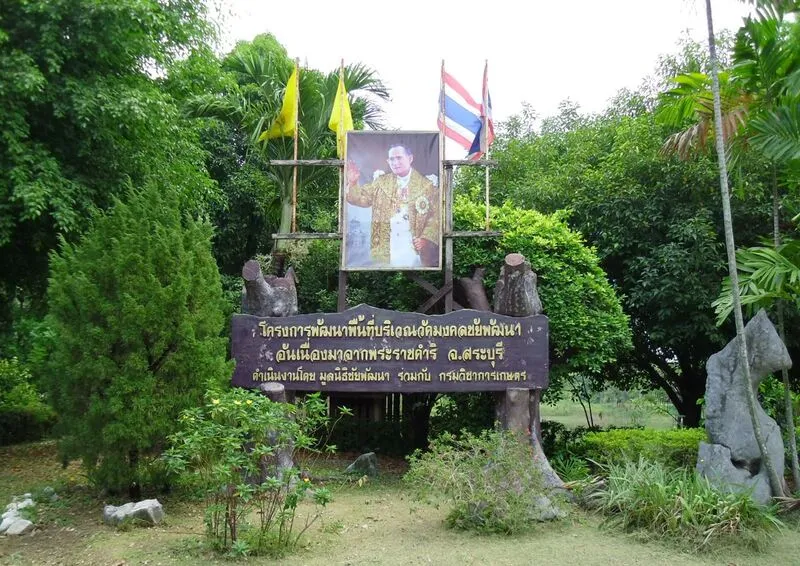
Open Days: Daily
Opening Hours: 08:30 – 16:30
The New Theory at Wat Mongkol Chaipattana, Saraburi is one of Thailand’s most important learning sites for the royal development philosophy because it is the place where His Majesty King Bhumibol Adulyadej the Great gave the royal initiative to test and demonstrate the “New Theory” in a concrete and practical way. This is not simply a temple visit. It is a place where visitors can clearly see how land and water can be managed so that a small farming household can become self-reliant, have enough food, secure water, and sustainable income from the same plot of land.
The historical roots of the site go back to 1988, when His Majesty gave instructions for land adjacent to Wat Mongkol in Saraburi to be acquired and developed as a real-life agricultural demonstration area. The temple later received the royal name “Wat Mongkol Chaipattana” on 3 October 1992. Although older records often refer to the area as being in Mueang Saraburi District, the project area is now located in Khao Din Phatthana Subdistrict, Chaloem Phra Kiat District, Saraburi Province. This detail is important for modern travelers planning a visit.
Wat Mongkol Chaipattana is especially significant because it is recognized as the first New Theory agricultural site in Thailand. In other words, this is not just one example among many. It is the original model that helped turn a royal concept into a visible and teachable system. Visitors do not merely walk through demonstration plots. They stand in the place where one of Thailand’s best-known royal development ideas first took form on the ground.
In simple terms, the New Theory is a way of organizing land and water so that small farmers can first secure the essentials of life before thinking about expansion. The familiar principle is often remembered as a 30-30-30-10 land division: one part for water storage, one for rice cultivation, one for mixed crops and fruit trees, and one for housing or other uses. At Wat Mongkol Chaipattana, however, the concept was adjusted to fit the actual conditions of the land. The working ratio became 16-35.5-24.5-24, showing clearly that the New Theory is not about memorizing numbers, but about understanding the principle and adapting it wisely to local conditions.
The New Theory demonstration plot at the site covers about 15.5 rai and is divided into four interrelated sections. The first section is the water reservoir, around 2.5 rai or 16 percent of the land, capable of storing approximately 18,000 cubic meters of water. This water supports rice farming during dry periods and helps sustain later crops, while also serving as a fish-raising area that adds food and supplementary income. The second section, about 5.5 rai or 35.5 percent, is the rice field. This reflects the royal emphasis on ensuring that villagers first have rice to eat. After harvest, the land can then be used for other field crops such as mung beans or similar plants.
The third section covers about 3.8 rai or 24.5 percent and is used for fruit trees, perennial trees, field crops, and medicinal plants. This part of the system demonstrates diversity and resilience. It includes fruit species and useful plants that support household food needs while also creating surplus for sale. The fourth section, approximately 3.7 rai or 24 percent, is used for housing, roads, poultry raising, and safe home-garden vegetables. This makes the entire area work as a connected living system rather than a single-purpose farm.
Seen as a whole, the site makes the New Theory easy to understand. Water is the foundation. Rice provides food security. Fruit trees and mixed crops create daily use and income. Housing and small livestock complete the household system. This is why the site remains so valuable for learning. Even visitors with no farming background can immediately understand the relationships between the pond, the rice field, the crop area, and the living zone once they see them laid out in one place.
In addition to the New Theory plot, Wat Mongkol Chaipattana also includes around 16.5 rai of integrated farming demonstration land. This broader section supports multiple forms of agricultural testing and development, including mixed field crops, fruit cultivation, vegetable planting, and practical farm management. As a result, the site is not only a model of the New Theory in a narrow sense, but also a broader learning center for sustainable agriculture based on moderation, local suitability, and efficient use of resources.
What makes the site especially compelling for general travelers is that it teaches through visible reality. It does not explain agricultural philosophy in abstract terms alone. It shows water storage, rice planting, diversified crops, and practical land use in a way that is immediately understandable. That is why Wat Mongkol Chaipattana has long attracted farmers, students, researchers, and ordinary visitors who want to understand the royal development philosophy in a more direct and practical form.
Another unique feature of the site is the way it combines the role of a royal temple with that of a learning center. Wat Mongkol Chaipattana is a royal monastery, but it is also a place where the royal development concept is carried forward through physical demonstration. This creates a distinctive atmosphere. Visitors experience the calm and dignity of a temple together with the openness of farmland, water systems, and educational plots. The result is both peaceful and intellectually engaging.
For anyone interested in the philosophy behind Thailand’s development approach, the site gives clear meaning to the phrase “self-reliance.” It does not suggest isolation or stagnation. Instead, it begins by building a stable base: enough rice, enough water, enough daily food, and a manageable system suited to the land. Once that base is secure, additional income and long-term resilience can grow from it. This is one of the reasons the New Theory remains highly relevant in Thailand today.
Reaching Wat Mongkol Chaipattana is relatively convenient by private car. The site lies along the Phahonyothin Road corridor in the area of Huai Bong and Khao Din Phatthana, Chaloem Phra Kiat District, Saraburi. It works well as a day trip from Bangkok or as part of a wider educational and cultural route within Saraburi Province. Because the roads are straightforward and the temple is an established landmark, the journey is generally simple for independent travelers.
Getting There is easiest by car from Saraburi town or from Bangkok, following the Phahonyothin route toward Chaloem Phra Kiat District and then continuing to Wat Mongkol Chaipattana. Visitors using digital navigation can search directly for the temple by name. Those planning a study visit or a more detailed educational tour may also contact the relevant office in advance during official working hours.
Today, Wat Mongkol Chaipattana continues to function as both a royal monastery and a living learning center. Ongoing temple activity and continued public engagement show that this is not a static historical site. It remains a working place of faith, education, and royal development learning. For travelers seeking a destination in Saraburi that offers inspiration, knowledge, calm surroundings, and direct connection to the legacy of King Bhumibol’s development thought, Wat Mongkol Chaipattana is one of the most meaningful places to visit.
| Name | Wat Mongkol Chaipattana Royal Monastery |
| Location | Khao Din Phatthana Subdistrict, Chaloem Phra Kiat District, Saraburi |
| Address | Moo 5, Phahonyothin 45, Huai Bong Subdistrict, Chaloem Phra Kiat District, Saraburi 18000 |
| Highlights | The first New Theory agricultural demonstration site in Thailand and a major learning center for royal development philosophy |
| History | The project began in 1988 under royal initiative, and the temple was later granted the name Wat Mongkol Chaipattana on 3 October 1992 |
| Distinctive Features | New Theory and integrated farming demonstration plots, water management learning area, rice fields, fruit trees, herbs, and a peaceful royal temple setting |
| Travel Information | Best reached by private car from Saraburi town or Bangkok via the Phahonyothin route into Chaloem Phra Kiat District |
| Current Status | Open to visitors and active as both a royal monastery and a royal-initiative learning site |
| Open Days | Daily |
| Opening Hours | 08:30 – 16:30 |
| Facilities | Parking area, walking paths through the project, demonstration plots, souvenir area, and temple facilities |
| Main Areas / Zones | New Theory demonstration plot, integrated farming zone, water reservoir, rice field, fruit and herb sections, and temple grounds |
| Abbot / Caretaker | Phra Rajavachiramongkolvisit |
| Main Contact Number | 036-221-644 |
| Official Website / Official Page | watmongkhonchaipattana.com |
| Nearby Tourist Attractions | 1) Talad Tang Mai at Wat Mongkol Chaipattana, about 0 km 2) Khao Din Phatthana Community Area, about 1 km 3) Talad Hua Plee, about 9 km 4) Manasikarn Hall, about 18 km 5) Ban Ton Tan Ancient Floating Market, about 20 km |
| Nearby Restaurants | 1) Uncle Tree Café, about 2 km, Tel. 061-828-7962 2) Mos Coffee, about 1 km 3) Talad Hua Plee, about 9 km, Tel. 061-524-1677, 081-852-9391 4) Khaona Café, about 16 km, Tel. 062-795-5500 5) Rongsi Coffee Kaeng Khoi, about 25 km, Tel. 086-802-5588, 097-010-0493, 081-977-2499 |
| Nearby Accommodations | 1) Pairom Resort, about 9 km, Tel. 097-093-0636, 087-675-9909, 095-390-2779 2) Baan Dara Resort Saraburi, about 18 km, Tel. 086-450-0570, 036-222-875 3) Chuan Chom The High Resort Saraburi, about 20 km, Tel. 036-222-533, 084-220-1999 4) Glai Gan Place Hotel Saraburi, about 20 km, Tel. 090-249-2497 5) Pasak Boutique Resort & Spa, about 23 km, Tel. 092-640-4210 |
Frequently Asked Questions (FAQ)
Q: What is the New Theory at Wat Mongkol Chaipattana?
A: It is a royal-initiative demonstration area showing how land and water can be managed so that small farmers can become self-reliant in a practical and sustainable way.
Q: Why is Wat Mongkol Chaipattana important?
A: It is recognized as the first New Theory agricultural site in Thailand and a major learning center for the royal development philosophy.
Q: What is the simple idea behind the New Theory?
A: The core idea is to divide land into balanced sections for water, rice, crops, and living space so a household can secure food, water, and income from the same area.
Q: Is the site in Mueang Saraburi or Chaloem Phra Kiat District?
A: Older records refer to Mueang Saraburi, but the current location is in Khao Din Phatthana Subdistrict, Chaloem Phra Kiat District, Saraburi Province.
Q: What can visitors see inside the project area?
A: Visitors can see the New Theory plot, integrated farming areas, a water reservoir, rice fields, fruit trees, herbs, and the temple grounds of Wat Mongkol Chaipattana.
Q: Who would enjoy visiting this place?
A: It is ideal for farmers, students, researchers, cultural travelers, and anyone interested in the royal development philosophy and self-reliant living.
Q: What is the best way to get there?
A: The most convenient way is by private car from Saraburi town or Bangkok, following the road into Chaloem Phra Kiat District and then continuing to Wat Mongkol Chaipattana.
 Category: ●Research and Development
 Group: ●Royal Project
Last Update : 3 MonthAgo
 Last Update : 3 MonthAgo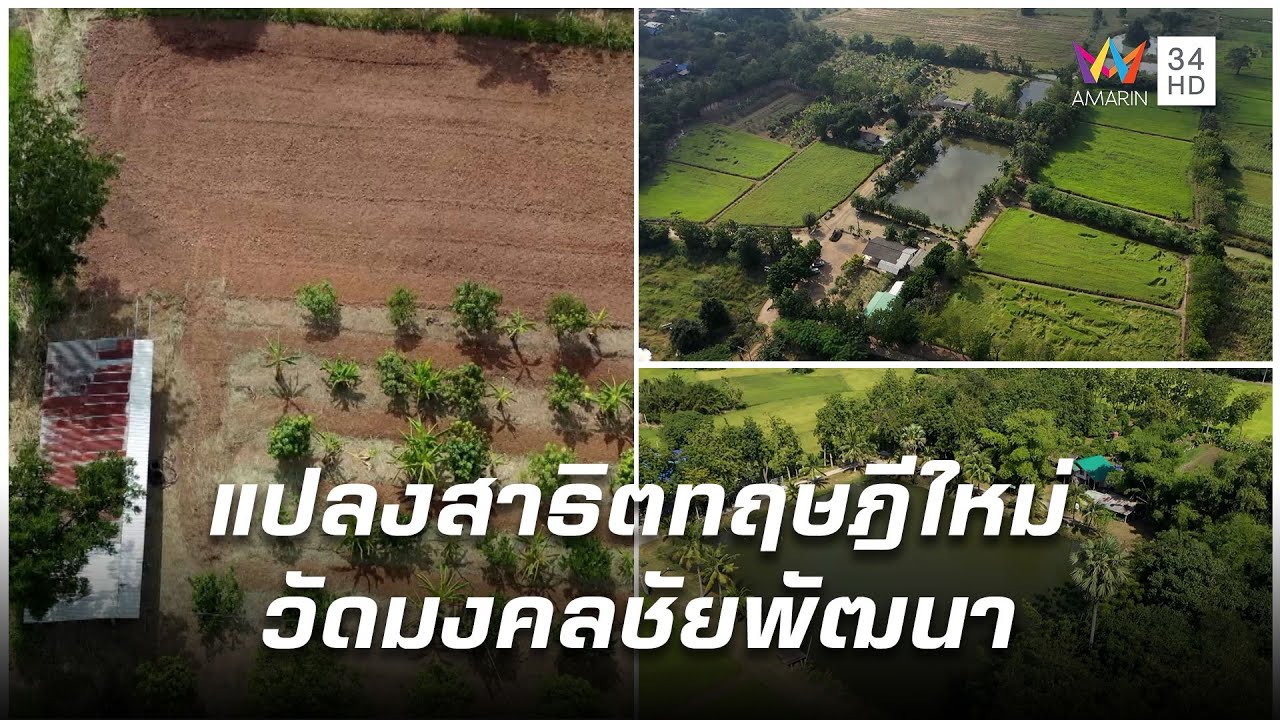
 Click to Access the Navigation Map GPS
New Theory at Wat Mongkol Chaipattana Map
Recommend

 Art, Culture and Heritage
 Historical Sites and Monuments(2)
 Landmarks and Memorials(2)
 Royal Palace(4)
 Art, Craft Centres, Tradition(4)
 Museums(1)
 Educational Places
 Museum for Study(1)
 Educational Gardens, Farm(2)
 Places of Worship
 Temple(8)
 Other Sacred Sites(5)
Royal Project(1)
Other Sacred Sites(5)
Royal Project(1)
 Suburban Living
 Village, Community(3)
 Nature and Wildlife
 National Parks and Marine Reserves(3)
 Mountain (Doi)(3)
 Waterfalls(5)
 Caves(6)
 Flower Field(1)
 River, Canal(1)
 Bays and Beaches(1)
 Other natural attractions(2)
 Entertainment and Agricultural
 Zoos and Aquariums(1)
 Animal camps and shows(1)
 Farms, Parks and Ecotourism(8)
 Outdoor and Adventure Activities(1)


