
lovethailand home >Central Travel Attractions >Samut Songkhram Travel Attractions >Muang Samut Songkhram >Mae Klong > Bai Sri Cloth Offering Tradition
TL;DR: Bai Sri Cloth Offering Tradition is located at Samut Songkhram Province, Thailand, open Held during funeral ceremonies, hours Not fixed (depends on funeral schedule).
Bai Sri Cloth Offering Tradition
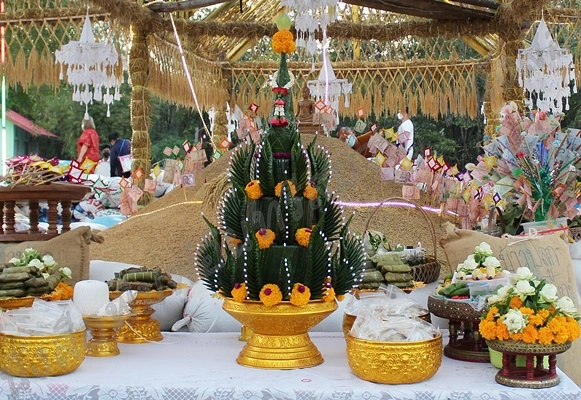
Open Days: Held during funeral ceremonies
Opening Hours: Not fixed (depends on funeral schedule)
Bai Sri Cloth Offering Tradition, Samut Songkhram is a unique cultural ritual found only in Samut Songkhram Province, Thailand. This tradition is closely associated with funeral ceremonies and reflects deep-rooted values of gratitude, respect for the deceased, and reconciliation within families. It continues to be practiced today as an important part of local heritage.
The core purpose of this tradition is to seek forgiveness and express respect, particularly in the relationship between a daughter-in-law and her husband's parents. In traditional Thai society, marriage connects not only two individuals but also two families. Conflicts or misunderstandings may occur over time, and this ritual provides an opportunity to resolve those issues before the cremation ceremony.
The term “Bai Sri” refers to a ceremonial arrangement made from banana leaves and flowers, carefully crafted into elegant layered structures symbolizing purity and auspiciousness. The “cloth offering” involves robes or fabric folded into lotus shapes, representing respect and spiritual merit.
During the ritual, the daughter-in-law prepares the Bai Sri set, which includes the decorative arrangement, folded cloth, Thai offering items, betel nuts, and monetary offerings. She then presents these items in front of the deceased, performing a formal apology and expressing gratitude. The ceremony is simple but emotionally meaningful.
After the apology ritual, all items are offered to monks in front of the body, symbolizing merit-making for the deceased and blessings for the living family members.
This tradition reflects key Thai cultural values such as gratitude, respect for elders, forgiveness, and maintaining harmony within families. Even in times of loss, it serves as a way to heal relationships and promote peace.
Historically, the tradition is believed to have been influenced by Chinese ancestral respect practices, which emphasize honoring the deceased and seeking forgiveness. Over time, these beliefs merged with Thai cultural practices, creating a unique ritual specific to Samut Songkhram.
Despite modernization, this tradition remains relevant because it provides emotional closure and reinforces strong family bonds, allowing families to move forward peacefully after loss.
| Name | Bai Sri Cloth Offering Tradition |
| Location | Samut Songkhram Province, Thailand |
| Type of Ritual | Funeral apology ritual |
| Timing | Before cremation ceremony |
| Main Participant | Daughter-in-law |
| Significance | Respect, apology, gratitude, reconciliation |
| Cultural Origin | Thai-Chinese cultural integration |
Frequently Asked Questions (FAQ)
Q: What is the Bai Sri cloth offering tradition?
A: It is a ritual where a daughter-in-law apologizes to her in-laws’ deceased body before cremation.
Q: When is this ritual performed?
A: It is performed during funeral ceremonies, before cremation.
Q: Why is the daughter-in-law the main participant?
A: It reflects traditional family roles and the importance of respect toward the husband’s family.
Q: What items are included in the Bai Sri offering?
A: Bai Sri arrangement, folded cloth, Thai offerings, betel nuts, and monetary offerings.
Q: Is this tradition still practiced today?
A: Yes, it is still preserved in Samut Songkhram Province.
 Category: ●Art, Culture and Heritage
 Group: ●Art, Craft Centres, Tradition
Last Update : 3 MonthAgo
 Last Update : 3 MonthAgo
Recommend

 Historical Sites and Monuments(2)
Art, Craft Centres, Tradition(1)
Historical Sites and Monuments(2)
Art, Craft Centres, Tradition(1)
 Museums(6)
 Historic Homes and Cities(1)
 Places of Worship
 Temple(34)
 Church(1)
 Research and Development
 Royal Project(2)
 Suburban Living
 Village, Community(6)
 Local Market(2)
 Floating Market(5)
 Nature and Wildlife
 River, Canal(1)
 Bays and Beaches(1)
 Other natural attractions(1)
 Entertainment and Agricultural
 Farms, Parks and Ecotourism(1)


