
lovethailand home >Central Travel Attractions
>Samut Songkhram Travel Attractions >Bang Kon Tee
>Ban Pramot
> Wat Pramot
TL;DR: Wat Pramot is located at Ban Pramot Subdistrict, Bang Khonthi District, Samut Songkhram, Thailand, open Daily, hours 05.00 – 20.00.
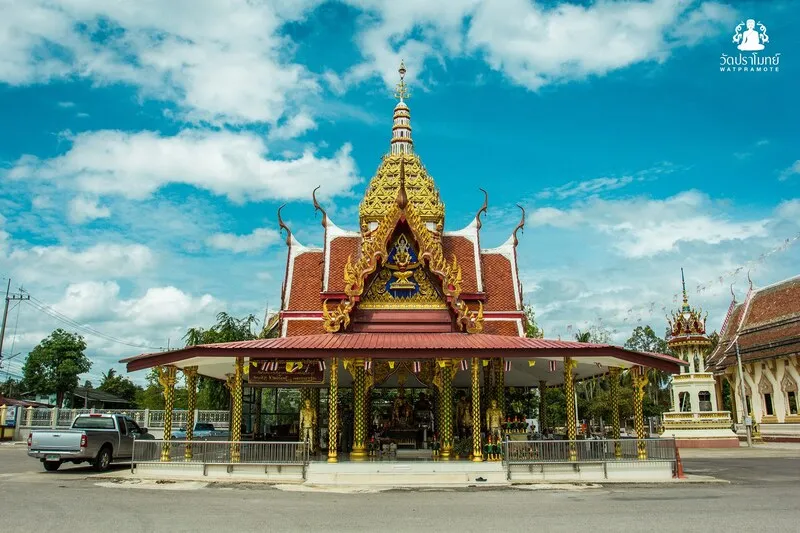
Wat Pramot
Open Days: Daily
Opening Hours: 05.00 – 20.00
Wat Pramot is a Buddhist temple under the Maha Nikaya order, located in Ban Pramot Subdistrict, Bang Khonthi District, Samut Songkhram Province. It is one of the important community temples in this part of the Mae Klong region and continues to serve as a spiritual center for local residents. Visitors often remember the temple for its peaceful setting, the revered Luang Pho To, and its large collection of religious buildings that reflect both historical continuity and ongoing development.
The temple was formally established in 1898, although older evidence connected with the former ordination hall indicates a longer historical background linked to the reign of King Chulalongkorn, Rama V. The temple was originally known as Wat Rong Wi, and later developed into Wat Pramot. It received royal boundary status again in 1953, marking an important stage in the temple’s formal religious development.
Wat Pramot is significant not only because of its age, but also because of its role as the religious heart of Ban Pramot. For generations, it has hosted merit-making activities, Buddhist holy day ceremonies, annual temple fairs, community gatherings, and examinations related to Buddhist education in Bang Khonthi District. This makes the temple a living religious institution rather than a site remembered only for its past.
The line of abbots at Wat Pramot is also well documented. Since the temple’s founding, there have been seven abbots: Luang Pho Roek, Luang Pho Mueang, Luang Pho Tuy, Luang Pho Phlop (Phra Khru Udomsutakit), Luang Pho Sui (the first Phra Khru Pramot Samutkhun), the second Phra Khru Pramot Samutkhun named Pira, and the current abbot, Phra Khru Pramot Panyawat, formerly Phra Khru Palad Bunlert Techapanyo, who also serves as the ecclesiastical chief of Bang Khonthi District. This continuity gives the temple strong institutional stability and local prominence.
The ordination hall is one of the temple’s key architectural features. Measuring 8 meters wide and 25.70 meters long, it was built in 1953 as a reinforced concrete Thai-style structure with a gilded pediment decorated in traditional kneeling deity motifs and Thai ornamental window frames. Inside, it houses the principal Buddha image together with the chief disciples, creating a formal and highly respected sacred space.
Wat Pramot also includes a large sermon hall measuring 12 by 30 meters, built in 1954, and a two-storey wooden chanting hall built in 1970. The temple compound contains four monks’ residences, an octagonal viharn, a shrine for Phra Khru Udomsutakit, a crematorium, a bell tower, two riverside pavilions, a provincial meditation pavilion, a museum of twin traditional Thai wooden houses, and several supporting structures used for religious and community purposes. These elements make the temple especially rich in architectural and cultural interest.
The temple’s most famous sacred image is Luang Pho To, a large statue in the Maitreya posture located in the viharn. It measures 4.12 meters across the lap and 4.32 meters in height. Local people have long regarded Luang Pho To as highly sacred, and the annual gold-leaf offering festival dedicated to this image remains one of the temple’s most important events.
Another major sacred object is the principal Buddha image in the ordination hall known as Phra In Prasert, believed to be more than 300 years old. This image adds considerable historical depth to Wat Pramot, showing that the temple preserves devotional traditions extending far beyond its modern construction phases. Together, Luang Pho To and Phra In Prasert make the temple attractive to both Buddhist pilgrims and visitors interested in religious heritage.
Wat Pramot is also active throughout the year with many recurring religious events, including New Year merit-making, Songkran activities, candlelight processions on major Buddhist holy days such as Visakha Bucha, Makha Bucha, and Asalha Bucha, royal birthday commemorations on 12 August and 5 December, memorial merit-making for former abbots, the annual Luang Pho To gold-leaf festival, almsgiving and precept observance on Buddhist holy days, Loy Krathong events, and local Dhamma examination activities. This strong calendar of events helps keep the temple deeply connected to everyday community life.
For travelers, Wat Pramot is an excellent stop for a cultural route through Samut Songkhram. It appeals to visitors interested in temples, community history, sacred images, and traditional architecture. Because the temple is located in Bang Khonthi, it can be combined easily with nearby attractions such as Wat Bang Sakae, Bang Noi Floating Market, Wat Bang Kung, the Cathedral of the Nativity of Our Lady in Bang Nok Khwaek, and Amphawa Floating Market.
Getting There Wat Pramot can be reached easily by private car from Samut Songkhram town or Amphawa. From there, continue toward Bang Khonthi District and then into Ban Pramot Subdistrict. The temple is located at Ban Pramot, Moo 2, and is straightforward to find using online navigation. It fits well into a one-day temple and cultural itinerary in the Bang Khonthi–Amphawa area.
Overall, Wat Pramot is one of the most complete and meaningful temples in Bang Khonthi. It combines documented abbatial lineage, active religious life, respected sacred images, historically layered architecture, and strong ties to local culture. For anyone asking whether Wat Pramot in Samut Songkhram is worth visiting, the answer is clear: it is a highly rewarding stop for those who want more than a quick photo and instead want a deeper encounter with living temple culture in central Thailand.
| Name | Wat Pramot |
| Location | Ban Pramot Subdistrict, Bang Khonthi District, Samut Songkhram, Thailand |
| Address | 13 Moo 2, Ban Pramot Subdistrict, Bang Khonthi District, Samut Songkhram 75120 |
| Highlights | Luang Pho To in the Maitreya posture, Phra In Prasert believed to be over 300 years old, the scripture hall over water, and the twin Thai wooden house museum |
| History | Formally established in 1898, formerly known as Wat Rong Wi, with historical links to the reign of King Rama V; royal boundary status granted in 1953 |
| Distinctive Features | Thai-style ordination hall, large sermon hall, two-storey wooden chanting hall, octagonal viharn, ancient sacred images, and a wide range of religious structures within one compound |
| Travel Information | Convenient by private car from Samut Songkhram town or Amphawa, with easy route connections to nearby temples and floating markets |
| Current Status | Open and active with regular religious events |
| Open Days | Daily |
| Opening Hours | 05.00 – 20.00 |
| Abbot / Caretaker | Phra Khru Pramot Panyawat (Bunlert Techapanyo) |
| Main Contact Number | 032-399-322, 081-268-8903 |
| Official Website / Official Page | Facebook: Luang Pho To Wat Pramot, Samut Songkhram |
| Nearby Tourist Attractions | 1. Wat Bang Sakae – about 2 km 2. Bang Noi Floating Market – about 6 km 3. Wat Bang Kung – about 11 km 4. Cathedral of the Nativity of Our Lady, Bang Nok Khwaek – about 12 km 5. Amphawa Floating Market – about 15 km |
| Nearby Restaurants | 1. Daeng Seafood Restaurant – about 20 km. Tel. 034-712-077, 063-368-7098 2. Ruen Wilai Mas – about 12 km. Tel. 081-995-9148 3. Baanthip Suanthong Restaurant – about 13 km. Tel. 099-362-3245 4. Krua Baan Pla Tubtim – about 15 km. Tel. 081-806-6838 5. Sathanikungpao – about 14 km. Tel. 062-861-9556 |
| Nearby Accommodations | 1. Amphawa Nanon – about 15 km. Tel. 034-752-111, 082-444-2111 2. Baan Nam Pen Resort – about 12 km. Tel. 034-702-528, 094-454-4149 3. Na Tree Tara Riverside Resort – about 16 km. Tel. 034-751-335, 093-592-5635 4. Baanthip Suanthong Resort – about 13 km. Tel. 096-346-9496, 092-252-5160 5. Baanrak Amphawa – about 15 km |
Frequently Asked Questions (FAQ)
Q: Where is Wat Pramot located?
A: Wat Pramot is located in Ban Pramot Subdistrict, Bang Khonthi District, Samut Songkhram Province.
Q: What is the most famous highlight of Wat Pramot?
A: The temple is especially known for Luang Pho To in the Maitreya posture, Phra In Prasert, and the scripture hall over water.
Q: Who is the current abbot of Wat Pramot?
A: The current abbot is Phra Khru Pramot Panyawat, also known as Bunlert Techapanyo.
Q: What time can visitors enter the temple?
A: Publicly available travel information lists visiting hours at approximately 05.00 to 20.00.
Q: Does Wat Pramot have an annual temple fair?
A: Yes. The annual gold-leaf offering festival for Luang Pho To is one of the temple’s best-known yearly events.
Q: What other places can be visited nearby?
A: Visitors can continue to Wat Bang Sakae, Bang Noi Floating Market, Wat Bang Kung, the Cathedral of the Nativity of Our Lady, and Amphawa Floating Market.
 Category: ●Places of Worship
 Group: ●Temple
 Last Update : 1 MonthAgo
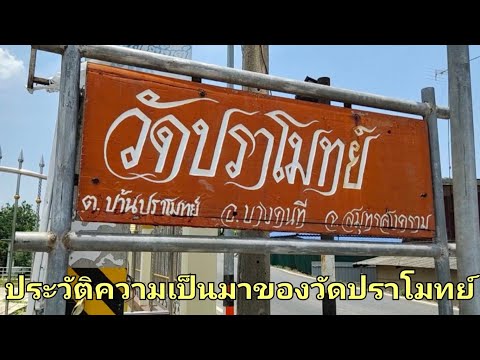
 Click to Access the Navigation Map GPS
 Art, Culture and Heritage
 Historical Sites and Monuments(
 Art, Craft Centres, Tradition(
 Museums(
 Historical Houses and The Ancient City(
 Church(
 Research and Development
 Royal Project(
 Suburban Living
 Village, Community(
 Local Market(
 Floating Market(
 Nature and Wildlife
 River, Canal(
 Bays and Beaches(
 Other natural attractions(
 Entertainment and Agricultural
 Farm, Parks, Gardens and Ecotourism(


