
lovethailand home >Central Travel Attractions >Samut Songkhram Travel Attractions >Bang Kon Tee >Bang Phrom > Ban Phraya Sor
TL;DR: Ban Phraya Sor is located at Bang Phrom Subdistrict, Bang Khonthi District, Samut Songkhram. Highlights include Traditional So U maker’s house, carved coconut-shell instruments, Thai musical heritage, rare decorative craftsmanship, learning experience.
Ban Phraya Sor
Operating day: Daily
Operating time: 08.00 - 17.00
The Art of Making So U at Ban Phaya So in Samut Songkhram is one of the most distinctive local cultural experiences in the province. So U, a traditional Thai bowed string instrument from central Thailand, becomes far more than a musical instrument here. At Ban Phaya So, the making of the instrument is combined with the art of carving coconut shells into elegant decorative patterns, turning each piece into both a playable instrument and a work of craftsmanship. For travelers who want to experience Samut Songkhram beyond floating markets and riverside food, this is a place that reveals a much deeper layer of Thai cultural heritage.
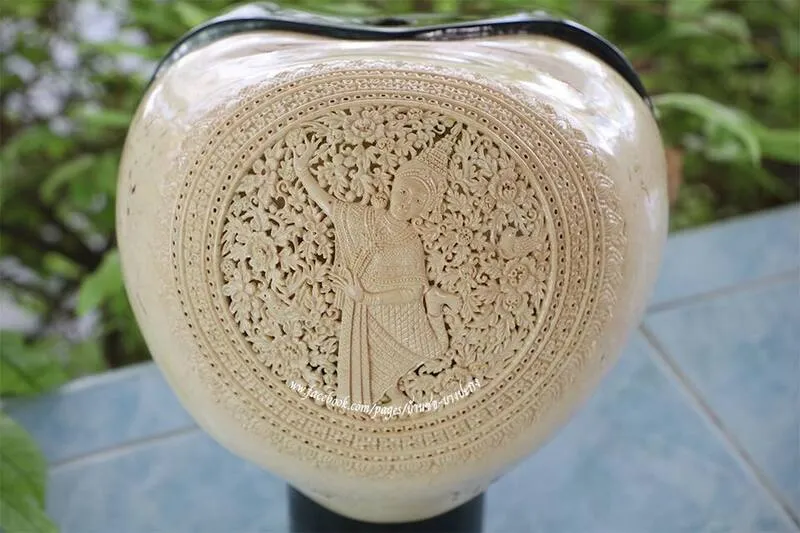
What makes Ban Phaya So so special is that it is not simply a music workshop or a souvenir stop. It is a craftsman’s home where traditional knowledge, musical skill, and decorative carving come together naturally. Visitors can see how the shell used for the body of the So U is selected and transformed through careful shaping and detailed carving. The finished instruments often feature character motifs, floral patterns such as the rose-like phutthan design, initials, or zodiac signs. This level of craftsmanship is now very rare, which makes the experience especially meaningful for visitors interested in living heritage.
For many people, the So U is already familiar as an instrument with a deep and mellow sound in Thai classical music. At Ban Phaya So, however, the instrument is understood in a broader way. It is not only about sound, but also about form, balance, decoration, and the way natural material can be turned into something both beautiful and expressive. The coconut shell used in making the instrument is carefully chosen for its qualities, because the shell influences both tone and durability. Once it is carved and finished, the result is an instrument with artistic identity as well as musical value.
The experience here is especially rewarding because visitors are able to understand the creative process rather than seeing only finished objects. Instead of looking at instruments displayed behind glass, travelers encounter a real craftsman’s setting and a real working tradition. That makes the visit far more personal. It becomes easier to appreciate how much knowledge and patience are required to produce one finely made So U, and why such craftsmanship deserves to be preserved.
Another important feature of Ban Phaya So is the connection between instrument-making and performance. The place is associated with Khun Somporn Ketkaeo, whose work links traditional music with handcraft. Visitors interested in Thai music can not only observe the carved instruments but also learn more about how the So U is played and why its structure matters. This gives the visit a richer educational dimension, especially for those who want to understand Thai music through both listening and material culture.
Within the wider context of Samut Songkhram, Ban Phaya So is a reminder that the province’s charm is not limited to Amphawa Floating Market, famous temples, or orchard scenery. It also holds highly specialized forms of local wisdom hidden within its communities. Located in Bang Phrom, Bang Khonthi District, the site offers a quieter and more intimate experience than many of the province’s better-known attractions. It gives travelers a chance to step into a local setting where cultural knowledge is still actively practiced.
For travelers who appreciate Thai craft traditions, Ban Phaya So is particularly inspiring. It shows how a familiar natural material such as coconut shell can be transformed into something refined, expressive, and culturally significant. This reflects a deeply rooted Thai way of working with the natural environment, where practical local materials become the basis for craftsmanship of high artistic quality. That transformation from ordinary material to cultural object is part of what makes the place so memorable.
The atmosphere also feels different from commercial tourist venues. Because Ban Phaya So is essentially a craftsman’s house and learning space, the visit feels more personal and direct. Travelers often feel as though they are visiting a master artisan rather than simply walking through an attraction. This closeness makes the experience more meaningful, especially for visitors who value conversation, demonstration, and real cultural exchange.
Ban Phaya So also carries importance in terms of cultural continuity. Carved So U instruments of this kind are increasingly difficult to find, especially in a context where the maker is still present to explain and demonstrate the work. The site therefore functions as more than a place to visit. It is a living knowledge space that helps keep traditional Thai handcraft and music connected to the present. This is exactly the kind of place that cultural travelers often hope to find but rarely do.
From a tourism perspective, Ban Phaya So fits well into a heritage route in the Amphawa and Bang Khonthi area. It can be combined with visits to King Rama II Memorial Park, Amphawa Floating Market, the Amphawa Chaipattananurak Project, and Wat Amphawan Chetiyaram. Adding Ban Phaya So to such an itinerary brings in a strong handcraft and music dimension, making the day more varied and culturally rewarding.
The site is also especially suitable for students, educational groups, and travelers interested in Thai classical music. Watching the making of a So U, hearing about the materials, and understanding how decorative carving is integrated into instrument-making helps explain Thai music in a fuller way. It becomes clear that the beauty of Thai instruments begins long before performance, in the choice of material, the care of construction, and the precision of decorative work.
For photographers, the charm of Ban Phaya So lies in authenticity. The carved instruments, the house setting, and the surrounding orchard community atmosphere create images that feel intimate and story-rich rather than monumental. The visual appeal comes from detail, texture, and craftsmanship. This makes the place particularly rewarding for those who enjoy documentary-style cultural photography.
On a broader level, Ban Phaya So reminds visitors that traditional knowledge survives when people continue to value and visit it. A trip here is not only about seeing beautiful handmade instruments. It is also a way of supporting the recognition of local craft heritage and the people who keep it alive. For culturally minded travelers, that makes the experience even more worthwhile.
Getting There is fairly straightforward. From Samut Songkhram town, take Highway 325 on the Samut Songkhram-Bang Phae route. Around kilometer 36-37, turn toward the King Rama II Memorial Park area, then continue for about 4 km beyond the park to reach Ban Phaya So in Bang Phrom, Bang Khonthi District. Since this is a craftsman’s house rather than a large open tourist complex, it is best to call ahead before visiting.
Overall, the art of making So U at Ban Phaya So is one of Samut Songkhram’s most valuable hidden cultural experiences. It combines Thai music, local craftsmanship, natural materials, and community identity in a single place. Visitors who come here do not just learn about an instrument. They gain a deeper understanding of how traditional Thai arts are created, sustained, and passed on through the lives of skilled local artisans.
| Name | The Art of Making So U at Ban Phaya So |
| Location | Bang Phrom Subdistrict, Bang Khonthi District, Samut Songkhram |
| Address | 43 Moo 5, Bang Phrom Subdistrict, Bang Khonthi District, Samut Songkhram 75120, Thailand |
| Coordinates | 13.451760, 99.948093 |
| Highlights | Traditional So U maker’s house, carved coconut-shell instruments, Thai musical heritage, rare decorative craftsmanship, learning experience about playing the So U |
| History | A living local craft site associated with Khun Somporn Ketkaeo, preserving the making and carving of So U instruments in Bang Phrom |
| Name Origin | Known as “Ban Phaya So” because of its reputation as a notable house of So U craftsmanship |
| Distinctive Features | Combines Thai music with fine carving on coconut-shell So U bodies, creating rare artistic instruments with local identity |
| Travel Information | From Samut Songkhram town, take Highway 325 toward Bang Phae, turn near kilometer 36-37 toward the King Rama II Memorial Park area, then continue about 4 km |
| Current Status | Still recognized as a cultural learning site and craft house; advance contact is recommended before visiting |
| Open Days | Please call in advance for an appointment |
| Opening Hours | Please call in advance for an appointment |
| Main Areas / Zones | So U making area, carved instrument display corner, learning space for So U playing, local craftsman’s house environment |
| Caretaker | Khun Somporn Ketkaeo |
| Main Contact Number | +66 34 761 949 |
| Nearby Tourist Attractions | 1) King Rama II Memorial Park - 4 km 2) Amphawa Floating Market - 4 km 3) Amphawa Chaipattananurak Project - 4 km 4) Wat Amphawan Chetiyaram - 5 km 5) Thai Cat House Amphawa - 5 km |
| Nearby Restaurants | 1) Ranjuan Amphawa - 4 km, Tel. +66 63 646 2892 2) Somanat Panich - 4 km 3) Khanom Jeen Khun Pu Pak Khlong Amphawa - 4 km 4) Chan Chala - 4 km 5) The Pomelo Amphawa - 7 km, Tel. +66 61 394 3136 |
| Nearby Accommodations | 1) Amphawa Nanon Hotel - 4 km, Tel. +66 34 752 111, +66 82 444 2111 2) At Casa Guesthouse Amphawa - 4 km, Tel. +66 80 633 0055 3) Thanicha Resort Amphawa - 5 km, Tel. +66 62 324 2914 4) House of Passion Amphawa - 6 km, Tel. +66 89 613 7838 5) Baan Amphawa Resort & Spa - 7 km, Tel. +66 34 752 228 |
Frequently Asked Questions (FAQ)
Q: Where is Ban Phaya So located?
A: It is located at 43 Moo 5, Bang Phrom Subdistrict, Bang Khonthi District, Samut Songkhram, Thailand.
Q: What is special about Ban Phaya So?
A: It is known for making So U instruments and carving coconut-shell instrument bodies with rare decorative patterns such as floral, character, initial, and zodiac motifs.
Q: Can visitors walk in without contacting the house first?
A: It is best to call in advance before visiting, as this is a craftsman’s house and learning site rather than a large open tourist venue.
Q: Can I learn about playing the So U there?
A: Yes. Visitors interested in Thai music can learn more about the So U and its use when arranging a visit in advance.
Q: Who would enjoy visiting Ban Phaya So?
A: It is ideal for travelers interested in Thai music, local craftsmanship, cultural heritage, educational visits, and community-based tourism.
Q: How much time should I allow for a visit?
A: Around 45 minutes to 1 hour is a good amount of time for viewing the carved instruments and learning about the craft.
Q: What other places can I visit nearby?
A: Nearby places include King Rama II Memorial Park, Amphawa Floating Market, the Amphawa Chaipattananurak Project, Wat Amphawan Chetiyaram, and Thai Cat House Amphawa.
Tel : 034761949
 Tel : 034761949
 Category: ●Suburban Living
 Group: ●Village, Community
Last Update : 7 MonthAgo
 Last Update : 7 MonthAgo
 Click to Access the Navigation Map GPS
Ban Phraya Sor Map
Recommend

 Art, Culture and Heritage
 Historical Sites and Monuments(2)
 Art, Craft Centres, Tradition(1)
 Museums(6)
 Historic Homes and Cities(1)
 Places of Worship
 Temple(34)
 Church(1)
 Other Sacred Sites(1)
 Research and Development
 Royal Project(2)
Village, Community(6)
Royal Project(2)
Village, Community(6)
 Local Market(2)
 Floating Market(5)
 Nature and Wildlife
 River, Canal(1)
 Bays and Beaches(1)
 Other natural attractions(1)
 Entertainment and Agricultural
 Farms, Parks and Ecotourism(1)
 Waterpark(1)
 Travel Articles, Recipes
 Travel Review, Food Review(1)


