
lovethailand home >Central Travel Attractions >Samut Songkhram Travel Attractions >Am Phawa >Am Phawa > King Rama II Memorial Park
TL;DR: King Rama II Memorial Park is located at Amphawa Subdistrict, Amphawa District, Samut Songkhram, open Monday-Sunday (Closed every Wednesday), hours 08:30-16:30.
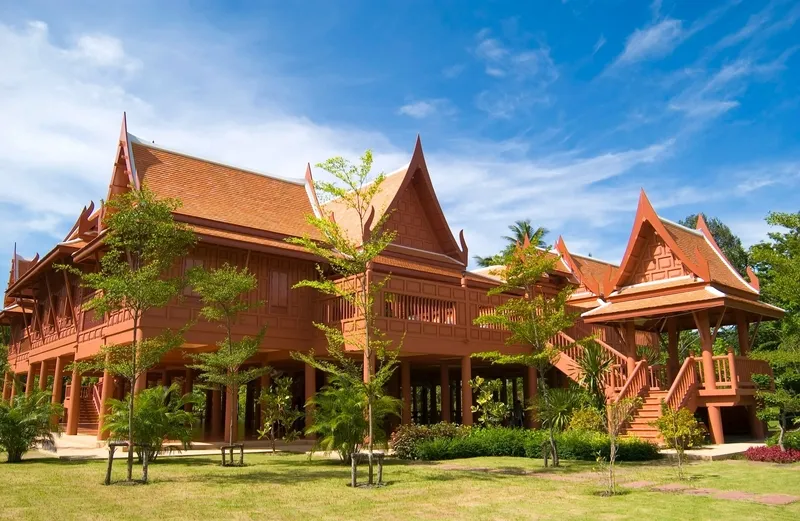
King Rama II Memorial Park
Open Days: Monday-Sunday (Closed every Wednesday)
Opening Hours: 08:30-16:30
King Rama II Memorial Park, officially known as the Memorial Park of King Phutthaloetla Naphalai, is one of the most important cultural attractions in Samut Songkhram. Located along the Mae Klong River in Amphawa Subdistrict, right beside the Amphawa Floating Market area, the park offers far more than a casual sightseeing stop. It is a place where royal history, traditional Thai architecture, early Rattanakosin lifestyle, literature, performing arts, and the quiet charm of old Amphawa come together in one beautifully arranged setting.
What makes this park especially meaningful is its connection to King Rama II, one of the most celebrated patrons of Thai arts and literature. The site is associated with the area of his royal birth, which gives the memorial a depth that goes beyond ordinary museum displays. A visit here is not only about learning facts from exhibition labels. It is about stepping into a carefully curated environment that reflects the world of early Bangkok-period Siam and the refined cultural atmosphere linked to the reign of King Rama II.
Although many travelers come to Amphawa mainly for its floating market, canals, seafood, and evening atmosphere, King Rama II Memorial Park offers a very different experience. The mood here is calm, shaded, and reflective. The moment you enter, the pace slows down. Instead of a bustling market, you find clusters of elegant Thai houses, garden spaces, open courtyards, and exhibition areas that invite you to walk gradually and take in the details. This makes the park especially rewarding for travelers who appreciate history, architecture, museums, photography, and cultural storytelling.
One of the park’s major highlights is the group of traditional Thai houses used as museum spaces. These buildings are not just decorative reconstructions. They serve as interpretive spaces that help visitors understand everyday life during the early Rattanakosin era. Inside, you can see displays related to Thai domestic life, objects associated with elite households, and artifacts that reflect taste, craftsmanship, and social customs of the period. The experience feels much more immersive than reading history in a textbook because the arrangement of the space helps you imagine how people actually lived.
The central pavilion is among the most important areas of the park. It houses a statue of King Rama II and displays historical objects connected to the period. The atmosphere in this section is dignified and ceremonial, setting the tone for the rest of the visit. From there, visitors can continue into other exhibition areas that focus on the lives of men and women in old Thai households, as well as various domestic spaces that help reconstruct a fuller picture of the social world of the time.
The male and female sleeping quarters are particularly interesting because they show how living spaces were divided and arranged in traditional Thai society. These sections make the visit feel more intimate and relatable. Instead of seeing history only through royal or political narratives, visitors also encounter the social and domestic structures that shaped daily life. This is one of the reasons the park appeals to a wide range of visitors, including students, families, and international travelers who may be less familiar with the finer details of Thai historical culture.
The house platforms, kitchen, and supporting domestic areas add another layer of interest. They reveal practical aspects of Thai household life that are often overlooked in broader historical summaries. For many visitors, these spaces become unexpectedly memorable because they bring the past closer to everyday human experience. They show how people cooked, arranged their homes, and moved through domestic routines, helping the entire memorial feel more alive and less abstract.
Another defining feature of the park is its strong link to the performing arts. King Rama II is remembered not only as a monarch, but also as a major patron of literature, drama, and classical Thai performance. That legacy is reflected in the open-air theatre within the park, a venue used for cultural performances and special commemorative events. This is not a decorative addition. It is central to the identity of the memorial, reinforcing the idea that the park exists not only to preserve the past, but also to keep Thai artistic traditions visible and active in the present.
The annual commemorative celebrations connected with King Rama II are one of the park’s most distinctive cultural moments. During the late February period around the royal birth anniversary, the park becomes a focal point for performances, official ceremonies, and traditional arts events. This gives the site a living cultural role rather than that of a static museum. Visitors who arrive during a festival period will experience a more ceremonial and vibrant atmosphere, while those who visit on regular days can enjoy the quieter, contemplative side of the grounds.
The botanical and literary garden area is another major attraction. This section adds depth to the visit by linking nature with Thai literary culture. Rather than functioning only as decorative landscaping, the garden reflects the broader artistic spirit associated with the period. For visitors who enjoy slow travel, shaded walks, and visually pleasing spaces, this part of the park helps balance the more formal museum sections. It is also one of the best areas for photography, especially in softer morning or afternoon light.
In practical travel terms, King Rama II Memorial Park works extremely well as part of a half-day or full-day Amphawa itinerary. Because it is close to Amphawa Floating Market, Wat Amphawan Chetiyaram, and other local attractions, it is easy to combine with riverside sightseeing, temple visits, dining, and an evening market walk. That convenience makes it ideal for travelers who want a fuller understanding of Amphawa rather than seeing only the commercial market side of the district.
The atmosphere of the park also makes it appealing to photographers and travelers who enjoy architecture. The Thai houses, open lawns, wooden details, garden pathways, and river-adjacent setting create many strong visual compositions. Unlike fast-paced tourist sites, this park rewards patience. The more slowly you walk, the more details you notice. This includes decorative building elements, spatial relationships between the houses, and the carefully maintained tone of the grounds.
For cultural travelers, the park offers one of the clearest introductions to the artistic world associated with early Bangkok-period Thailand. It brings together royal memory, traditional domestic design, museum interpretation, literature, and performance spaces in a way that feels cohesive rather than fragmented. This makes it especially valuable for foreign visitors who want a more meaningful encounter with Thai heritage, beyond the most photographed market scenes and boat rides.
Getting There is straightforward. If you are driving from Bangkok, take Rama II Road and continue toward Highway 325 in the direction of Amphawa. The park is located near the Amphawa Floating Market and next to Wat Amphawan Chetiyaram, so it is relatively easy to find. Travelers using public transportation can first reach Samut Songkhram town or Amphawa, then continue by local transport into the market area and walk or continue a short distance to the park. Because of its central location, it is very easy to combine with other stops on the same day.
To enjoy the park properly, it is best to allow at least 1-2 hours. That gives you enough time to walk through the Thai house museum areas, appreciate the gardens, take photographs, and absorb the atmosphere without rushing. Afterward, it is easy to continue to nearby attractions and return to the floating market area later in the day. This sequence creates a more balanced Amphawa visit, beginning with history and culture before moving into food, shopping, and evening leisure.
Overall, King Rama II Memorial Park is one of the cultural anchors of Amphawa. It is a destination that gives the district historical depth and artistic identity. Travelers who value heritage, thoughtful museum spaces, Thai architecture, and a slower pace of exploration will find this park especially rewarding. It is not merely a stop beside the floating market. It is one of the places that explains why Amphawa matters in the broader story of Thai history and culture.
| Name | King Rama II Memorial Park |
| Location | Amphawa Subdistrict, Amphawa District, Samut Songkhram |
| Address | Pracha Set Road, Amphawa Subdistrict, Amphawa District, Samut Songkhram 75110, Thailand |
| Coordinates | 13.4245596, 99.9570577 |
| Highlights | Traditional Thai house museum, central pavilion with royal statue, open-air theatre, botanical and literary garden, riverside setting near Amphawa Floating Market |
| History | Created as a memorial to King Phutthaloetla Naphalai (Rama II) and linked to the area of his royal birth; exhibitions focus on early Rattanakosin art, culture, and way of life |
| Name Origin | Named in honor of King Rama II, commemorating his royal legacy in Thai arts and culture |
| Distinctive Features | Open-air cultural museum with Thai houses, historical displays, literary garden, and spaces dedicated to classical Thai performing arts |
| Travel Information | Accessible from Bangkok via Rama II Road and Highway 325 toward Amphawa; located near Amphawa Floating Market and beside Wat Amphawan Chetiyaram; local transport is available from Samut Songkhram town and Amphawa |
| Current Status | Open to visitors and still active as a venue for cultural events and annual commemorative celebrations |
| Open Days | Monday-Sunday (Closed every Wednesday) |
| Opening Hours | 08:30-16:30 |
| Fees | Thai visitors: Adults 40 THB, Children 20 THB / Foreign visitors: Adults 60 THB, Children 20 THB |
| Facilities | Ticket counter, souvenir shop, visitor areas, open grounds, photo spots, and event spaces |
| Main Areas / Zones | Central Pavilion, Male Sleeping House, Female Sleeping House, House Platform, Thai Kitchen Area, Open-Air Theatre, Botanical and Literary Garden |
| Caretaker | King Rama II Memorial Foundation under Royal Patronage |
| Main Contact Number | +66 34 751 666, +66 34 751 376 |
| Official Website / Official Page | King Rama II Foundation website, Facebook: อุทยาน ร.2 |
| Nearby Tourist Attractions | 1) Amphawa Floating Market - 0.2 km 2) Wat Amphawan Chetiyaram - 0.3 km 3) Amphawa Chaipattananurak Project - 0.4 km 4) Thai Cat House Amphawa - 1 km 5) Wat Bang Kung - 7 km |
| Nearby Restaurants | 1) Khanom Jeen Khun Pu Pak Khlong Amphawa - 0.3 km 2) Somanat Panich - 0.3 km 3) Chao Samran Restaurant - 0.5 km 4) Ranjuan Amphawa - 1 km, Tel. +66 63 646 2892 5) The Pomelo Amphawa - 5 km, Tel. +66 61 394 3136 |
| Nearby Accommodations | 1) Amphawa Nanon Hotel - 0.3 km, Tel. +66 34 752 111, +66 82 444 2111 2) At Casa Guesthouse Amphawa - 0.5 km, Tel. +66 80 633 0055 3) Thanicha Resort Amphawa - 1 km, Tel. +66 62 324 2914 4) House of Passion Amphawa - 2 km, Tel. +66 89 613 7838 5) Baan Amphawa Resort & Spa - 4 km, Tel. +66 34 752 228 |
Frequently Asked Questions (FAQ)
Q: Where is King Rama II Memorial Park located?
A: It is located on Pracha Set Road in Amphawa Subdistrict, Amphawa District, Samut Songkhram, close to Amphawa Floating Market and Wat Amphawan Chetiyaram.
Q: What days is King Rama II Memorial Park open?
A: The park is open every day from 08:30 to 16:30, except Wednesdays when it is closed.
Q: How much is the entrance fee?
A: Thai visitors pay 40 THB for adults and 20 THB for children. Foreign visitors pay 60 THB for adults and 20 THB for children.
Q: What can visitors see inside the park?
A: Visitors can explore traditional Thai house museums, historical exhibitions, a central pavilion with a royal statue, an open-air theatre, and a botanical-literary garden.
Q: How long should I plan for a visit?
A: It is best to allow around 1-2 hours for a relaxed visit.
Q: Who would enjoy this park most?
A: It is ideal for travelers interested in Thai history, architecture, literature, museums, culture, and slow travel.
Q: What can I visit after King Rama II Memorial Park?
A: Nearby options include Amphawa Floating Market, Wat Amphawan Chetiyaram, Amphawa Chaipattananurak Project, Thai Cat House Amphawa, and Wat Bang Kung.
Tel : 034750666, 034750376
 Tel : 034750666, 034750376
Fax : 034750376
 Fax : 034750376
 Category: ●Research and Development
 Group: ●Royal Project
Last Update : 6 MonthAgo
 Last Update : 6 MonthAgo
 Click to Access the Navigation Map GPS
King Rama II Memorial Park Map
Recommend

 Art, Culture and Heritage
 Historical Sites and Monuments(2)
 Art, Craft Centres, Tradition(1)
 Museums(6)
 Historic Homes and Cities(1)
 Places of Worship
 Temple(34)
 Church(1)
 Other Sacred Sites(1)
Royal Project(2)
Other Sacred Sites(1)
Royal Project(2)
 Suburban Living
 Village, Community(6)
 Local Market(2)
 Floating Market(5)
 Nature and Wildlife
 River, Canal(1)
 Bays and Beaches(1)
 Other natural attractions(1)
 Entertainment and Agricultural
 Farms, Parks and Ecotourism(1)
 Waterpark(1)
 Travel Articles, Recipes
 Travel Review, Food Review(1)


