
lovethailand home >Central Travel Attractions >Samut Songkhram Travel Attractions >Am Phawa >Mueang Mai > Wat Intharam
TL;DR: Wat Intharam is located at Mueang Mai Subdistrict, Amphawa District, Samut Songkhram, open Open Daily, hours 08:00-17:00.
Wat Intharam

Open Days: Open Daily
Opening Hours: 08:00-17:00
Wat Intharam in Samut Songkhram is one of Amphawa’s older temples and offers a meaningful visit for travelers who want more than a quick stop for merit-making. This historic temple in Mueang Mai Subdistrict was founded around 1757 during the Ayutthaya period and later restored in the reign of King Rama III. Today, it combines an old sacred atmosphere, a revered Buddha image, a full marble ordination hall, carved teak doors and windows, a riverside fish-feeding area, and an active social role within the community. The result is a temple visit that feels both peaceful and culturally substantial.
The temple is best known for Luang Pho To, an ancient Buddha image believed to be more than 300 years old. This image remains the spiritual center of the temple and is deeply respected by local residents as well as visiting worshippers. For many people, a visit to Wat Intharam begins with paying respect to Luang Pho To, whose presence gives the old temple a strong sense of continuity with the late Ayutthaya past. The atmosphere around the image is calm and solemn, making it one of the temple’s most memorable features.
Another major highlight is the marble ordination hall, built entirely of marble. This gives Wat Intharam a highly distinctive architectural character compared with many other temples in the Amphawa area. The window shutters and doors are made of carved teak and decorated with moral sayings and didactic proverbs. These details add a layer of craftsmanship and thoughtful symbolism to the building. Visitors interested in Thai temple art will notice that the beauty here is not based on scale alone, but on material quality and careful workmanship.
The temple’s waterside zone is also unusually attractive. The landing area is developed as an arbor-like fish park for pla taphian, and visitors can feed fish there. This gives the temple an additional recreational and reflective dimension. Rather than being only a place for ritual worship, Wat Intharam also functions as a peaceful riverside stop where people can slow down, enjoy the scenery, and take in the atmosphere of the Mae Klong basin. In the morning and late afternoon especially, the area feels relaxed and highly local.
Wat Intharam also has a social and therapeutic role. Part of the temple has been developed as a mental rehabilitation center that uses herbal treatment alongside Buddhist practice to help people recovering from drug addiction. This is an important detail because it shows that the temple still serves the community in a practical way. It is not simply a historic religious site preserved for visitors. It remains a living institution with religious, social, and healing functions.
Looking ahead, the temple has also been associated with a future plan for an ancient boat museum. This fits naturally with Amphawa’s water-based heritage and the long relationship between temples, canals, and riverside life in Samut Songkhram. Even before such a museum is fully realized, the temple already offers enough depth to appeal to travelers interested in culture, history, and local identity.
According to recent information from the Provincial Office of Buddhism and the temple’s own communication channels, the current abbot is Phra Methee Watcharaprachathorn, also known as Luang Pho Daeng Nandiyo. His name appears consistently in contemporary temple and provincial records, confirming the temple’s active role in local Buddhist life. This matters because Wat Intharam is not merely an old monument. It remains a functioning monastery with ongoing religious leadership and community activity.
The atmosphere within the temple grounds suits visitors who enjoy old temples that are still simple, grounded, and not overly commercialized. Wat Intharam does not depend on spectacle. Its appeal comes from age, faith, quiet surroundings, and small details that reward a slower visit. The old sacred image, the marble hall, the carved woodwork, and the riverside setting work together to create a place that feels both historical and lived-in.
The temple also fits well into a wider Amphawa route. Nearby cultural and religious sites include Wat Bang Kung, Wat Thung Setthi, Wat Bot Amphawa, Tai Peng Ong Kong Shrine, and Wat Bang Khae Klang. Travelers can combine Wat Intharam with local restaurants, cafés, and accommodations within a short driving distance, making it practical for a half-day or full-day cultural itinerary focused on the quieter side of Amphawa.
Getting There is relatively straightforward. From Highway 325, the Samut Songkhram-Bang Phae road, turn left across Phra Si Suriyen Bridge. After crossing, turn right onto Highway 3062, then right again onto Highway 2002, pass Amphawa Hospital, and continue along Highway 2007 to reach the temple. Travelers using public transport can use bus route 8030, which runs between Samut Songkhram and Tha Ruea Wat Kaeo Charoen. For those already touring Amphawa, the temple is an easy and worthwhile stop.
Most visitors should allow 1 to 2 hours here. That is enough time to pay respect to Luang Pho To, look at the marble ordination hall and carved woodwork, spend time by the fish-feeding area, and absorb the calm temple atmosphere. Wat Intharam is especially well suited to travelers who value historic temples, sacred images, local religious life, and the understated beauty of old riverside communities.
Overall, Wat Intharam is one of the more quietly impressive temples in Samut Songkhram. Its value comes from the way it blends Ayutthaya-era origins, later restoration, sacred devotion, temple craftsmanship, waterside character, and present-day community relevance. For travelers seeking a cultural stop in Amphawa that feels authentic, calm, and historically grounded, Wat Intharam deserves a clear place on the itinerary.
| Name | Wat Intharam |
| Location | Mueang Mai Subdistrict, Amphawa District, Samut Songkhram |
| Address | Mueang Mai, Amphawa, Samut Songkhram 75110, Thailand |
| Highlights | Luang Pho To over 300 years old, full marble ordination hall, carved teak doors and windows with moral sayings, fish-feeding riverside area, rehabilitation center, future ancient boat museum concept |
| History | Ancient temple founded around 1757 in the Ayutthaya period and restored in the reign of King Rama III |
| Distinctive Features | An old Amphawa temple combining a revered ancient Buddha image, marble architecture, carved teak craftsmanship, and a peaceful riverside setting |
| Travel Information | Accessible by car via Highways 325, 3062, 2002, and 2007, or by bus route 8030 Samut Songkhram-Tha Ruea Wat Kaeo Charoen |
| Current Status | Open to visitors and worshippers as usual |
| Open Days | Open Daily |
| Opening Hours | 08:00-17:00 |
| Facilities | Temple Courtyard, Fish-Feeding Riverside Area, Worship Spaces, Nearby Parking, Meditation and Rehabilitation Area |
| Main Areas / Zones | Marble Ordination Hall, Luang Pho To Worship Area, Riverside Fish Park, Rehabilitation Center Area, Future Ancient Boat Museum Project Zone |
| Abbot / Caretaker | Phra Methee Watcharaprachathorn (Luang Pho Daeng Nandiyo) |
| Main Contact Number | 086-369-9496, 087-328-7808 |
| Official Website / Official Page | Facebook: Wat Intharam, Mueang Mai, Amphawa, Samut Songkhram |
| Nearby Tourist Attractions | 1. Wat Bang Kung - 2 km 2. Wat Thung Setthi - 2 km 3. Wat Bot Amphawa - 2 km 4. Tai Peng Ong Kong Shrine - 3 km 5. Wat Bang Khae Klang - 3 km |
| Nearby Restaurants | 1. Moradok Cafe - 2 km 2. Bansuwan Homestay - 2 km Tel. 094-062-9481 3. Grilled Pork Noodles with Fresh Coconut Milk Amphawa - 4 km Tel. 083-629-9924 4. Chalsamran Amphawa - 4 km Tel. 094-546-4562, 034-751-811 5. Coffee Pot Amphawa - 4 km Tel. 086-399-5661 |
| Nearby Accommodations | 1. Meephawa Resort - 2 km Tel. 064-556-2456 2. Ruanpanalee Resort - 2 km Tel. 080-052-0770, 089-688-1965 3. Ban Teim Tem Resort - 2 km Tel. 089-691-4484 4. Thienhom Amphawa Resort - 3 km Tel. 092-747-8838, 034-710-401 5. Amphawa Na Non Hotel & Spa - 4 km Tel. 082-444-2111, 034-752-111 |
Frequently Asked Questions (FAQ)
Q: Is Wat Intharam open every day?
A: Yes. The temple is open daily, and general visiting hours are 08:00-17:00.
Q: What is Wat Intharam most famous for?
A: It is best known for Luang Pho To, the more than 300-year-old Buddha image, the full marble ordination hall, and the carved teak doors and windows.
Q: Is Wat Intharam suitable for cultural travelers?
A: Yes. It is especially suitable for visitors interested in old temples, sacred Buddha images, Thai craftsmanship, and the quieter cultural side of Amphawa.
Q: Can visitors feed fish at Wat Intharam?
A: Yes. The temple has a riverside fish-feeding area known as the pla taphian fish park.
Q: How far is Wat Intharam from major Amphawa attractions?
A: Several nearby cultural sites are within about 2 to 4 kilometers, making the temple easy to include in the same trip.
Q: Who is the current abbot of Wat Intharam?
A: The current abbot is Phra Methee Watcharaprachathorn, also known as Luang Pho Daeng Nandiyo.
Tel : 034760888, 034735505
 Tel : 034760888, 034735505
 Category: ●Places of Worship
 Group: ●Temple
Last Update : 6 MonthAgo
 Last Update : 6 MonthAgo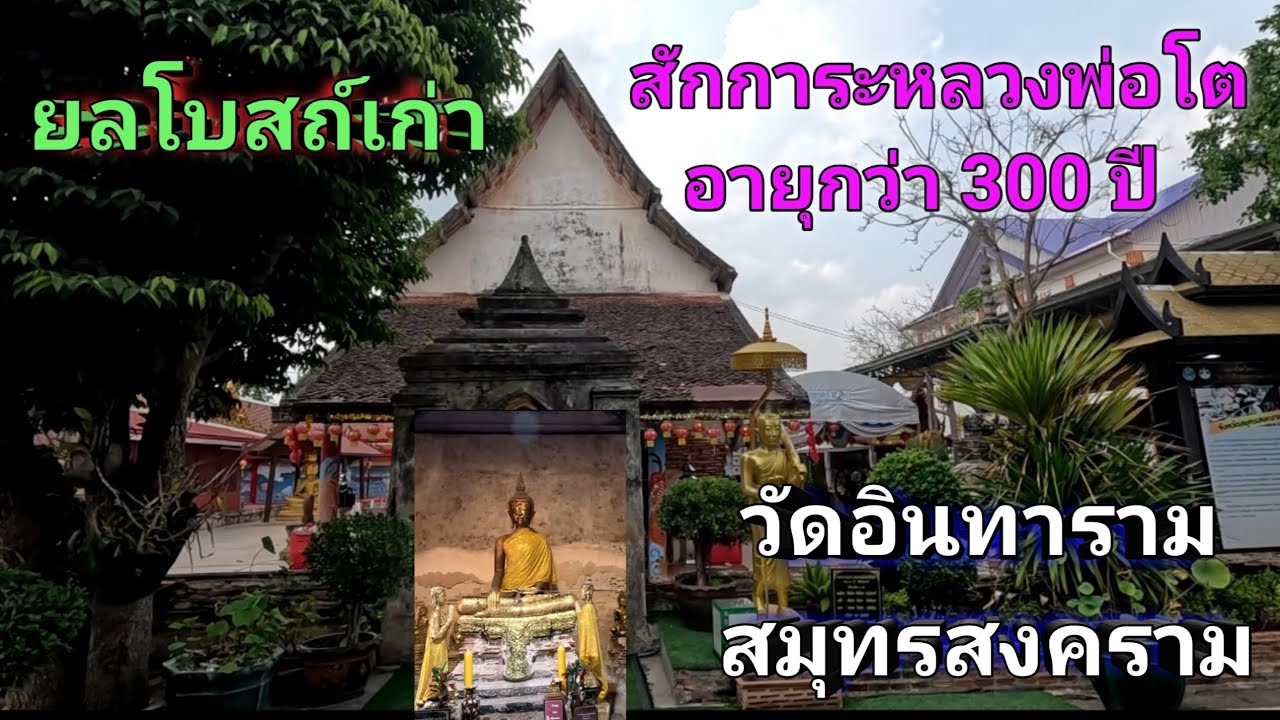
 Click to Access the Navigation Map GPS
Wat Intharam Map
Recommend

 Art, Culture and Heritage
 Historical Sites and Monuments(2)
 Art, Craft Centres, Tradition(1)
 Museums(6)
 Historic Homes and Cities(1)
Temple(34)
Historic Homes and Cities(1)
Temple(34)
 Church(1)
 Research and Development
 Royal Project(2)
 Suburban Living
 Village, Community(6)
 Local Market(2)
 Floating Market(5)
 Nature and Wildlife
 River, Canal(1)
 Bays and Beaches(1)
 Other natural attractions(1)
 Entertainment and Agricultural
 Farms, Parks and Ecotourism(1)
 Travel Articles, Recipes
 Travel Review, Food Review(1)


