
lovethailand home >Central Travel Attractions >Samut Songkhram Travel Attractions >Am Phawa >Khwae Om > Wat Bang Khae Yai
TL;DR: Wat Bang Khae Yai is located at Moo 7, Khaeo Om Subdistrict, Amphawa District, Samut Songkhram, open Open Daily, hours 08:00-16:00.
Wat Bang Khae Yai
Open Days: Open Daily
Opening Hours: 08:00-16:00
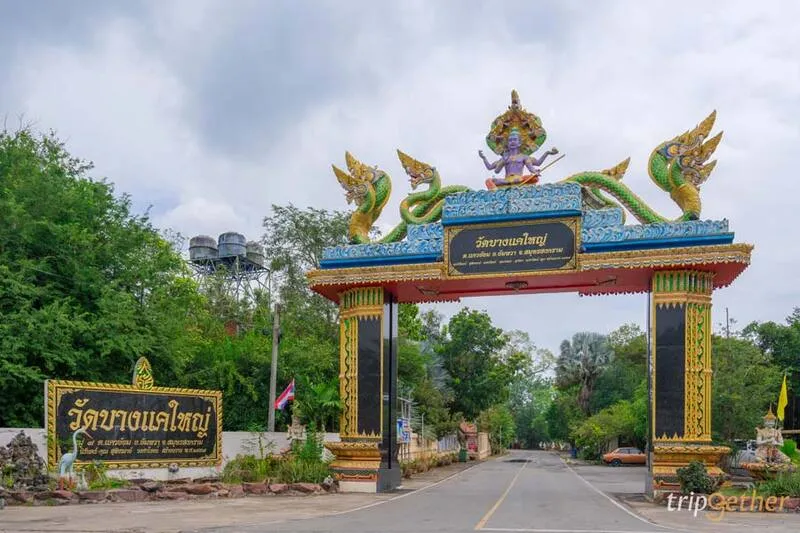
Wat Bang Khae Yai in Samut Songkhram is an old riverside temple that stands out for its historical depth, archaeological value, and peaceful canal-side setting in Amphawa. It is not simply an old temple to stop by for merit-making. It is a place where visitors can experience layers of Ayutthaya and early Rattanakosin history, observe rare sandstone Buddha images, and enjoy the quiet atmosphere of a temple surrounded by waterways and orchards. For travelers who want to see more than floating markets, Wat Bang Khae Yai offers a far richer cultural experience.
The temple is located in Moo 7, Khaeo Om Subdistrict, Amphawa District, Samut Songkhram Province. Its landscape is especially distinctive because water surrounds the area from multiple directions. Khlong Bang Khae runs along the east, Khlong Meru to the north, and Khlong Bang Li to the south. This setting gives the temple a calm and deeply local identity. Rather than feeling urban or heavily commercial, the area still reflects the orchard-and-canal character that defines traditional Samut Songkhram.
Wat Bang Khae Yai is an ancient temple with origins in the Ayutthaya period and a major restoration in 1814 CE during the reign of King Rama II. That restoration was carried out by Chao Phraya Wongsa Surasak, also known as Saeng Wongsaroj, who served as Samuha Kalahom. Local oral history passed down through elders in the area and former abbot Phra Kru Khositsutkhun states that he built the temple for his principal wife, which is why the temple became known as Wat Bang Khae Yai, the “larger” Bang Khae temple. This story places the temple within the wider Bang Khae religious landscape, where Wat Bang Khae Noi and Wat Bang Khae Klang also stand nearby.
Its historical importance is reinforced by an inscription on a slate stone panel inside the front wall of the ordination hall. The inscription clearly records the temple’s reconstruction in the Buddhist year 2357, or 1814 CE. This means that Wat Bang Khae Yai is not known only through legend. It retains direct archaeological evidence linking the temple to early Rattanakosin restoration activity. For visitors interested in temple history, this makes the site especially significant because the evidence can still be appreciated within the actual sacred space.
One of the most striking features inside the temple compound is the row of red sandstone Buddha images around the cloistered gallery. These sculptures are particularly notable because their hand gestures, facial forms, and stylistic elements suggest an older artistic tradition. The spread fingers in a Pala-influenced manner and the oval face associated with U Thong female-type features point to a much earlier sculptural lineage. This has led to the view that the images were either brought from elsewhere or preserved from an earlier phase of the temple’s history. Either way, they are among the temple’s most valuable artistic treasures.
Surrounding the ordination hall are small red sandstone boundary stones, or sema, in a style comparable to those found at Wat Ban Laem and other late-Ayutthaya temples in Samut Songkhram. These stones are important because they help confirm that the temple grounds had already undergone a renewed sacred delimitation in the late Ayutthaya period. For travelers who enjoy reading history through architectural fragments, Wat Bang Khae Yai is a rewarding place because even its smaller details carry chronological meaning.
In front of the ordination hall stands a twelve-cornered square chedi on an open court surrounded by the gallery. This chedi is another major visual highlight and is associated with architectural forms seen in the era of King Narai or King Phetracha. Its presence adds dignity and balance to the temple’s layout. When seen together with the hall, cloister, and surrounding sacred elements, it gives the front court of Wat Bang Khae Yai the complete feeling of an old historic temple rather than an isolated monument.
Another important feature is the mural work inside the monks’ residence. These paintings are executed in powder pigment mixed with glue on teak panels. The original monks’ residence was once a low-elevated Thai house, but later the temple rebuilt it into a two-storey structure, with a masonry ground floor and a traditional wooden Thai upper floor. The roof is tiled, the chofa and bai raka are decorated with mirrored stucco, and the gable shows Indra riding Erawan. The murals survive on partition panels within the residence and provide yet another dimension to the temple’s artistic value. Wat Bang Khae Yai therefore preserves not only sculpture and architecture, but also painted narrative art on wood.
The beauty of the temple comes from the combination of all these features. The red sandstone Buddha images, the ancient sema stones, the twelve-cornered chedi, the cloister, the ordination hall, and the painted residence all work together to create a temple environment that feels historically layered and spiritually grounded. When this is combined with the surrounding canals and orchard landscape, the overall result is a temple that rewards slow, observant travel rather than hurried sightseeing.
For worshippers, Wat Bang Khae Yai offers a quiet and dignified atmosphere. It is far less crowded than Amphawa’s better-known tourist spots, which makes it well suited to prayer, reflection, and careful appreciation of architectural detail. Photographers often appreciate the old cloister, the chedi, and the waterside environment, while cultural travelers tend to be drawn to the temple’s archaeological traces and understated beauty.
Wat Bang Khae Yai also works extremely well as part of a broader Amphawa heritage route. Because it lies close to Wat Bang Khae Noi, Wat Bang Khae Klang, Amphawa Floating Market, and King Rama II Memorial Park, it can easily be combined with other destinations in a single day. Travelers interested in old temples and local cultural landscapes can use this Bang Khae zone as the core of an Amphawa itinerary before continuing on to markets, cafés, and canalside restaurants later in the day.
Getting There is convenient from both Samut Songkhram town and Amphawa Floating Market. The temple is in Khaeo Om Subdistrict in the Bang Khae community area. Travelers with a private car can head toward Amphawa and continue into the old canal-side temple zone directly. The distance from Amphawa Floating Market is short, making Wat Bang Khae Yai an easy stop in the morning or afternoon. Online map navigation also works well for direct access.
Most visitors can spend around 1 to 2 hours here, enough time to pay respect, walk through the gallery, observe the chedi and ordination hall, and appreciate the temple’s historical atmosphere. Wat Bang Khae Yai becomes more impressive the slower you move through it, because every part of the compound reflects a different moment in its long development. For anyone looking for an Amphawa temple with genuine historical substance, quiet surroundings, and visible evidence of old craftsmanship, Wat Bang Khae Yai is one of the clearest choices in Samut Songkhram.
| Name | Wat Bang Khae Yai |
| Location | Moo 7, Khaeo Om Subdistrict, Amphawa District, Samut Songkhram |
| Address | Moo 7, Khaeo Om, Amphawa, Samut Songkhram 75110, Thailand |
| Highlights | Red sandstone Buddha images in the cloister, small Ayutthaya-period sema stones, a twelve-cornered chedi, and mural painting on teak panels inside the monks’ residence |
| History | An ancient temple dating back to the Ayutthaya period, restored in 1814 CE during the reign of King Rama II by Chao Phraya Wongsa Surasak (Saeng Wongsaroj) |
| Name Origin | According to local tradition, the temple was built for the principal wife of Chao Phraya Wongsa Surasak and became known as the “larger” Bang Khae temple, distinct from Wat Bang Khae Noi and Wat Bang Khae Klang |
| Distinctive Features | An old canal-side temple rich in archaeological elements, cloistered layout, historic chedi, sandstone sculpture, and teak-panel mural work |
| Travel Information | Easy to reach from Amphawa Floating Market and Samut Songkhram town by car via the Bang Khae canal-side community area |
| Current Status | Open to visitors and worshippers as usual |
| Open Days | Open Daily |
| Opening Hours | 08:00-16:00 |
| Facilities | Worship Areas, Temple Courtyard, Nearby Parking Access, Walkways Around the Cloister and Main Structures |
| Main Areas / Zones | Cloister with Red Sandstone Buddha Images, Ordination Hall, Sema Stones Around the Hall, Twelve-Cornered Chedi, Monks’ Residence with Teak-Panel Murals |
| Abbot / Caretaker | Phra Kru Khositsutkhun (Somphon Bhaddajaro) |
| Main Contact Number | 062-978-7982 |
| Official Website / Official Page | Facebook: Wat Bang Khae Yai Amphawa Samut Songkhram |
| Nearby Tourist Attractions | 1. Wat Bang Khae Noi - 1 km 2. Wat Bang Khae Klang - 1 km 3. Amphawa Floating Market - 2 km 4. King Rama II Memorial Park - 2 km 5. Amphawa Chaipattananurak Project - 2 km |
| Nearby Restaurants | 1. Grilled Pork Noodles in Fresh Coconut Milk Amphawa - 1 km 2. Ranjuan Amphawa - 2 km 3. Ruean Chai Nam Cafe & Restaurant - 2 km 4. The Pomelo Amphawa - 2 km 5. The Kittens Koffie Arts 'n Eats - 2 km |
| Nearby Accommodations | 1. Amphawa Na Non Hotel - 1 km 2. Thanicha Resort Amphawa - 1 km 3. House Of Passion - 2 km 4. Chuchai Buri Si Amphawa - 2 km 5. Baan Mae Arom - 1 km |
Frequently Asked Questions (FAQ)
Q: Is Wat Bang Khae Yai open every day?
A: Yes. The temple is open daily, and general visiting hours are around 08:00-16:00.
Q: What is Wat Bang Khae Yai most famous for?
A: It is known for its red sandstone Buddha images in the cloister, Ayutthaya-style sema stones, twelve-cornered chedi, and teak-panel mural work in the monks’ residence.
Q: Why is Wat Bang Khae Yai historically important?
A: The temple has Ayutthaya roots and preserves inscription evidence of a major restoration in 1814 CE during the reign of King Rama II by Chao Phraya Wongsa Surasak.
Q: Is Wat Bang Khae Yai suitable for cultural travelers?
A: Yes. It is especially suitable for visitors interested in old temples, archaeology, sacred architecture, and the quieter cultural landscape of Amphawa.
Q: How much time should I spend at Wat Bang Khae Yai?
A: Most visitors can spend about 1 to 2 hours exploring the temple, paying respect, and observing its historical details.
Q: Is Wat Bang Khae Yai close to Amphawa Floating Market?
A: Yes. The distance is about 2 kilometers, so it can easily be combined with other Amphawa attractions in the same trip.
 Category: ●Places of Worship
 Group: ●Temple
Last Update : 2 MonthAgo
 Last Update : 2 MonthAgo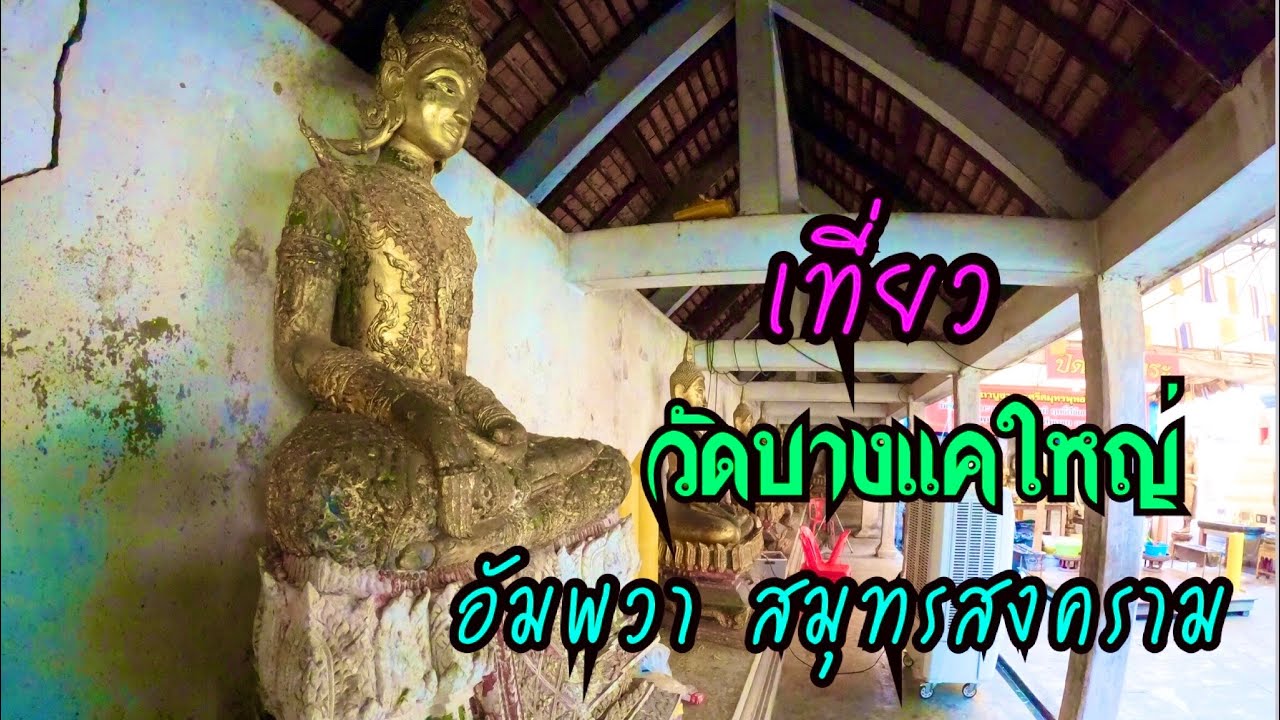
 Click to Access the Navigation Map GPS
Wat Bang Khae Yai Map
Recommend
 Art, Culture and Heritage
 Historical Sites and Monuments(2)
 Art, Craft Centres, Tradition(1)
 Museums(6)
 Historical Houses and The Ancient City(1)
Temple(34)
Historical Houses and The Ancient City(1)
Temple(34)
 Church(1)
 Research and Development
 Royal Project(2)
 Suburban Living
 Village, Community(6)
 Local Market(2)
 Floating Market(5)
 Nature and Wildlife
 River, Canal(1)
 Bays and Beaches(1)
 Other natural attractions(1)
 Entertainment and Agricultural
 Farm, Parks, Gardens and Ecotourism(1)


