
lovethailand home >Central Travel Attractions >Samut Songkhram Travel Attractions >Am Phawa >Khwae Om > Wat Bang Khae Noi
TL;DR: Wat Bang Khae Noi is located at Khaeo Om Subdistrict, Amphawa District, Samut Songkhram, open Open Daily, hours 08:00-17:00.
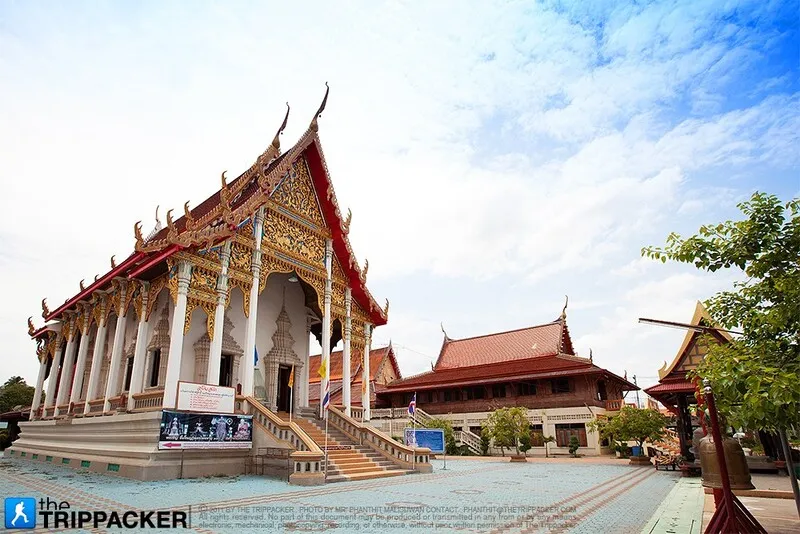
Wat Bang Khae Noi
Open Days: Open Daily
Opening Hours: 08:00-17:00
Wat Bang Khae Noi in Samut Songkhram is one of the most visually distinctive temples in Amphawa, not because of great size or crowds, but because of the extraordinary teakwood craftsmanship inside its ordination hall. This riverside temple on the Mae Klong River is widely admired for its intricate carved wood surfaces, its calm atmosphere, and its layered local history. Visitors who come here are not only stopping for merit-making. They are also encountering one of the most refined examples of temple woodwork in the Amphawa area.
The temple is a Mahanikaya temple located on the bank of the Mae Klong River at the mouth of Khlong Bang Khae in Khaeo Om Subdistrict, Amphawa District, Samut Songkhram Province. Its setting gives it an especially peaceful character. Surrounded by waterways and old community landscapes, Wat Bang Khae Noi offers a more contemplative experience than many of the busier attractions in Amphawa. It is also closely connected to the Bang Khae temple cluster, which includes Wat Bang Khae Yai and Wat Bang Khae Klang, making this zone one of the most interesting religious heritage areas in the district.
According to the temple’s historical record, Wat Bang Khae Noi was founded in 1868 by Khunying Noi, also known as Chui Wongsaroj, the younger sister of Khunying Yai, wife of Chao Phraya Wongsa Surasak, who built Wat Bang Khae Yai. This family connection is important because it shows how temple building in the Bang Khae area was shaped by patronage networks and local devotion. Wat Bang Khae Noi therefore holds value not only as a religious site, but also as part of the wider historical landscape of Samut Songkhram.
The early history of its ordination hall is especially unusual. The first ubosot was built on a bamboo raft tied to a bodhi tree, an arrangement known as an Uthok Kukhep Sima, reflecting the water-based environment of the old Amphawa community. At that time, Phra Athikan That served as abbot. Later, the second abbot, Phra Athikan Rot, moved the ordination hall onto land. Khunying Noi then donated 8 rai, 2 ngan, and 29 square wah of land for the formal establishment of the temple. The temple was officially permitted in 1875, and the second ordination hall was built in 1887 before receiving its boundary consecration in 1897.
The second ordination hall was a Maha Ut style structure with only one front door. Built in brick and mortar with a wooden upper structure, it had a butterfly-like front form and no chofa or bai raka, giving it a different visual identity from more conventional Thai temple architecture. This already made Wat Bang Khae Noi architecturally interesting before the temple entered its later phase of development and reconstruction.
After several abbots without major restoration, local villagers invited Phra Khiao Thitisaro from Wat Bang Khae Yai to become abbot. He built the sermon hall and began constructing a new ordination hall to replace the decaying earlier one in 1941. The work was completed in 1947. In the time of Phra Kru Samut Nuntakhun, widely known as Luang Pho Phrae, the temple continued to develop. When the third ordination hall later became damaged again in 1997, a new ordination hall was commissioned, and the temple received royal consecrated boundary status on 16 May 1997. The current ubosot is the one admired by visitors today.
The single most remarkable feature of Wat Bang Khae Noi is its teakwood-carved ordination hall. Both side walls are carved in teak with scenes from the Ten Jataka tales by master craftsmen from Phetchaburi. This is not decorative carving in a minor sense. It is a highly disciplined narrative woodwork program that turns the entire hall into a continuous sacred artwork. The closer one looks, the more detail appears. The carved figures, flowing compositions, and depth of the surfaces create an atmosphere that feels both artistic and devotional.
The beauty continues inside. The interior Buddhist narrative panels are made using an inlaid wood technique in which ivory-toned mokman wood is set into darker teak. This creates an elegant tonal transition rather than a painted effect, allowing the imagery to emerge through the natural contrast of the woods themselves. The result is warm, refined, and deeply rooted in Thai craft tradition. This is one of the reasons Wat Bang Khae Noi is often praised not merely as a beautiful temple, but as a rare showcase of wood artistry.
The floor of the ordination hall is also memorable. It is laid with only seven large takhian wood planks, each around 2 inches thick and roughly 39 to 40 inches wide. The main Buddha image is an old figure that came with the temple and reflects Chinese artistic influence. The pedestal beneath it is made from an enormous piece of makha wood, while the supporting base incorporates carved wood in a traditional royal-style form. Altogether, these features give the hall a very distinct identity and make it one of the most rewarding temple interiors in Samut Songkhram for anyone who cares about historic craftsmanship.
Beyond the main hall, the temple also houses a Busabok Vajra throne enshrining relics of the Buddha. Within the Thai Maha Ut style monk residence stands a wax figure of Somdet Phra Phutthachan To Phrommarangsi. On the structure above are images of the 28 Buddhas in royal attire, along with Buddha figures carved from sacred stone. These elements expand the temple’s significance beyond one beautiful building and give visitors several meaningful points of devotion and observation within the same compound.
The overall atmosphere of Wat Bang Khae Noi is one of quiet depth. Although it has become popular among temple-goers and photography lovers, it still preserves the calm dignity of an old riverside temple. It suits travelers who want to slow down, spend time with details, and experience a place through sacred art rather than through commercial activity. Families, older visitors, and cultural travelers often find it especially appealing for exactly this reason.
Wat Bang Khae Noi also works very well in a one-day Amphawa itinerary. Because it is close to Wat Bang Khae Klang, Wat Bang Khae Yai, Amphawa Floating Market, King Rama II Memorial Park, and the Amphawa Chaipattananurak Project, it can be combined easily with other riverside attractions. This makes it a strong choice for travelers who want to balance local culture, temple visits, and Amphawa’s better-known canalside destinations in the same route.
Getting There is convenient from both Samut Songkhram town and Amphawa Floating Market. The temple is located at 43 Moo 7, Khaeo Om Subdistrict, Amphawa District, Samut Songkhram 75110. Travelers with a private car can drive directly to the Bang Khae riverside area near the mouth of Khlong Bang Khae. It is only a short distance from Amphawa, so the temple is easy to visit in the morning or afternoon and can be included comfortably in a wider cultural route through the district.
What makes Wat Bang Khae Noi special is that its beauty does not feel created for spectacle alone. It comes from accumulated faith, craftsmanship, and restoration across generations. From a distance, visitors may notice only the richness of the carved wood exterior. Up close, however, the temple reveals patience, precision, and sacred purpose in every panel, beam, and surface. For travelers looking for an Amphawa temple that offers both artistic excellence and spiritual atmosphere, Wat Bang Khae Noi is one of the clearest answers in Samut Songkhram.
| Name | Wat Bang Khae Noi |
| Location | Khaeo Om Subdistrict, Amphawa District, Samut Songkhram |
| Address | 43 Moo 7, Khaeo Om, Amphawa, Samut Songkhram 75110, Thailand |
| Coordinates | 13.42988, 99.945368 |
| Highlights | Fully carved teak ordination hall, Jataka carvings by Phetchaburi craftsmen, inlaid wood interior art, old Chinese-style Buddha image |
| History | Founded in 1868 during the Rattanakosin period by Khunying Noi (Chui Wongsaroj) |
| Name Origin | One of the three Bang Khae temples in the area: Wat Bang Khae Yai, Wat Bang Khae Noi, and Wat Bang Khae Klang; this temple became known as the “small” Bang Khae temple |
| Distinctive Features | Exceptional wood carving inside and outside the ubosot, large takhian wood floor planks, riverside old temple atmosphere |
| Travel Information | Easy to reach from Amphawa Floating Market and Samut Songkhram town by car via the Bang Khae riverside area |
| Current Status | Open to visitors and worshippers as usual |
| Open Days | Open Daily |
| Opening Hours | 08:00-17:00 |
| Fees | Free Admission |
| Facilities | Worship Areas, Temple Courtyard, Nearby Parking Area, Walking Space Around the Ordination Hall and Main Structures |
| Main Areas / Zones | Carved Teak Ordination Hall, Busabok Relic Shrine, Thai Maha Ut Monk Residence, Wax Figure Area of Somdet To, Enshrinement Area of the 28 Buddhas |
| Main Contact Number | 090-445-1340 |
| Official Website / Official Page | Facebook: Wat Bang Khae Noi Wooden Ordination Hall 3D Carving |
| Nearby Tourist Attractions | 1. Wat Bang Khae Klang - 1 km 2. Wat Bang Khae Yai - 1 km 3. Amphawa Floating Market - 2 km 4. King Rama II Memorial Park - 2 km 5. Amphawa Chaipattananurak Project - 2 km |
| Nearby Restaurants | 1. The Kittens Koffie Arts 'n Eats - 0.3 km 2. Toom Bang Khae Bread - 0.4 km 3. Phawanawa Cafe & Restaurant - 0.7 km 4. Krua Phae Kung Maenam Bang Phrom - 1 km 5. The Pomelo Amphawa - 2 km Tel. 061-394-3136 |
| Nearby Accommodations | 1. Chuchai Buri Sri Amphawa - 2 km 2. Amphawa Na Non Hotel - 2 km 3. Villa Amphawa - 3 km 4. House Of Passion Amphawa - 3 km 5. Prima Amphawa - 3 km |
Frequently Asked Questions (FAQ)
Q: Is Wat Bang Khae Noi open every day?
A: Yes. The temple is open daily, and visitor hours are generally 08:00-17:00.
Q: Is there an entrance fee at Wat Bang Khae Noi?
A: No. Visitors can enter the temple free of charge for worship and sightseeing.
Q: What is Wat Bang Khae Noi most famous for?
A: It is most famous for its fully carved teak ordination hall, its Jataka carvings, and its refined inlaid wood interior art.
Q: Is Wat Bang Khae Noi suitable for cultural travelers?
A: Yes. It is especially suitable for visitors interested in Thai temple art, wood craftsmanship, riverside heritage, and a quieter side of Amphawa.
Q: How long should I spend at Wat Bang Khae Noi?
A: Most visitors can spend about 1 to 2 hours exploring the ordination hall, making merit, and observing the temple’s main artistic features.
Q: Is Wat Bang Khae Noi close to Amphawa Floating Market?
A: Yes. The distance is about 2 kilometers, so it can be combined easily with Amphawa Floating Market and nearby attractions.
Tel : 034760222
 Tel : 034760222
 Category: ●Places of Worship
 Group: ●Temple
Last Update : 5 MonthAgo
 Last Update : 5 MonthAgo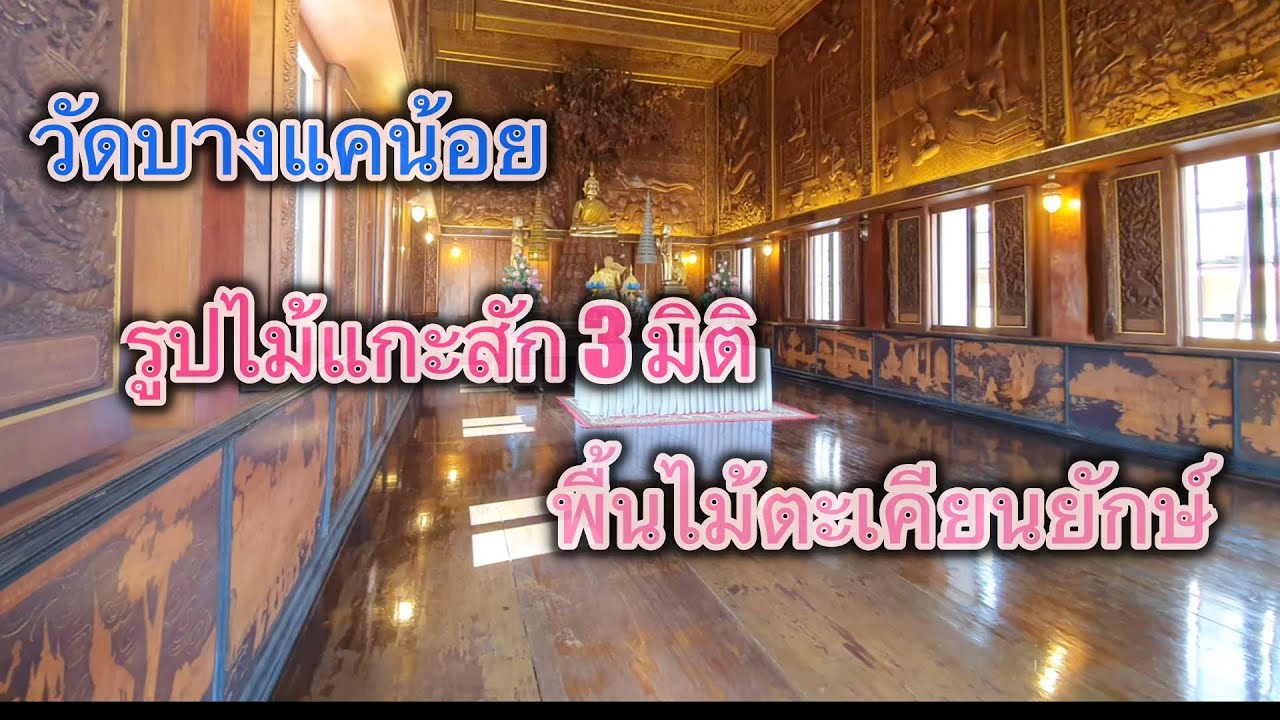
 Click to Access the Navigation Map GPS
Wat Bang Khae Noi Map
Recommend

 Art, Culture and Heritage
 Historical Sites and Monuments(2)
 Art, Craft Centres, Tradition(1)
 Museums(6)
 Historic Homes and Cities(1)
Temple(34)
Historic Homes and Cities(1)
Temple(34)
 Church(1)
 Research and Development
 Royal Project(2)
 Suburban Living
 Village, Community(6)
 Local Market(2)
 Floating Market(5)
 Nature and Wildlife
 River, Canal(1)
 Bays and Beaches(1)
 Other natural attractions(1)
 Entertainment and Agricultural
 Farms, Parks and Ecotourism(1)


