
lovethailand home >Central Travel Attractions >Samut Songkhram Travel Attractions >Bang Kon Tee >Bang Kung > Wat Bang Kung
TL;DR: Wat Bang Kung is located at Bang Kung Subdistrict, Bang Khonthi District, Samut Songkhram, open Daily, hours 08:00 – 16:30. Highlights include Root-covered temple, Luang Pho Nil Manee, Bang Kung Camp, Muay Thai warrior statues, Nang Mai Chao Chom shrine.
Wat Bang Kung
Open Days: Daily
Opening Hours: 08:00 – 16:30
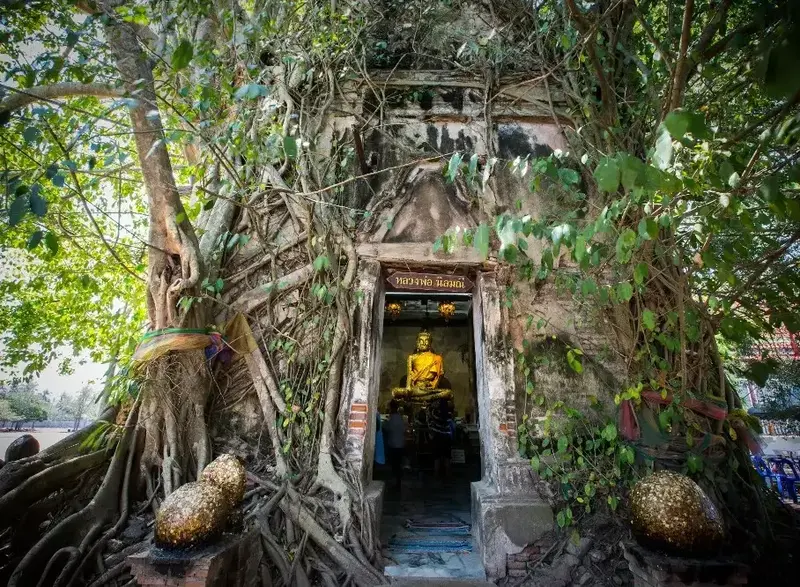
Wat Bang Kung is an ancient temple in Bang Kung Subdistrict, Bang Khonthi District, Samut Songkhram Province. It is one of the province’s most recognizable landmarks because its old ordination hall is completely embraced by the roots of large trees, creating the famous image of a temple hidden within living roots. The site is not only visually striking, but also deeply important in Thai history, especially in connection with the Bang Kung military camp and the Thonburi period.
In the clearest summary, Wat Bang Kung stands out for 3 major reasons. First, it is an Ayutthaya-period temple with strong historical significance. Second, it houses the famous root-covered ordination hall and the revered Luang Pho Nil Manee. Third, it is directly tied to the history of Bang Kung Camp, one of the important military strongholds connected to the struggle for Siam after the fall of Ayutthaya.
Temple history says Wat Bang Kung was founded during the Ayutthaya period and later became an important religious site in the Mae Klong river basin. In 1765, during the late Ayutthaya era, Burmese forces advanced toward the capital. Orders were given for southern coastal cities to move naval forces to the area and build fortifications around Wat Bang Kung, creating what became known as Bang Kung Camp. This transformed the temple from a religious site into part of a strategic defensive landscape.
When Burmese troops pushed further down the Mae Klong waterway, the Ayutthaya forces could not hold the camp and Bang Kung fell. After Ayutthaya collapsed in 1767, the camp was abandoned. Later, when King Taksin established Thonburi as the new capital, he ordered Chinese fighters to gather and hold the old camp. This led to the name Chinese Camp of Bang Kung. The temple therefore became closely linked with one of the most dramatic periods in Siamese political and military history.
In 1768, only a short time after the fall of Ayutthaya, Burmese forces from Tavoy surrounded the Chinese-held Bang Kung Camp. The defending Chinese troops fought hard but were heavily outnumbered. News was sent to Thonburi, and King Taksin personally led forces to break the siege and defeat the Burmese. This event made Bang Kung one of the places most closely associated with the early restoration of the kingdom.
Later, in 1774, King Taksin also stopped at the temple while moving troops by water on the way to war in Bang Kaeo, Ratchaburi. This further reinforces the historical importance of the site. Wat Bang Kung is therefore not simply an old temple with beautiful scenery. It is a place where religion, war history, and the story of national recovery overlap in a powerful way.
The most famous feature of the temple is the root-covered ordination hall. The old brick ubosot is wrapped by the roots of bodhi, banyan-like trees, and other large species until the structure appears almost fused with nature. This image has become one of the visual symbols of Samut Songkhram. It is rare, memorable, and spiritually evocative, which is why Wat Bang Kung has long been promoted as one of the province’s signature attractions.
Inside the root-covered ubosot sits Luang Pho Nil Manee, also widely called Luang Pho Dam by local devotees. The image is a large Buddha in the Mara-vijaya posture and is associated with the late Ayutthaya period. Some historical descriptions also refer to the main image as Luang Pho Bot Noi, describing a large late-Ayutthaya Buddha image housed inside the same ordination hall. In practice, the image inside the root-covered ubosot is the spiritual center of the entire temple and the main object of worship for visitors.
The inner walls of the ubosot still preserve mural paintings depicting the life of the Buddha and earlier Buddhas. North of the ubosot there is also an old rectangular pond lined with brick and plaster, another archaeological clue to the temple’s age. Because of the site’s importance, the Fine Arts Department registered Wat Bang Kung as a national archaeological site in 1996.
Beyond the ordination hall, the temple complex includes several elements that make the visit more varied. There are many Muay Thai warrior statues, an old aircraft displayed within the temple grounds, and the shrine of Nang Mai Chao Chom, also associated with Princess Monthathip. This shrine has become an important part of local belief and adds another layer of spiritual culture beyond the formal Buddhist architecture of the temple.
In the late 20th century, Wat Bang Kung underwent renewed revival from a period when the grounds had become overgrown. Phra Vinaiyathorn Ong-art Ariyo played a major role in restoring the temple together with local residents. Today the temple remains active with resident monks and ongoing religious events, which means it is not merely a preserved ruin but a living temple with continuing relevance.
For travelers, Wat Bang Kung is ideal as part of a route through Amphawa and Bang Khonthi. Nearby attractions include Bang Kung Camp, King Rama II Memorial Park, Amphawa Floating Market, the Nativity of Our Lady Cathedral, Wat Chulamanee, and Tha Kha Floating Market. It is one of the best places in Samut Songkhram for combining history, religion, local culture, and photogenic architecture in a single stop.
Getting There is easy by private car from Amphawa or Samut Songkhram town. Visitors often combine the temple with Bang Kung Camp and nearby Amphawa attractions because they are all within the same travel zone. From Amphawa, the drive is short and convenient, making the temple an excellent half-day or full-day stop.
| Name | Wat Bang Kung |
| Location | Bang Kung Subdistrict, Bang Khonthi District, Samut Songkhram |
| Address | Ban Khai, Moo 4, Bang Kung, Bang Khonthi, Samut Songkhram 75120 |
| Highlights | Root-covered temple, Luang Pho Nil Manee, Bang Kung Camp, Muay Thai warrior statues, Nang Mai Chao Chom shrine |
| History | An Ayutthaya-period temple closely connected to Bang Kung Camp and the Thonburi-era battles after the fall of Ayutthaya |
| Distinctive Features | An ancient brick ubosot completely embraced by tree roots, creating one of Samut Songkhram’s most iconic temple images |
| Travel Information | Easy to reach from Amphawa and Samut Songkhram town by private car, often visited together with Bang Kung Camp and Amphawa attractions |
| Current Status | Still active as a temple and as a historical tourist attraction in Samut Songkhram |
| Open Days | Daily |
| Opening Hours | 08:00 – 16:30 |
| Fees | Free admission |
| Facilities | Parking area, worship areas, walking space around the historical site, Muay Thai sculpture zone, and direct access to Bang Kung Camp grounds |
| Main Areas / Zones | Root-covered ubosot, Luang Pho Nil Manee, mural area, ancient pond, Nang Mai Chao Chom shrine, Muay Thai statue zone, Bang Kung Camp area |
| Main Contact Number | 034-761631, 089-2009684 |
| Nearby Tourist Attractions | 1. Bang Kung Camp 0 km 2. King Rama II Memorial Park 6 km 3. Amphawa Floating Market 6 km 4. Nativity of Our Lady Cathedral 7 km 5. Wat Chulamanee 9 km 6. Tha Kha Floating Market 11 km |
| Nearby Restaurants | 1. The Buffalo Cafe 7 km Tel. 034-120333, 092-2484333 2. Krua Khru Moo Seafood 14 km Tel. 034-723226, 085-8306963 3. Daeng Seafood 21 km Tel. 034-769765, 089-9186836 4. Kob Seafood Khlong Khon 26 km Tel. 085-1426756 5. Sathani Maeklong 2448 13 km Tel. 081-4384262 |
| Nearby Accommodations | 1. Amphawa Nanon Hotel 6 km Tel. 034-752111, 082-4442111 2. Baan Amphawa Resort & Spa 8 km Tel. 034-752228 3. Asita Eco Resort 13 km Tel. 034-767333, 084-2896264, 061-2896264 4. Na Tree Tara Riverside Resort 18 km Tel. 034-751335 5. Coco View Hotel Maeklong 14 km Tel. 088-2881900 |
Frequently Asked Questions (FAQ)
Q: Where is Wat Bang Kung located?
A: Wat Bang Kung is in Bang Kung Subdistrict, Bang Khonthi District, Samut Songkhram Province, close to Bang Kung Camp and within easy reach of Amphawa.
Q: What is the temple’s most famous feature?
A: Its most famous feature is the root-covered ordination hall, where the old brick ubosot is wrapped by the roots of large trees.
Q: Who is Luang Pho Nil Manee?
A: Luang Pho Nil Manee, also called Luang Pho Dam, is the temple’s revered principal Buddha image inside the root-covered ubosot.
Q: Why is Wat Bang Kung important in Thai history?
A: The temple was part of Bang Kung Camp, an important military site connected to the late Ayutthaya period and King Taksin’s campaigns during the early Thonburi era.
Q: What time does Wat Bang Kung open?
A: It is generally open daily from 08:00 to 16:30.
Q: What can I visit after Wat Bang Kung?
A: Nearby places include Bang Kung Camp, King Rama II Memorial Park, Amphawa Floating Market, the Nativity of Our Lady Cathedral, Wat Chulamanee, and Tha Kha Floating Market.
Tel : 034760630
 Tel : 034760630
Mobile : 0892009684
 Mobile : 0892009684
 Category: ●Places of Worship
 Group: ●Temple
Last Update : 3 MonthAgo
 Last Update : 3 MonthAgo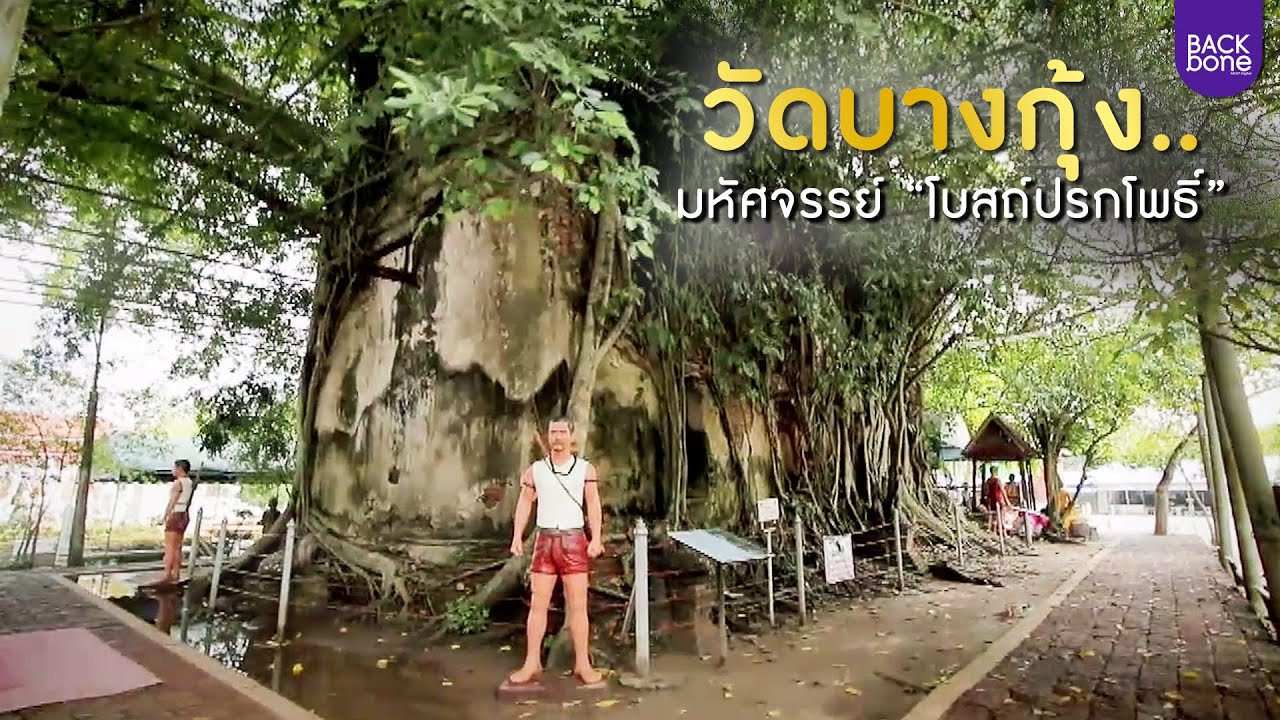
 Click to Access the Navigation Map GPS
Wat Bang Kung Map
Recommend

 Art, Culture and Heritage
 Historical Sites and Monuments(2)
 Art, Craft Centres, Tradition(1)
 Museums(6)
 Historic Homes and Cities(1)
Temple(34)
Historic Homes and Cities(1)
Temple(34)
 Church(1)
 Research and Development
 Royal Project(2)
 Suburban Living
 Village, Community(6)
 Local Market(2)
 Floating Market(5)
 Nature and Wildlife
 River, Canal(1)
 Bays and Beaches(1)
 Other natural attractions(1)
 Entertainment and Agricultural
 Farms, Parks and Ecotourism(1)


