
lovethailand home >Central Travel Attractions >Samut Sakhon Travel Attractions >Muang Samut Sakhon >Tha Chalom > Cheng Hieng Tua Vegetarian House
TL;DR: Cheng Hieng Tua Vegetarian House is located at Thawai Road, Tha Chalom, Mueang Samut Sakhon District, Samut Sakhon, open Daily.
Cheng Hieng Tua Vegetarian House
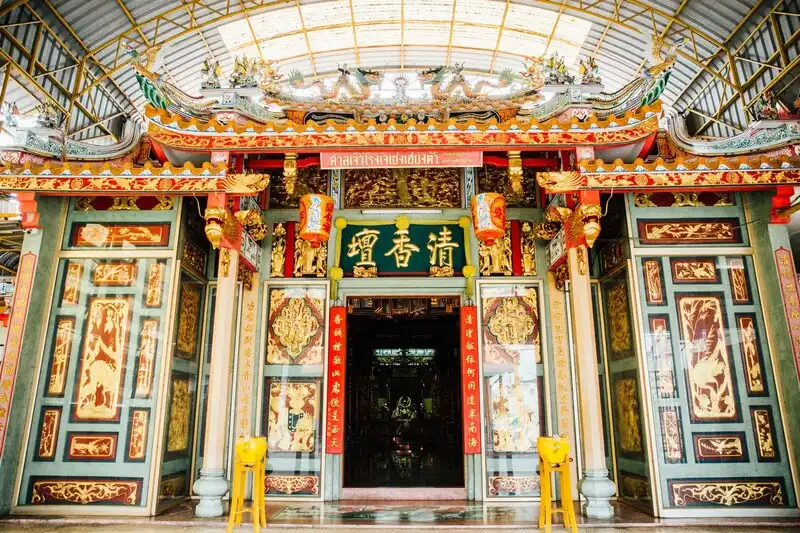
Open Days: Daily
Opening Hours: 08.00 - 16.00
Cheng Hieng Tua Vegetarian House in Tha Chalom, Mueang Samut Sakhon District, is one of the most meaningful Chinese religious sites in the old waterfront community. It is not only a vegetarian house for worship during the Vegetarian Festival, but also a place that reflects the story of Chinese migration, the growth of a riverside town, and the collective effort of a community that gradually built its own sacred center over time.
The story of the site begins with the Chinese settlers who came to live in Tha Chalom. Because this riverside area was an early landing point for people entering Siam by water, many Chinese migrants settled here and formed a growing community. As the population expanded, they gathered to build shrines as shared spaces for worship, social contact, and communal identity. In the case of Cheng Hieng Tua, the place also became a vegetarian house where Chinese residents could observe religious discipline and festival traditions together.
There is no clear documentary evidence showing the exact year when the vegetarian house was first established. What is known is that it began in a very modest form, as a small shelter with a roof made from thatch. Later, when local residents became more economically secure through trade and business, they contributed money to improve the place step by step. Through those donations, the small structure gradually developed into the established vegetarian house seen today.
This gradual transformation is one of the site’s most valuable features. The current building is not simply the result of one construction project. It is the result of long-term faith and continuous communal support. Because of that, Cheng Hieng Tua Vegetarian House is important not only as a religious place, but also as a living record of how the local Chinese community in Tha Chalom strengthened itself through shared belief and cooperation.
Culturally, the site is most strongly associated with the 10-day Vegetarian Festival held every year in October. During this period, it becomes one of the key centers of religious activity in Tha Chalom. Devotees gather to observe vegetarian practice, pray, take part in rituals, and continue traditions passed down through generations. For many local families, this is one of the most important annual moments for spiritual renewal and community participation.
The vegetarian house is also meaningful because of its setting. It stands on Thawai Road, one of the historic roads of old Tha Chalom. The surrounding area still preserves the atmosphere of an old Chinese riverside neighborhood, with historic shopfronts, community buildings, and several important shrines within walking distance. Visiting this place therefore offers more than a single stop for worship. It also allows travelers to experience the cultural fabric of Tha Chalom as a connected heritage district.
For this reason, Cheng Hieng Tua Vegetarian House is often included in the broader 9 Shrines Worship Route of the Samut Sakhon Vegetarian Festival. It can easily be visited together with other major shrines in Tha Chalom and Maha Chai, making it especially suitable for travelers who want to follow a full cultural and spiritual route during the festival season.
From a historical perspective, the place also reveals how community institutions developed in port towns. Shrines and vegetarian houses were not created only for ritual purposes. They also served as gathering points, social anchors, and symbolic centers for migrant communities trying to establish themselves in a new environment. Cheng Hieng Tua therefore represents an important part of how Chinese cultural life took root in Samut Sakhon.
For visitors today, the site works well for both spiritual travel and cultural exploration. After paying respects at the vegetarian house, travelers can continue on foot to nearby places such as Jao Mae Tubtim Shrine, Pun Tao Kong Shrine, Guan Yu Shrine, Baan Tha Chalom, and Wat Suthiwat Wararam. This makes the visit easy to combine with a slower walking route through the old town.
Even though the exact founding year is not known, this does not reduce the importance of the site. In fact, it highlights the organic nature of the place. It grew through real community use, devotion, and repeated renovation rather than through one formally documented founding event. That gives the vegetarian house a character that feels especially authentic and rooted in lived local history.
Many visitors notice the calm atmosphere of the space. Although it sits within an active neighborhood, the moment you step inside, the mood changes. It becomes quieter and more contemplative, especially outside the major festival season. This makes it appealing not only to worshippers, but also to travelers who value peaceful heritage spaces.
Getting There is straightforward. Visitors traveling by car can head directly to Thawai Road in Tha Chalom and continue into the old community area. Those coming by public transport can cross from Maha Chai by ferry and then walk through the historic district. This makes the vegetarian house easy to include in a one-day itinerary that combines worship, local history, cafés, and riverside exploration.
Overall, Cheng Hieng Tua Vegetarian House is much more than a vegetarian festival venue. It is a meaningful community landmark that preserves the story of Chinese migration, local faith, and the historical development of Tha Chalom. A visit here offers both spiritual value and a much deeper understanding of Samut Sakhon’s old waterfront culture.
| Name | Cheng Hieng Tua Vegetarian House |
| Location | Thawai Road, Tha Chalom, Mueang Samut Sakhon District, Samut Sakhon |
| Address | Thawai Road, Tha Chalom, Mueang Samut Sakhon, Samut Sakhon 74000 |
| Highlights | An important vegetarian house in Tha Chalom linked to Chinese migration history and the annual 10-day Vegetarian Festival in October |
| History | Its exact founding year is unknown. It began as a small thatched shelter and was gradually improved through community donations |
| Name Origin | A vegetarian house created by the Chinese community in Tha Chalom as a shared place for worship and vegetarian observance |
| Distinctive Features | A community-based Chinese religious site in the old Tha Chalom quarter, especially important during the October Vegetarian Festival |
| Travel Information | Accessible by car via Thawai Road, or by ferry from Maha Chai followed by a walk through the old Tha Chalom community |
| Current Status | Still active as an important local vegetarian house and part of the Samut Sakhon Vegetarian Festival shrine route |
| Main Contact Number | 034-498-498, 087-060-5671 |
| Official Website / Official Page | Facebook: โรงเจเช็งเฮียงตั๊วท่าฉลอม |
| Nearby Tourist Attractions | 1) Jao Mae Buai Ni / Jao Mae Tubtim Shrine – 0.1 km 2) Pun Tao Kong Shrine, Tha Chalom – 0.3 km 3) Guan Yu Shrine, Tha Chalom – 0.4 km 4) Baan Tha Chalom – 0.5 km 5) Wat Suthiwat Wararam (Wat Chong Lom) – 0.8 km |
| Nearby Restaurants | 1) Republic Coffee Tha Chalom Pier – 0.3 km Tel. 088-253-4183 2) Jae Na Tha Chalom – 0.4 km Tel. 085-047-0825 3) Tiew Tha Chalom – 0.7 km Tel. 087-674-6749 4) Jeab Heng Lee (Hia Huat Tha Chalom) – 0.8 km Tel. 034-498-147 5) Krua Chom Ao Tha Chalom – 1.8 km Tel. 085-190-5677 |
| Nearby Accommodations | 1) Baan Ruea Udom Homestay – 0.3 km Tel. 094-326-6261 2) The Seaport Mahachai – 1.9 km Tel. 083-436-5434, 034-836-880-2 3) Kasem Hotel – 2.7 km Tel. 034-441-078 4) Central Place Hotel – 2.9 km Tel. 034-412-818, 085-312-9999 5) The Eight Mahachai – 3.4 km Tel. 092-470-2888 6) Grand Inter Hotel – 4.9 km Tel. 099-949-8889 |
Frequently Asked Questions (FAQ)
Q: Where is Cheng Hieng Tua Vegetarian House located?
A: It is on Thawai Road in Tha Chalom, Mueang Samut Sakhon District, Samut Sakhon, within the historic Chinese riverside community.
Q: Why is Cheng Hieng Tua Vegetarian House important?
A: It is a long-standing religious center for the Chinese community in Tha Chalom and an important place for vegetarian observance and communal worship.
Q: When was the vegetarian house built?
A: The exact year is not clearly recorded, but it is known to have started as a small thatched shelter and later developed through community donations.
Q: What is the main annual festival here?
A: The most important annual event is the 10-day Vegetarian Festival held in October.
Q: What else can I visit nearby?
A: You can continue to Jao Mae Tubtim Shrine, Pun Tao Kong Shrine, Guan Yu Shrine, Baan Tha Chalom, and Wat Chong Lom in the same historic district.
Q: Can I get there by public transport?
A: Yes. You can cross from Maha Chai by ferry and continue on foot through the old Tha Chalom neighborhood.
Tel : 034498498
 Tel : 034498498
Mobile : 0870605671
 Mobile : 0870605671
 Category: ●Places of Worship
 Group: ●Other Sacred Sites
Last Update : 6 MonthAgo
 Last Update : 6 MonthAgo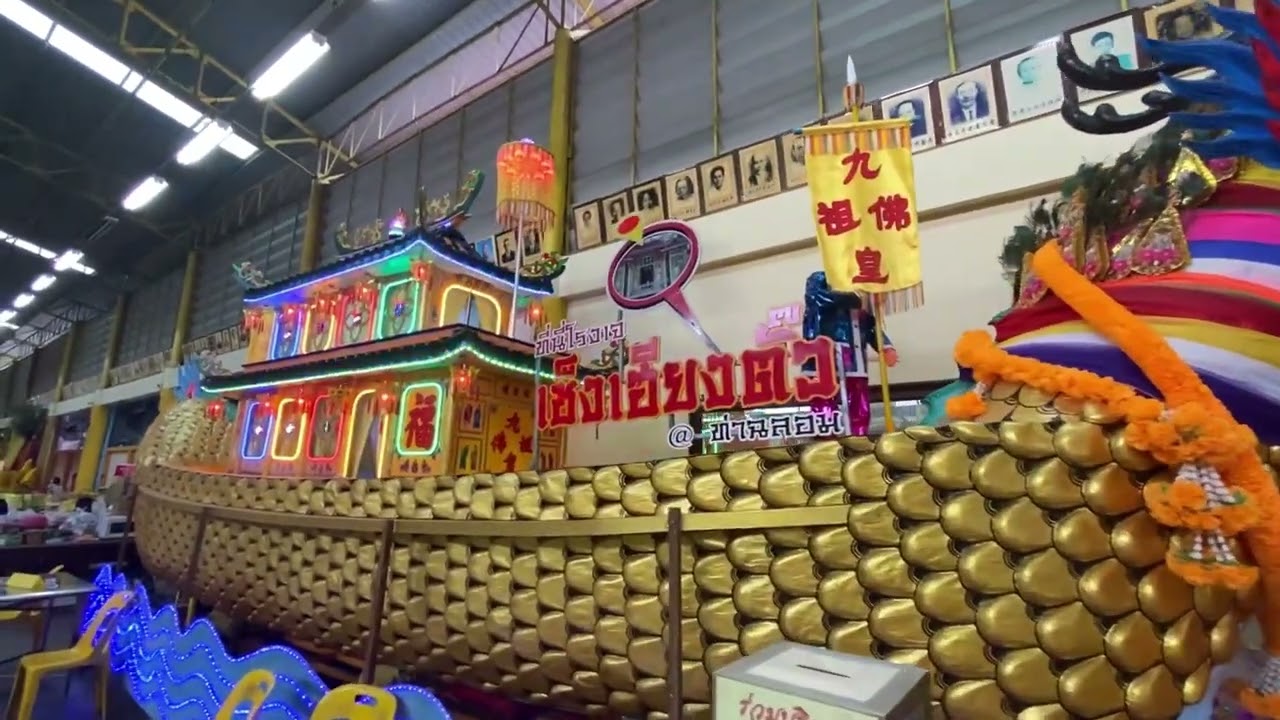
 Click to Access the Navigation Map GPS
Cheng Hieng Tua Vegetarian House Map
Recommend

 Art, Culture and Heritage
 Historical Sites and Monuments(3)
 Landmarks and Memorials(4)
 Art, Craft Centres, Tradition(2)
 Museums(1)
 Historic Homes and Cities(1)
 Educational Places
 Museum for Study(1)
 Temple(31)
Other Sacred Sites(12)
Temple(31)
Other Sacred Sites(12)
 Research and Development
 Royal Project(1)
 Suburban Living
 Village, Community(4)
 Local Market(2)
 Floating Market(2)
 Nature and Wildlife
 National Parks and Marine Reserves(1)
 River, Canal(4)
 Bays and Beaches(1)
 Other natural attractions(3)
 Entertainment and Agricultural
 Zoos and Aquariums(1)
 Shopping
 Shopping and Night Market(1)


