
lovethailand home >Central Travel Attractions >Samut Sakhon Travel Attractions >Muang Samut Sakhon >Maha Chai > Samut Sakhon Foundation Charity Vegetarian House
TL;DR: Samut Sakhon Foundation Charity Vegetarian House is located at Maha Chai Subdistrict, Mueang Samut Sakhon District, Samut Sakhon, open Open Daily, Including Public Holidays, hours 08:00 – 16:00.
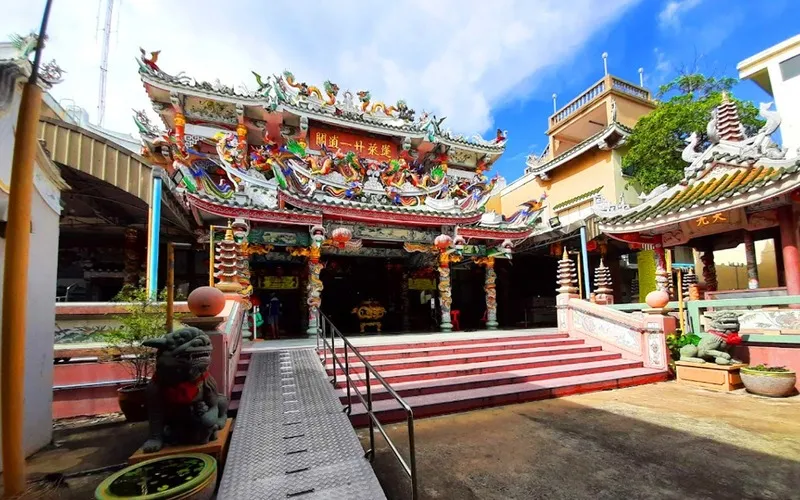
Samut Sakhon Foundation Charity Vegetarian House
Open Days: Open Daily, Including Public Holidays
Opening Hours: 08:00 – 16:00
Samut Sakhon Foundation Charity Vegetarian House is one of the most important Chinese religious sites on the Maha Chai side of Samut Sakhon. It is more than a vegetarian hall or a place of worship. It also tells a larger story about local Chinese community life, public charity, and the way a historical urban space was transformed from an abandoned former Chinese school into a living center of faith that still serves the community today.
The site’s background is one of its most distinctive features. The area was originally used as a Chinese school in earlier times. Later, when Thai educational policy required schools to teach only in Thai, the school closed down and the property became neglected. Instead of allowing the place to disappear, local people and donors came together and turned it into a vegetarian house. The funds used for its creation were closely linked to donations from a cemetery-clearing merit-making event, giving the place a strong connection to both charity and spiritual devotion from the very beginning.
Today, the vegetarian house stands on Nararat Uthit Road in Maha Chai Subdistrict, Mueang Samut Sakhon District. The setting is convenient for visitors and closely tied to the life of the old urban area. It feels peaceful, structured, and devotional in the traditional style of a Chinese vegetarian house. This is not a site that exists only for tourists. It remains a functioning religious place where worship, merit-making, and festival activities are still carried out throughout the year.
Its cultural importance is especially clear during the Vegetarian Festival in October, when Thai-Chinese residents on the Maha Chai side gather here to observe religious discipline, eat vegetarian food, and purify the mind. During this 10-day period, the atmosphere becomes especially meaningful. People dressed in white come to practice, pray, and participate in festival traditions, making the site one of the key spiritual centers of the season in Samut Sakhon.
What makes this place stand out even more is that it is active far beyond the October festival. The vegetarian house follows a clear annual calendar of important ceremonies. In February, it hosts the annual misfortune-dispelling ceremony known as Pa Keng, which many devotees attend for blessings and spiritual renewal. In May, there is a celebration for Sia Chao’s birthday. In December, the site holds its annual celebration for Tai Hong Kong’s birthday. These repeated observances show that the vegetarian house functions as a year-round center of belief, not just a seasonal festival venue.
This pattern of annual ceremonies also reflects the deeper role of the place within the community. It is not simply somewhere people visit briefly to pay respect. It is a place where local faith is structured through time. Each major ceremony gives the community another occasion to return, reconnect, and continue traditions that have been carried forward for generations on the Maha Chai side of the river.
Another important layer of meaning comes from its connection to the wider work of the Samut Sakhon Charity Foundation. The name of the site is not only associated with religious activity, but also with public service and charitable work in the province. Because of that, the vegetarian house carries a broader identity: it is seen not only as a sacred place, but also as a symbol of merit-making that links worship with real support for society.
For travelers, this makes the site especially interesting. A visit here is worthwhile not only for those interested in Chinese shrines or vegetarian festival traditions, but also for those who want to understand Maha Chai through its religious and community history. Samut Sakhon is often known for seafood, markets, and transport routes, but this vegetarian house reveals another side of the city: the side shaped by devotion, local associations, and Chinese-Thai civic life.
The vegetarian house is also one of the participating shrines in the 9 Shrines Worship Route of the Samut Sakhon Vegetarian Festival. This makes it an easy stop within a wider religious and cultural itinerary. Visitors can combine it with places such as Samut Sakhon City Pillar Shrine, Guan Yin Thousand Hands Shrine at Khlong Chak, Maha Chai Market, and other sacred sites in both Maha Chai and Tha Chalom.
If you want the most festive atmosphere, October is the best time to visit because that is when the Vegetarian Festival is in full motion. February, May, and December each offer a different ceremonial mood tied to the annual ritual calendar. On ordinary days, the site is calmer and more suitable for quiet worship, reflection, and cultural exploration without the larger festival crowds.
Historically, the story of this site is also meaningful because it reflects a transition in Thai society itself. The transformation from Chinese school to abandoned land, and then from abandoned land to vegetarian house, captures a wider story of adaptation. It shows how a community preserved identity and continuity through religion and charity, even after social and policy changes altered the original use of the space.
Getting There is fairly easy. Travelers by car can head directly to Nararat Uthit Road in Maha Chai. Those using public transport can take the Wongwian Yai–Maha Chai train line to Maha Chai Station and continue by local transport over a short distance. Because the vegetarian house is close to the urban core of Maha Chai, it can easily be included in the same day as a visit to Maha Chai Market, the riverside area, the city pillar shrine, or a cross-river trip to Tha Chalom.
In summary, Samut Sakhon Foundation Charity Vegetarian House is more than a religious building. It is a place where local history, Chinese-Thai identity, public charity, and annual ritual tradition come together. A visit here offers not only a chance to pay respect, but also a way to understand Maha Chai with much greater depth.
| Name | Samut Sakhon Foundation Charity Vegetarian House |
| Location | Maha Chai Subdistrict, Mueang Samut Sakhon District, Samut Sakhon |
| Address | 1300/53-4 Nararat Uthit Road, Maha Chai, Mueang Samut Sakhon, Samut Sakhon 74000 |
| Coordinates | 13.550765, 100.275644 |
| Highlights | An important vegetarian house in Maha Chai with roots in a former Chinese school, now serving as a spiritual and charitable center for the local Thai-Chinese community |
| History | Originally a Chinese school, later abandoned, and then rebuilt as a vegetarian house using donations connected to cemetery-clearing merit-making |
| Name Origin | Named after the Samut Sakhon Charity Foundation, reflecting both religious devotion and charitable work |
| Distinctive Features | A year-round religious venue where devotees gather for vegetarian practice, ritual observance, and annual Chinese merit-making festivals |
| Travel Information | Direct access by car via Nararat Uthit Road, or by train to Maha Chai Station followed by a short local transfer |
| Current Status | Open to worship and active as one of the shrines in the Samut Sakhon 9 Shrines Vegetarian Festival route |
| Open Days | Open Daily, Including Public Holidays |
| Opening Hours | 08:00 – 16:00 |
| Fees | No Admission Fee |
| Facilities | Worship areas, ceremony space, festival activity area, and urban amenities nearby in Maha Chai |
| Main Areas / Zones | Worship hall, Pa Keng ritual area, Vegetarian Festival area, celebration spaces for Sia Chao and Tai Hong Kong observances |
| Main Contact Number | 034-427-479, 034-411-013 |
| Official Website / Official Page | Facebook: Samut Sakhon Charity Foundation Headquarters |
| Nearby Tourist Attractions | 1) Maha Chai Market – 0.7 km 2) Maha Chai Railway Station – 0.9 km 3) Samut Sakhon City Pillar Shrine – 1.4 km 4) Wichian Chodok Fort – 1.5 km 5) Guan Yin Thousand Hands Shrine, Khlong Chak – 1.9 km |
| Nearby Restaurants | 1) Eua Mui Tiang Bakery, Mahachai – 0.7 km Tel. 034-412-408 2) Green Ice Restaurant – 1.0 km Tel. 034-422-736 3) Between Coffee Roaster @Mahachai – 1.1 km 4) Rongmai Mahachai – 1.2 km Tel. 098-008-9980 5) Rub Lom Café Tha Ruea Maha Chai – 1.5 km Tel. 062-987-8962 |
| Nearby Accommodations | 1) The Seaport Mahachai – 1.4 km Tel. 083-436-5434, 034-836-880-2 2) Kasem Hotel – 1.7 km Tel. 034-441-078 3) U Sabai Hotel and Residence Mahachai – 2.1 km 4) Central Place Hotel – 2.4 km Tel. 034-412-816-8, 085-312-9999 5) At Samutsakhon Mahachai – 3.6 km Tel. 099-095-4541, 065-464-7459 6) Grand Inter Hotel – 4.2 km Tel. 099-949-8889 |
Frequently Asked Questions (FAQ)
Q: What was this place before it became a vegetarian house?
A: It was originally a Chinese school before later being transformed into a vegetarian house.
Q: What are the opening hours?
A: It is open daily, including public holidays, from 08:00 to 16:00.
Q: What annual events are held here?
A: Important annual events include the Pa Keng misfortune-dispelling ceremony in February, Sia Chao’s birthday celebration in May, the 10-day Vegetarian Festival in October, and Tai Hong Kong’s birthday celebration in December.
Q: Is this vegetarian house part of the Samut Sakhon Vegetarian Festival route?
A: Yes. It is one of the shrines included in the 9 Shrines worship route during the Samut Sakhon Vegetarian Festival.
Q: What can I visit nearby?
A: You can continue to Maha Chai Market, Maha Chai Railway Station, Samut Sakhon City Pillar Shrine, Wichian Chodok Fort, and Guan Yin Thousand Hands Shrine at Khlong Chak.
Q: Can I get there by public transport?
A: Yes. You can take the Wongwian Yai–Maha Chai train line to Maha Chai Station and continue locally over a short distance.
Tel : 034427479
 Tel : 034427479
 Category: ●Places of Worship
 Group: ●Other Sacred Sites
Last Update : 3 MonthAgo
 Last Update : 3 MonthAgo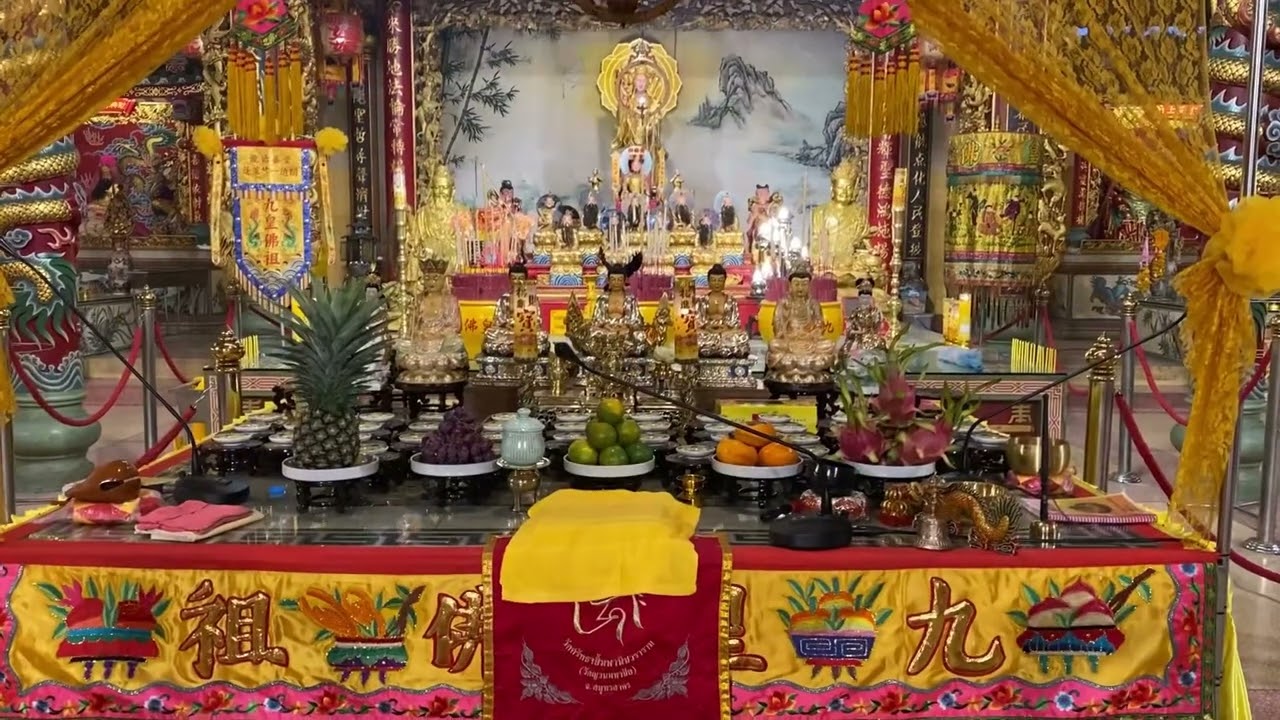
 Click to Access the Navigation Map GPS
Samut Sakhon Foundation Charity Vegetarian House Map
Recommend

 Art, Culture and Heritage
 Historical Sites and Monuments(3)
 Landmarks and Memorials(4)
 Art, Craft Centres, Tradition(2)
 Museums(1)
 Historic Homes and Cities(1)
 Educational Places
 Museum for Study(1)
 Temple(31)
Other Sacred Sites(12)
Temple(31)
Other Sacred Sites(12)
 Research and Development
 Royal Project(1)
 Suburban Living
 Village, Community(4)
 Local Market(2)
 Floating Market(2)
 Nature and Wildlife
 National Parks and Marine Reserves(1)
 River, Canal(4)
 Bays and Beaches(1)
 Other natural attractions(3)
 Entertainment and Agricultural
 Zoos and Aquariums(1)
 Shopping
 Shopping and Night Market(1)


