
lovethailand home >Central Travel Attractions
>Samut Sakhon Travel Attractions >Muang Samut Sakhon
>Krok Krak
> Wat Krok Krak
TL;DR: Wat Krok Krak is located at Krok Krak Subdistrict, Mueang Samut Sakhon District, Samut Sakhon, open Open Daily, hours 8:30 a.m.–5:30 p.m.
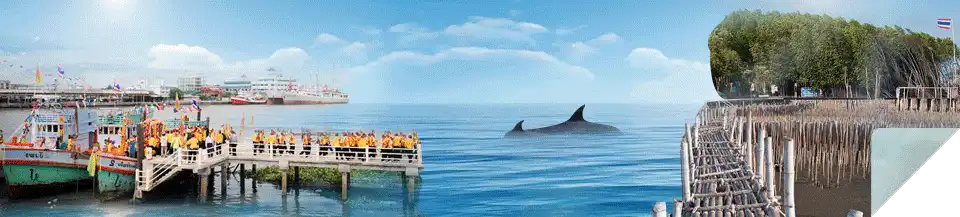
Wat Krok Krak
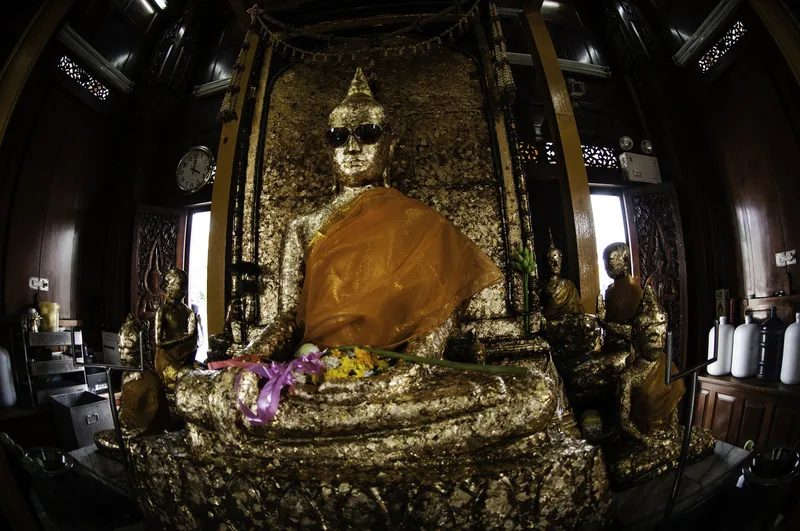
Open Days: Open Daily
Opening Hours: 8:30 a.m.–5:30 p.m.
Wat Krok Krak is an old temple on the bank of the Tha Chin River in Krok Krak Subdistrict, Mueang Samut Sakhon District, Samut Sakhon. It is one of the province’s most recognizable temples because of a feature found almost nowhere else in Thailand: its principal Buddha image wears dark glasses. This unusual image has made the temple famous far beyond Samut Sakhon, but the temple’s true significance goes much deeper. Wat Krok Krak is a place of old riverside history, local devotion, Chinese and Mon cultural memory, and living ritual practice that still shapes everyday life in the community.
The temple’s importance comes not only from its age, but from the way it is woven into the life of the Tha Chin riverside community. It stands in an area that was once home to a Chinese settlement, and its old stories still reflect the worldview of river people, fishermen, traders, and local families who lived with the rhythms of water, tides, and faith. Because of this, the temple does not feel like a detached historical monument. It feels like a sacred place that grew naturally out of community life and never lost that connection.
According to historical tradition, Wat Krok Krak dates back to around 1832 and later received its royal consecrated boundary in 1880. Although many early records were lost in a fire during the time of Phra Athikan To, the temple became historically visible in a major way through the travel records of King Chulalongkorn. The temple is mentioned in connection with the royal river journey in which the king’s boat stopped at Wat Krok Krak, giving the temple a place not only in local history but also in the wider narrative of royal travel in Thailand.
On 30 July 1905, during a royal journey along the Tha Chin River, the king’s boat stopped at Wat Krok Krak after coming from Ban Laem in Phetchaburi. Food was purchased at Tha Chalom and prepared at the riverside pavilion of the temple. Prince Damrong Rajanubhab also came up into the temple for holy water because of seasickness. This episode makes Wat Krok Krak especially interesting for visitors who enjoy historical temples connected with real events rather than only legend. The temple was not just passed by. It was used as an actual stopping point during a royal river journey.
Architecturally, the temple once carried strong signs of Chinese influence. The old teak ubosot had a roof curving in the style of a Chinese pavilion, and the surrounding pillars leaned outward on all four sides. In front stood two chedis, and in the past there were also two concrete Chinese junk boats similar in spirit to those at Wat Yannawa in Bangkok, though smaller. Those boats have disappeared, and only the chedis remain, but the memory of these features helps explain the temple’s cultural setting and the way Chinese riverside identity shaped the sacred landscape here.
The heart of the temple is Luang Pho Pu, the principal Buddha image in the ubosot, made of laterite and seated in the Mara-Vijaya posture. The story of how this Buddha image came to Wat Krok Krak is central to the temple’s identity. It was originally enshrined at Wat Chong Sadao, an old abandoned temple on the Tha Chin River. When the old structures there had fallen into ruin, Mon villagers from Ban Kamphra transported two Buddha images by boat, one bronze and one laterite. As they neared Wat Krok Krak, a violent storm forced them to take shelter in a canal beside the temple. They lifted the laterite Buddha image onto the bank to protect it from the rain, but when the storm passed, they could no longer raise it back onto the boat. One of the Mon villagers then made a vow that if the Buddha image wished to stay at Wat Krok Krak, they would install it in the temple’s ubosot. After that, the image could be lifted. Since then, Luang Pho Pu has remained at the temple.
The temple’s most famous and unusual feature is the dark glasses worn by Luang Pho Pu. According to local tradition, an outbreak of severe eye infection once spread through the village. In a time when medicine was limited, people prayed to the Buddha image and vowed that if their eyes recovered, they would place gold leaf over the eyes of the image. When the whole village recovered, so much gold leaf was applied that the appearance of the image became less beautiful. Luang Pu Krap, then abbot of the temple, solved the problem by placing glasses on the Buddha image instead. From that point on, people began offering eyeglasses rather than applying gold leaf directly. That tradition continues today and gives the temple its unforgettable identity.
The devotion surrounding Luang Pho Pu is still active in striking ways. Fishermen often light firecrackers before going out to sea, following old Chinese-style practice for good fortune. Traders and ordinary worshippers also make similar offerings, and many local drivers honk their horns when passing the ubosot as a form of respect. These customs show that Luang Pho Pu is not simply a temple image admired by visitors. He remains a living sacred presence in the emotional geography of the community.
Another important tradition is the annual worship day of Luang Pho Pu, held on the full moon of the first lunar month. This date is connected to the story of an attempted theft, when thieves once drilled into the abdomen of the Buddha image. Luang Pu Krap later repaired the damage with lacquer mixed with gold and performed a sacred offering ritual on that day. Over time, the date became the annual worship day of Luang Pho Pu, formerly known as his birthday celebration day. It remains one of the temple’s most important religious occasions.
Wat Krok Krak also has a long line of abbots, from Phra Athikan Daeng, Phra Athikan Sin, Phra Athikan Prem, and Phra Athikan To, to Phra Khru Thammasakhon, Phra Khru Sakhon Kittikhun, Phra Khru Sangkhakitcha Aphirak, Phra Athikan Leng, and the current abbot Phra Khru Wisutthisitthikhun. This continuity has helped preserve the temple’s traditions and local significance over many generations.
Getting There is easy from Samut Sakhon town. The temple is located at 188 Thammakhunakorn Road in Krok Krak Subdistrict, not far from central Maha Chai. A private car is the most convenient option, especially if you plan to continue to other attractions in the city afterward. Travelers using public transport can first reach Samut Sakhon town and continue by local transport to the temple. The riverside setting and the surrounding local atmosphere make the journey itself part of the experience.
Wat Krok Krak is therefore much more than a temple with a Buddha image in sunglasses. It is a sacred place where legend, local healing faith, royal travel history, fishing culture, Chinese influence, and Mon memory all come together. For travelers looking for one of the most distinctive temples in Samut Sakhon, Wat Krok Krak stands out immediately and deservedly remains one of the province’s most memorable cultural sites.
| Name | Wat Krok Krak |
| Location | Krok Krak Subdistrict, Mueang Samut Sakhon District, Samut Sakhon |
| Address | 188 Thammakhunakorn Road, Krok Krak, Mueang Samut Sakhon, Samut Sakhon 74000 |
| Highlights | Luang Pho Pu with dark glasses, old riverside temple, eyeglass-offering tradition, annual Luang Pho Pu worship day, strong fishing-community faith |
| History | Built around 1832 and granted royal consecrated boundary in 1880, making it one of the old temples of Samut Sakhon |
| Distinctive Features | Laterite Buddha image wearing dark glasses, legends of eye-healing vows, links to Chinese and fishing communities, mention in King Rama V’s river journey |
| Travel Information | Located not far from central Maha Chai on Thammakhunakorn Road; easiest to visit by private car or local transport from Samut Sakhon town |
| Current Status | Open for worship, merit-making, and temple visits as usual |
| Open Days | Open Daily |
| Opening Hours | 8:30 a.m.–5:30 p.m. |
| Main Areas / Zones | Ubosot of Luang Pho Pu, Luang Pu Krap worship area, old chedis, riverside pavilion, annual worship-ritual area |
| Abbot / Caretaker | Phra Khru Wisutthisitthikhun |
| Main Contact Number | 099-221-1799 |
| Official Website / Official Page | Facebook: Wat Krok Krak Samut Sakhon |
| Nearby Tourist Attractions | 1) Wat Sutthiwat Wararam (Wat Chong Lom) 4 km 2) Tha Chalom Old Community 4 km 3) Wat Chedsadaram Royal Monastery 5 km 4) Mahachai Market 5 km 5) Wat Yai Chom Prasat 6 km |
| Nearby Restaurants | 1) Tha Rua Phattakhan 5 km Tel. 084-229-5159, 093-946-4954, 034-421-935 2) Mahachai Seafood 5 km Tel. 085-218-4405 3) Seafood Mahachai 5 km Tel. 092-579-3182 4) Jae Phrai Rim Khuean Tha Chalom 4 km 5) Krua Rim Wang 8 km Tel. 092-524-6806, 098-259-1195 |
| Nearby Accommodations | 1) Ban Ruea Udom Homestay 4 km Tel. 094-326-6261 2) The Seaport Mahachai 5 km Tel. 083-436-5434, 034-836-880 3) At Samut Sakhon Mahachai 6 km Tel. 099-095-4541, 065-464-7459 4) Orchid Hotel Mahachai Samut Sakhon 8 km Tel. 097-119-4744, 034-425-382, 034-425-383 5) Thongchen Residence 8 km Tel. 034-425-191 |
Frequently Asked Questions (FAQ)
Q: Where is Wat Krok Krak located?
A: The temple is at 188 Thammakhunakorn Road, Krok Krak Subdistrict, Mueang Samut Sakhon District, Samut Sakhon, on the bank of the Tha Chin River.
Q: What is Wat Krok Krak most famous for?
A: It is most famous for Luang Pho Pu, the laterite Buddha image that wears dark glasses.
Q: Why does Luang Pho Pu wear sunglasses?
A: The tradition comes from a village vow related to an eye-infection outbreak; later, glasses were offered instead of gold leaf over the eyes.
Q: What time is Wat Krok Krak open?
A: The temple is open daily from 8:30 a.m. to 5:30 p.m.
Q: When is Luang Pho Pu worship day?
A: It is held annually on the full moon day of the first lunar month.
Q: What else can I visit near Wat Krok Krak?
A: You can continue to Wat Chong Lom, Tha Chalom Old Community, Wat Chedsadaram, Mahachai Market, and Wat Yai Chom Prasat in the same trip.
 Category: ●Places of Worship
 Group: ●Temple
 Last Update : 1 MonthAgo
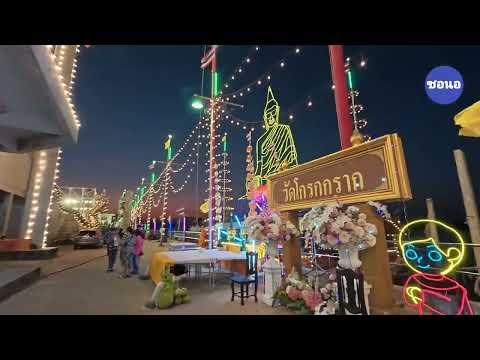
 Click to Access the Navigation Map GPS
 Art, Culture and Heritage
 Historical Sites and Monuments(
 Landmarks and Memorials(
 Art, Craft Centres, Tradition(
 Museums(
 Historical Houses and The Ancient City(
 Educational Places
 Museum for Study(
 Other religious and spiritural sites(
 Research and Development
 Royal Project(
 Suburban Living
 Village, Community(
 Local Market(
 Floating Market(
 Nature and Wildlife
 National Parks and Marine Reserves(
 River, Canal(
 Bays and Beaches(
 Other natural attractions(
 Entertainment and Agricultural
 Zoos and Aquariums(
 Shopping
 Shopping and Night Market(


