
lovethailand home >Central Travel Attractions >Samut Sakhon Travel Attractions >Muang Samut Sakhon >Ban Koh > Wat Pa Chai Rangsi
TL;DR: Wat Pa Chai Rangsi is located at Moo 4, Ban Bang Pla, Ban Ko Subdistrict, Mueang Samut Sakhon District, Samut Sakhon, open Open Daily, hours 6:00 a.m.–7:00 p.m.
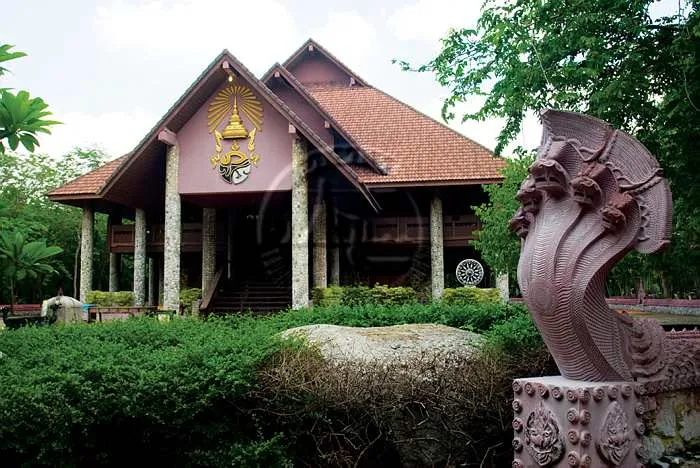
Wat Pa Chai Rangsi
Open Days: Open Daily
Opening Hours: 6:00 a.m.–7:00 p.m.
Wat Pa Chai Rangsi is a Dhammayut temple in Ban Bang Pla, Ban Ko Subdistrict, Mueang Samut Sakhon District, Samut Sakhon, set along the Tha Chin River on a large area of about 200 rai. It is one of the most visually distinctive temples in Samut Sakhon and stands out immediately for its unusual combination of scale, symbolism, and architecture. For travelers searching for a beautiful temple in Samut Sakhon, a temple with unusual design, or a place where northern Thai decorative ideas have been transformed into something highly individual, Wat Pa Chai Rangsi is one of the clearest answers. It is not simply a temple to visit for merit-making. It is a designed sacred landscape where architecture itself becomes part of the religious experience.
What makes the temple especially memorable is the strong coherence of its design. In 1983, Phra Ajarn Chan Khavesako, the temple’s founder who later held the title Phra Thep Sitthiyannarangsi, developed the temple using adapted Lanna architectural ideas. The result is a temple that feels unlike most central Thai temples. It has the elegance of northern wooden structures, the force of giant naga imagery, and a weighty visual presence that many visitors compare to stone sanctuaries or castle-like sacred buildings. This unusual fusion gives the temple a distinctive personality and makes it highly appealing to both worshippers and cultural travelers.
The temple’s best-known highlight is the ubosot known by its royal auspicious name, Ubosot Phra Phutthaphumirangsi. This is the spiritual and visual center of the temple. Around it, a huge naga-shaped boundary wall encircles the sacred zone, creating a powerful sense of protection and symbolic sanctity. The entrance is equally dramatic, with a beautifully crafted six-headed naga gateway that immediately signals the temple’s artistic ambition. Even before entering the ubosot itself, visitors are already drawn into a carefully staged experience of sacred design.
The ubosot is built on two levels. The lower level uses large stone blocks, giving it a grounded and monumental feel, while the upper level is made of hardwood and carries the warmth and elegance associated with northern Thai craftsmanship. The roof rises in three tiers, and the gable ends use wooden kalae ornaments instead of the more familiar chofa. These elements make the building look both traditional and unusual at the same time. From a distance, it can suggest a northern viharn, a fortified wooden sanctuary, or even a stylized sacred palace. This is one reason why Wat Pa Chai Rangsi attracts photographers and architecture lovers as much as religious visitors.
Inside the ubosot, the principal Buddha image is named Phra Phutthachairangsi Mongkhon Thotsaphon Mahakaruna Sakhon. Behind the principal image is one of the temple’s most striking artistic features: a massive carved log shaped into a spreading Bodhi tree. On the left side, the carving depicts the Buddha’s birth, and on the right side it depicts the Parinirvana. This use of large-scale wood carving as a narrative and symbolic background is rare and gives the interior a very strong visual identity. Instead of relying only on painted decoration, the temple uses carved timber to create a dramatic sacred setting that visitors tend to remember clearly.
In historical terms, Wat Pa Chai Rangsi was founded in 1982 and received royal permission for its consecrated boundary on 30 January 1987. Although it is not an ancient Ayutthaya or early Rattanakosin temple, its value lies elsewhere. It shows how a modern temple can still create a powerful and recognizable artistic language. Rather than copying older forms exactly, Wat Pa Chai Rangsi developed a clear identity of its own. That makes it important not only as a place of worship, but also as an example of Thai Buddhist architecture in the late 20th century.
The temple grounds also include several other important structures that make the overall site feel complete and carefully organized. These include one residence for the Supreme Patriarch, twelve Thai-style monk residences for monks and novices, and six residences for lay practitioners. These buildings help explain why the temple feels more like a full religious complex than a single-building destination. Visitors who appreciate spacious temple grounds, greenery, and multiple areas to explore often find Wat Pa Chai Rangsi especially rewarding because there is more to see here than just the ubosot.
The line of abbots connected with the temple also reflects continuity in its development. Names associated with the temple include Phra Maha Prakop Dhammachivo, later known as Phra Khru Sirisutwaraphon; Phra Thep Sitthiyannarangsi, or Phra Ajarn Chan Khavesako, the founder; Phra Khru Prichathamrangsi, or Phra Maha Pramuan Piyathammo; and Phra Khru Sripariyatwithan, or Phra Maha Maen Kuptarungsi, who is listed as the current abbot in the latest temple information. This continuity helps explain why the temple’s artistic vision has remained so coherent over time.
The overall atmosphere of Wat Pa Chai Rangsi suits several kinds of visitors. It works well for worshippers, travelers looking for beautiful temples near Bangkok, photographers, and anyone interested in unusual religious architecture. The temple grounds are broad and calm, and almost every major structure offers strong visual composition. The naga gateway, the serpent boundary wall, the layered rooflines, the timber work, and the riverside setting all contribute to a memorable visit. Because of this, the temple is often more than just a brief stop. It can easily become the main destination in a Samut Sakhon cultural day trip.
Getting There is straightforward from Mahachai. Take Setthakit Road, Highway 3091, for about 5 kilometers. Then turn left near kilometer marker 16, opposite the substation, continue for about 1.5 kilometers, and turn right for another 200 meters to reach the temple. A private car is the easiest option, especially because the temple has a large area and is best enjoyed slowly. Travelers without their own vehicle can first reach central Samut Sakhon and continue by local transport. Morning and late afternoon are especially pleasant times to walk the grounds and take photographs.
For anyone asking what makes Wat Pa Chai Rangsi worth visiting, the answer is not just one thing. It is the total combination of its founder’s design vision, adapted Lanna architecture, giant naga symbolism, two-level ubosot of stone and wood, the distinctive principal Buddha image, the carved Bodhi tree backdrop, and the peaceful temple grounds by the Tha Chin River. All of these come together to make Wat Pa Chai Rangsi one of the most distinctive modern temples in Samut Sakhon and one of the province’s strongest temple experiences for cultural travelers.
| Name | Wat Pa Chai Rangsi |
| Location | Moo 4, Ban Bang Pla, Ban Ko Subdistrict, Mueang Samut Sakhon District, Samut Sakhon |
| Address | 103 Moo 4, Ban Ko Subdistrict, Mueang Samut Sakhon District, Samut Sakhon 74000 |
| Coordinates | Located on the bank of the Tha Chin River in Ban Ko, Mueang Samut Sakhon |
| Highlights | Ubosot Phra Phutthaphumirangsi, giant naga boundary wall, six-headed naga gateway, two-level ubosot built from stone and hardwood, carved Bodhi tree backdrop behind the principal Buddha image |
| History | Founded in 1982, designed in 1983, and granted royal consecrated boundary status on 30 January 1987 |
| Distinctive Features | Adapted Lanna-inspired architecture combined with a stone-sanctuary atmosphere, triple-tier roof, kalae wood ornaments instead of chofa |
| Travel Information | From Mahachai, take Setthakit Road (Highway 3091) about 5 km, turn left opposite the substation near km marker 16, continue 1.5 km, then turn right for about 200 m |
| Current Status | Open for temple visits, worship, and contact with the temple as usual |
| Open Days | Open Daily |
| Opening Hours | 6:00 a.m.–7:00 p.m. |
| Facilities | Large temple grounds, monk residences, lay practitioner residences, contact point, walking areas for architecture viewing |
| Main Areas / Zones | Ubosot Phra Phutthaphumirangsi, six-headed naga gate, naga boundary wall, Supreme Patriarch residence, Thai-style monk residences, lay practitioner quarters |
| Abbot / Caretaker | Phra Khru Sripariyatwithan (Phra Maha Maen Kuptarungsi) |
| Main Contact Number | 087-169-8426, 034-468-128 |
| Official Website / Official Page | www.watpachairangsi.com, Facebook: Wat Pa Chai Rangsi Samut Sakhon |
| Nearby Tourist Attractions | 1) Wat Bang Pla 4 km 2) Mahachai Market 9 km 3) Wat Sutthiwat Wararam (Wat Chong Lom) 10 km 4) Tha Chalom Community 11 km 5) Phanthai Norasing Shrine 18 km |
| Nearby Restaurants | 1) Ruen Sakhon Cafe & Restaurant 4 km 2) PlantB Cafe 4 km Tel. 065-687-6484 3) Ban Ko Samut Made-to-Order Food 5 km Tel. 093-095-2173 4) Ahan Tam Sang Ban Ko Samut Sakhon 5 km Tel. 091-059-4218 5) Tha Rua Phattakhan 10 km Tel. 084-229-5159, 093-946-4954, 034-421-935 |
| Nearby Accommodations | 1) At Samut Sakhon Mahachai 9 km Tel. 099-095-4541, 065-464-7459 2) The Seaport Mahachai 10 km Tel. 083-436-5434, 034-836-880 3) The Eight Serviced Apartment Mahachai 10 km 4) Orchid Hotel Samut Sakhon 10 km 5) Thongchen Residence 11 km Tel. 034-425-191 |
Frequently Asked Questions (FAQ)
Q: Where is Wat Pa Chai Rangsi located?
A: The temple is in Moo 4, Ban Bang Pla, Ban Ko Subdistrict, Mueang Samut Sakhon District, Samut Sakhon, on the bank of the Tha Chin River.
Q: What time is Wat Pa Chai Rangsi open?
A: It is open daily from 6:00 a.m. to 7:00 p.m.
Q: What is the most distinctive feature of Wat Pa Chai Rangsi?
A: Its most distinctive features are the naga-encircled ubosot, the six-headed naga entrance, and the unusual combination of stone, hardwood, and adapted Lanna design.
Q: When was Wat Pa Chai Rangsi established?
A: The temple was founded in 1982 and received its royal consecrated boundary in 1987.
Q: Who founded Wat Pa Chai Rangsi?
A: The founder was Phra Thep Sitthiyannarangsi, also known as Phra Ajarn Chan Khavesako, who also shaped the temple’s design concept.
Q: Is Wat Pa Chai Rangsi worth visiting for architecture lovers?
A: Yes. It is one of the most distinctive temples in Samut Sakhon for visitors interested in unusual Thai Buddhist architecture and temple photography.
Tel : 034412992, 034810123
 Tel : 034412992, 034810123
 Category: ●Places of Worship
 Group: ●Temple
Last Update : 6 MonthAgo
 Last Update : 6 MonthAgo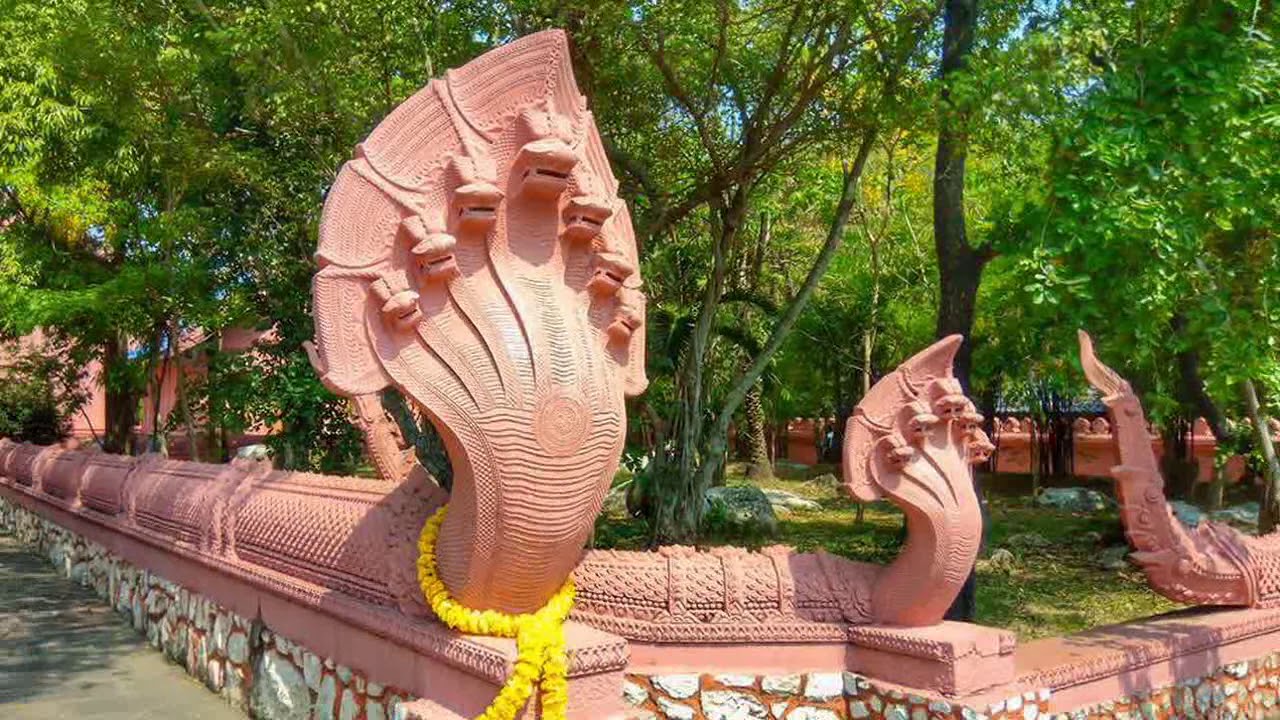
 Click to Access the Navigation Map GPS
Wat Pa Chai Rangsi Map
Recommend

 Art, Culture and Heritage
 Historical Sites and Monuments(3)
 Landmarks and Memorials(4)
 Art, Craft Centres, Tradition(2)
 Museums(1)
 Historic Homes and Cities(1)
 Educational Places
 Museum for Study(1)
Temple(31)
Museum for Study(1)
Temple(31)
 Other Sacred Sites(12)
 Research and Development
 Royal Project(1)
 Suburban Living
 Village, Community(4)
 Local Market(2)
 Floating Market(2)
 Nature and Wildlife
 National Parks and Marine Reserves(1)
 River, Canal(4)
 Bays and Beaches(1)
 Other natural attractions(3)
 Entertainment and Agricultural
 Zoos and Aquariums(1)
 Shopping
 Shopping and Night Market(1)


