
lovethailand home >Central Travel Attractions >Samut Prakan Travel Attractions >Bang Bo >Khlong Dan > Wat Mongkol Kothawas
TL;DR: Wat Mongkol Kothawas is located at Khlong Dan Subdistrict, Bang Bo District, Samut Prakan, Thailand, open Daily, hours 08:00 AM – 06:00 PM.
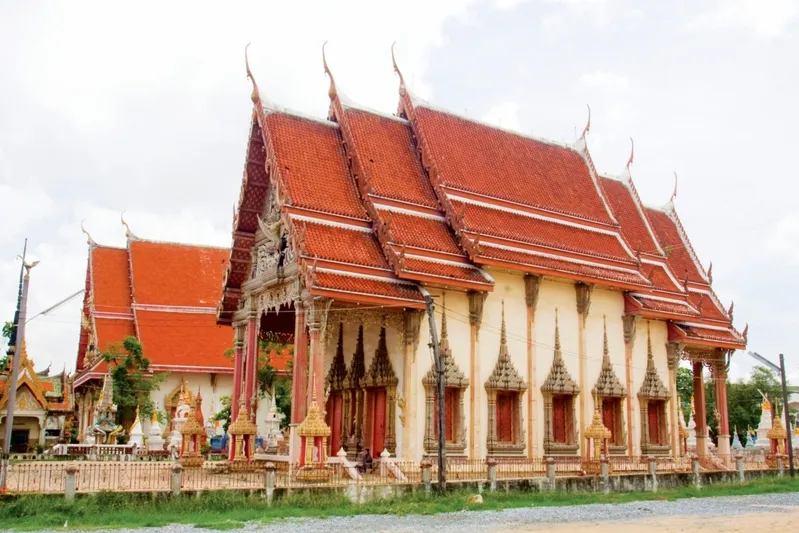
Wat Mongkol Kothawas
Open Days: Daily
Opening Hours: 08:00 AM – 06:00 PM
Wat Mongkol Kothawas, widely known as Wat Luang Pho Pan, is one of the best-known old temples in Khlong Dan, Bang Bo District, Samut Prakan. The temple is closely associated with Luang Pho Pan, a highly respected monk from the reign of King Rama V, and remains an important spiritual center for local residents. With a history reaching back to the late Ayutthaya period, the temple combines local heritage, living faith, and a strong connection to the riverside community of Khlong Dan.
One of the reasons Wat Mongkol Kothawas stands out is that it still feels like a real community temple rather than a purely tourist-oriented destination. Visitors come here not only to look around, but to pay respect to Luang Pho Pan, make merit, and experience a temple that has remained meaningful to the people of the area for generations. The temple is located near Khlong Dan Market, so it also fits naturally into a short cultural trip around this old coastal community.
The temple was first established on 15 April 1757 during the late Ayutthaya period. Its original name was Wat Bang Hia Nok, based on the former name of the subdistrict, Bang Hia. According to local historical tradition, the area was once home to many monitor lizards, which explains the old place name. During the long wars between Siam and Burma in the Ayutthaya era, a group of relatively well-off residents grew weary of the conflict and migrated with their families to settle near the Bang Hia waterway in an area known as Khok Setthi, today called Ban Sam Ruean. The local people then joined together to build the temple.
This origin gives the temple an especially strong local character. Wat Mongkol Kothawas was not established as a royal foundation at the beginning. It grew from the effort of ordinary people seeking security, stability, and spiritual grounding in a new settlement. That history makes the temple valuable not only as a Buddhist site, but also as a witness to the formation of old Khlong Dan community life.
A major turning point in the temple’s history came during the reign of King Chulalongkorn. In early 1909, King Rama V stayed for three nights at the floodgate on the Bang Hia River, now known as the Chonlahan Phichit Water Gate. During that visit, he held Dhamma conversations with Luang Pu Pan, and the king was greatly pleased. He later granted Luang Pu Pan the ecclesiastical title Phra Khru Phiphat Nirothakit. This royal recognition greatly enhanced the prestige of both the monk and the temple.
Afterward, the temple’s name was changed from Wat Bang Hia Nok to Wat Mongkol Kothawas, a more auspicious and refined name. Even so, local people and visiting devotees continued to call it Wat Luang Pho Pan, and that popular name remains widely used today. In practice, the identity of the temple is still strongly centered on Luang Pho Pan and the devotion people hold for him.
The most important sacred focus inside the temple is the cast statue of Luang Pho Pan, which is housed in his former kuti. This statue is especially meaningful because it was created before his death. For devotees, that makes it much more than an ordinary commemorative image. It is regarded as a living representation of the revered monk and serves as the main point of prayer and merit-making for many visitors. People often come to ask for blessings related to work, success, safety, and personal well-being.
Another important part of the temple’s living tradition is the annual event held on the waxing moon days 5 to 7 of the 12th lunar month. During this period, Luang Pho Pan’s image is ceremonially taken to the Bang Bo District Office for a major worship and gold-leaf offering festival. This tradition continues to draw strong participation from local communities and from devotees in other areas, showing that the temple’s religious significance remains active in everyday life.
Wat Mongkol Kothawas is also attractive because of its location. Since it is close to Khlong Dan Market, visitors can easily combine a temple visit with a food trip, local seafood shopping, or a wider exploration of the Khlong Dan area. This makes the temple especially suitable for travelers who want something more rooted in local culture rather than a standard checklist-style temple stop.
The temple sits on a large land area of 45 rai, 3 ngan, and 75 square wah, with additional monastic land in two separate plots. This gives it the spacious feeling of a long-established community temple that has grown together with the settlement around it. On important religious dates or festival days, the grounds are able to accommodate large numbers of visitors while still preserving a calm temple atmosphere.
For people interested in the religious history of central Thailand, the temple is also notable because Luang Pho Pan remains one of the best-known monks associated with Samut Prakan in the late 19th and early 20th centuries. His legacy continues to shape the reputation of the temple, and this is why many visitors come specifically because they have heard of his name long before they know the formal name Wat Mongkol Kothawas.
Travel Information is straightforward. Drivers can follow Sukhumvit Road into Khlong Dan and turn toward the temple via the local road near Khlong Dan Market. Public transport users can take regional transport routes that pass through Bang Bo and Khlong Dan, then continue locally to the temple. Because the temple is so close to the market area, it is easy to include it in a half-day itinerary focused on local culture, seafood, and merit-making.
The best way to experience the temple is to move slowly and allow time for both worship and observation. Visitors often spend time paying respect to Luang Pho Pan, walking quietly through the grounds, and then continuing on to nearby local attractions. Those who want to witness the strongest atmosphere of communal devotion should consider visiting during the annual festival period, while those who prefer a quieter visit may find weekday mornings more suitable.
Overall, Wat Mongkol Kothawas is a temple of deep local memory and enduring faith. Its roots in the Ayutthaya era, its connection with migrating communities, its association with King Rama V, and the continuing devotion to Luang Pho Pan all make it far more than an ordinary neighborhood temple. For anyone interested in old temples in Samut Prakan, Luang Pho Pan worship sites, or meaningful places to visit near Khlong Dan Market, this temple is well worth the trip.
| Name | Wat Mongkol Kothawas (Wat Luang Pho Pan) |
| Location | Khlong Dan Subdistrict, Bang Bo District, Samut Prakan, Thailand |
| Address | 103 Moo 13, Sukhumvit Road, Khlong Dan, Bang Bo, Samut Prakan 10550 |
| Highlights | Late Ayutthaya-era temple, Luang Pho Pan devotion site, cast image of Luang Pho Pan made before his death, annual gold-leaf worship festival, important temple near Khlong Dan Market |
| History | Established on 15 April 1757 in the late Ayutthaya period, originally named Wat Bang Hia Nok before later becoming Wat Mongkol Kothawas |
| Name Origin | Originally called Wat Bang Hia Nok after the old subdistrict name Bang Hia, later renamed Wat Mongkol Kothawas while locals continued to call it Wat Luang Pho Pan |
| Distinctive Features | Historic community temple, strong local faith in Luang Pho Pan, annual procession and worship event, spacious grounds close to the traditional market area |
| Travel Information | Follow Sukhumvit Road into Khlong Dan and turn toward the temple near Khlong Dan Market, or use regional transport routes serving Bang Bo and Khlong Dan |
| Current Status | Open and active as a functioning community temple |
| Open Days | Daily |
| Opening Hours | 08:00 AM – 06:00 PM |
| Fees | No admission fee |
| Facilities | Inner temple grounds, ritual areas, parking, and easy access to nearby market shops and local services |
| Main Areas / Zones | Luang Pho Pan image area, ritual grounds, internal temple courtyard, and annual festival-related spaces |
| Abbot / Caretaker | Phra Khru Palad Adun Thinnadhammo |
| Main Contact Number | 02-330-1247 |
| Official Website / Official Page | Facebook: Luang Pu Pan Wat Mongkol Kothawas |
| Nearby Tourist Attractions | 1. Khlong Dan Market – 0.5 km 2. Wat Sarang Sok – 3 km 3. Wat Pika Floating Market – 6 km 4. Wat Pan Prasittharam (Wat Pika) – 6 km 5. Khlong Takok Viewpoint – 7 km |
| Nearby Restaurants | 1. Podong Khlong Dan – 1 km. Tel. 086-364-2770 2. Hoi Tong Ta Restaurant – 1 km. Tel. 085-171-9810, 093-873-9585 3. Ko Tae Seafood – 2 km 4. Dan Rim Lay – 3 km. Tel. 095-097-4515 5. Pom T Seafood – 3 km. Tel. 02-019-2651 |
| Nearby Accommodations | 1. First Resort Khlong Dan – 2 km. Tel. 087-510-6377 2. Phet Resort Khlong Dan – 3 km. Tel. 081-355-0649 3. The Green View Hotel – 9 km 4. Phraewa Luxury Serviced Residence – 10 km 5. Maybis Hotel – 21 km. Tel. 02-088-4999 |
Frequently Asked Questions (FAQ)
Q: Where is Wat Mongkol Kothawas located?
A: It is in Khlong Dan Subdistrict, Bang Bo District, Samut Prakan, close to Khlong Dan Market.
Q: What was the temple’s original name?
A: Its original name was Wat Bang Hia Nok, based on the old name of the subdistrict.
Q: Why is the temple also called Wat Luang Pho Pan?
A: The temple is strongly associated with Luang Pho Pan, its famous former abbot, and local people have continued to use that name.
Q: What is the main sacred highlight inside the temple?
A: The main sacred highlight is the cast image of Luang Pho Pan, which was made before his death and is deeply revered by devotees.
Q: What are the opening hours?
A: Public travel information commonly lists the temple as open daily from 08:00 AM to 06:00 PM.
Q: What can I visit after the temple?
A: You can continue to Khlong Dan Market, Wat Sarang Sok, the floating market at Wat Pika, and other local attractions in the Khlong Dan area.
 Category: ●Places of Worship
 Group: ●Temple
Last Update : 4 MonthAgo
 Last Update : 4 MonthAgo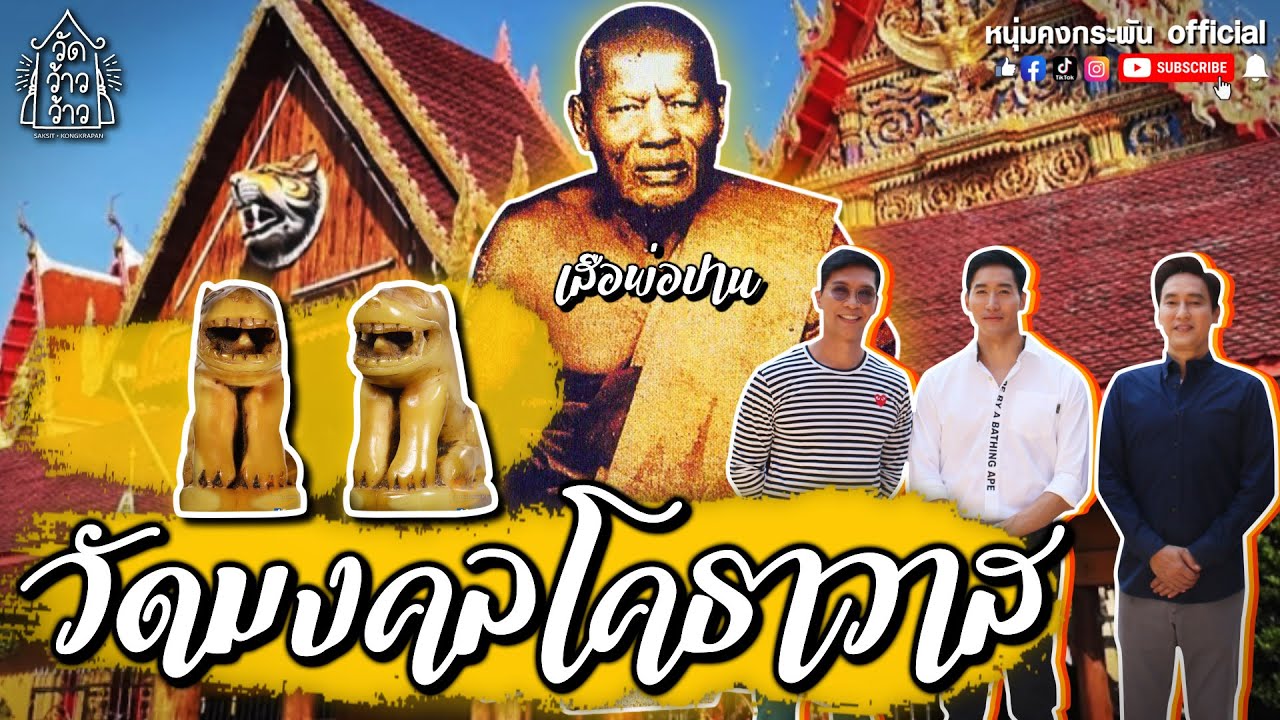
 Click to Access the Navigation Map GPS
Wat Mongkol Kothawas Map
Recommend

 Art, Culture and Heritage
 Historical Sites and Monuments(2)
 Landmarks and Memorials(1)
 Art, Craft Centres, Tradition(9)
 Museums(5)
 Historic Homes and Cities(1)
Temple(30)
Historic Homes and Cities(1)
Temple(30)
 Mosque(1)
 Other Sacred Sites(9)
 Suburban Living
 Local Market(1)
 Floating Market(3)
 Nature and Wildlife
 River, Canal(1)
 Bays and Beaches(2)
 Entertainment and Agricultural
 Zoos and Aquariums(1)
 Animal camps and shows(1)
 Farms, Parks and Ecotourism(1)
 Outdoor and Adventure Activities(1)


