
lovethailand home >North Travel Attractions >Lampang Travel Attractions >Wang Nuea >Thung Hua > Tham Pha Daeng Cave
TL;DR: Tham Pha Daeng Cave is located at Ban Pha Daeng, Thung Hua Subdistrict, Wang Nuea District, Lampang Province, open Daily, hours 08:00–17:00.

Tham Pha Daeng Cave
Open Days: Daily
Opening Hours: 08:00–17:00
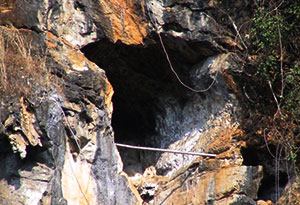
Tham Pha Daeng Cave in Lampang is a natural cave attraction in Ban Pha Daeng, Thung Hua Subdistrict, Wang Nuea District, Lampang Province. It is known for its large limestone chamber, rural mountain setting, and the presence of many bats living inside the cave. The cave is best suited for travelers who enjoy quiet nature sites, limestone landscapes, local community routes, and cave ecosystems rather than heavily developed tourist attractions. Its appeal lies in the raw character of the place: a cave formed naturally within a limestone mountain, reached by local roads, and closely connected with the surrounding village landscape.
Tham Pha Daeng is believed to have been discovered by forest hunters who entered the mountain area while hunting. This local discovery story reflects the relationship between rural communities and the natural environment around them. Before the cave became known as a tourist site, the hills, forests, and natural routes around Ban Pha Daeng were part of the lived landscape of local people. Hunters, villagers, and people familiar with the terrain would have known paths, slopes, water sources, and hidden natural places long before they appeared in travel information.
The cave itself is a large chamber formed within a limestone mountain. Limestone caves are created slowly over long periods when water moves through cracks and dissolves parts of the rock. Over time, these processes create hollow spaces, chambers, passages, and textured walls beneath the mountain. Tham Pha Daeng is therefore not simply a hollow space in a hill; it is the result of natural geological processes involving water, minerals, rock, and time. This makes the cave meaningful not only as a sightseeing point but also as a place for learning about limestone landscapes in northern Thailand.
One of the most important features of Tham Pha Daeng is its bat population. Many bats live inside the cave, making the site part of a functioning cave ecosystem. Bats play an important ecological role by helping control insects and, in some ecosystems, supporting seed dispersal and nutrient cycles. Bat guano also supports small cave organisms that depend on organic material in dark environments. For this reason, visitors should understand that the cave is not an empty tourist space but a habitat for living creatures.
Visitors should behave quietly inside the cave. Loud noise, strong lights, repeated flash photography, and disturbing bat roosting areas should be avoided. Bats are sensitive to disturbance, and repeated human disruption can affect their behavior. Responsible cave tourism means observing from a respectful distance, using only necessary light, and leaving the cave environment as undisturbed as possible.
Tham Pha Daeng is located in Thung Hua Subdistrict, an area with several local religious, cultural, and natural sites. Nearby places associated with the subdistrict include Wat Phra Kerd, Phra That Pha Din, Chao Pho Khomue Lek Shrine, and Tham Pha Daeng itself. These places show that Thung Hua has more to offer than a single cave. It is a community landscape where temples, local beliefs, hills, caves, and rural roads are connected.
The access route to Tham Pha Daeng is a key part of the travel experience. The cave is about 12 km from Wang Nuea District and about 6 km from Thung Hua Subdistrict Administrative Organization. The main route includes paved and reinforced concrete roads, while the final access road to the cave is a dirt road. Cars and motorcycles can enter, but travelers should drive carefully, especially during the rainy season or after heavy rain. Dirt roads may become slippery, uneven, or muddy.
Getting There is most convenient by private car or motorcycle. From Wang Nuea District, travel toward Thung Hua Subdistrict and Ban Pha Daeng. From the Thung Hua Subdistrict Administrative Organization area, the cave is about 6 km away. The final section is a dirt road leading toward the cave area. First-time visitors should ask local residents or contact Thung Hua Subdistrict Administrative Organization before traveling, as some sections may have limited signage and mobile phone signal may not be stable.
For travelers coming from Lampang city, an early start is recommended. Wang Nuea District is in the northern part of Lampang Province, and the journey takes more planning than visiting attractions near the city. Once in Wang Nuea town, travelers should prepare supplies, check fuel, and consider stopping for a meal before continuing to Thung Hua and Ban Pha Daeng. Facilities near the cave itself are limited.
The recommended visiting hours are 08:00–17:00, and visitors should enter only during daylight hours. Cave visits should not begin late in the evening because the route and the surrounding natural area become more difficult to assess when light fades. If a vehicle gets stuck, if travelers lose the route, or if an accident occurs, assistance can be harder to arrange after dark.
Tham Pha Daeng is most suitable for travelers who are physically ready and comfortable with natural sites. It is not a highly serviced attraction with food stalls, lighting systems, paved walking paths, or full facilities at the cave entrance. Its value comes from the authenticity of the landscape: limestone rock, a large cave chamber, bats, quiet surroundings, and the rural atmosphere of Thung Hua Subdistrict.
Before visiting, travelers should prepare a flashlight or headlamp, closed shoes with good grip, drinking water, personal medicine, a hat, and a personal trash bag. Cave floors may be damp, uneven, or slippery. A headlamp is especially useful because it keeps both hands free while walking. Relying only on a mobile phone light is not ideal because phones can fall, lose battery, or provide insufficient light inside a large and dark cave chamber.
Visitors should walk in a group and avoid separating from one another. Even a large cave chamber can contain dark sections, uneven rock, guano deposits, and areas that are difficult to judge without sufficient light. The safest approach is to stay in accessible areas, move slowly, and avoid entering unknown side passages. Responsible cave travel is not about going as deep as possible; it is about observing carefully and returning safely.
From a geological perspective, Tham Pha Daeng reflects the limestone terrain often found in northern Thailand. Limestone mountains can form caves, cracks, hollows, chambers, and underground textures as water slowly dissolves the rock. Such caves usually have their own microclimate, with cooler air, higher humidity, and specific cave-dwelling organisms. Even without formal lighting or developed walkways, a cave like Tham Pha Daeng can be fascinating precisely because it remains close to its natural state.
Tham Pha Daeng also helps visitors understand the relationship between people and local landscapes. The cave is linked to Ban Pha Daeng and Thung Hua Subdistrict, and local people are often the best source of practical route information. Travelers should combine map information with local advice, especially when visiting a rural cave site. Digital navigation alone may not fully reflect road conditions, seasonal changes, or the most suitable access route.
A trip to Tham Pha Daeng can be combined with other sites in Wang Nuea District. Nearby places include Wat Pha Daeng, Wat Phra Kerd, Phra That Pha Din, Chao Pho Khomue Lek Shrine, Wang Nuea Sweetie, and Wat Wiang Kalong. Combining the cave with local temples, community landmarks, and food stops in Wang Nuea town creates a more balanced travel plan that includes nature, culture, and local life.
For photographers, Tham Pha Daeng offers interesting subjects such as the large cave chamber, limestone surfaces, shadows, and the atmosphere of a bat-inhabited cave. Photography should be done responsibly. Avoid repeated flash near bats, do not shine strong lights directly at wildlife, and do not climb on fragile rock surfaces for a camera angle. The best cave photography respects darkness as part of the cave environment.
Visitors should not treat Tham Pha Daeng as a casual playground. Caves are fragile natural environments. Litter, food waste, plastic, wall writing, and rock damage can have lasting effects. The basic rule is simple: take everything you bring back out with you, leave no marks, and do not disturb wildlife. A clean and quiet visit helps preserve the cave for both local communities and future travelers.
During the rainy season, extra caution is necessary. The dirt road to the cave may be affected by rainfall, and the cave area may become more slippery. Ban Pha Daeng and surrounding areas can be affected by strong water flow during heavy rain periods. Travelers should check weather conditions and ask local residents or Thung Hua Subdistrict Administrative Organization before entering the area. If the route is not suitable, postponing the visit is the safest decision.
Families should assess the ability of all members before entering the cave. Young children may be frightened by darkness or bats, elderly travelers may have difficulty on uneven surfaces, and people with respiratory issues may not be comfortable in a humid cave environment. If any member of the group is not ready, it is better to stay near safer areas rather than continue deeper inside.
Tham Pha Daeng also shows the potential of community-based tourism in Thung Hua Subdistrict. The area includes caves, temples, shrines, rural roads, and local stories. Sustainable tourism here should focus on safety, conservation, clear local information, and community participation. If managed carefully, Tham Pha Daeng can remain a valuable nature attraction for travelers who want to see a quieter side of Lampang.
Contacting Thung Hua Subdistrict Administrative Organization before traveling is a practical step, especially for first-time visitors. The office can provide local orientation and may help confirm route conditions, seasonal concerns, and community information. This is especially useful because the cave is about 6 km from the subdistrict office and includes a dirt-road approach.
In summary, Tham Pha Daeng Cave in Lampang is a natural limestone cave attraction in Ban Pha Daeng, Thung Hua Subdistrict, Wang Nuea District. It is believed to have been discovered by forest hunters and is known for its large cave chamber and many resident bats. The cave is about 12 km from Wang Nuea District and about 6 km from Thung Hua Subdistrict Administrative Organization. The final access road is a dirt road suitable for cars and motorcycles in appropriate conditions. Visitors should travel by private vehicle, prepare lighting and proper footwear, visit only during daylight hours, ask local authorities for updated route information, and treat the cave as a living ecosystem rather than just a sightseeing spot.
| Name | Tham Pha Daeng Cave |
| Location | Ban Pha Daeng, Thung Hua Subdistrict, Wang Nuea District, Lampang Province |
| Address | Thung Hua Subdistrict, Wang Nuea District, Lampang Province 52140, Thailand |
| Highlights | A large limestone cave chamber with many bats living inside, set in the rural landscape of Thung Hua Subdistrict |
| History | Believed to have been discovered by forest hunters in the mountain and forest area around Ban Pha Daeng |
| Distinctive Features | A large cave chamber formed within a limestone mountain and a bat-inhabited cave ecosystem |
| Travel Information | About 12 km from Wang Nuea District and about 6 km from Thung Hua Subdistrict Administrative Organization. The main route includes paved and reinforced concrete roads, while the final access road to the cave is a dirt road suitable for cars and motorcycles in appropriate conditions. |
| Current Status | A natural attraction of Thung Hua Subdistrict, Wang Nuea District, Lampang Province |
| Open Days | Daily |
| Opening Hours | 08:00–17:00. Visitors should enter only during daylight hours and check route conditions before traveling. |
| Caretaker / Local Contact Office | Thung Hua Subdistrict Administrative Organization |
| Main Contact Number | 054-209700 |
| Nearby Tourist Attractions | 1. Wat Pha Daeng – 1 km 2. Wat Phra Kerd – 6 km 3. Phra That Pha Din – 8 km 4. Chao Pho Khomue Lek Shrine – 9 km 5. Wang Nuea Sweetie – 13 km Tel. 089-264-2730, 081-289-0535 6. Wat Wiang Kalong – 26 km |
| Nearby Restaurants | 1. Pongsri Phochana Wang Nuea – 12 km Tel. 080-125-0540 2. Five Star PTT Wang Nuea – 12 km Tel. 091-004-6801 3. Rak Kan Coffee&Cake – 12 km 4. Jungle Cafe Wang Nuea Branch – 12 km 5. Café Amazon DD1356 PTT Wang Nuea – 12 km 6. Khrua Muan Jai Wang Nuea – 16 km Tel. 064-495-6386 |
| Nearby Accommodations | 1. Ban Phak Suwan Wang Nuea – 12 km Tel. 062-286-4959, 089-269-4876 2. Pansuwan Home & Safe House – 13 km Tel. 083-985-9728 3. Jintana Wang Nuea – 13 km Tel. 086-179-8773 4. Wangnue Mountain View Resort&Hotel – 15 km Tel. 085-863-1196 5. Wang Nuea Rooms / Boonsiri Resort – 17 km Tel. 095-329-2891 6. Sherpa Chae Son – 70 km Tel. 081-984-1767 |
Frequently Asked Questions (FAQ)
Q: Where is Tham Pha Daeng Cave located?
A: Tham Pha Daeng Cave is located in Ban Pha Daeng, Thung Hua Subdistrict, Wang Nuea District, Lampang Province. It is about 12 km from Wang Nuea District and about 6 km from Thung Hua Subdistrict Administrative Organization.
Q: What is Tham Pha Daeng Cave known for?
A: The cave is known for its large limestone chamber and the large number of bats living inside.
Q: How was Tham Pha Daeng Cave discovered?
A: It is believed to have been discovered by forest hunters who entered the mountain and forest area around Ban Pha Daeng.
Q: How can visitors get to Tham Pha Daeng Cave?
A: Visitors should travel by private car or motorcycle from Wang Nuea District toward Thung Hua Subdistrict. The main route is paved and reinforced concrete, while the final access road to the cave is a dirt road.
Q: What are the opening hours?
A: Tham Pha Daeng Cave is open daily from 08:00 to 17:00. Visitors should enter only during daylight hours and check route conditions before traveling.
Q: What should visitors bring?
A: Visitors should bring a flashlight or headlamp, closed shoes with good grip, drinking water, personal medicine, and a small bag for taking trash back out.
Q: Is Tham Pha Daeng Cave suitable for children and elderly travelers?
A: It is suitable only for accessible and safe areas. Young children, elderly travelers, and people with mobility issues should be especially careful because the cave is a natural site with uneven surfaces.
Q: Who can visitors contact for local information?
A: Visitors can contact Thung Hua Subdistrict Administrative Organization at 054-209700 for local information and route updates.
 Category: ●Nature and Wildlife
 Group: ●Caves
Last Update : 2 MonthAgo
 Last Update : 2 MonthAgo
 Click to Access the Navigation Map GPS
Tham Pha Daeng Cave Map
Recommend

 Art, Culture and Heritage
 Historical Sites and Monuments(2)
 Landmarks and Memorials(5)
 Art, Craft Centres, Tradition(10)
 Museums(4)
 Historic Homes and Cities(1)
 Places of Worship
 Temple(86)
 Other Sacred Sites(9)
 Research and Development
 Royal Project(2)
 Suburban Living
 Village, Community(3)
 Local Market(2)
 National Parks and Marine Reserves(5)
 Mountain (Doi)(4)
 Dam, Reservoir, Lake(11)
 Waterfalls(15)
 Hot Springs(1)
Caves(12)
Hot Springs(1)
Caves(12)
 Flower Field(1)
 River, Canal(1)
 Bays and Beaches(1)
 Other natural attractions(4)
 Entertainment and Agricultural
 Animal camps and shows(1)
 Farms, Parks and Ecotourism(2)
 Outdoor and Adventure Activities(2)
 Shopping
 Shopping and Night Market(2)
 Spas and Wellness
 Spas and Wellness(1)


