
lovethailand home >North Travel Attractions >Lampang Travel Attractions >Mae Mo >Sop Pat > Relics Ban Sop Pat
TL;DR: Relics Ban Sop Pat is located at Wat Sop Pat, Sop Pat Subdistrict, Mae Mo District, Lampang Province, open Daily, hours 08.00 – 17.00.

Relics Ban Sop Pat
Open Days: Daily
Opening Hours: 08.00 – 17.00
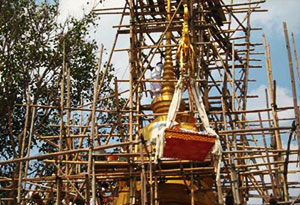
The Buddha Relics of Ban Sop Pat are enshrined at Wat Sop Pat in Sop Pat Subdistrict, Mae Mo District, Lampang Province. This sacred site is deeply meaningful to the local Buddhist community because the relics were requested by Phra Khru Sunthon Panyakhun, the former abbot of Wat Sop Pat, from Somdet Phra Nyanasamvara, the Supreme Patriarch of Thailand, so that they could be enshrined in the temple’s chedi. The purpose was to create a spiritual center for the people of Sop Pat and to bring auspiciousness to the community.
Wat Sop Pat is a community temple rather than a large mainstream tourist attraction, but its significance is strong and sincere. The temple serves as a place of worship, a center for merit-making, a site for local traditions, and a place where the memory of the former abbot, Phra Khru Sunthon Panyakhun or Khru Ba In Kuan, continues to be respected. For visitors seeking a quieter side of Lampang’s religious and cultural landscape, the Buddha Relics of Ban Sop Pat offer a meaningful and peaceful experience.
The enshrinement of Buddha relics in a temple chedi is a profound act in Thai Buddhist culture. Relics are not seen merely as sacred objects; they represent the presence and virtues of the Buddha. For local devotees, paying respect to the Buddha relics is a way to contemplate the Buddha’s teachings, calm the mind, and seek blessings for life, family, work, and personal well-being. At Wat Sop Pat, this devotion is closely connected with the identity of the village and the faith of the surrounding community.
Phra Khru Sunthon Panyakhun played a central role in shaping the importance of this sacred site. His request for the Buddha relics reflected a clear intention to strengthen the spiritual life of Sop Pat. By bringing the relics to the temple, he helped create a lasting place of worship where people could come together in faith. His name remains closely associated with Wat Sop Pat, and the memory of his work continues to be part of the temple’s cultural identity.
Wat Sop Pat is also home to a local museum that preserves items connected with the daily life and memory of the community. The collection includes old household objects, traditional tools, antique items, and belongings associated with Khru Ba In Kuan. This gives the temple a role beyond religious practice. It also serves as a small community archive, preserving local knowledge, family memory, and the material culture of earlier generations.
The presence of the local museum makes Wat Sop Pat a layered cultural site. Visitors can pay respect to the Buddha relics, observe the role of the temple in community life, and learn about local history through preserved objects. This combination of sacred relics, local memory, and living traditions makes the temple especially valuable for travelers who want to understand Lampang through its communities rather than only through famous landmarks.
The annual relic-washing tradition at Wat Sop Pat is one of the most important religious and cultural activities connected with the temple. This ceremony brings together monks, local residents, community leaders, and devotees to honor the relics and continue local Buddhist customs. The ceremony is not only an act of worship but also a way to strengthen community unity, preserve local heritage, and pass religious traditions to younger generations.
The atmosphere at the Buddha Relics of Ban Sop Pat is quiet and community-based. Visitors should dress respectfully, speak softly, and behave with consideration for monks and local residents. Since the temple is an active place of worship, photography should be done politely, and visitors should avoid disturbing ceremonies or people who are praying. A visit here is best approached with sincerity and mindfulness rather than as a quick photo stop.
Those who wish to make offerings can prepare flowers, incense, candles, or simple Buddhist offerings. The most important part of the visit is a calm and respectful mind. Families visiting with children can use the experience to teach temple etiquette, respect for sacred places, and the meaning of Buddhist relics in Thai culture. In this way, the visit becomes both a spiritual and educational experience.
Sop Pat Subdistrict is also becoming more interesting for travelers who enjoy local culture and nature-based routes. The area is part of Mae Mo District, which is known for attractions such as the Mae Mo Mexican Sunflower Field, Mae Mo Botanical Garden, the EGAT Mae Mo area, Ann’s Farm Lampang Thailand, and Pha Hop. A visit to Wat Sop Pat can therefore be combined with a relaxed trip through Mae Mo, especially for travelers using a private car.
The strongest appeal of Wat Sop Pat is its close relationship with the local community. The Buddha relics, the memory of Khru Ba In Kuan, the local museum, and the annual relic-washing tradition all show how the temple continues to function as a living center of faith. This is not a place created only for visitors; it is a real community temple where people continue to make merit, preserve memory, and maintain traditions.
For travelers interested in local Buddhist culture, it is worth spending time quietly around the temple grounds. Observe the chedi, the worship area, the local museum, and the village atmosphere. Understanding the temple as the heart of a community makes the Buddha Relics of Ban Sop Pat more meaningful than simply viewing them as another sacred object.
A half-day itinerary can begin with a visit to Wat Sop Pat to pay respect to the Buddha relics and explore the local museum. After that, travelers can stop for coffee or lunch at nearby community restaurants or Ann’s Farm Cafe, then continue to natural attractions in Mae Mo. This route is suitable for families, senior travelers, and anyone who prefers a calm and culturally meaningful trip.
A full-day route from Lampang city can include Wat Sop Pat in the morning, lunch in Mae Mo, a visit to Ann’s Farm or nearby cafes, and an afternoon trip to the Mae Mo Mexican Sunflower Field, Mae Mo Botanical Garden, or the EGAT Mae Mo learning area. Travelers interested in local nature can also include Pha Hop in Ban Mae Kiang, a natural attraction in Sop Pat Subdistrict.
Getting There is easiest by private car or hired vehicle from Lampang city. Drive toward Mae Mo District and continue into Sop Pat Subdistrict. The temple is located in Ban Sop Pat and can be found by using the coordinates of Wat Sop Pat. Travelers should allow enough time for the drive and consider combining the temple with other attractions in Mae Mo, as the area has restaurants, cafes, accommodations, and nature-based destinations within reasonable driving distance.
Road conditions in Mae Mo District may include local community roads, so drivers should use moderate speed and be careful at intersections, village roads, and areas with motorcycles or pedestrians. During the rainy season, checking weather conditions is recommended, especially if the trip includes natural attractions such as Pha Hop or other outdoor locations.
A visit to the Buddha Relics of Ban Sop Pat is best enjoyed slowly. Travelers who only wish to pay respect may spend about 30 minutes at the temple, while those who want to explore the local museum and absorb the atmosphere should allow more time. When possible, visitors should ask temple or community members before entering specific areas or photographing sensitive objects.
From a spiritual travel perspective, the Buddha Relics of Ban Sop Pat are valuable because of their simplicity and sincerity. The site is not defined by grandeur, but by the story of the relics, the devotion of Phra Khru Sunthon Panyakhun, the community museum, and the continuing tradition of relic washing. These elements make the temple a meaningful stop for anyone interested in faith, community, and local heritage in Lampang.
Overall, the Buddha Relics of Ban Sop Pat are more than a sacred site in a small subdistrict. They connect Buddhism, local monastic history, community memory, museum heritage, and living tradition in one place. For travelers who want to understand Lampang beyond its better-known attractions, Wat Sop Pat offers a quiet but deeply meaningful encounter with the spiritual and cultural life of Mae Mo District.
| Name | Buddha Relics of Ban Sop Pat, Wat Sop Pat |
| Location | Wat Sop Pat, Sop Pat Subdistrict, Mae Mo District, Lampang Province |
| Address | Sop Pat Subdistrict, Mae Mo District, Lampang 52220 |
| Coordinates | 18.24945, 99.76137 |
| Highlights | Buddha relics enshrined in the chedi of Wat Sop Pat, serving as a spiritual center for the Sop Pat community |
| History | Phra Khru Sunthon Panyakhun, former abbot of Wat Sop Pat, requested the Buddha relics from Somdet Phra Nyanasamvara, the Supreme Patriarch of Thailand, to enshrine them in the temple chedi. |
| Name Origin | The name refers to the Buddha relics enshrined at Wat Sop Pat in Ban Sop Pat, Sop Pat Subdistrict, Mae Mo District, Lampang Province. |
| Distinctive Features | Community temple with a chedi enshrining Buddha relics, a local museum, and an annual relic-washing tradition |
| Travel Information | Travel from Lampang city toward Mae Mo District and continue to Sop Pat Subdistrict. Using Wat Sop Pat coordinates is the easiest way to navigate by private car or hired vehicle. |
| Current Status | Open to Buddhist devotees and visitors as a sacred site and local community learning place in Sop Pat Subdistrict |
| Open Days | Daily |
| Opening Hours | 08.00 – 17.00 |
| Fees | No Admission Fee |
| Facilities | Worship area, chedi, Wat Sop Pat Local Museum, and parking within or near the temple area where available |
| Main Areas / Zones | Chedi enshrining the Buddha relics, worship area, temple grounds, and Wat Sop Pat Local Museum |
| Abbot / Caretaker | Wat Sop Pat monastic community and Ban Sop Pat community. Sop Pat Subdistrict Administrative Organization supports local temple traditions. Phra Khru Sunthon Panyakhun, also known as Khru Ba In Kuan, was the former abbot who played an important role in bringing the Buddha relics to the temple. |
| Important Tradition | Annual relic-washing tradition at Wat Sop Pat, held to honor the relics, preserve Buddhist practice, and unite the local community |
| Nearby Tourist Attractions | 1. Wat Sop Pat Local Museum, about 0 km 2. Ann’s Farm Lampang Thailand, about 4 km 3. Pha Hop, Ban Mae Kiang, about 13 km 4. Mae Mo Mexican Sunflower Field, about 15 km 5. EGAT Mae Mo Royal Garden Area, about 15 km 6. Mae Mo Botanical Garden, about 16 km 7. Mae Mo Lignite Coal Study Center Museum, about 16 km |
| Nearby Restaurants | 1. Ann’s Farm Cafe, about 4 km, Tel. 088-269-8888, 081-562-5333 2. Ban Hom Hag, about 6 km 3. The Sun Coffee, Sop Pat Subdistrict Administrative Organization Area, about 3 km 4. Pa Od Nam Ngiao Noodle Restaurant, Sop Pat Subdistrict, about 4 km 5. Local Food And Drink Stalls In Ban Sop Pat, about 1 – 5 km |
| Nearby Accommodations | 1. Ann’s Farm Resort & Cafe, about 4 km, Tel. 088-269-8888, 081-562-5333 2. Huen Mae Moh Hotel, about 12 km, Tel. 090-656-6056, 089-261-2856 3. Inthanin House Mae Mo, about 13 km, Tel. 054-340-229, 080-857-3471 4. Ngao Village Resort And Farm Stay, about 35 km, Tel. 081-095-9069 5. LD Hotel & Residences, Ngao District, about 38 km, Tel. 086-658-4768, 093-905-4744 |
Frequently Asked Questions (FAQ)
Q: Where are the Buddha Relics of Ban Sop Pat located?
A: They are enshrined at Wat Sop Pat in Sop Pat Subdistrict, Mae Mo District, Lampang Province.
Q: Why are the Buddha Relics of Ban Sop Pat important?
A: They were requested by Phra Khru Sunthon Panyakhun, former abbot of Wat Sop Pat, from Somdet Phra Nyanasamvara, the Supreme Patriarch of Thailand, to be enshrined in the temple chedi as a spiritual center for the community.
Q: What are the opening hours of Wat Sop Pat?
A: Wat Sop Pat is open daily from 08.00 to 17.00.
Q: Is there an admission fee?
A: No. Visitors can enter and pay respect to the Buddha relics without an admission fee.
Q: What important tradition is held at Wat Sop Pat?
A: Wat Sop Pat holds an annual relic-washing tradition, an important Buddhist ceremony for honoring the relics and preserving local faith.
Q: What else can visitors see at Wat Sop Pat?
A: Visitors can also see the Wat Sop Pat Local Museum, which preserves old objects, local heritage items, and belongings connected with Khru Ba In Kuan.
Q: How can travelers get to Wat Sop Pat?
A: The easiest way is by private car or hired vehicle from Lampang city toward Mae Mo District, then continuing to Sop Pat Subdistrict using Wat Sop Pat coordinates for navigation.
Q: What nearby attractions can be visited after Wat Sop Pat?
A: Nearby attractions include Ann’s Farm Lampang Thailand, Pha Hop, Mae Mo Mexican Sunflower Field, EGAT Mae Mo Royal Garden Area, Mae Mo Botanical Garden, and Mae Mo Lignite Coal Study Center Museum.
 Category: ●Places of Worship
 Group: ●Other Sacred Sites
Last Update : 5 MonthAgo
 Last Update : 5 MonthAgo
 Click to Access the Navigation Map GPS
 Art, Culture and Heritage
 Historical Sites and Monuments(2)
 Landmarks and Memorials(5)
 Art, Craft Centres, Tradition(10)
 Museums(4)
 Historic Homes and Cities(1)
 Temple(86)
Other Sacred Sites(9)
Temple(86)
Other Sacred Sites(9)
 Research and Development
 Royal Project(2)
 Suburban Living
 Village, Community(3)
 Local Market(2)
 Nature and Wildlife
 National Parks and Marine Reserves(6)
 Mountain (Doi)(4)
 Dam, Reservoir, Lake(11)
 Waterfalls(15)
 Hot Springs(1)
 Caves(12)
 Flower Field(1)
 River, Canal(1)
 Bays and Beaches(1)
 Other natural attractions(4)
 Entertainment and Agricultural
 Animal camps and shows(1)
 Farms, Parks and Ecotourism(2)
 Outdoor and Adventure Activities(2)
 Shopping
 Shopping and Night Market(2)
 Spas and Wellness
 Spas and Wellness(1)
 Travel Articles, Recipes
 Travel Review, Food Review(1)


