
lovethailand home >North Travel Attractions >Lampang Travel Attractions >Mueang Lampang >Wiang Nuea > Lampang Forest Museum (Hundred-Year House)
TL;DR: Lampang Forest Museum (Hundred-Year House) is located at Office of Protected Areas Regional 13 (Lampang Branch), Mueang Lampang District, Lampang Province, open Monday – Friday, hours Approximately 08.30 AM – 04.30 PM.

Lampang Forest Museum (Hundred-Year House)
Open Days: Monday – Friday
Opening Hours: Approximately 08.30 AM – 04.30 PM
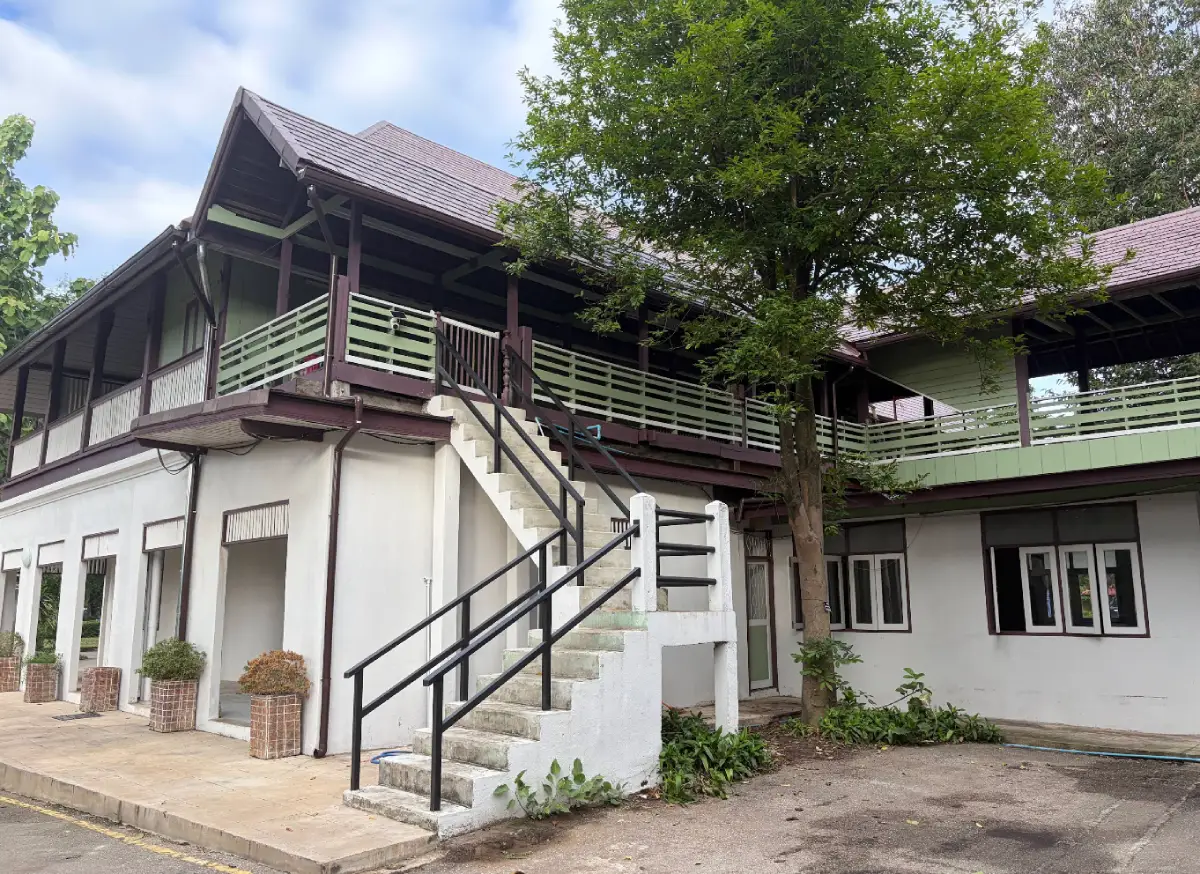
The Lampang Forest Museum (Hundred-Year House) is one of the most historically significant cultural attractions in Lampang Province. Located inside the Office of Protected Areas Regional 13 (Lampang Branch), the site is widely known among local residents as “Pa Mai Khet” or the “Hundred-Year House” because the office has existed for more than a century and the building itself remains a beautifully preserved historical structure.
The museum represents an important reminder of the golden age of the northern Thai teak industry, a period when Lampang served as one of the country’s most important centers for forestry and teak trading. Through photographs, architecture, and historical exhibits, visitors can explore the economic, social, and cultural transformation of northern Thailand during the teak concession era.
During the late nineteenth and early twentieth centuries, teak became one of Siam’s most valuable natural resources. International demand for teak wood attracted numerous foreign logging companies, especially British firms, to northern Thailand. Lampang quickly developed into a major commercial center because of its strategic location and abundant forest resources.
The establishment of the regional forestry office in Lampang reflected the importance of the city during this period. The office played a key role in supervising forest management, regulating teak concessions, and overseeing forestry operations throughout northern Thailand.
The architecture of the building itself is one of the museum’s greatest highlights. Designed in a colonial style blended with local northern Thai construction techniques, the structure features high windows, wooden balconies, ventilation openings, and large interior spaces adapted to the tropical climate. Even after more than one hundred years, the building remains elegant and distinctive.
Because of its age and architectural beauty, local residents affectionately call the structure the “Hundred-Year House.” The building has become one of Lampang’s symbolic historical landmarks and represents the prosperity of the teak industry that once shaped the city’s identity.
Today, the Office of Protected Areas Regional 13 has transformed part of the building’s ground-floor hall into a small museum dedicated to forestry history and the teak trading era. Although modest in size, the museum contains historically valuable exhibits and rare photographs documenting the development of northern Thailand’s forestry industry.
One of the museum’s most fascinating collections consists of old black-and-white photographs from the teak concession period. These images portray the transportation of teak logs, elephant labor in forest operations, riverside log floating, and daily life in Lampang during the early twentieth century.
Elephants played an especially important role in the teak industry, and Lampang became famous throughout Thailand for elephant logging operations. Many historical photographs inside the museum demonstrate how elephants were used to transport massive teak logs from remote forests to rivers and transportation routes.
The museum also displays images of foreign logging companies, executive residences, and expatriate communities that once lived in Lampang. These exhibits help visitors understand how international teak trading influenced the city’s economy, society, and urban development.
Another special feature of the museum is the preserved atmosphere of the old wooden building itself. Wooden floors, staircases, support beams, windows, and balconies remain carefully maintained, allowing visitors to experience the feeling of stepping back into the teak trading era more than a century ago.
Architecture enthusiasts often admire the craftsmanship visible throughout the structure, including carved wooden details, colonial decorative elements, and construction methods combining Western and northern Thai influences. The building is considered an excellent example of historical adaptation between foreign architectural styles and local environmental conditions.
The museum also serves an important educational role. By presenting the history of forestry and resource management, it helps younger generations understand the importance of natural resources in Thailand’s economic development and encourages awareness about environmental conservation today.
Although relatively small, the museum contains valuable historical evidence that is increasingly difficult to find elsewhere. The photographs and archival materials provide insight into the teak concession system, forestry administration, and northern Thailand’s economic history.
Travelers interested in Lampang’s history often combine visits to the museum with nearby attractions such as Kad Kong Ta Walking Street, Ratsadaphisek Bridge, Wat Sri Rong Mueang, and the Dhanabadee Ceramic Museum. Together, these sites create an excellent cultural route through Lampang’s historic districts.
The surrounding grounds of the forestry office remain shaded by large old trees, creating a peaceful atmosphere ideal for walking, photography, and appreciating the historic architecture. During morning and late afternoon, sunlight filtering through the wooden structure creates especially beautiful scenes.
One of the reasons this museum remains so meaningful is its connection to Lampang’s cultural identity. The province has long been associated with forestry, teak trading, and elephants, making these historical stories deeply connected to local memory and regional heritage.
Although the teak industry no longer dominates Lampang’s economy as it once did, the Lampang Forest Museum continues preserving memories of this important historical period and sharing them with visitors, students, and future generations.
Photography enthusiasts especially enjoy visiting the Hundred-Year House because of its classic wooden architecture and surrounding greenery. The combination of historic design and natural surroundings creates an atmosphere rich with nostalgia and timeless charm.
The museum therefore functions as much more than a small exhibition hall. It is a place preserving the memory of Lampang’s teak era and illustrating how forestry shaped the city’s economy, culture, and identity throughout history.
Getting There is convenient because the museum is located within the Office of Protected Areas Regional 13 in central Lampang. Visitors can travel easily by private car, local transportation, or Lampang’s traditional horse carriage service.
The Lampang Forest Museum (Hundred-Year House) therefore remains one of the province’s most valuable historical attractions, preserving the story of northern Thailand’s teak trading era and the architectural heritage of old Lampang for future generations to appreciate.
| Place Name | Lampang Forest Museum (Hundred-Year House) |
| Location | Office of Protected Areas Regional 13 (Lampang Branch), Mueang Lampang District, Lampang Province |
| Main Characteristic | Forestry and teak trading history museum inside a historic wooden building over 100 years old |
| Historical Background | Originally served as the regional forestry office during the teak concession era |
| Building Age | More Than 100 Years |
| Architectural Style | Colonial Architecture Combined with Northern Thai Wooden Craftsmanship |
| Main Exhibits | Historical teak trading photographs, elephant logging images, and forestry history exhibits |
| Historical Importance | Represents the prosperity of the teak industry and forestry administration in northern Thailand |
| Managed By | Office of Protected Areas Regional 13 (Lampang Branch) |
| Open Days | Monday – Friday |
| Opening Hours | 08.30 AM – 04.30 PM |
| Entrance Fee | Not Specified |
| Travel Information | Located in central Lampang and accessible by car, local transportation, or horse carriage |
| Contact Number | 054-265024 |
| Nearby Tourist Attractions | 1. Kad Kong Ta Walking Street, About 2 km 2. Ratsadaphisek Bridge, About 2 km 3. Wat Sri Rong Mueang, About 1 km 4. Dhanabadee Ceramic Museum, About 3 km 5. Wat Phra Kaew Don Tao, About 4 km |
| Nearby Restaurants | 1. Wiang Lakon Restaurant, About 2 km, Tel. 054-222111 2. Baan Phraya Suren by Madame Musur, About 2 km, Tel. 054-314899 3. Long Jim New York Pizza, About 2 km, Tel. 095-4465959 4. Krua Nuea Hom Lampang, About 3 km, Tel. 054-019899 5. Tik Jaew Hon Lampang, About 3 km, Tel. 054-223799 |
| Nearby Accommodations | 1. Wiang Thong Hotel Lampang, About 2 km, Tel. 054-218561 2. Regent Lodge Lampang, About 2 km, Tel. 054-323111 3. Hop Inn Lampang City Center, About 3 km, Tel. 052-081777 4. The Coconut Hotel, About 4 km, Tel. 054-821999 5. Lampang River Lodge, About 8 km, Tel. 054-209999 |
Frequently Asked Questions (FAQ)
Q: What is the Lampang Forest Museum?
A: It is a small museum displaying the history of forestry and teak trading in northern Thailand inside a historic wooden building.
Q: Why is it called the “Hundred-Year House”?
A: Because the building has existed for more than one hundred years and has long been part of Lampang’s history.
Q: What can visitors see inside the museum?
A: Visitors can see historical photographs of teak logging, elephant labor, and the teak concession era.
Q: What makes the architecture special?
A: The building combines colonial architecture with northern Thai wooden craftsmanship and traditional climate-adapted design.
Q: Who would enjoy visiting this museum?
A: It is ideal for visitors interested in history, forestry, architecture, culture, and heritage photography.
Q: How can visitors travel to the museum?
A: The museum can be reached easily from central Lampang by car, local transportation, or horse carriage.
Q: Why is the museum important to Lampang?
A: It preserves the memory of the teak trading era, which played a major role in Lampang’s economic and cultural development.
 Category: ●Art, Culture and Heritage
 Group: ●Museums
Last Update : 6 DayAgo
 Last Update : 6 DayAgo
 Click to Access the Navigation Map GPS
Lampang Forest Museum (Hundred-Year House) Map
Recommend

 Historical Sites and Monuments(2)
 Landmarks and Memorials(5)
 Art, Craft Centres, Tradition(10)
Museums(4)
Art, Craft Centres, Tradition(10)
Museums(4)
 Historic Homes and Cities(1)
 Places of Worship
 Temple(86)
 Other Sacred Sites(9)
 Research and Development
 Royal Project(2)
 Suburban Living
 Village, Community(3)
 Local Market(2)
 Nature and Wildlife
 National Parks and Marine Reserves(6)
 Mountain (Doi)(4)
 Dam, Reservoir, Lake(11)
 Waterfalls(15)
 Hot Springs(1)
 Caves(12)
 Flower Field(1)
 River, Canal(1)
 Bays and Beaches(1)
 Other natural attractions(4)
 Entertainment and Agricultural
 Animal camps and shows(1)
 Farms, Parks and Ecotourism(2)
 Outdoor and Adventure Activities(2)
 Shopping
 Shopping and Night Market(2)
 Spas and Wellness
 Spas and Wellness(1)
 Travel Articles, Recipes
 Travel Review, Food Review(1)


