
lovethailand home >North Travel Attractions >Lampang Travel Attractions >Muang Pan >Muang Pan > Phra That Mon Wieng
TL;DR: Phra That Mon Wieng is located at Wat Phra That Mon Wiang, Mueang Pan Subdistrict, Mueang Pan District, Lampang Province, open Daily, hours 08.00 – 17.00.
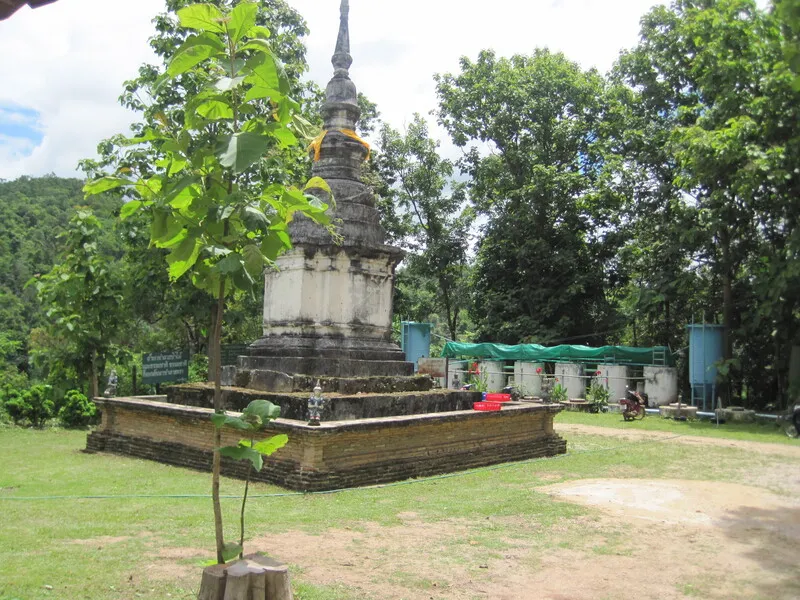
Phra That Mon Wieng
Open Days: Daily
Opening Hours: 08.00 – 17.00
Phra That Mon Wiang is located at Wat Phra That Mon Wiang in Mueang Pan Subdistrict, Mueang Pan District, Lampang Province. It is a revered Buddhist relic shrine respected by the people of Mueang Pan and an important religious site connected with local history, community faith, and the discovery of ancient sacred objects. The site became widely known after monks and villagers discovered a bronze casket beneath a large tree about 300 meters from the relic shrine. Inside were 7 brass Buddha images, 6 brass-like earrings, and a number of nine-colored gemstones, all of which strengthened local belief in the historical and spiritual importance of the site.
Phra That Mon Wiang reflects the close relationship between Buddhism and the local communities of Mueang Pan. This district of Lampang is known for its mountains, hot springs, rural villages, old temples, and natural attractions. The shrine is not only a place for worship but also a reminder of an older settlement pattern in the area. It is connected with the belief that this part of Mueang Pan once had prosperous communities and ancient Buddhist sites that later became abandoned or forgotten before being revived through local faith.
The discovery of the bronze casket is one of the most important stories associated with Phra That Mon Wiang. According to local accounts, Phra Khru Ba Boonping Kittiyano, who was acting abbot at the time, and villagers were surveying the area to prepare for the construction of a large Buddha image for public worship. During this survey, they performed a water-pouring ritual to inform the local guardian spirits beneath a large tree. While doing so, they noticed a suspicious object at the base of the tree and dug carefully until they found a bronze casket.
When the casket was opened, it was found to contain brass Buddha images of different sizes, 7 in total, along with 6 brass-like earrings and various nine-colored gemstones. These objects were placed in a glass container so that people could pay respect to them. The discovery drew many people to the temple, and Buddhist devotees from Mueang Pan District came continuously to make merit, join blessing ceremonies, and pay homage to the sacred objects.
Phra Ratchachindanayok, the ecclesiastical provincial governor of Lampang at the time, commented that the Buddha images and objects found in the casket were likely old. The place where the casket was discovered was close to Phra That Mon Wiang, which is counted as 1 of 5 ancient chedis connected with the historical Buddhist heritage of Mueang Pan. These 5 relic shrines are believed to be at least 200 years old, linking Phra That Mon Wiang with a deeper layer of local Buddhist history.
In the past, the area around Phra That Mon Wiang is believed to have been a settled and prosperous community. Over time, as people moved and patterns of development changed, some temples and sacred sites became abandoned. Phra That Mon Wiang therefore represents both the memory of an old community and the revival of a sacred place. Its current importance comes not only from the chedi itself, but also from the collective effort to restore the site as a place for Buddhist practice.
The restoration of Wat Phra That Mon Wiang as a place for meditation and religious practice is an important part of the shrine’s recent story. Restoring a sacred site does not only mean repairing structures. It also means reconnecting the community with the temple, bringing people back to make merit, practice Dhamma, and remember the religious heritage of their ancestors. In this way, Phra That Mon Wiang has become both an ancient relic shrine and a living spiritual space.
The objects discovered in the bronze casket carry strong cultural and devotional meaning. The 7 brass Buddha images symbolize Buddhist faith, while the earrings and nine-colored gemstones may represent valuable offerings made to the sacred site. For local people, these items are not merely antique objects. They are material links between past devotion and present faith, connecting generations of worshippers through the shared reverence for the relic shrine.
Phra That Mon Wiang is also interesting for visitors who want to understand abandoned temples and the revival of Buddhist sites in northern Thailand. Many old Lanna temples were once centers of active communities but later became quiet or deserted due to migration, changing routes, or social transformation. When sacred objects are discovered or local people gather to restore them, these sites return to life. Phra That Mon Wiang is a clear example of this process.
In terms of belief, visitors come to Phra That Mon Wiang to pray for auspiciousness, make merit, join blessing ceremonies, and calm the mind. The shrine is respected as a sacred place, and visitors should approach it with quietness and sincerity. Paying respect here can be simple: bowing before the chedi, offering flowers or incense, and taking time to reflect on the continuity of Buddhist faith in the local community.
The atmosphere of Phra That Mon Wiang is peaceful and rural. Mueang Pan District is surrounded by mountains, small communities, and natural routes. Traveling to the shrine through Ban Thung Pong, Village No. 1, on the same route toward Ban Pang Ai, allows visitors to experience the quieter landscape of Lampang beyond the main city. The journey feels like entering a place of calmness rather than a typical tourist attraction.
Ban Thung Pong and Ban Pang Ai are useful landmarks for reaching the shrine. Travelers with private vehicles can enter through Ban Thung Pong and continue along the route toward Ban Pang Ai. Because many temple and relic sites in Mueang Pan are located along smaller community roads, private car travel or a hired local vehicle is the most practical way to visit.
One advantage of visiting Phra That Mon Wiang is that it can be combined easily with other attractions in Mueang Pan District. The area is known for Chae Son National Park, Chae Son Hot Spring, Chae Son Waterfall, Wat Phra Bat Pu Pha Daeng, Ban Pa Miang, and local cafes and restaurants. Travelers can visit Phra That Mon Wiang in the morning, then continue to nature or cultural attractions in the afternoon.
Chae Son National Park is one of the best nearby destinations to combine with Phra That Mon Wiang. It offers hot springs, mineral bathing, waterfalls, streams, and forest scenery. A practical one-day trip can begin with worship at the relic shrine, followed by lunch in Mueang Pan and a relaxing afternoon at Chae Son. This route is suitable for families, couples, nature lovers, and travelers who want both spiritual and relaxing experiences.
Wat Phra Bat Pu Pha Daeng, also known as Wat Chaloem Phra Kiat Phrachomklao Rachanuson, is another major attraction that fits well with the route. While Phra That Mon Wiang offers the atmosphere of an ancient community shrine, Wat Phra Bat Pu Pha Daeng presents dramatic mountaintop scenery with white pagodas on high ridges. Visiting both sites helps travelers understand how Buddhist faith in Mueang Pan is closely linked with mountains and sacred landscapes.
Ban Pa Miang is recommended for travelers who want to stay overnight or experience a slow mountain community. The village is known for cool weather, forest surroundings, homestays, and traditional tea-leaf culture. A 2-day, 1-night trip can include Phra That Mon Wiang, Chae Son National Park, Ban Pa Miang, and Wat Phra Bat Pu Pha Daeng, creating a balanced itinerary of faith, nature, and community life.
Visitors interested in local history should allow more than a few minutes at Phra That Mon Wiang. It is worth reading about the bronze casket discovery, understanding the idea of the 5 ancient chedis of Mueang Pan, and seeing the site as part of a larger historical landscape. With this perspective, the shrine becomes more than a chedi; it becomes a place where time, memory, faith, and community restoration meet.
Getting There is most convenient by private car. Travelers can drive from Lampang city to Mueang Pan District, then enter through Ban Thung Pong, Village No. 1, in Mueang Pan Subdistrict. This is the same route used for traveling toward Ban Pang Ai. Visitors should use a navigation map and ask local residents when needed, especially because smaller community routes may be less clearly marked than main roads.
Travelers starting from Lampang city should allow about 1 to 1.5 hours depending on road conditions and the onward travel plan. Roads in Mueang Pan may include rural sections, slopes, curves, and areas that require caution during rain or fog. Drivers should avoid blocking community roads and prepare drinking water or essentials if planning to visit several places in one day.
The best time to visit is in the morning or late afternoon, when the weather is more comfortable and the atmosphere is calm. Those who wish to join merit-making or temple activities should check with the temple or local community in advance, as special ceremonies may depend on Buddhist holy days or community schedules.
Visitors should dress modestly and behave respectfully. Flowers, incense, candles, or other appropriate offerings may be prepared. If sacred objects or antiques are displayed for worship, they should be viewed respectfully and should not be touched, moved, or photographed in a disruptive manner. Keeping the temple clean and quiet is an important part of responsible visiting.
Food and accommodation are most convenient around Mueang Pan town, Chae Son, and Ban Pa Miang. Dining options include local restaurants, cafes, Thai food shops, and national park food stalls. Accommodation includes homestays, small resorts, farm-view stays, and community lodging. This makes it possible to plan a half-day, one-day, or overnight trip around Phra That Mon Wiang.
A half-day route can include Phra That Mon Wiang and a restaurant or cafe in Mueang Pan. A full-day route can add Chae Son National Park, Chae Son Hot Spring, or Chae Son Waterfall. A 2-day, 1-night trip can include Ban Pa Miang and Wat Phra Bat Pu Pha Daeng for a deeper experience of Mueang Pan’s spiritual, natural, and community-based attractions.
Overall, Phra That Mon Wiang is worth visiting for travelers who want to understand the quieter and more historical side of Mueang Pan District. It combines an ancient relic shrine, the discovery of a bronze casket, sacred Buddha images, local belief in the 5 ancient chedis, and the revival of an old Buddhist site into a place for worship and meditation. A visit here is not only an act of merit-making, but also a way to encounter the living memory of Lampang’s local Buddhist communities.
| Name | Phra That Mon Wiang |
| Location | Wat Phra That Mon Wiang, Mueang Pan Subdistrict, Mueang Pan District, Lampang Province |
| Address | Mueang Pan Subdistrict, Mueang Pan District, Lampang 52240, accessible via Ban Thung Pong, Village No. 1, on the route toward Ban Pang Ai |
| Highlights | Ancient relic shrine respected by the people of Mueang Pan, known for the discovery of a bronze casket containing 7 brass Buddha images, 6 brass-like earrings, and nine-colored gemstones |
| History | Counted as 1 of 5 ancient chedis connected with the historical Buddhist heritage of Mueang Pan. The 5 relic shrines are believed to be at least 200 years old, and the area was once a prosperous settlement before some temple sites became abandoned and later revived. |
| Name Origin | The name reflects a relic shrine on a mound or elevated area, connected with the old community landscape of Mueang Pan. |
| Distinctive Features | Ancient chedi, sacred objects discovered in a bronze casket, and restoration as a Buddhist practice and meditation site |
| Travel Information | Travel by private car through Ban Thung Pong, Village No. 1, Mueang Pan Subdistrict, on the same route toward Ban Pang Ai. |
| Current Status | Open to Buddhist devotees and visitors as an important religious and local historical site of Mueang Pan District |
| Open Days | Daily |
| Opening Hours | 08.00 – 17.00 |
| Fees | No Admission Fee |
| Facilities | Worship area, meditation area, parking where available, and restaurants or cafes in Mueang Pan and Chae Son areas |
| Main Areas / Zones | Phra That Mon Wiang chedi, worship area, bronze casket discovery area about 300 meters from the relic shrine, and meditation area |
| Abbot / Caretaker | Phra Khru Ba Boonping Kittiyano was acting abbot during the bronze casket discovery. The site is currently cared for by the local monastic community and devotees of Mueang Pan District. |
| Important Discovered Objects | Bronze casket, 7 brass Buddha images, 6 brass-like earrings, and various nine-colored gemstones |
| Visitor Guidelines | Dress politely, keep quiet, respect worshippers, do not touch or move sacred objects without permission, and keep the temple area clean. |
| Nearby Tourist Attractions | 1. Mueang Pan Town Center, about 8 km 2. Chae Son National Park, about 20 km 3. Chae Son Hot Spring, about 20 km 4. Chae Son Waterfall, about 20 km 5. Wat Phra Bat Pu Pha Daeng, about 25 km 6. Ban Pa Miang Community, about 30 km 7. The First Valley Coffee Academy, about 22 km |
| Nearby Restaurants | 1. Trai Khun Mueang Pan, about 8 km, Tel. 054-276-023, 098-097-5015 2. Toob Luang Huai Nga Restaurant, about 15 km, Tel. 061-559-8638 3. Krua Rai Ya, about 20 km 4. Chae Son National Park Food Shop, about 20 km 5. Woraman Cottage & Cafe, about 12 km 6. Window View Cafe’&Bistro, about 8 km, Tel. 095-135-3335 |
| Nearby Accommodations | 1. Chae Son Vintage, about 20 km 2. The Little Earth Farm View, about 22 km 3. Sherpa Chae Son, about 20 km, Tel. 081-984-1767 4. View Dee Pa Miang Homestay, about 30 km 5. Khon Bon Doi Homestay Ban Pa Miang, about 30 km 6. Khao Saard Homestay Chae Son, about 20 km, Tel. 054-263162, 081-7655185 |
Frequently Asked Questions (FAQ)
Q: Where is Phra That Mon Wiang located?
A: Phra That Mon Wiang is located at Wat Phra That Mon Wiang in Mueang Pan Subdistrict, Mueang Pan District, Lampang Province. It can be reached via Ban Thung Pong, Village No. 1, on the route toward Ban Pang Ai.
Q: Why is Phra That Mon Wiang important?
A: It is an ancient relic shrine respected by the people of Mueang Pan and is counted as 1 of 5 old chedis connected with the historical Buddhist heritage of the district.
Q: What are the opening hours of Phra That Mon Wiang?
A: The site is open daily from 08.00 to 17.00.
Q: Is there an admission fee?
A: No. Visitors can enter and pay respect without an admission fee.
Q: What important objects were discovered near Phra That Mon Wiang?
A: A bronze casket was found beneath a large tree about 300 meters from the relic shrine. Inside were 7 brass Buddha images, 6 brass-like earrings, and various nine-colored gemstones.
Q: Who discovered the bronze casket?
A: Phra Khru Ba Boonping Kittiyano, acting abbot at the time, and local villagers discovered the casket while surveying the area for a large Buddha image project.
Q: How can travelers get to Phra That Mon Wiang?
A: The most convenient way is by private car from Lampang city to Mueang Pan District, then entering through Ban Thung Pong, Village No. 1, on the same route toward Ban Pang Ai.
Q: What nearby attractions can be visited after Phra That Mon Wiang?
A: Nearby attractions include Chae Son National Park, Chae Son Hot Spring, Chae Son Waterfall, Wat Phra Bat Pu Pha Daeng, Ban Pa Miang Community, and Mueang Pan town.
 Category: ●Places of Worship
 Group: ●Other Sacred Sites
Last Update : 5 MonthAgo
 Last Update : 5 MonthAgo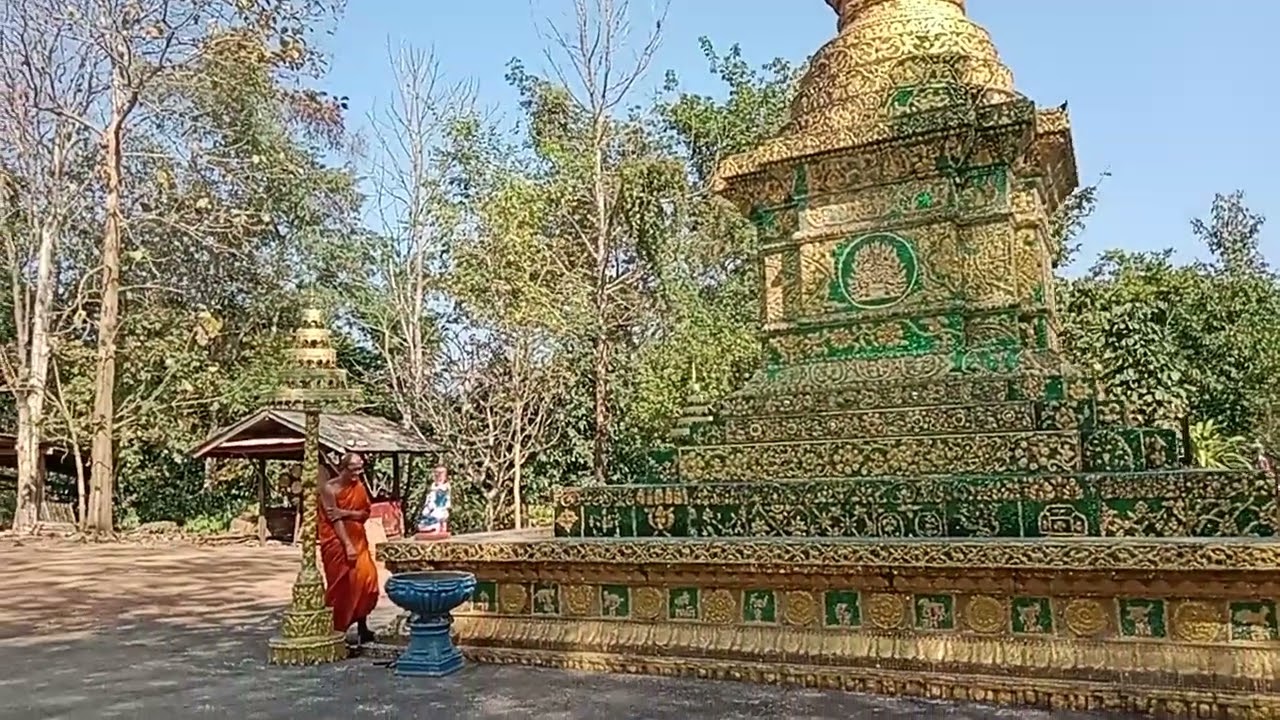
 Click to Access the Navigation Map GPS
Phra That Mon Wieng Map
Recommend

 Art, Culture and Heritage
 Historical Sites and Monuments(2)
 Landmarks and Memorials(5)
 Art, Craft Centres, Tradition(10)
 Museums(4)
 Historic Homes and Cities(1)
 Temple(86)
Other Sacred Sites(9)
Temple(86)
Other Sacred Sites(9)
 Research and Development
 Royal Project(2)
 Suburban Living
 Village, Community(3)
 Local Market(2)
 Nature and Wildlife
 National Parks and Marine Reserves(6)
 Mountain (Doi)(4)
 Dam, Reservoir, Lake(11)
 Waterfalls(15)
 Hot Springs(1)
 Caves(12)
 Flower Field(1)
 River, Canal(1)
 Bays and Beaches(1)
 Other natural attractions(4)
 Entertainment and Agricultural
 Animal camps and shows(1)
 Farms, Parks and Ecotourism(2)
 Outdoor and Adventure Activities(2)
 Shopping
 Shopping and Night Market(2)
 Spas and Wellness
 Spas and Wellness(1)
 Travel Articles, Recipes
 Travel Review, Food Review(1)


