
lovethailand home >North Travel Attractions >Lampang Travel Attractions >Muang Pan >Muang Pan > Doi Pu Yak
TL;DR: Doi Pu Yak is located at Ban Nam Cho, Village No. 8, Mueang Pan Subdistrict, Mueang Pan District, Lampang Province, open Daily, hours 08.00 – 17.00.

Doi Pu Yak
Open Days: Daily
Opening Hours: 08.00 – 17.00
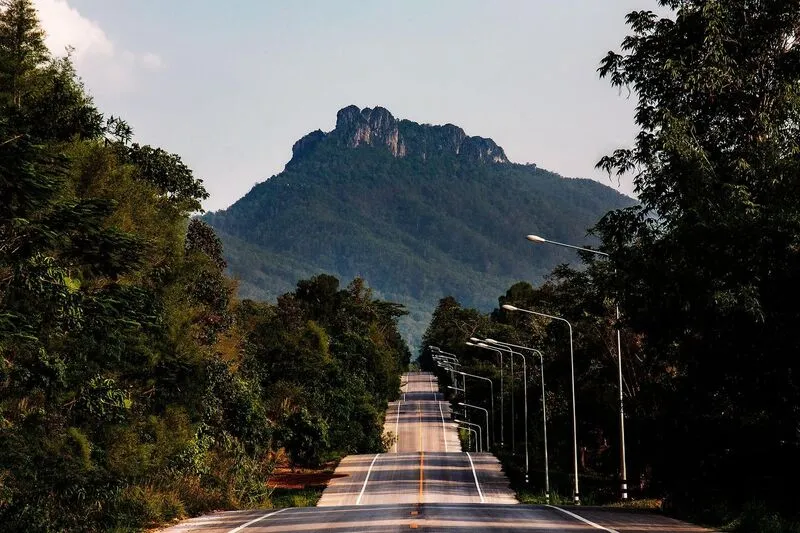
Doi Pu Yak is an important mountain destination in Ban Nam Cho, Village No. 8, Mueang Pan Subdistrict, Mueang Pan District, Lampang Province. It is one of the most distinctive peaks in the Mueang Pan area because, when viewed from below, the summit appears to split into two sections. This unique shape makes the mountain easy to recognize from surrounding villages and roads. Doi Pu Yak is also considered the highest peak in Mueang Pan Subdistrict and offers wide views over Mueang Pan District and Chae Hom District from the summit area.
The attraction of Doi Pu Yak is not only its summit view but also the walking route. Travelers must reach the mountain by trekking from Ban Nam Cho for about 3 km. At present, the summit is not directly accessible by vehicle, so visitors experience the mountain through a real walking route. The trail passes through natural forest, slopes, seasonal wildflowers, and viewpoints that gradually reveal the landscape of northern Lampang. This makes the trip suitable for travelers who enjoy light to moderate trekking, nature study, and quiet local landscapes.
Doi Pu Yak is closely connected with the natural identity of Mueang Pan. The mountain can be seen from many points in the area, especially along rural roads and the Mueang Pan – Chae Son route. Its twin-split summit creates a strong visual landmark. For local people, the mountain is more than a scenic background. It is part of the landscape that defines the boundary between communities, forests, and the mountain environment of Mueang Pan and Chae Hom.
The route to Doi Pu Yak also has cultural and spiritual meaning. Along the way, visitors may pass Bat Cave and a natural rock formation revered by local people as a Buddha footprint. Villagers visit this sacred point annually to pay respect. This gives the route a deeper identity, combining nature, local belief, and community memory. For visitors, it is important to treat these places with respect, not only as travel spots but as meaningful places for the people who live with the mountain.
Bat Cave is one of the important stops on the route. The cave contains beautiful stalactites and stalagmites formed by natural limestone processes over a long period of time. It also provides habitat for bats and small cave-dwelling organisms. Visitors should walk carefully, avoid loud noise, avoid shining strong lights directly at bats, and never touch cave formations. Cave environments are fragile, and damage can last for generations.
The natural Buddha footprint is another meaningful stop on the route. The rock formation resembles a footprint and is respected by local villagers. Whether viewed as a natural curiosity or as a sacred site, it should be treated with care. Visitors should not step on it, scratch it, place damaging objects on it, or behave disrespectfully around the area. The site reflects how local belief and natural formations often become deeply connected in northern Thai mountain communities.
The walking route is also known for seasonal wildflowers. Different flowers bloom at different times of year, giving the trail a changing character. During the rainy and post-rainy seasons, the forest becomes greener and more alive. In the cool season, the air is more comfortable for trekking and viewpoints are often clearer. In the dry season, the forest opens visually and the ridge structure can be easier to see. Each season gives Doi Pu Yak a different atmosphere.
From the summit area, visitors can look down over Mueang Pan and Chae Hom. The view includes mountain ridges, agricultural areas, villages, roads, and forested slopes. The mountain acts as a natural dividing line between the two districts, making the summit significant not only for scenery but also for understanding local geography. The view helps travelers see Lampang as a province of mountain basins, forests, and communities shaped by the surrounding terrain.
Doi Pu Yak is suitable for visitors who enjoy nature but can handle a real walking route. The trail is about 3 km from Ban Nam Cho, but conditions may vary with season and weather. Visitors should wear proper walking shoes, carry drinking water, bring sun or rain protection, prepare a flashlight, and avoid hiking alone. Starting early in the morning is recommended so there is enough time to walk up, enjoy the area, and return before dark.
During the rainy season, the trail may become slippery and harder to walk. Visitors should check weather conditions before traveling. If heavy rain is expected, the trip should be postponed. During the cool season, the route is more comfortable and often clearer for views. Those who want to visit in the late afternoon should be especially careful about timing because descending after sunset may be unsafe without a guide and proper lighting.
As a conservation-based nature route, Doi Pu Yak should be visited responsibly. Visitors should stay on existing trails, avoid shortcuts, not collect wildflowers or plants, not disturb animals, and not leave trash. The mountain is still a natural local route rather than a fully developed tourist site, so careless tourism can easily damage the trail, cave, sacred footprint, and forest floor. Responsible visitors help keep the route available for future generations.
Doi Pu Yak can be included in a wider Mueang Pan and Chae Hom itinerary. Nearby attractions include Wat Phra Bat Pu Pha Daeng, also known as Wat Chaloem Phra Kiat Phrachomklao Rachanuson, Ban Pa Miang, Chae Son National Park, Chae Son Hot Spring, and the scenic Highway 1252 route. This makes it possible to combine trekking, mountain temples, hot springs, waterfalls, and village scenery in one northern Lampang trip.
Wat Phra Bat Pu Pha Daeng is one of the strongest nearby attractions. It is famous for white pagodas on limestone peaks and panoramic mountain views. Because both Doi Pu Yak and Wat Phra Bat Pu Pha Daeng involve mountain terrain and walking, travelers should plan enough time and not overpack the day. Those who want a slower trip may stay overnight in Mueang Pan, Chae Son, or Ban Pa Miang.
Ban Pa Miang is another suitable extension. It is a mountain village known for peaceful scenery, miang culture, coffee shops, and cool mountain air. A traveler can trek Doi Pu Yak in the morning and relax at Ban Pa Miang in the afternoon, or stay overnight in the area for a slower two-day trip. This combination gives the trip both active trekking and calm village travel.
Chae Son National Park is also part of the same travel region. It offers hot springs, mineral baths, Chae Son Waterfall, nature trails, and accommodation. Compared with the more structured facilities of Chae Son National Park, Doi Pu Yak feels more local and less developed. The two destinations complement each other well: Chae Son offers organized nature recreation, while Doi Pu Yak offers a quieter community-linked trekking experience.
Getting There starts from Mueang Pan District. Travel to Ban Nam Cho, Village No. 8, Mueang Pan Subdistrict, Lampang Province. From the village, visitors walk about 3 km to reach Doi Pu Yak. There is no direct vehicle road to the summit, so travelers should be prepared for trekking. Those unfamiliar with the area should contact local guides or community representatives before starting the route.
From Lampang city, travelers can drive toward Chae Hom and Mueang Pan, or combine the route with Chae Son National Park depending on the itinerary. Roads in this region include mountain sections and rural roads, so drivers should check vehicle condition, fuel, weather, and travel time. Fog and rain may affect visibility in some seasons.
Food options near Doi Pu Yak are mainly in Mueang Pan town, Ban Pa Miang, and the Chae Son route rather than on the mountain trail itself. Visitors should eat before trekking and carry water or light snacks. Nearby options include local restaurants in Mueang Pan, Window View Cafe & Bistro, community food shops in Ban Pa Miang, the Chae Son National Park shop, Khrua Rai Ya, and The First Valley Coffee Academy.
Accommodation options include local stays in Mueang Pan, homestays in Ban Pa Miang, and accommodation around Chae Son National Park. Those who want to trek early should stay in Mueang Pan or near Ban Nam Cho. Travelers who prefer hot springs, waterfalls, and park facilities can stay near Chae Son National Park. Those who want mountain village atmosphere can choose Ban Pa Miang or nearby natural lodgings.
Visitors should follow basic safety and conservation rules. Do not hike alone, do not litter, do not collect wildflowers, do not write on cave walls, do not disturb bats or wildlife, do not enter deep cave areas without local guidance, and do not damage the natural Buddha footprint. Proper footwear, drinking water, and local route information are essential.
Doi Pu Yak is suitable for travelers who want to understand Mueang Pan through its mountain landscape. It offers a distinctive split summit, trekking, seasonal wildflowers, cave scenery, a natural Buddha footprint, and wide views of Mueang Pan and Chae Hom. Its beauty is quiet, local, and closely tied to the community rather than built around heavy tourism infrastructure.
Overall, Doi Pu Yak is a valuable natural and cultural destination in Mueang Pan District. It combines mountain scenery, local belief, cave formations, seasonal plants, and a walking route that requires preparation and respect. With responsible travel and proper planning, Doi Pu Yak can be one of Lampang’s most meaningful short trekking experiences.
| Name | Doi Pu Yak |
| Location | Ban Nam Cho, Village No. 8, Mueang Pan Subdistrict, Mueang Pan District, Lampang Province |
| Address | Doi Pu Yak trekking route, Ban Nam Cho, Village No. 8, Mueang Pan Subdistrict, Mueang Pan District, Lampang 52240 |
| Highlights | Split summit, views of Mueang Pan and Chae Hom, nature-study trekking route, seasonal wildflowers, Bat Cave, stalactites and stalagmites, and a natural Buddha footprint |
| History | An important mountain of Mueang Pan Subdistrict, locally associated with annual visits to the natural Buddha footprint and the mountain landscape between Mueang Pan and Chae Hom districts |
| Name Origin | The name Doi Pu Yak refers to the distinctive large mountain form whose summit appears split into two sections when viewed from below. |
| Distinctive Features | A major high peak of Mueang Pan Subdistrict, located along the natural landscape between Mueang Pan and Chae Hom, accessible by a walking route of about 3 km from Ban Nam Cho |
| Travel Information | Travel to Ban Nam Cho, Village No. 8, Mueang Pan Subdistrict, then walk about 3 km to Doi Pu Yak. There is no direct vehicle road to the summit. Visitors should ask local guides or local authorities before trekking. |
| Current Status | Open as a local nature attraction and nature-study trekking route in Mueang Pan Subdistrict. Visitors should travel carefully and coordinate locally before trekking. |
| Open Days | Daily |
| Opening Hours | 08.00 – 17.00 / Start Trekking In The Morning And Return Before Dark |
| Fees | No Admission Fee For General Visits |
| Facilities | Natural trekking route, viewpoints, Bat Cave, natural Buddha footprint, and Ban Nam Cho community area as the starting point |
| Main Areas / Zones | Ban Nam Cho – Doi Pu Yak route, Doi Pu Yak summit, Mueang Pan viewpoint, Chae Hom viewpoint, Bat Cave, natural Buddha footprint area, and seasonal wildflower route |
| Caretaker | Ban Nam Cho Community / Local Authorities In Mueang Pan Subdistrict / Mueang Pan Subdistrict Municipality |
| Main Contact Number | Mueang Pan Subdistrict Municipality, Tel. 054-276-170 / Chae Son National Park, Tel. 089-851-3355 For Nearby Travel Information |
| Recommended Season | Cool season is suitable for trekking and views. Rainy and post-rainy seasons are suitable for green forest and seasonal wildflowers, but trails may be slippery. |
| Visitor Guidelines | Do not hike alone, do not litter, do not collect wildflowers, do not write on cave walls, do not disturb bats, do not damage the natural Buddha footprint, and coordinate with local guides before trekking. |
| Nearby Tourist Attractions | 1. Bat Cave And Natural Buddha Footprint, about 1 km 2. Ban Nam Cho, Village No. 8, about 3 km 3. Mueang Pan Town Center, about 8 km 4. Wat Phra Bat Pu Pha Daeng / Wat Chaloem Phra Kiat Phrachomklao Rachanuson, about 12 km 5. Ban Pa Miang, about 18 km 6. Chae Son National Park, about 22 km 7. Chae Hom Town Center, about 25 km |
| Nearby Restaurants | 1. Local Restaurants In Mueang Pan Town, about 8 km 2. Window View Cafe&Bistro, about 10 km, Tel. 095-135-3335 3. Community Food Shops In Ban Pa Miang, about 18 km 4. Chae Son National Park Shop, about 22 km 5. Khrua Rai Ya, about 24 km, Tel. 084-619-4522 6. The First Valley Coffee Academy, about 25 km |
| Nearby Accommodations | 1. Local Accommodations In Mueang Pan District, about 8 km 2. Ban Pa Miang Community Stays, about 18 km 3. Chae Son National Park Bungalows And Camping Area, about 22 km, Tel. 089-851-3355 4. The Little Earth Farm View, about 24 km 5. Sherpa Chae Son, about 25 km, Tel. 081-984-1767 6. Khao Sound Homestay Chae Son, about 28 km, Tel. 054-263-162, 081-765-5185 |
Frequently Asked Questions (FAQ)
Q: Where is Doi Pu Yak located?
A: Doi Pu Yak is located at Ban Nam Cho, Village No. 8, Mueang Pan Subdistrict, Mueang Pan District, Lampang Province.
Q: What are the highlights of Doi Pu Yak?
A: Highlights include the split summit, nature-study trekking route, seasonal wildflowers, viewpoints over Mueang Pan and Chae Hom, Bat Cave, and a natural Buddha footprint.
Q: How far is the trek to Doi Pu Yak?
A: The walking route from Ban Nam Cho to Doi Pu Yak is about 3 km. There is no direct vehicle road to the summit.
Q: Who is Doi Pu Yak suitable for?
A: It is suitable for visitors who enjoy trekking, nature study, mountain views, seasonal wildflowers, caves, and local cultural landscapes.
Q: What are the opening hours of Doi Pu Yak?
A: General visits are recommended from 08.00 to 17.00. Visitors should start in the morning and return before dark.
Q: Is there an admission fee?
A: There is no admission fee for general visits, but visitors should ask local authorities or local guides about current route conditions before trekking.
Q: What should visitors prepare for Doi Pu Yak?
A: Visitors should prepare trekking shoes, drinking water, a hat, sun or rain protection, flashlight, personal medicine, and light food because there are no restaurants on the trail.
Q: What nearby attractions can be visited after Doi Pu Yak?
A: Nearby attractions include Wat Phra Bat Pu Pha Daeng, Ban Pa Miang, Chae Son National Park, Mueang Pan town, and the Mueang Pan – Chae Son scenic route.
 Category: ●Nature and Wildlife
 Group: ●Mountain (Doi)
Last Update : 5 MonthAgo
 Last Update : 5 MonthAgo
 Click to Access the Navigation Map GPS
Doi Pu Yak Map
Gellery
Recommend

 Art, Culture and Heritage
 Historical Sites and Monuments(2)
 Landmarks and Memorials(5)
 Art, Craft Centres, Tradition(10)
 Museums(4)
 Historic Homes and Cities(1)
 Places of Worship
 Temple(86)
 Other Sacred Sites(9)
 Research and Development
 Royal Project(2)
 Suburban Living
 Village, Community(3)
 Local Market(2)
 National Parks and Marine Reserves(5)
Mountain (Doi)(4)
National Parks and Marine Reserves(5)
Mountain (Doi)(4)
 Dam, Reservoir, Lake(11)
 Waterfalls(15)
 Hot Springs(1)
 Caves(12)
 Flower Field(1)
 River, Canal(1)
 Bays and Beaches(1)
 Other natural attractions(4)
 Entertainment and Agricultural
 Animal camps and shows(1)
 Farms, Parks and Ecotourism(2)
 Outdoor and Adventure Activities(2)
 Shopping
 Shopping and Night Market(2)
 Spas and Wellness
 Spas and Wellness(1)


