
lovethailand home >North Travel Attractions >Lampang Travel Attractions >Mae Tha >Don Fai > Wat Don Fai
TL;DR: Wat Don Fai is located at Ban Don Fai, Village No. 7, Don Fai Subdistrict, Mae Tha District, Lampang Province, open Daily, hours 06.00 – 18.00.

Wat Don Fai
Open Days: Daily
Opening Hours: 06.00 – 18.00
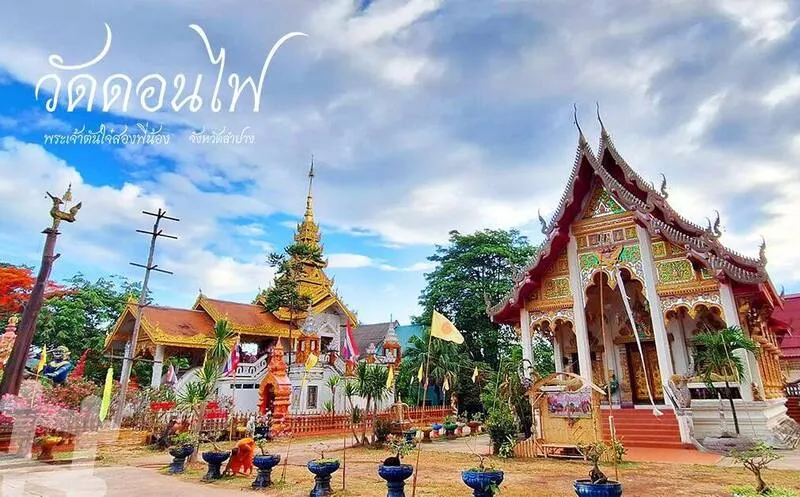
Wat Don Fai is located in Ban Don Fai, Village No. 7, Don Fai Subdistrict, Mae Tha District, Lampang Province. This old community temple is one of the most meaningful Buddhist sites in the area because it enshrines Phra Chao Tanjai Song Phi Nong, a pair of sacred Buddha images deeply respected by the people of Don Fai and nearby communities. The Buddha images were originally enshrined at Wat Phra Chao Tanjai, also known as Wat Klang Don Fai, but were later moved to Wat Don Fai for safety and proper preservation, as the old temple site was away from the village and vulnerable to theft.
Wat Don Fai is therefore more than an ordinary village temple. It is the place where the historical faith of Wat Klang Don Fai continues in the present. Visitors who come to this temple can pay respect to Phra Chao Tanjai Song Phi Nong, learn about local Lanna legends, and understand how Buddhist belief remains deeply connected with community life in Mae Tha District. The temple is especially important on April 16 every year, when the annual celebration and bathing ceremony of Phra Chao Tanjai is held.
Phra Chao Tanjai Song Phi Nong is the spiritual heart of Wat Don Fai. In northern Thai Buddhist belief, the term “Phra Chao Tanjai” refers to a sacred Buddha image believed to grant blessings swiftly to sincere worshippers. The word “tanjai” means timely or immediate. For local devotees, worshipping Phra Chao Tanjai is connected with hope, vows, gratitude, and the desire for auspicious results in life.
Local traditions connect Phra Chao Tanjai Song Phi Nong with legends of early settlement and strong Buddhist devotion in the Don Fai area. These stories tell of local ancestors, faith in Buddhism, and the creation of sacred Buddha images as a way to support the religion and protect the community. Whether approached as legend, history, or living belief, the story of Phra Chao Tanjai helps explain why the images remain so important to local people.
The Buddha images were originally kept at Wat Phra Chao Tanjai or Wat Klang Don Fai, an old sacred site west of the present village. Over time, because the old site was far from the main settlement and had no resident monks, the community became concerned about the safety of the sacred images. The images were therefore moved to Wat Don Fai, where they could be properly cared for and made more accessible to worshippers.
This relocation is an important cultural detail. It shows how Thai communities protect sacred objects when old temple sites become difficult to maintain. Wat Klang Don Fai remains the historical root, while Wat Don Fai functions as the living center of worship today. Together, the 2 places form one cultural landscape connected by faith, memory, and the continuing devotion of the local community.
Wat Don Fai is known as one of the old temples of Mae Tha District. The temple is associated with Phra Chao Tanjai, old religious buildings, and a large Bodhi tree. These features give the temple a strong sense of age and sacredness. Rather than feeling like a commercial tourist attraction, the temple preserves the atmosphere of a living local temple where people come to worship, make merit, and take part in community ceremonies.
The main value of Wat Don Fai lies in the combination of faith, history, and community life. Phra Chao Tanjai serves as the center of devotion, while the old ordination hall, viharn, and temple grounds reflect the long presence of Buddhism in the village. The large Bodhi tree adds shade and symbolic meaning, since Bodhi trees are closely associated with the enlightenment of the Buddha and are treated with respect in Thai Buddhist culture.
Every year on April 16, Wat Don Fai holds the celebration and bathing ceremony of Phra Chao Tanjai. This date follows the main Songkran or northern Thai New Year period, making it a deeply meaningful time for merit-making and renewal. Local people return to the temple to make merit, pay respect, offer gold leaf, and take part in the ritual bathing of the sacred Buddha images.
The bathing ceremony of Phra Chao Tanjai is a ritual of reverence and purification. Devotees respectfully pour water over the sacred Buddha images as an act of gratitude and blessing. In Thai Buddhist culture, this practice symbolizes cleansing the mind, welcoming the new year with purity, and expressing respect toward the Buddha, the Dhamma, and the Sangha.
The annual ceremony is important because it brings together people from Don Fai and nearby communities, especially Hua Suea, Wang Ngoen, and Don Fai subdistricts. The participation of several communities shows that Phra Chao Tanjai is not only a village-level sacred image, but a shared spiritual focus for a wider local area. The ceremony strengthens social ties and helps transmit local belief to younger generations.
For foreign travelers, the April 16 ceremony is a valuable opportunity to experience a real local Buddhist tradition. This is not a staged tourist event, but a living community ceremony. Visitors can observe merit-making, local offerings, gold-leaf worship, and the bathing of the sacred Buddha images. The atmosphere is devotional, communal, and closely connected with the rhythm of northern Thai New Year.
Outside the annual ceremony, Wat Don Fai remains a peaceful place for worship. Devotees visit the temple to make merit, pray before Phra Chao Tanjai, and ask for blessings. The temple also plays a role during important Buddhist occasions such as Visakha Bucha, Buddhist Lent, the end of Buddhist Lent, Kathin, robe-offering ceremonies, and other local religious events.
Public temple information identifies Phra Ajahn Maha Thanaboonchai Dattasiri as the abbot of Wat Don Fai. His role is important in caring for Phra Chao Tanjai, organizing religious activities, guiding local faith, and coordinating community participation in temple ceremonies. Visitors who wish to make merit or ask about annual events should contact the temple through its public channels.
Visitors should allow around 45 minutes to 1 hour for a regular visit. A meaningful visit may include paying respect to Phra Chao Tanjai, observing the old temple structures, walking around the temple grounds, and taking time for quiet reflection. During the April 16 ceremony, visitors should allow more time because the temple may be crowded with local participants and ceremonial activities.
Respectful behavior is essential. Visitors should dress modestly, keep their voices low, avoid disturbing worshippers, and ask permission before taking close-up photos of monks or people participating in rituals. When joining the bathing ceremony, visitors should follow local practice and wait for their turn respectfully. The event belongs to the community and should be approached with humility.
Getting There is most convenient by private car. From Lampang City, travel toward Mae Tha District, then continue to Don Fai Subdistrict and Ban Don Fai, Village No. 7. Visitors can search for Wat Don Fai or Phra Chao Tanjai Song Phi Nong on online maps. Don Fai Subdistrict Administrative Organization can also be used as a local reference point.
If visiting on April 16, travelers should arrive early because many local people attend the ceremony. Parking should be done only in designated areas, without blocking village roads, house entrances, or ceremonial routes. Following the guidance of local volunteers or community members will make the visit smoother and more respectful.
Wat Don Fai can be included in a cultural travel route around Mae Tha District. Nearby places include Wat Phra Chao Tanjai or Wat Klang Don Fai, Wat Phra That Doi Phra Chan, Wat Nakot Luang, Wat Phra That Lampang Luang, and Kad Kong Ta Walking Street in Lampang City. This route allows travelers to experience local sacred images, old temple sites, hilltop temples, historic Lanna temples, and the old riverside atmosphere of Lampang.
In summary, Wat Don Fai in Lampang Province is an important temple of Ban Don Fai, Don Fai Subdistrict, Mae Tha District. It enshrines Phra Chao Tanjai Song Phi Nong, the sacred Buddha images originally kept at Wat Phra Chao Tanjai or Wat Klang Don Fai. The annual bathing ceremony on April 16 keeps the tradition alive and continues to draw local devotees from several communities. For travelers interested in Lanna culture, local faith, and meaningful Buddhist traditions, Wat Don Fai is a valuable place to visit in Mae Tha District.
| Name | Wat Don Fai |
| Location | Ban Don Fai, Village No. 7, Don Fai Subdistrict, Mae Tha District, Lampang Province |
| Community Reference Coordinates | 18.1109512011867, 99.674015790224 |
| Highlights | Phra Chao Tanjai Song Phi Nong, sacred Buddha images of Don Fai community, old ordination hall and viharn, large Bodhi tree, and the annual April 16 bathing ceremony |
| History / Cultural Importance | An old community temple where Phra Chao Tanjai was moved from Wat Phra Chao Tanjai or Wat Klang for safety and proper preservation |
| Name Origin | The temple name is connected with Ban Don Fai, while Phra Chao Tanjai refers to sacred Buddha images believed to grant auspicious blessings swiftly |
| Distinctive Features | Old Lanna community temple, sacred Phra Chao Tanjai images, and a major annual merit-making ceremony after Songkran |
| Important Sacred Objects | Phra Chao Tanjai Song Phi Nong, old ordination hall, viharn, and large Bodhi tree |
| Traditions / Rituals | Annual Phra Chao Tanjai celebration and bathing ceremony on April 16, merit-making, gold-leaf offering, vow fulfillment, and Buddhist ceremonies throughout the year |
| Travel Information | Travel from Lampang City to Mae Tha District, then to Don Fai Subdistrict and Ban Don Fai, Village No. 7. A private car is the most convenient option |
| Current Status | Active community temple open for worship, merit-making, and annual Buddhist activities |
| Open Days | Daily |
| Opening Hours | 06.00 – 18.00 |
| Abbot / Caretaker | Phra Ajahn Maha Thanaboonchai Dattasiri |
| Main Contact Number | 085-261-9681, 086-998-5153 |
| Official Website / Official Page | Facebook: Phra Chao Tanjai Song Phi Nong, Wat Don Fai, Lampang Province |
| Nearby Tourist Attractions | 1. Wat Phra Chao Tanjai / Wat Klang Don Fai, about 1 km 2. Wat Phra That Doi Phra Chan, about 16 km 3. Wat Nakot Luang, about 20 km 4. Wat Phra That Lampang Luang, about 23 km 5. Kad Kong Ta Walking Street, about 32 km |
| Nearby Restaurants | 1. Ran Ahan Rot Dang Mae Tha, about 13 km, Tel. 088-261-2461 2. Phu Doi Shiitake Mushroom Farm, about 15 km 3. Homdoi Cafe & Homestay, about 16 km 4. Baan Khot Kat Tong, about 17 km 5. KEPT Horizonline, about 25 km, Tel. 086-428-0223, 080-839-2303 |
| Nearby Accommodations | 1. Bunnum Homestay, about 18 km 2. Bon Doi Lampang, about 19 km 3. Phorpun Resort Lampang, about 22 km, Tel. 095-661-4296 4. KEPT CABANA, about 25 km, Tel. 063-941-6426, 096-419-8928 5. Baan Suan Resort Lampang, about 28 km, Tel. 088-577-5661, 063-789-8558 |
Frequently Asked Questions (FAQ)
Q: Where is Wat Don Fai located?
A: Wat Don Fai is located in Ban Don Fai, Village No. 7, Don Fai Subdistrict, Mae Tha District, Lampang Province.
Q: Why is Wat Don Fai important?
A: Wat Don Fai enshrines Phra Chao Tanjai Song Phi Nong, sacred Buddha images deeply respected by the Don Fai community.
Q: Where was Phra Chao Tanjai originally enshrined?
A: The images were originally enshrined at Wat Phra Chao Tanjai or Wat Klang Don Fai before being moved to Wat Don Fai for safety and preservation.
Q: When is the annual bathing ceremony of Phra Chao Tanjai held?
A: The annual celebration and bathing ceremony is held on April 16 every year.
Q: Who is the abbot of Wat Don Fai?
A: The abbot is Phra Ajahn Maha Thanaboonchai Dattasiri.
Q: What are the opening hours of Wat Don Fai?
A: The temple is open daily from 06.00 to 18.00.
Q: How can visitors get to Wat Don Fai?
A: Travel from Lampang City to Mae Tha District, then continue to Don Fai Subdistrict and Ban Don Fai, Village No. 7. A private car is the most convenient option.
 Category: ●Places of Worship
 Group: ●Temple
Last Update : 3 MonthAgo
 Last Update : 3 MonthAgo
 Click to Access the Navigation Map GPS
 Art, Culture and Heritage
 Historical Sites and Monuments(2)
 Landmarks and Memorials(5)
 Art, Craft Centres, Tradition(10)
 Museums(4)
 Historic Homes and Cities(1)
Temple(86)
Historic Homes and Cities(1)
Temple(86)
 Other Sacred Sites(9)
 Research and Development
 Royal Project(2)
 Suburban Living
 Village, Community(3)
 Local Market(2)
 Nature and Wildlife
 National Parks and Marine Reserves(5)
 Mountain (Doi)(4)
 Dam, Reservoir, Lake(11)
 Waterfalls(15)
 Hot Springs(1)
 Caves(12)
 Flower Field(1)
 River, Canal(1)
 Bays and Beaches(1)
 Other natural attractions(4)
 Entertainment and Agricultural
 Animal camps and shows(1)
 Farms, Parks and Ecotourism(2)
 Outdoor and Adventure Activities(2)
 Shopping
 Shopping and Night Market(2)
 Spas and Wellness
 Spas and Wellness(1)


