
lovethailand home >North Travel Attractions >Lampang Travel Attractions >Wang Nuea >Wang Nuea > Salak Phat Festival
TL;DR: Salak Phat Festival, open Held According to the Lanna Traditional Calendar During September – October, hours Activities Continue Throughout the Day Until Evening.
Salak Phat Festival
Open Days: Held According to the Lanna Traditional Calendar During September – October
Opening Hours: Activities Continue Throughout the Day Until Evening
Salak Phat Festival, known locally in northern Thailand as “Tan Kuay Salak,” is one of the most important traditional merit-making ceremonies of Lanna culture. The festival has been practiced for centuries throughout northern Thai communities and reflects deep religious faith, generosity, gratitude toward ancestors, and the strong social unity of village life. More than simply a Buddhist ceremony, the Salak Phat Festival combines religion, local arts, traditional performances, community celebration, and cultural identity into one meaningful event.
The term “Salak Phat” comes from two words: “Salak,” meaning lottery or drawing lots, and “Phat,” referring to food offerings for monks. In northern Thailand, the ceremony is commonly called “Tan Kuay Salak.” The word “Kuay” refers to a traditional woven container or basket used for placing offerings. Inside each Kuay Salak are rice, dried foods, snacks, fruits, household necessities, and Buddhist offerings prepared for monks.
The origin of the Salak Phat tradition is closely connected to the Buddhist concept of merit-making dedicated to deceased relatives and ancestors. Northern Thai people believe that offering Kuay Salak baskets allows merit to be transferred to family members who have passed away, including ancestors and spirits connected to the family lineage. At the same time, the ceremony is believed to bring blessings and spiritual merit to the donors themselves.
The festival usually takes place between September and October, after the rice-growing season and around the beginning of harvest time. This period is especially important within agricultural communities because villagers finally have time to celebrate after months of hard work during the rainy season. The Salak Phat Festival therefore becomes both a religious event and a joyful community celebration.
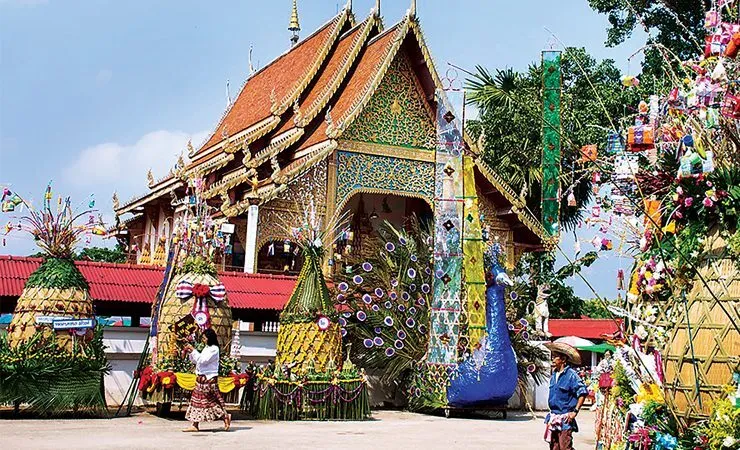
Before the festival begins, villagers carefully prepare Kuay Salak baskets using traditional bamboo weaving techniques. Some communities use handwoven baskets, while others use local containers decorated with colorful paper, flowers, banners, and traditional Lanna ornaments. The beautifully arranged offerings demonstrate the creativity, craftsmanship, and cultural identity of northern Thai communities.
One of the most meaningful aspects of the tradition is the writing of names on the Salak papers attached to each offering basket. Families often include the names of deceased relatives and ancestors so that the merit generated through the ceremony can be spiritually dedicated to them. Some households include multiple generations of family names as a symbol of gratitude and remembrance.
On the festival day, temple grounds become filled with villagers dressed in beautiful traditional Lanna clothing. Many communities organize colorful processions carrying Kuay Salak offerings into the temple accompanied by traditional drums, cymbals, music, and elegant northern Thai dances. These processions create a lively and culturally rich atmosphere unique to northern Thailand.
Traditional dance performances are one of the major highlights of the festival. Local women, youth groups, and cultural performers participate in graceful Lanna dances such as Fingernail Dance and Candle Dance. These performances are offered as acts of Buddhist devotion while simultaneously preserving traditional northern Thai performing arts.
During the offering ceremony itself, monks receive the Kuay Salak baskets through a lottery-style selection process. Unlike ordinary Buddhist offerings given directly to specific monks, Salak Phat offerings are distributed randomly. This practice reflects the Buddhist principle of non-attachment and equality in merit-making, emphasizing generosity without personal preference.
Northern Thai people consider Salak Phat to be a highly significant merit-making ceremony because it combines generosity, ancestral remembrance, and support for the Buddhist monastic community. The belief that merit can be transferred to deceased relatives gives the festival strong emotional and spiritual importance within family life.
Another special aspect of the festival is its role in reconnecting families and communities. Many people working in distant cities return to their hometowns to participate in the ceremony with relatives. Temples therefore become gathering spaces where families reunite, prepare food together, and strengthen social relationships.
Traditional northern Thai cuisine also plays an important role during the festival. Many temples organize communal meals featuring famous Lanna dishes such as Khao Soi, Hang Lay Curry, Sai Ua sausage, Nam Prik Noom chili dip, and traditional desserts. Visitors attending the festival therefore experience both religious culture and local culinary heritage.
In some communities, additional folk entertainment activities are organized during the celebration, including traditional music performances, folk singing, village games, and competitions involving the decoration of Kuay Salak baskets. These activities create a joyful atmosphere that combines spirituality with local celebration.
The Salak Phat Festival demonstrates how northern Thai communities successfully integrate religion, culture, craftsmanship, music, dance, and social life into a single event. The ceremony therefore functions as a complete reflection of traditional Lanna lifestyle and community identity.
Today, the tradition remains strongly preserved throughout northern provinces such as Lampang, Chiang Mai, Lamphun, Phayao, and Nan. Many temples continue organizing large-scale Salak Phat ceremonies attracting both Thai and international visitors interested in authentic northern Thai culture.
Despite rapid modernization, the Salak Phat Festival remains deeply important because it preserves values of gratitude, generosity, social harmony, and respect for ancestors. The tradition continues serving as both a spiritual practice and a cultural heritage passed from one generation to the next.
Younger generations participating in the festival learn traditional skills including basket preparation, dance performance, ceremonial etiquette, and community cooperation. Through direct involvement, children and teenagers gain pride in their local identity and help ensure the continuation of Lanna traditions into the future.
Getting There depends on the temple and community hosting the event. Salak Phat festivals are commonly organized at major temples throughout Lampang, Chiang Mai, Lamphun, and other northern provinces. Visitors can travel by private car or local transportation, and it is recommended to confirm schedules with local temples or provincial cultural offices in advance because dates vary according to the Lanna calendar.
The Salak Phat Festival is therefore far more than an ordinary Buddhist ceremony. It is a living cultural tradition that beautifully combines faith, art, family relationships, community spirit, and northern Thai identity into one of the most meaningful celebrations of Lanna culture.
| Festival Name | Salak Phat Festival (Tan Kuay Salak) |
| Category | Traditional Lanna Merit-Making Festival |
| Region | Northern Thailand |
| Festival Period | September – October after the harvest season |
| Local Name | Tan Kuay Salak |
| Main Highlights | Kuay Salak processions, Lanna dances, and lottery-style offering ceremonies |
| Cultural Importance | Represents gratitude, merit dedication to ancestors, and community unity |
| Main Activities | Offering Kuay Salak baskets, traditional dances, folk music, merit-making, and village entertainment |
| Tradition Caretakers | Lanna temples, local villagers, and northern provincial cultural offices |
| Main Offering Items | Rice, dried foods, fruits, snacks, household items, and Buddhist offerings |
| Traditional Dress | Traditional Lanna clothing |
| Travel Information | Held at major temples across northern Thailand and accessible by private car or local transportation |
| Nearby Tourist Attractions | 1. Wat Phra That Lampang Luang, About 18 km 2. Kad Kong Ta Lampang, About 2 km 3. Wat Sri Rong Mueang, About 3 km 4. Ratsadaphisek Bridge, About 2 km 5. Dhanabadee Ceramic Museum, About 5 km |
| Nearby Restaurants | 1. Wiang Lakon Restaurant, About 2 km, Tel. 054-222111 2. Krua Nuea Hom Lampang, About 3 km, Tel. 054-019899 3. Baan Phraya Suren by Madame Musur, About 2 km, Tel. 054-314899 4. Long Jim New York Pizza, About 2 km, Tel. 095-4465959 5. Tik Jaew Hon Lampang, About 3 km, Tel. 054-223799 |
| Nearby Accommodations | 1. Wiang Thong Hotel Lampang, About 2 km, Tel. 054-218561 2. Regent Lodge Lampang, About 2 km, Tel. 054-323111 3. The Coconut Hotel, About 4 km, Tel. 054-821999 4. Hop Inn Lampang City Center, About 3 km, Tel. 052-081777 5. Lampang River Lodge, About 8 km, Tel. 054-209999 |
Frequently Asked Questions (FAQ)
Q: What is the Salak Phat Festival?
A: It is a traditional Lanna merit-making ceremony involving Kuay Salak offerings dedicated to monks and deceased ancestors.
Q: What does “Tan Kuay Salak” mean?
A: It refers to offering baskets filled with food and necessities through a lottery-style Buddhist ceremony.
Q: When is the festival held?
A: The festival is usually organized between September and October after the harvest season.
Q: Why are offerings distributed by lottery?
A: The lottery system symbolizes equality and non-selective generosity in Buddhist merit-making.
Q: What items are placed inside Kuay Salak baskets?
A: The baskets usually contain rice, dried food, fruits, snacks, and daily necessities.
Q: What performances take place during the festival?
A: The festival includes Lanna dances, folk music, processions, and traditional entertainment activities.
Q: What does the festival represent in Lanna society?
A: It represents gratitude, social harmony, ancestral remembrance, and cultural unity.
 Category: ●Art, Culture and Heritage
 Group: ●Art, Craft Centres, Tradition
Last Update : 5 MonthAgo
 Last Update : 5 MonthAgo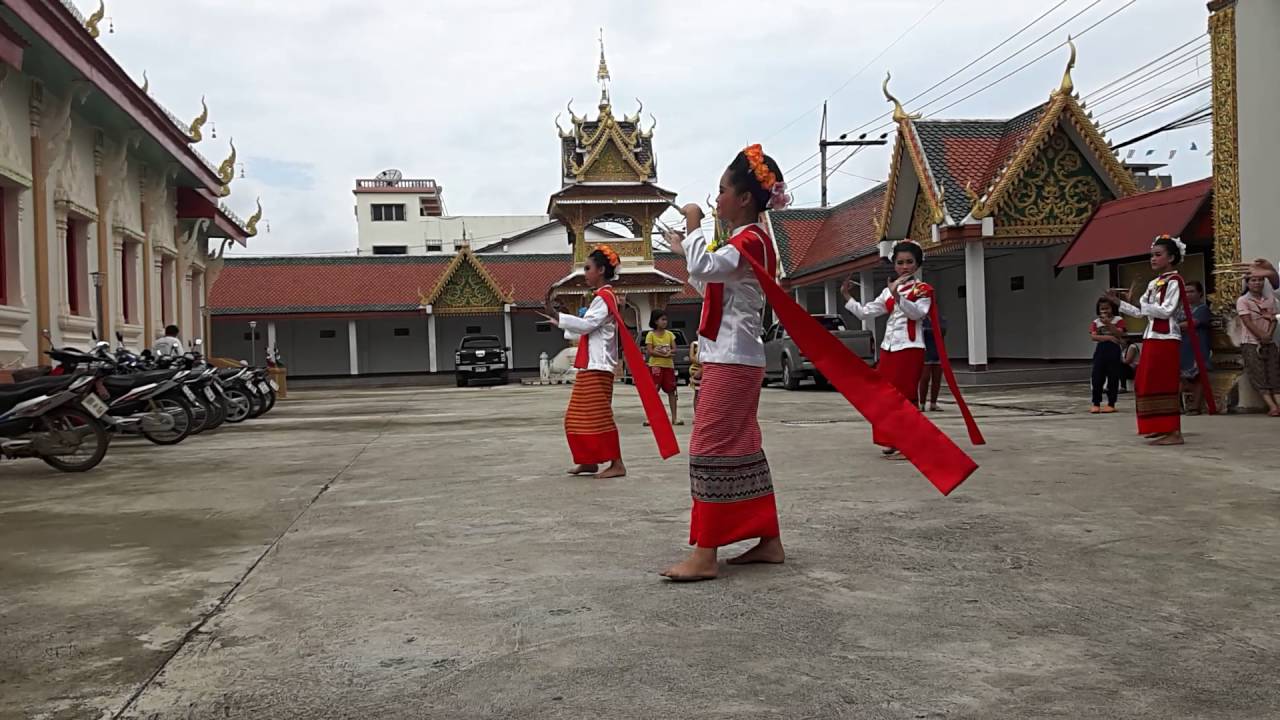

 Historical Sites and Monuments(2)
 Landmarks and Memorials(5)
Art, Craft Centres, Tradition(10)
Landmarks and Memorials(5)
Art, Craft Centres, Tradition(10)
 Museums(4)
 Historic Homes and Cities(1)
 Places of Worship
 Temple(86)
 Other Sacred Sites(9)
 Research and Development
 Royal Project(2)
 Suburban Living
 Village, Community(3)
 Local Market(2)
 Nature and Wildlife
 National Parks and Marine Reserves(5)
 Mountain (Doi)(4)
 Dam, Reservoir, Lake(11)
 Waterfalls(15)
 Hot Springs(1)
 Caves(12)
 Flower Field(1)
 River, Canal(1)
 Bays and Beaches(1)
 Other natural attractions(4)
 Entertainment and Agricultural
 Animal camps and shows(1)
 Farms, Parks and Ecotourism(2)
 Outdoor and Adventure Activities(2)
 Shopping
 Shopping and Night Market(2)
 Spas and Wellness
 Spas and Wellness(1)


