
lovethailand home >North Travel Attractions >Lampang Travel Attractions >Ngao >Ban Ngae > Tham Mae Mueang Cave
TL;DR: Tham Mae Mueang Cave is located at Between Ban Haeng Nuea and Ban Haeng Tai, Ban Haeng Subdistrict, Ngao District, Lampang Province, hours 08:00 - 17:00.

Tham Mae Mueang Cave
Opening days: Every day
Opening hours: 08:00 - 17:00
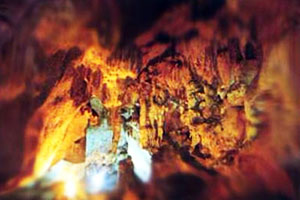
Tham Mae Mueang Cave in Lampang is a local natural attraction in Ban Haeng Subdistrict, Ngao District, Lampang Province. The cave is located between Ban Haeng Nuea and Ban Haeng Tai, about 3 km from the village area. It is known for its beautiful dripstone formations, stalactites, stalagmites, and naturally textured cave walls. Discovered around 1998, the cave has become one of the important attractions of Ban Haeng Subdistrict, especially during the Songkran holiday when many local residents and visitors travel to admire its natural beauty.
The charm of Tham Mae Mueang Cave lies in its simple and natural character. It is not a heavily commercialized tourist site, but a quiet cave associated with the local community and the surrounding landscape. Inside the cave, visitors can see limestone formations created slowly by water and minerals over a long period of time. These formations appear along the cave walls and ceiling, giving the cave a distinctive visual character that is especially appealing to travelers who enjoy geology, caves, and low-key nature destinations.
Tham Mae Mueang Cave was discovered around B.E. 2541, or 1998, and has since been recognized as a notable natural site of Ban Haeng. Although it is not one of Lampang’s most famous tourist attractions, it is important at the community level. Local people know it as a place to visit during holidays, especially during Songkran, when families return home, visit relatives, make merit, and spend time together in nearby natural areas.
Ban Haeng Subdistrict has a varied landscape of villages, agricultural areas, lowland fields, uplands, and mountains. Ban Haeng Nuea and Ban Haeng Tai are two important village areas within this subdistrict, and Tham Mae Mueang Cave sits between them. This setting gives the cave a strong local identity. It is not just a geological feature, but part of the everyday landscape of a rural community that has long lived with forests, hills, water sources, and natural routes.
Inside the cave, the most impressive features are the dripstone formations and stalactites along the walls. These natural formations develop when mineral-rich water seeps through limestone and slowly deposits minerals over time. Some areas may appear as curtains of stone, while others form delicate lines, ridges, or hanging shapes. When a flashlight shines on the cave walls, shadows reveal the depth and texture of the formations, making the cave visually engaging for careful observers.
Visitors should explore Tham Mae Mueang Cave with caution. Natural caves are often humid, uneven, and dark in some areas. A flashlight or headlamp is recommended, along with shoes that provide good traction. Travelers should avoid entering deep or unfamiliar sections alone and should not separate from the group. Because the cave is a local nature site rather than a fully developed attraction, it is practical to ask local residents or Ban Haeng Subdistrict Administrative Organization for updated route information before visiting.
Tham Mae Mueang Cave is best suited for travelers who appreciate simple natural places rather than fully serviced tourist facilities. The attraction does not focus on cafes, shops, or large structures. Its value comes from the experience of reaching a quiet cave, observing natural limestone formations, and understanding how a small community-based attraction can reflect the deeper character of Lampang’s rural landscape.
The Songkran period is the time when Tham Mae Mueang Cave is especially popular among visitors. In rural northern Thailand, Songkran is not only about water festivities. It is also a time for returning home, paying respect to elders, visiting temples, and spending time with family. For people in Ban Haeng and nearby areas, a visit to the cave during this holiday becomes part of a local leisure tradition connected to family, community, and nature.
During busy periods, visitors should pay special attention to cleanliness and conservation. More visitors can mean a higher risk of litter, noise, and accidental damage to cave formations. Stalactites and stalagmites take a very long time to form, and direct touching, scratching, breaking, or climbing on them can cause permanent damage. Responsible visitors should admire the formations with their eyes, keep noise low, avoid lighting fires inside the cave, and carry all waste back out.
From a wider travel perspective, Ngao District is rich in natural attractions, including caves, waterfalls, hills, reservoirs, and rural landscapes. Tham Mae Mueang Cave can be included in a Ban Haeng and Ngao nature route together with Mae Mueang Reservoir, Wiang Haeng Ancient Town, Ngao Market, Wat Chong Kham, Tham Pha Thai National Park, and Tham Ratchakhru Cave. Combining these places allows travelers to see both natural and community-based attractions within the same district.
Mae Mueang Reservoir is another important site in Ban Haeng Subdistrict. It is associated with local water use and agriculture, and it helps show how natural resources support everyday life in the community. When paired with Tham Mae Mueang Cave, the travel route offers a fuller picture of Ban Haeng: limestone cave scenery, rural settlements, agricultural landscapes, water resources, and local roads that connect people with the land.
Tham Mae Mueang Cave is suitable for a half-day trip, especially for travelers staying in Ngao District or passing through the area. A practical plan is to visit the cave in the morning or early afternoon, then continue to nearby attractions or stop for a meal in Ngao town. Daytime travel is strongly recommended because natural light makes the route safer and helps visitors assess road and cave conditions more clearly.
Getting There is most convenient by private car. Travel to Ban Haeng Subdistrict in Ngao District, then continue toward the area between Ban Haeng Nuea and Ban Haeng Tai. The cave is about 3 km from the village area. Some parts of the route may be local roads or natural access roads, so careful driving is advised. During the rainy season, road conditions may change, and visitors should ask local residents for the most suitable route before entering the area.
For travelers starting from Lampang city, head toward Ngao District and continue to Ban Haeng Subdistrict. Extra time should be allowed because rural roads and hill terrain may take longer than expected. It is not advisable to begin the cave visit late in the evening, especially for first-time visitors. A daylight visit provides better safety and a more relaxed experience.
Recommended items for visiting Tham Mae Mueang Cave include a flashlight, spare batteries, grippy closed shoes, drinking water, personal medicine, mosquito repellent, and a small trash bag. Groups should agree on a meeting point and exit time before entering the cave area. These simple preparations help reduce risk and make the visit more comfortable.
The cave is also a valuable learning site for those interested in limestone landscapes. Its dripstone formations show how water, minerals, and time shape underground spaces. Seeing these formations in person gives visitors a better appreciation of how slow and delicate natural processes can be. For students, local youth, or travelers interested in nature education, Tham Mae Mueang Cave can serve as a meaningful outdoor classroom.
Photographers may find the cave interesting because of its shadows, textures, and natural forms. However, photography should be done responsibly. Visitors should not climb on rock formations or use harsh lighting that disturbs the cave environment. The best photographs often come from careful observation, patience, and respect for the place rather than from forcing unusual angles at the expense of safety or conservation.
Families traveling with children should stay in safer and easier areas. Young children should not be allowed to run inside the cave or touch rock formations. Elderly travelers or those with balance issues should assess the cave conditions before entering. If the path is slippery or uneven, it is better to enjoy the accessible areas rather than attempt deeper sections.
As a community-based nature site, Tham Mae Mueang Cave represents a quieter side of Lampang travel. It is not a place for rushed sightseeing, but a destination for travelers who want to understand local landscapes, village surroundings, and the value of small natural attractions. The cave shows that meaningful travel does not always require a famous landmark; sometimes, a modest site connected to local life can leave a deeper impression.
Preserving the cave depends on the cooperation of visitors, local people, and local authorities. If visitors avoid littering, protect rock formations, keep noise low, and respect the surrounding villages, the cave can remain beautiful for future generations. Natural caves are fragile environments, and damage caused by careless behavior can take a very long time to recover.
Travelers planning a visit should use multiple sources of information and confirm local access before departure. Because Tham Mae Mueang Cave is a local attraction with limited online information, contacting Ban Haeng Subdistrict Administrative Organization or asking local residents can help clarify the route, parking, and seasonal conditions. This is especially useful during the rainy season or major holiday periods.
In summary, Tham Mae Mueang Cave in Lampang is an important natural attraction of Ban Haeng Subdistrict, Ngao District. Its key features are beautiful limestone dripstones, stalactites, and cave-wall formations, along with its community connection and popularity during Songkran. Visitors should travel by private car, visit during daylight hours, prepare basic cave equipment, and respect the cave environment. For travelers seeking a quiet and locally rooted nature destination in Lampang, Tham Mae Mueang Cave is a worthwhile stop.
| Name | Tham Mae Mueang Cave |
| Location | Between Ban Haeng Nuea and Ban Haeng Tai, Ban Haeng Subdistrict, Ngao District, Lampang Province |
| Address | Ban Haeng Subdistrict, Ngao District, Lampang Province 52110, Thailand |
| Highlights | A natural cave with beautiful dripstone formations, stalactites, and stalagmites along the cave walls |
| History | Discovered around 1998 and known as an important natural attraction of Ban Haeng Subdistrict, especially during Songkran |
| Distinctive Features | Limestone cave formations, dripstone textures, natural cave walls, and a quiet rural setting |
| Travel Information | Private car is the most convenient option. Travel to Ban Haeng Subdistrict, Ngao District, then continue toward the area between Ban Haeng Nuea and Ban Haeng Tai. The cave is about 3 km from the village area. |
| Current Status | A local natural attraction of Ban Haeng Subdistrict, Ngao District, Lampang Province |
| Local Contact Office | Ban Haeng Subdistrict Administrative Organization |
| Main Contact Number | 054-261-552 |
| Nearby Tourist Attractions | 1. Mae Mueang Reservoir – 7 km 2. Wiang Haeng Ancient Town – 8 km 3. Ngao Market – 17 km 4. Wat Chong Kham – 18 km 5. Tham Pha Thai National Park – 23 km 6. Tham Ratchakhru Cave – 31 km |
| Nearby Restaurants | 1. Thana Cafe – 7 km Tel. 098-749-5717 2. Kuai Tiao Mueang Ngao Nee Doh – 17 km 3. Rai Decha Restaurant – 18 km 4. Grandfa Farm-Cafe’&Restaurant – 18 km Tel. 086-658-2739 5. Apirom Restaurant – 20 km Tel. 081-289-7009 6. Lap Ruean Ngoen – 20 km |
| Nearby Accommodations | 1. Ngao Village Resort and Farmstay – 17 km Tel. 081-095-9069, 091-075-0201 2. Somporn Resort / Ngao – 18 km Tel. 054-329-009, 081-746-5270 3. Arawan Resort Ngao Lampang – 18 km Tel. 086-348-0798, 095-860-0699 4. LD Hotel & Residences – 19 km Tel. 086-658-4768, 093-905-4744 5. Rai Decha Rooms – 20 km Tel. 085-260-2420, 080-124-0324 6. Ban Rim Noen Resort Ngao – 22 km Tel. 095-595-4535, 089-854-5452 |
Frequently Asked Questions (FAQ)
Q: Where is Tham Mae Mueang Cave located?
A: Tham Mae Mueang Cave is located between Ban Haeng Nuea and Ban Haeng Tai in Ban Haeng Subdistrict, Ngao District, Lampang Province, about 3 km from the village area.
Q: What is Tham Mae Mueang Cave known for?
A: The cave is known for its beautiful dripstone formations, stalactites, stalagmites, and naturally textured cave walls.
Q: When was Tham Mae Mueang Cave discovered?
A: Tham Mae Mueang Cave was discovered around 1998 and later became recognized as an important natural attraction of Ban Haeng Subdistrict.
Q: When is Tham Mae Mueang Cave most popular?
A: The cave is especially popular during the Songkran holiday, when many local residents and visitors travel to enjoy nature and spend time with family.
Q: What should visitors bring?
A: Visitors should bring a flashlight or headlamp, grippy closed shoes, drinking water, personal medicine, mosquito repellent, and a small bag for taking trash back out.
Q: Is Tham Mae Mueang Cave suitable for children and elderly travelers?
A: It is suitable only in easier and safer areas. Children and elderly travelers should avoid slippery, narrow, or uneven sections inside the cave.
Q: Which nearby attractions can be visited with Tham Mae Mueang Cave?
A: Nearby attractions include Mae Mueang Reservoir, Wiang Haeng Ancient Town, Ngao Market, Wat Chong Kham, Tham Pha Thai National Park, and Tham Ratchakhru Cave.
Q: Who can visitors contact for local information?
A: Visitors can contact Ban Haeng Subdistrict Administrative Organization at 054-261-552 for local information.
 Category: ●Nature and Wildlife
 Group: ●Caves
Last Update : 2 MonthAgo
 Last Update : 2 MonthAgo
 Click to Access the Navigation Map GPS
Tham Mae Mueang Cave Map
Recommend

 Art, Culture and Heritage
 Historical Sites and Monuments(2)
 Landmarks and Memorials(5)
 Art, Craft Centres, Tradition(10)
 Museums(4)
 Historic Homes and Cities(1)
 Places of Worship
 Temple(86)
 Other Sacred Sites(9)
 Research and Development
 Royal Project(2)
 Suburban Living
 Village, Community(3)
 Local Market(2)
 National Parks and Marine Reserves(5)
 Mountain (Doi)(4)
 Dam, Reservoir, Lake(11)
 Waterfalls(15)
 Hot Springs(1)
Caves(12)
Hot Springs(1)
Caves(12)
 Flower Field(1)
 River, Canal(1)
 Bays and Beaches(1)
 Other natural attractions(4)
 Entertainment and Agricultural
 Animal camps and shows(1)
 Farms, Parks and Ecotourism(2)
 Outdoor and Adventure Activities(2)
 Shopping
 Shopping and Night Market(2)
 Spas and Wellness
 Spas and Wellness(1)


