
lovethailand home >North Travel Attractions >Lampang Travel Attractions >Ngao >Ban On > Tham Ratchakhru Cave
TL;DR: Tham Ratchakhru Cave is located at Village No. 5, Ban Mae Kae, Ngao District, Lampang Province, open Daily, hours 08:00–17:00.

Tham Ratchakhru Cave
Open Days: Daily
Opening Hours: 08:00–17:00
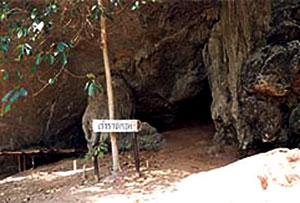
Tham Ratchakhru Cave in Lampang is a quiet limestone cave attraction in Ban Mae Kae, Village No. 5, Ngao District, Lampang Province. It is best suited for travelers who enjoy caves, forest scenery, limestone landscapes, waterfalls, and low-key nature routes away from crowded city attractions. The cave is known for its open passage extending about 500 meters into the hill, with many smaller side chambers branching off inside. In some sections, visitors can see naturally formed stalagmites and stalactites, while the nearby “Nam Ok Ru” spring adds another distinctive feature to the area. This underground spring emerges from beneath rocks, creating clear water where fish can be found, making the site more than just a cave visit.
Tham Ratchakhru Cave is located about 3 km from Mae Kae Waterfall, so it can be combined with nearby nature attractions such as Mae Kae Waterfall, Khao Fu Waterfall, Nam Ok Ru, and other sites within the broader Tham Pha Thai National Park area. The surrounding landscape still feels rural and natural, with forested hills, local community areas, and limestone formations that give Ngao District its distinctive northern character. For travelers who want to experience Lampang beyond horse carriages, temples, and the old town, this cave offers a different view of the province.
The appeal of Tham Ratchakhru Cave lies not only in its length but also in its natural form. The open cave passage, irregular limestone walls, and smaller branching holes reflect the slow work of water and minerals over a long period of time. Walking into the cave allows visitors to observe the texture of the rocks, the natural shapes created by erosion, and the quiet atmosphere of an underground space. For those interested in geology, limestone caves, and karst landscapes, this is a meaningful stop in Lampang’s nature route.
Because the cave has several small side passages, visitors should explore it carefully. A flashlight or headlamp is strongly recommended, along with shoes that provide good grip. Some areas may be humid, uneven, or slippery. Travelers should avoid entering narrow or deep side passages without guidance from local people or park staff. The safest way to enjoy this cave is to stay within visible and accessible areas, move slowly, and never separate from the group.
The nearby Nam Ok Ru spring makes the cave area especially interesting. Water emerges from underground through rock openings and forms a small natural water source where fish live. This feature shows the connection between limestone hills, underground water, and a small freshwater ecosystem. Visitors should observe the area quietly, avoid disturbing fish, and keep the water clean. It is one of the details that gives this route a strong sense of place.
The name “Tham Ratchakhru” gives the cave a calm and almost contemplative character. While detailed historical records about the origin of the name are not widely documented, the cave’s deep, quiet, and hidden setting makes it easy to understand why it has remained a local nature site rather than a heavily commercialized attraction. It is the kind of place best appreciated by travelers who value silence, simple landscapes, and direct contact with nature.
Ngao District is known for mountains, forests, limestone terrain, waterfalls, caves, and small rural communities. Tham Ratchakhru Cave should therefore be seen as part of a wider nature route rather than a single stop. A half-day or full-day plan can include the cave, Mae Kae Waterfall, Nam Ok Ru, and other nearby sites depending on road conditions and time available. The route is especially suitable for travelers with a private vehicle and a flexible schedule.
The best time to visit Tham Ratchakhru Cave is during daylight hours. Natural light around the cave entrance makes orientation easier, and it is safer to explore the surrounding area before late afternoon. The rainy season brings lush greenery and stronger water flow at nearby waterfalls, but roads and walking paths may become more slippery. The cool season is generally comfortable for cave and forest visits, with clearer air and easier walking conditions. Morning to early afternoon is the most practical time for this trip.
Visitors should prepare carefully because Tham Ratchakhru Cave is a natural attraction rather than a fully developed tourist facility. Bring drinking water, a flashlight, personal medicine, comfortable clothing, grippy shoes, and a small bag for taking your own trash back out. If traveling during the rainy season, check weather conditions and contact Tham Pha Thai National Park before entering the area, especially when heavy rain may affect rural roads or natural water levels.
Getting There is easiest by private car. From Ngao District, continue toward Ban Mae Kae and the Mae Kae Waterfall area. The cave is about 3 km from Mae Kae Waterfall. Some sections of the route may be local roads or natural access roads, so drivers should use a suitable vehicle and proceed carefully. Travelers unfamiliar with the area should ask local residents or park staff for directions before entering. Mobile signal may be unstable in some sections.
For travelers coming from Lampang city, drive north toward Ngao District and continue to Ban Mae Kae. Extra travel time should be allowed because the route passes through rural and natural areas. It is not advisable to start the cave visit late in the day, especially for first-time visitors, because cave exploration and nearby waterfall routes are safer with enough daylight.
Tham Ratchakhru Cave is ideal for travelers who prefer quiet natural places rather than heavily developed attractions. Its strength is its raw landscape: a limestone cave, forest atmosphere, a spring emerging from rock, and a nearby waterfall route. Travelers looking for restaurants, shops, or full facilities directly at the cave should prepare in advance. Those who enjoy simple nature, however, will find this site rewarding.
Visitors should be especially careful around the side passages inside the cave. Entering too deeply into narrow chambers without experience may cause disorientation or accidents. The goal of visiting a cave is not to go as far as possible, but to understand and appreciate the landscape safely. Stay within areas where the exit remains clear, avoid risky slopes, and do not enter dark branches without proper guidance.
Stalagmites and stalactites are fragile natural formations that take a very long time to develop. Touching, breaking, climbing on, or scratching them can damage the cave permanently. Visitors should view them with care, use photography responsibly, avoid loud noise, and leave no waste behind. Responsible behavior helps preserve Tham Ratchakhru Cave for future visitors.
As a travel route, Tham Ratchakhru Cave combines well with Mae Kae Waterfall, located about 3 km away. Mae Kae is a limestone waterfall in the Tham Pha Thai National Park area, known for clear water and a peaceful forest setting. Together with Nam Ok Ru and Khao Fu Waterfall, the route offers a compact but varied experience of cave, waterfall, spring, and forest within Ngao District.
Travelers with more time can continue to Tham Pha Thai National Park, one of Lampang’s important nature destinations. The park area is associated with caves, limestone hills, forest landscapes, Lom Phu Khiao, waterfalls, and other natural sites. Planning the route in advance is important because the distances between attractions can be longer than they appear on a map, and road conditions may vary by season.
Tham Ratchakhru Cave is also suitable for nature photography. The contrast between darkness and filtered light, limestone textures, cave walls, and surrounding forest can create compelling images. Lightweight gear is recommended, and strong flash use should be avoided where it may disturb the atmosphere or other visitors. Moving slowly and observing details often gives better results than rushing through the cave.
Families and groups should assess the ability of all members before entering the cave. Young children and elderly travelers should stay in safer, easier areas and avoid slippery or narrow sections. The area is better suited to nature learning than casual sightseeing, so practical preparation matters. A careful pace and a clear plan will make the visit more enjoyable and safer.
Travelers should also respect Ban Mae Kae community areas. Do not block local roads, enter private land without permission, or leave waste behind. If asking for directions, do so politely and use local advice together with park information. Low-impact travel is the best approach for places where nature and community life exist side by side.
In summary, Tham Ratchakhru Cave in Lampang is a valuable nature attraction for travelers interested in caves, limestone formations, forest scenery, waterfalls, and underground springs. Its main features are a roughly 500-meter open cave passage, smaller side chambers, stalagmites and stalactites, Nam Ok Ru spring, and its close connection to Mae Kae Waterfall. With careful preparation, a private vehicle, and a daytime visit, this cave can become one of the most memorable nature stops in Ngao District.
| Name | Tham Ratchakhru Cave |
| Location | Village No. 5, Ban Mae Kae, Ngao District, Lampang Province |
| Highlights | A limestone cave with an open passage of about 500 meters, smaller side chambers, stalagmites, stalactites, and a nearby underground spring |
| Distinctive Features | Limestone cave formations, natural side passages, underground spring water, and a small freshwater ecosystem with fish |
| Travel Information | Private car is the most convenient option. Drive toward Ngao District, continue to Ban Mae Kae and the Mae Kae Waterfall area. The cave is about 3 km from Mae Kae Waterfall. |
| Current Status | A natural attraction in the Ban Mae Kae area and the wider Tham Pha Thai National Park tourism zone |
| Open Days | Daily |
| Opening Hours | 08:00–17:00 |
| Caretaker | Tham Pha Thai National Park |
| Main Contact Number | 082-936-7076, 083-203-7330, 054-220-364 |
| Nearby Tourist Attractions | 1. Mae Kae Waterfall – 3 km 2. Nam Ok Ru / Nam Ok Hu Spring – 1 km 3. Khao Fu Waterfall – 4 km 4. Tham Pha Thai National Park – 42 km 5. Lom Phu Khiao – 48 km |
| Nearby Restaurants | 1. Kafae Ko Chao – 10 km 2. Kuai Tiao Kala Na Mon Chet Ha – 11 km 3. Doi Mae San Coffee – 16 km 4. Café Amazon DD2227 City Group At Ngao – 20 km 5. Kuai Tiao Mueang Ngao Nee Doh – 22 km 6. Grandfa Farm-Cafe’&Restaurant – 25 km Tel. 086-658-2739 7. Apirom Restaurant – 26 km Tel. 081-289-7009 |
| Nearby Accommodations | 1. Somporn Resort / Ngao – 23 km Tel. 054-329-009, 081-746-5270 2. Arawan Resort Ngao Lampang – 24 km Tel. 086-348-0798, 095-860-0699 3. Ngao Village Resort and Farmstay – 25 km Tel. 081-095-9069, 091-075-0201 4. LD Hotel & Residences – 25 km Tel. 086-658-4768, 093-905-4744 5. Ban Rim Noen Resort Ngao – 30 km Tel. 095-595-4535, 089-854-5452 6. Rai Decha Rooms – 24 km Tel. 085-260-2420, 080-124-0324 |
Frequently Asked Questions (FAQ)
Q: Where is Tham Ratchakhru Cave located?
A: Tham Ratchakhru Cave is located in Village No. 5, Ban Mae Kae, Ngao District, Lampang Province, about 3 km from Mae Kae Waterfall.
Q: What makes Tham Ratchakhru Cave special?
A: The cave has an open limestone passage of about 500 meters, several smaller side chambers, stalagmites, stalactites, and a nearby underground spring known as Nam Ok Ru.
Q: What should visitors bring to the cave?
A: Visitors should bring a flashlight or headlamp, grippy shoes, drinking water, personal medicine, and a bag for carrying trash back out.
Q: Is Tham Ratchakhru Cave suitable for children or elderly travelers?
A: It is suitable only for easy and safe viewing areas. Children and elderly travelers should avoid slippery, narrow, or steep sections inside the cave.
Q: Which nearby places can be visited with Tham Ratchakhru Cave?
A: Nearby attractions include Mae Kae Waterfall, Nam Ok Ru Spring, Khao Fu Waterfall, Tham Pha Thai National Park, and Lom Phu Khiao.
Q: What is the best way to get to Tham Ratchakhru Cave?
A: A private car is the most convenient option. Drive toward Ngao District, continue to Ban Mae Kae, and follow the local route toward Mae Kae Waterfall and the cave area.
Q: Who can visitors contact for travel information?
A: Visitors can contact Tham Pha Thai National Park at 082-936-7076, 083-203-7330, or 054-220-364.
 Category: ●Nature and Wildlife
 Group: ●Caves
Last Update : 2 MonthAgo
 Last Update : 2 MonthAgo
 Click to Access the Navigation Map GPS
Tham Ratchakhru Cave Map
Recommend

 Art, Culture and Heritage
 Historical Sites and Monuments(2)
 Landmarks and Memorials(5)
 Art, Craft Centres, Tradition(10)
 Museums(4)
 Historic Homes and Cities(1)
 Places of Worship
 Temple(86)
 Other Sacred Sites(9)
 Research and Development
 Royal Project(2)
 Suburban Living
 Village, Community(3)
 Local Market(2)
 National Parks and Marine Reserves(5)
 Mountain (Doi)(4)
 Dam, Reservoir, Lake(11)
 Waterfalls(15)
 Hot Springs(1)
Caves(12)
Hot Springs(1)
Caves(12)
 Flower Field(1)
 River, Canal(1)
 Bays and Beaches(1)
 Other natural attractions(4)
 Entertainment and Agricultural
 Animal camps and shows(1)
 Farms, Parks and Ecotourism(2)
 Outdoor and Adventure Activities(2)
 Shopping
 Shopping and Night Market(2)
 Spas and Wellness
 Spas and Wellness(1)


