
lovethailand home >North Travel Attractions >Lampang Travel Attractions >Mueang Lampang >Phichai > Wat Mon Khao Kaeo
TL;DR: Wat Mon Khao Kaeo is located at Ban Wang Bong, Moo 2, Wang Tai Subdistrict, Wang Nuea District, Lampang Province, open Daily, hours 06.00 – 18.00.
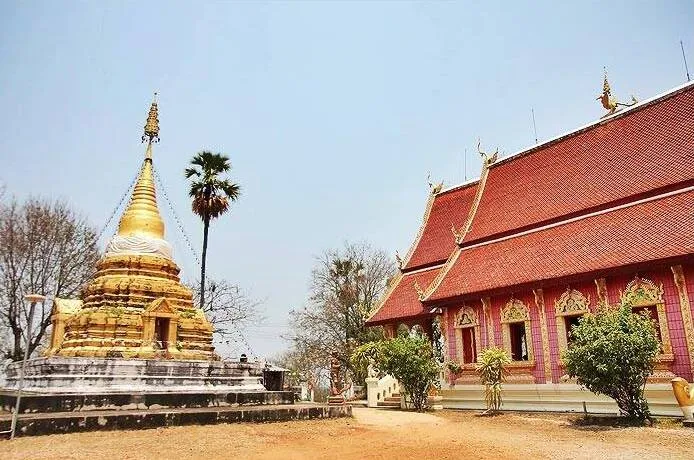
Wat Mon Khao Kaeo
Open Days: Daily
Opening Hours: 06.00 – 18.00
Wat Mon Khao Kaeo, also known locally as Wat Mon Kaeo, is a peaceful community temple in Ban Wang Bong, Moo 2, Wang Tai Subdistrict, Wang Nuea District, Lampang Province. The temple belongs to the Mahanikaya order and has long served as a spiritual center for the local community. Set along the Chae Hom–Wang Nuea route, it offers a quiet northern Thai temple atmosphere surrounded by rural scenery and local village life.
The name of the temple is closely connected with its landscape. In northern Thai usage, “mon” means a hill or raised ground, while “khao kaeo” suggests sacredness, purity, and auspiciousness. The temple is therefore understood as a sacred hilltop place where local people gather for merit-making, Buddhist ceremonies, and spiritual reflection.
Wat Mon Khao Kaeo covers about 13 rai, 2 ngan, and 9 square wah of temple land, with an additional monastic land plot of about 10 rai and 2 square wah. The temple is surrounded by private land and public roads, with its eastern side connected to the Chae Hom–Wang Nuea road. This location makes the temple accessible for local residents and visitors traveling through Wang Nuea District.
The temple was established in 1928 through the collective faith of villagers who built it on a small hill known as Mon Kaeo. Although the present temple foundation dates to 1928, the sacred landscape and local devotion associated with the area have made it an important place of faith for generations. For the local community, the temple represents both Buddhist practice and the identity of Ban Wang Bong.
The main monastic structures include monks’ residences, a viharn, merit-making halls, and several pavilions. These buildings support the daily religious life of the temple, including worship, merit-making, sermons, ceremonies, and community gatherings. The viharn is the main area where worshippers pay respect to the stucco Buddha image, while other halls are used for Buddhist activities and village events.
Important sacred objects include the Lanna-style relic chedi on the hilltop, a stucco Buddha image inside the viharn, and weekday Buddha images enshrined in the weekday pavilion. The hilltop chedi is the spiritual highlight of the temple. In northern Thai Buddhist belief, placing a chedi on elevated ground symbolizes sacred presence, protection, and a visible spiritual landmark for the surrounding community.
The stucco Buddha image inside the viharn is a central object of devotion for local residents. Worshippers visit the temple to make merit, pray, and participate in Buddhist ceremonies. The weekday Buddha images also play an important role in local religious practice, especially for people who come to make offerings according to their birth day.
The temple’s historical abbots include Phra Bunmee Sirisaro, Phra Bunmi, Phra Uenkham, Phra Suai, Phra Thongsuk Sirisaro, Phra Charit Athito, and Phra Yot Biyaphani. These monks are remembered for their role in maintaining the temple, developing its religious activities, and preserving Buddhist practice within the Wang Tai community.
Wat Mon Khao Kaeo is not only a place for worship. It is also a center of local traditions and cultural continuity. The temple hosts annual merit-making events, summer novice ordination activities, and ceremonies on important Buddhist holy days such as Visakha Bucha Day, Makha Bucha Day, and Buddhist Lent. These activities help preserve the connection between Buddhism and village life.
During major Buddhist festivals, local residents gather at the temple for merit-making, sermons, and communal religious ceremonies. These gatherings strengthen the relationship between the temple and the village while passing on local customs to younger generations through actual participation rather than written records alone.
The temple atmosphere is quiet, natural, and suitable for slow cultural travel. Visitors can walk through the temple grounds, pay respect to the Buddha images, observe the hilltop chedi, and experience the calm character of a rural Lanna community temple. The setting on a small hill gives the temple a distinctive sense of place and spiritual elevation.
Wat Mon Khao Kaeo is valuable because it reflects the relationship between religion, landscape, and local life. It is not a large tourist temple, but it carries strong community meaning. Its value lies in the faith of villagers, the Lanna-style chedi, the Buddha images, and the continuity of Buddhist activities in Wang Tai Subdistrict.
For travelers interested in Lanna Buddhist art, the hilltop chedi is the most important feature to observe. Chedis on elevated ground are common in northern Thailand because they serve both religious and landscape functions. They mark sacred space and act as visible symbols of faith for the surrounding community.
Wang Nuea District is known for its quiet rural atmosphere, natural attractions, waterfalls, local temples, and community-based travel. A visit to Wat Mon Khao Kaeo can be combined with nearby attractions such as Wang Nuea Market, Wat Sop Luen viewpoint, Doi Phra Phutthabat, Wat Phra That Doi Kaeo Chai Mongkhon, and Wang Kaeo Waterfall.
Getting There is convenient by following the Chae Hom–Wang Nuea road toward Ban Wang Bong in Wang Tai Subdistrict. The temple is located near the main road and can be reached by private car or local transport. Travelers starting from Lampang city should allow additional travel time because Wang Nuea District is located north of the provincial city area.
Visitors should dress respectfully, speak quietly, and observe proper temple etiquette, especially around the viharn, chedi, Buddha images, and ceremonial areas. During the rainy season, visitors should also take care when walking on elevated or sloping areas within the temple grounds.
Wat Mon Khao Kaeo is therefore a meaningful destination for travelers who want to experience a genuine Lanna community temple. With its hilltop chedi, stucco Buddha image, weekday Buddha images, peaceful surroundings, and long-standing connection with local Buddhist traditions, the temple offers a quiet but valuable glimpse into the spiritual life of Wang Nuea District.
| Name | Wat Mon Khao Kaeo, also known as Wat Mon Kaeo |
| Location | Ban Wang Bong, Moo 2, Wang Tai Subdistrict, Wang Nuea District, Lampang Province |
| Address | Ban Wang Bong, Moo 2, Wang Tai Subdistrict, Wang Nuea District, Lampang 52140, Thailand |
| Coordinates | 3JR9+XFH, Wang Tai Subdistrict, Wang Nuea District, Lampang Province |
| Highlights | Lanna-style hilltop chedi, peaceful community temple atmosphere, stucco Buddha image, weekday Buddha images, and local Wang Tai Buddhist traditions |
| History | Established in 1928 through the faith of local villagers on a small hill known as Mon Kaeo |
| Name Origin | “Mon” means hill, while “Khao Kaeo” suggests sacredness, purity, and auspiciousness |
| Distinctive Features | A Mahanikaya Buddhist temple on raised ground with about 13 rai, 2 ngan, and 9 square wah of temple land, plus an additional monastic land plot |
| Travel Information | Accessible via the Chae Hom–Wang Nuea road toward Ban Wang Bong, suitable for private car or local transport |
| Current Status | Active Mahanikaya Buddhist temple and spiritual center of Ban Wang Bong community |
| Open Days | Daily |
| Opening Hours | 06.00 – 18.00 |
| Fees | No admission fee |
| Facilities | Worship areas, merit-making hall, resting pavilions, parking area, and temple activity spaces |
| Main Areas / Zones | Monks’ residences, viharn, merit-making hall, weekday Buddha pavilion, hilltop chedi, stucco Buddha image, and weekday Buddha images |
| Historical Abbots | Phra Bunmee Sirisaro, Phra Bunmi, Phra Uenkham, Phra Suai, Phra Thongsuk Sirisaro, Phra Charit Athito, and Phra Yot Biyaphani |
| Nearby Tourist Attractions | 1. Wang Nuea Market, about 3 km 2. Wat Sop Luen Viewpoint, about 8 km 3. Doi Phra Phutthabat at Wat Sop Luen, about 8 km 4. Wat Phra That Doi Kaeo Chai Mongkhon, about 12 km 5. Wang Kaeo Waterfall, about 28 km |
| Nearby Restaurants | 1. Phong Sri Phochana, about 3 km, Tel. 080-1250540 2. Krua Muan Jai Wang Nuea, about 4 km, Tel. 064-4956386 3. Rak Kan Coffee & Cake, about 4 km 4. Jungle Cafe Wang Nuea Branch, about 5 km 5. Pizza Nai Soi, about 5 km |
| Nearby Accommodations | 1. Wangnuea Riverside Resort & Hotel, about 3 km, Tel. 085-8631196, 094-7169562 2. Wang Nuea Place, about 4 km, Tel. 087-1883100 3. Chutiman House, about 4 km, Tel. 081-8814505, 094-7169562 4. Choeng Tawan, about 5 km, Tel. 084-7398921, 081-1803628 5. Charoenphon Resort, about 8 km, Tel. 093-6322952, 086-1798773 |
Frequently Asked Questions (FAQ)
Q: Where is Wat Mon Khao Kaeo located?
A: Wat Mon Khao Kaeo is located in Ban Wang Bong, Moo 2, Wang Tai Subdistrict, Wang Nuea District, Lampang Province.
Q: What is another local name for Wat Mon Khao Kaeo?
A: Local residents commonly call the temple Wat Mon Kaeo.
Q: When was Wat Mon Khao Kaeo established?
A: The temple was established in 1928 through the faith of local villagers.
Q: What is Wat Mon Khao Kaeo known for?
A: It is known for its Lanna-style hilltop chedi, stucco Buddha image, weekday Buddha images, and peaceful community temple atmosphere.
Q: What are the opening hours of Wat Mon Khao Kaeo?
A: The temple is open daily from 06.00 to 18.00.
Q: Is there an admission fee?
A: No. Visitors can enter the temple free of charge.
Q: What nearby attractions can be visited with Wat Mon Khao Kaeo?
A: Travelers can combine the visit with Wang Nuea Market, Wat Sop Luen viewpoint, Doi Phra Phutthabat, Wat Phra That Doi Kaeo Chai Mongkhon, and Wang Kaeo Waterfall.
 Category: ●Places of Worship
 Group: ●Temple
Last Update : 4 MonthAgo
 Last Update : 4 MonthAgo
 Click to Access the Navigation Map GPS
 Art, Culture and Heritage
 Historical Sites and Monuments(2)
 Landmarks and Memorials(5)
 Art, Craft Centres, Tradition(10)
 Museums(4)
 Historic Homes and Cities(1)
Temple(86)
Historic Homes and Cities(1)
Temple(86)
 Other Sacred Sites(9)
 Research and Development
 Royal Project(2)
 Suburban Living
 Village, Community(3)
 Local Market(2)
 Nature and Wildlife
 National Parks and Marine Reserves(5)
 Mountain (Doi)(4)
 Dam, Reservoir, Lake(11)
 Waterfalls(15)
 Hot Springs(1)
 Caves(12)
 Flower Field(1)
 River, Canal(1)
 Bays and Beaches(1)
 Other natural attractions(4)
 Entertainment and Agricultural
 Animal camps and shows(1)
 Farms, Parks and Ecotourism(2)
 Outdoor and Adventure Activities(2)
 Shopping
 Shopping and Night Market(2)
 Spas and Wellness
 Spas and Wellness(1)


