
lovethailand home >North Travel Attractions >Lampang Travel Attractions >Mueang Lampang >Phichai > Wat Mon Khiri Chai
TL;DR: Wat Mon Khiri Chai is located at Ban Phichai, Moo 1, Phichai Subdistrict, Mueang Lampang District, Lampang Province, open Daily, hours 06.00 – 18.00.
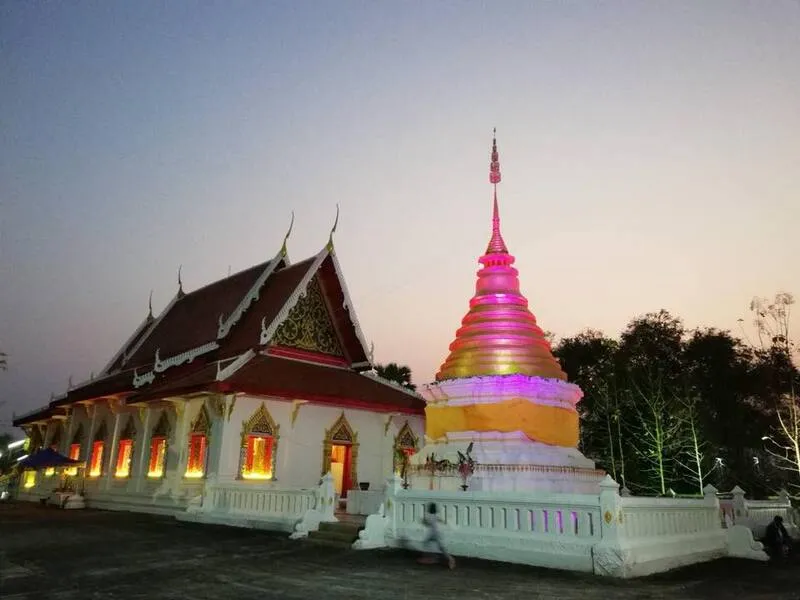
Wat Mon Khiri Chai
Open Days: Daily
Opening Hours: 06.00 – 18.00
Wat Mon Khiri Chai is located at 210 Phahonyothin Road, Ban Phichai, Moo 1, Phichai Subdistrict, Mueang Lampang District, Lampang Province. It is a Mahayana-affiliated Thai Buddhist temple under the Mahanikaya order and an important community temple in the northern part of Lampang city. The temple is especially meaningful because it was once abandoned before being rebuilt in 1924 through the joint efforts of Chao Bunwat Wongmanit, monks, and local residents.
The temple occupies an area of 38 rai, 2 ngan, and 17 square wah under title deed number 31. Its boundaries are clearly defined, with public roads to the north and west and local roads to the south and east. This spacious temple ground allows the temple to serve as a religious, social, and cultural center for the Ban Phichai community.
The name “Mon Khiri Chai” carries auspicious meaning. In northern Thai usage, “mon” refers to a hill or raised ground, “khiri” means mountain, and “chai” means victory or auspicious success. The name therefore suggests a sacred and fortunate hill-like place, appropriate for a temple that has long served as a spiritual center for the surrounding community.
Wat Mon Khiri Chai’s history reflects the power of collective faith. The temple was originally abandoned, but in 1924 it was rebuilt by Lieutenant General Chao Bunwat Wongmanit, the ruler of Lampang, together with monks and local people. This restoration was not merely a physical reconstruction of a temple; it was the revival of a spiritual center that helped strengthen Buddhist life in the Phichai community.
After its reconstruction, the temple was granted Wisungkhamasima status on August 14, 1930. The consecrated boundary measured 18 meters wide and 16 meters long. Receiving Wisungkhamasima was an important milestone because it officially established the temple’s ordination area for proper monastic ceremonies according to Buddhist discipline.
The temple’s main monastic structures include an ordination hall, a sermon hall, and monks’ residences. The sermon hall is a three-gabled pavilion used for merit-making, community gatherings, religious talks, and Buddhist activities. These structures show the practical role of the temple as a working religious space rather than merely a historic site.
Important sacred objects at Wat Mon Khiri Chai include a chedi, a replica of Phra Phuttha Chinnarat, stucco Buddha images, and stucco disciple figures. These objects form the spiritual heart of the temple. The replica of Phra Phuttha Chinnarat connects local worship with one of Thailand’s most revered Buddha images, while the chedi and stucco figures represent Buddhist faith passed down through generations.
The chedi serves as a visual and spiritual focal point of the temple grounds. The stucco Buddha images and disciple figures reflect the devotion of the community and the importance of Buddhist imagery in teaching, worship, and remembrance. Though modest compared with major tourist temples, these works are valuable examples of local religious art created for active community use.
The historical administration of the temple records two important abbots: Phra Athikan Phut Phutthima, who served from 1922 to 1973, and Phra Khru Kuson Chitapunyo, who became abbot in 1974. Their names are part of the temple’s institutional memory and represent the continuity of monastic leadership that helped preserve Wat Mon Khiri Chai as a functioning community temple.
Another interesting feature is the small museum within the temple. A small temple museum can preserve local memory through old objects, religious utensils, photographs, and materials connected with the temple and the surrounding community. For visitors interested in local history, this museum adds depth to the visit and helps explain the temple’s relationship with Ban Phichai.
Wat Mon Khiri Chai is a meaningful destination for travelers who want to understand Lampang beyond the famous temples in the city center. It tells a story of a revived abandoned temple, local leadership, monastic continuity, and community faith. The temple offers a quiet and authentic atmosphere suitable for visitors interested in local Buddhist culture.
The atmosphere of the temple is simple and community-oriented. Visitors can experience the peaceful character of a working neighborhood temple where local residents come for merit-making, Buddhist ceremonies, and community activities. It is suitable for slow cultural travel, quiet reflection, and learning about the everyday religious life of Lampang residents.
On major Buddhist holy days such as Makha Bucha Day, Visakha Bucha Day, Asalha Bucha Day, Buddhist Lent, and the end of Buddhist Lent, the temple serves as a gathering place for local worshippers. These occasions help preserve Buddhist traditions and strengthen the relationship between the temple and the community.
Phichai Subdistrict is an important area north of Lampang city. Because the temple is located near Phahonyothin Road, it is easy to access and can be included in a temple route around northern Lampang. Nearby cultural stops include Wat Phichai, Wat Phra That Muen Khruen, Dhanabadee Ceramic Museum, Wat Pong Sanuk Nuea, and Kad Kong Ta Walking Street.
Visitors interested in local temple architecture can observe several important elements, including the three-gabled sermon hall, the chedi, stucco Buddha images, stucco disciple figures, and the replica of Phra Phuttha Chinnarat. These features may be understated, but they reflect the genuine devotional art of a local Buddhist community.
A visit to Wat Mon Khiri Chai can be peaceful and informative. Visitors may pay respect to the Buddha images, walk around the temple grounds, observe the monastic structures, and learn about the history of the restored temple. When the small museum is open, it provides additional context about the temple’s past and the wider Ban Phichai community.
Getting There is convenient from Lampang city. Travelers can follow Phahonyothin Road north toward Phichai Subdistrict. The temple is located along the main road and can be reached by private car, rental car, or local transport. It is also suitable as a stop on the way to northern Lampang districts or as part of a half-day cultural route around the city.
Visitors should dress respectfully, speak quietly in religious areas, and follow temple etiquette when approaching the ordination hall, chedi, Buddha images, and museum area. Respectful behavior helps preserve the calm atmosphere of this active community temple.
Wat Mon Khiri Chai is therefore a worthwhile stop for travelers who want to see a quieter side of Lampang. Its story of revival from an abandoned temple, its sacred objects, its small museum, and its role in the Ban Phichai community make it a meaningful destination for cultural and spiritual travel.
| Name | Wat Mon Khiri Chai |
| Location | Ban Phichai, Moo 1, Phichai Subdistrict, Mueang Lampang District, Lampang Province |
| Address | 210 Phahonyothin Road, Ban Phichai, Moo 1, Phichai Subdistrict, Mueang Lampang District, Lampang Province, Thailand |
| Coordinates | 18.30205, 99.52315 |
| Highlights | Restored former abandoned temple, chedi, replica of Phra Phuttha Chinnarat, stucco Buddha images, stucco disciple figures, three-gabled sermon hall, and small museum |
| History | Rebuilt in 1924 by Lieutenant General Chao Bunwat Wongmanit together with monks and local residents; granted Wisungkhamasima status on August 14, 1930 |
| Name Origin | “Mon” means hill, “khiri” means mountain, and “chai” refers to auspicious victory or success |
| Distinctive Features | A community temple in Phichai Subdistrict with 38 rai, 2 ngan, and 17 square wah of temple land and several important sacred objects |
| Travel Information | Accessible from Lampang city via Phahonyothin Road toward Phichai Subdistrict by private car, rental car, or local transport |
| Current Status | Active Mahanikaya Buddhist temple and important religious site of Ban Phichai community |
| Open Days | Daily |
| Opening Hours | 06.00 – 18.00 |
| Fees | No admission fee |
| Facilities | Worship areas, parking area, sermon hall, monks’ residences, and areas for Buddhist activities |
| Main Areas / Zones | Ordination hall, three-gabled sermon hall, monks’ residences, chedi, replica of Phra Phuttha Chinnarat, stucco Buddha images, stucco disciple figures, and small museum |
| Historical Abbots | Phra Athikan Phut Phutthima and Phra Khru Kuson Chitapunyo |
| Nearby Tourist Attractions | 1. Wat Phichai, about 2 km 2. Wat Phra That Muen Khruen, about 2 km 3. Dhanabadee Ceramic Museum, about 5 km 4. Wat Pong Sanuk Nuea, about 6 km 5. Kad Kong Ta Walking Street, about 7 km |
| Nearby Restaurants | 1. Krua Pa Ja Ban Phichai, about 2 km, Tel. 065-0520890 2. TARUKA Phichai Lampang, about 2 km, Tel. 090-3215191 3. Tam Zaab Yum Nua Phichai, about 2 km, Tel. 098-2153006 4. All Rice-Lampang, about 3 km, Tel. 085-5929299 5. The Commons LPT, about 3 km, Tel. 093-2515353 |
| Nearby Accommodations | 1. Na Baanmae Resort, about 1 km 2. Pang Luang Garden Resort, about 3 km, Tel. 083-5774978, 093-1856968 3. Resort At Lampang, about 4 km, Tel. 054-811555, 099-2961998 4. Sibtis Hotel, about 5 km, Tel. 065-2597444 5. Lampang Residence, about 7 km, Tel. 054-209860, 061-7014111 |
Frequently Asked Questions (FAQ)
Q: Where is Wat Mon Khiri Chai located?
A: Wat Mon Khiri Chai is located at 210 Phahonyothin Road, Ban Phichai, Moo 1, Phichai Subdistrict, Mueang Lampang District, Lampang Province.
Q: What is the history of Wat Mon Khiri Chai?
A: The temple was formerly abandoned and was rebuilt in 1924 by Lieutenant General Chao Bunwat Wongmanit together with monks and local residents.
Q: When did Wat Mon Khiri Chai receive Wisungkhamasima status?
A: The temple received Wisungkhamasima status on August 14, 1930.
Q: What can visitors see inside Wat Mon Khiri Chai?
A: Visitors can see the ordination hall, three-gabled sermon hall, chedi, replica of Phra Phuttha Chinnarat, stucco Buddha images, stucco disciple figures, and a small museum.
Q: What are the opening hours of Wat Mon Khiri Chai?
A: The temple is open daily from 06.00 to 18.00.
Q: Is there an admission fee?
A: No. Visitors can enter the temple free of charge.
Q: What nearby attractions can be visited with Wat Mon Khiri Chai?
A: Travelers can combine the visit with Wat Phichai, Wat Phra That Muen Khruen, Dhanabadee Ceramic Museum, Wat Pong Sanuk Nuea, and Kad Kong Ta Walking Street.
 Category: ●Places of Worship
 Group: ●Temple
Last Update : 4 MonthAgo
 Last Update : 4 MonthAgo
 Click to Access the Navigation Map GPS
Wat Mon Khiri Chai Map
Recommend

 Art, Culture and Heritage
 Historical Sites and Monuments(2)
 Landmarks and Memorials(5)
 Art, Craft Centres, Tradition(10)
 Museums(4)
 Historic Homes and Cities(1)
Temple(86)
Historic Homes and Cities(1)
Temple(86)
 Other Sacred Sites(9)
 Research and Development
 Royal Project(2)
 Suburban Living
 Village, Community(3)
 Local Market(2)
 Nature and Wildlife
 National Parks and Marine Reserves(5)
 Mountain (Doi)(4)
 Dam, Reservoir, Lake(11)
 Waterfalls(15)
 Hot Springs(1)
 Caves(12)
 Flower Field(1)
 River, Canal(1)
 Bays and Beaches(1)
 Other natural attractions(4)
 Entertainment and Agricultural
 Animal camps and shows(1)
 Farms, Parks and Ecotourism(2)
 Outdoor and Adventure Activities(2)
 Shopping
 Shopping and Night Market(2)
 Spas and Wellness
 Spas and Wellness(1)


