
lovethailand home >North Travel Attractions >Lampang Travel Attractions >Mueang Lampang >Ban Ueam > Tham Pha Thai National Park
TL;DR: Tham Pha Thai National Park is located at Ban Huat Subdistrict, Ngao District, Lampang Province, covering parts of Mueang Lampang, Ngao, Mae Mo, and Chae Hom districts, open Daily, hours 08.30 – 16.30.

Tham Pha Thai National Park
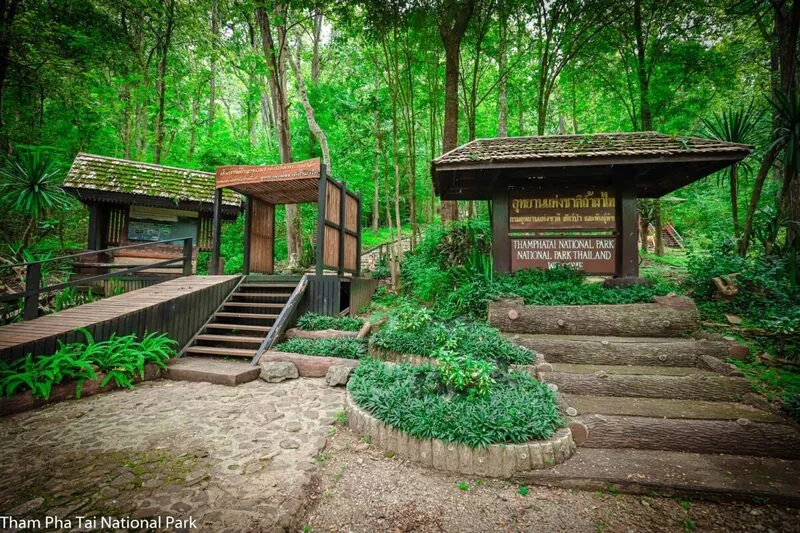
Open Days: Daily
Opening Hours: 08.30 – 16.30
Tham Pha Thai National Park is one of Lampang Province’s most important natural areas, covering parts of Mueang Lampang, Ngao, Mae Mo, and Chae Hom districts. The park covers approximately 758,750 rai and features complex mountain ranges, limestone formations, fertile forest, waterfalls, caves, ancient rock paintings, and important watershed areas. Its highest point is Doi Mae Khwan, about 1,253 meters above mean sea level. The park is not only a scenic destination but also a major ecological system that supports rivers, wildlife, forest communities, and natural heritage in northern Thailand.
The park plays an important role as a watershed. Water from the western side of the area flows toward the Wang River, one of Lampang’s main rivers, while water from the eastern side flows toward the Ngao River before joining the Yom River in Phrae Province. This means the value of Tham Pha Thai National Park extends beyond tourism. Protecting the forest also protects water sources, downstream communities, agriculture, and ecological stability across a wide area.
The landscape of Tham Pha Thai National Park is diverse. It includes large limestone caves, mountain forests, natural pools, waterfalls, streams, prehistoric rock-art sites, and habitats for birds and insects. More than 50 bird species have been recorded in the area, including species such as the Bar-winged Flycatcher-shrike, green pigeons, and raptors. The park also contains many insect species, including butterflies, longhorn beetles, rhinoceros beetles, and click beetles. This biodiversity makes the park suitable for nature lovers, birdwatchers, students, and travelers interested in limestone ecosystems.
The average temperature in the park is around 26 degrees Celsius. January is usually the coolest month, while heavy rainfall is common from May to October. The cool season and dry season are generally better for cave visits and nature routes, while the rainy season may affect roads, trails, waterfalls, and visibility. Visitors should check current park announcements before traveling, especially when planning to visit deeper natural sites such as waterfalls or Lom Phu Khiao.
The main attraction is Tham Pha Thai Cave, a large limestone cave located near the park office along Highway No. 1 on the Lampang – Ngao – Chiang Rai route, around kilometer marker 667. It is about 65 km from Lampang city. The cave is a large natural chamber formed within ancient limestone. Its stalactites, stalagmites, cave walls, and spacious interior reflect a long geological process shaped by water, minerals, and time.
Inside Tham Pha Thai Cave, walkways and lighting help visitors explore the cave more safely and conveniently. The cave’s atmosphere is quiet, dim, and impressive, with natural rock formations creating a strong sense of age and mystery. Bats also inhabit the cave, so visitors should avoid loud noise, unnecessary flashlight disturbance, touching cave formations, or leaving trash. Cave environments are fragile, and even small human actions can leave long-term damage.
Tham Pha Thai Cave is also historically important because King Prajadhipok, Rama VII, visited the cave in 1926. His royal initials, “ปปร.”, remain as historical evidence inside the cave. This makes Tham Pha Thai not only a natural site but also a place connected with modern Thai royal history. Visitors should view this evidence respectfully and avoid touching, marking, or damaging any historic surface.
Near Tham Pha Thai Cave are Tham Chon and Tham Suea, smaller caves with local stories and historic associations. Tham Chon is a small cave with three chambers and attractive curtain-like stalactites. Local stories say that it was once used by bandits as a hiding place. These nearby caves help expand the cave route around the main area, but visitors should remain on designated paths and be careful because limestone surfaces can be slippery and uneven.
Lom Phu Khiao is another famous natural attraction within the park area. Located in Ban On Subdistrict, Ngao District, it is a large natural pool on a mountain, known for its deep green water and mysterious atmosphere. The pool is surrounded by forest and rocky terrain, and its green color gives it a striking appearance. Fish live in the pool, and the site is one of Lampang’s most distinctive natural landmarks.
Travel to Lom Phu Khiao uses a route from Ban On village for about 6 km. Some road sections may require caution, especially during or after rain. Visitors should check local road conditions before traveling. Swimming, feeding fish, littering, or disturbing the pool environment should be avoided unless clearly permitted. Lom Phu Khiao is a fragile natural site and should be visited with care.
Mae Chae Fa Waterfall, also known as Tat Moei Waterfall, is another important attraction in the park. It is located about 8 km by road from Ban Thung Hang, Village No. 1, Thung Phueng Subdistrict, Chae Hom District. The waterfall flows down limestone terrain into clear pools and has about nine levels. Its emerald-colored water is especially attractive and reflects the character of limestone mountain streams.
Visitors to Mae Chae Fa Waterfall should be extra careful during the rainy season. Water levels can rise quickly, limestone rocks can become slippery, and road access may be affected. Proper footwear is recommended. Visitors should avoid climbing wet rocks, entering unsafe pools, or ignoring warning signs. Following park instructions is essential for safety.
Ban Huai Hok Historic Rock Paintings are among the most interesting cultural sites within the park area. The red paintings show a line of human figures and are estimated to be around 2,000 to 3,000 years old. Such images are not commonly seen in Thailand, making the site valuable for archaeology, history, and anthropology. Access requires a walk of about 3.5 km from Ban Huai Hok village, so visitors should prepare physically and consult park staff or local guides before going.
Ancient rock paintings are extremely fragile. Visitors should not touch the rock surface, add any writing, use flash photography at close range, or create vibration or smoke near the paintings. These images are evidence of ancient human thought, belief, and communication. Once damaged, they cannot be replaced.
Mae Kae Waterfall is a large waterfall located about 18 km from Ban Mae Kae. It is formed by Huai Mae Kae stream, which falls over rock cliffs into beautiful waterfall levels surrounded by large trees and shaded forest. The site is suitable for travelers who enjoy quieter natural areas. Road and water conditions should be checked before visiting, especially in the rainy season.
In addition to these main attractions, the park includes smaller waterfalls, streams, forest areas, plant-study points, and landscapes connected with surrounding communities. The park can be visited in different ways. A half-day visit may focus on Tham Pha Thai Cave and nearby caves. A full-day trip can include Lom Phu Khiao or Ngao town attractions. A longer trip can include waterfalls, rock paintings, and nearby cultural sites.
From a geological perspective, Tham Pha Thai Cave is an excellent example of limestone karst landscape. Caves, chambers, stalactites, stalagmites, and underground drainage systems are formed through long-term interaction between limestone, water, and minerals. Such environments are delicate. Cave formations grow very slowly, and touching them can leave oils or marks that interfere with natural formation processes.
The park is also suitable for bird and insect observation. Different forest types and elevations create various habitats. Some birds may be seen near forest edges, while others prefer denser forest or areas near streams. Butterflies, beetles, and other insects play important ecological roles in pollination, decomposition, and food chains. Visitors interested in wildlife should come early, walk quietly, and use binoculars rather than disturbing animals.
For families and general travelers, the easiest starting point is Tham Pha Thai Cave near the park office. It is more accessible than deeper natural sites and has better visitor facilities. After that, travelers with enough time and suitable road conditions can continue to Lom Phu Khiao, waterfalls, or nearby attractions in Ngao District. This gradual approach is safer for children, elderly travelers, and visitors unfamiliar with forest routes.
The park provides camping areas, accommodation, and welfare-shop services, but visitors planning to stay overnight should contact the park in advance to confirm availability, booking conditions, food service, electricity, water, and seasonal limitations. Those staying overnight should prepare food, drinking water, bedding, flashlights, personal medicine, rain protection, and suitable outdoor equipment.
Getting There from Lampang city is convenient by private car. Use Highway No. 1 on the Lampang – Ngao – Chiang Rai route and travel to around kilometer marker 667. The park office is about 65 km from Lampang city. Travelers coming from the Phrae – Ngao – Chiang Rai route can turn left toward Lampang before reaching Ngao District and continue about 15 km to the park office. Private car or organized transport is recommended because attractions inside the park area are spread out.
Trip planning should depend on available time and physical readiness. With half a day, visitors can focus on Tham Pha Thai Cave, Tham Chon, and Tham Suea. With a full day, Lom Phu Khiao or Ngao town attractions can be added. With 2 days and 1 night, visitors may include Tham Pha Thai, Lom Phu Khiao, Mae Chae Fa Waterfall, Mae Kae Waterfall, and nearby places such as Wat Chong Kham or Pang La Elephant Care Center. Always ask park staff about road conditions before visiting remote sites.
Visitors should wear suitable outdoor clothing, use shoes with good grip, carry drinking water, bring a flashlight, and prepare rain or cold-weather protection according to the season. They should not touch cave formations, write on cave walls, feed animals, collect plants, catch insects or wildlife, or leave trash. Responsible behavior is essential because natural systems in the park need time to recover from disturbance.
Food options near Tham Pha Thai are limited compared with Lampang city. Nearby choices include small local restaurants and cafes such as Kuai Tiao Kala Na Mon Chet Ha, Kafae Ko Chao, Kafae Doi Mae San, and restaurants in Ngao town such as Khun Phranai Restaurant, Thana Cafe, Laab Ruean Ngoen, Rai Decha Restaurant, and Tiao Ruea Komin. Visitors planning to go to deeper sites should bring drinking water and light snacks.
Accommodation options include the park’s own camping area and accommodation, subject to availability. Travelers can also stay in Ngao town at places such as Ngao Village Resort And Farm Stay, LD Hotel & Residences, Somphon Resort, or other local accommodations. Those who prefer more facilities may stay in Lampang city and make a full-day trip to the park. Staying in Ngao is more convenient for visitors planning to continue to Lom Phu Khiao or deeper park attractions.
Tham Pha Thai National Park is worth visiting for travelers who want to understand Lampang’s nature beyond temples and old-town heritage. The park combines limestone cave scenery, royal history, deep green natural pools, limestone waterfalls, ancient rock paintings, bird habitats, and watershed forest. Visiting the park is not only about walking through a cave or taking photographs, but about seeing how geology, ecology, history, and conservation meet in one landscape.
Overall, Tham Pha Thai National Park is one of Lampang’s most valuable natural areas. Its vast forest of approximately 758,750 rai protects water sources, wildlife habitats, limestone landscapes, and ancient cultural evidence. With proper planning, respectful behavior, and attention to park rules, a visit to Tham Pha Thai can offer beauty, knowledge, and a deeper appreciation of Lampang’s natural heritage.
| Name | Tham Pha Thai National Park |
| Location | Ban Huat Subdistrict, Ngao District, Lampang Province, covering parts of Mueang Lampang, Ngao, Mae Mo, and Chae Hom districts |
| Address | Tham Pha Thai National Park Office, Village No. 3, Ban Huat Subdistrict, Ngao District, Lampang 52110 |
| Approximate Location | Highway No. 1, Lampang – Ngao – Chiang Rai route, around kilometer marker 667 |
| Highlights | Large limestone cave, King Rama VII royal initials, stalactites and stalagmites, Lom Phu Khiao, Mae Chae Fa Waterfall, Ban Huai Hok rock paintings, Mae Kae Waterfall, and Lampang watershed forest |
| History | Tham Pha Thai Cave is an ancient limestone cave with evidence of King Rama VII’s visit in 1926. The park area also contains Ban Huai Hok prehistoric rock paintings estimated to be about 2,000 – 3,000 years old. |
| Name Origin | The park is named after Tham Pha Thai Cave, the main limestone cave attraction in Ngao District, Lampang Province. |
| Distinctive Features | The park covers about 758,750 rai of complex mountain terrain and fertile forest. Its highest point is Doi Mae Khwan at about 1,253 meters, and it serves as a watershed for the Wang and Ngao river systems. |
| Travel Information | From Lampang city, use Highway No. 1 on the Lampang – Ngao – Chiang Rai route to kilometer marker 667, about 65 km from Lampang city. From the Phrae – Ngao – Chiang Rai route, turn left toward Lampang before Ngao District and continue about 15 km to the park office. |
| Current Status | Open as a natural attraction and learning area for caves, limestone landscapes, watershed forest, waterfalls, and ecosystems of Lampang Province |
| Open Days | Daily |
| Opening Hours | 08.30 – 16.30 |
| Fees | Please Confirm With The Park Before Visiting, As Fee Conditions And Visitor Services May Change According To Official Announcements |
| Facilities | Park office, camping area, park accommodation, welfare shop, cave walkway, lighting inside the cave, and parking areas at service points |
| Main Areas / Zones | Tham Pha Thai Cave, Tham Chon, Tham Suea, Lom Phu Khiao, Mae Chae Fa Waterfall, Mae Kae Waterfall, Ban Huai Hok historic rock paintings, watershed forest, and park office area |
| Caretaker | Department Of National Parks, Wildlife And Plant Conservation / Tham Pha Thai National Park |
| Main Contact Number | Tham Pha Thai National Park, Tel. 082-936-7076, 054-220-364, 083-203-7330 |
| Recommended Season | Cool season and dry season are suitable for cave and nature routes. During heavy rainfall from May to October, visitors should check road conditions and park announcements before traveling. |
| Visitor Guidelines | Do not touch cave formations, do not write on cave walls, do not feed wildlife, do not collect plants or animals, do not litter, and follow park staff instructions. |
| Nearby Tourist Attractions | 1. Tham Pha Thai Cave, about 0 km 2. Tham Chon, about 1 km 3. Tham Suea, about 1 km 4. Lom Phu Khiao, about 35 km 5. Ngao Town Center, about 18 km 6. Wat Chong Kham Royal Monastery, about 22 km 7. Pang La Elephant Care Center, about 35 km |
| Nearby Restaurants | 1. Kuai Tiao Kala Na Mon Chet Ha, about 8 km 2. Kafae Ko Chao, about 7 km 3. Kafae Doi Mae San, about 13 km 4. Café Amazon Ngao Branch, about 17 km 5. Khun Phranai Restaurant, Ngao Town, about 22 km, Tel. 054-329-505 6. Thana Cafe, about 22 km, Tel. 098-749-5717 |
| Nearby Accommodations | 1. Tham Pha Thai National Park Accommodation And Camping Area, about 0 km, Tel. 082-936-7076 2. Ngao Village Resort And Farm Stay, about 22 km, Tel. 081-095-9069 3. LD Hotel & Residences, about 22 km, Tel. 086-658-4768, 093-905-4744 4. Somphon Resort, about 22 km 5. Local Accommodations In Ngao Town, about 22 km 6. Accommodations In Lampang City, about 65 km |
Frequently Asked Questions (FAQ)
Q: Where is Tham Pha Thai National Park located?
A: Tham Pha Thai National Park is located in Ban Huat Subdistrict, Ngao District, Lampang Province, around kilometer marker 667 on Highway No. 1, about 65 km from Lampang city.
Q: What are the main attractions in Tham Pha Thai National Park?
A: Main attractions include Tham Pha Thai Cave, stalactites and stalagmites, King Rama VII royal initials, Tham Chon, Tham Suea, Lom Phu Khiao, Mae Chae Fa Waterfall, Ban Huai Hok historic rock paintings, and Mae Kae Waterfall.
Q: Why is Tham Pha Thai Cave important?
A: It is a large limestone cave with impressive cave formations and historical evidence of King Rama VII’s visit in 1926.
Q: What are the opening hours of Tham Pha Thai National Park?
A: The park is open daily from 08.30 to 16.30. Visitors should check current park announcements before traveling, especially during heavy rain or route maintenance periods.
Q: Is there an entrance fee?
A: Visitors should confirm current fee conditions with the park before traveling because fee rules and visitor services may change according to official announcements.
Q: Is Lom Phu Khiao part of Tham Pha Thai National Park?
A: Yes. Lom Phu Khiao is located within Tham Pha Thai National Park in Ban On Subdistrict, Ngao District, Lampang Province.
Q: Does Tham Pha Thai National Park have accommodation?
A: The park has camping areas and accommodation, but visitors should contact the park in advance to confirm availability, booking conditions, welfare-shop services, and facilities.
Q: What nearby attractions can be visited after Tham Pha Thai National Park?
A: Nearby places include Lom Phu Khiao, Ngao town center, Wat Chong Kham Royal Monastery, Pang La Elephant Care Center, and Lampang city.
 Category: ●Nature and Wildlife
 Group: ●National Parks and Marine Reserves
Last Update : 5 MonthAgo
 Last Update : 5 MonthAgo
 Click to Access the Navigation Map GPS
Tham Pha Thai National Park Map
Recommend

 Art, Culture and Heritage
 Historical Sites and Monuments(2)
 Landmarks and Memorials(5)
 Art, Craft Centres, Tradition(10)
 Museums(4)
 Historic Homes and Cities(1)
 Places of Worship
 Temple(86)
 Other Sacred Sites(9)
 Research and Development
 Royal Project(2)
 Suburban Living
 Village, Community(3)
 Local Market(2)
National Parks and Marine Reserves(5)
Local Market(2)
National Parks and Marine Reserves(5)
 Mountain (Doi)(4)
 Dam, Reservoir, Lake(11)
 Waterfalls(15)
 Hot Springs(1)
 Caves(12)
 Flower Field(1)
 River, Canal(1)
 Bays and Beaches(1)
 Other natural attractions(4)
 Entertainment and Agricultural
 Animal camps and shows(1)
 Farms, Parks and Ecotourism(2)
 Outdoor and Adventure Activities(2)
 Shopping
 Shopping and Night Market(2)
 Spas and Wellness
 Spas and Wellness(1)


