
lovethailand home >North Travel Attractions >Lampang Travel Attractions >Mueang Lampang >Sop Tui > Wat Si Rong Muang
TL;DR: Wat Si Rong Muang is located at Sop Tui Subdistrict, Mueang Lampang District, Lampang Province, open Daily, hours 08.00 – 17.00.

Wat Si Rong Muang
Open Days: Daily
Opening Hours: 08.00 – 17.00
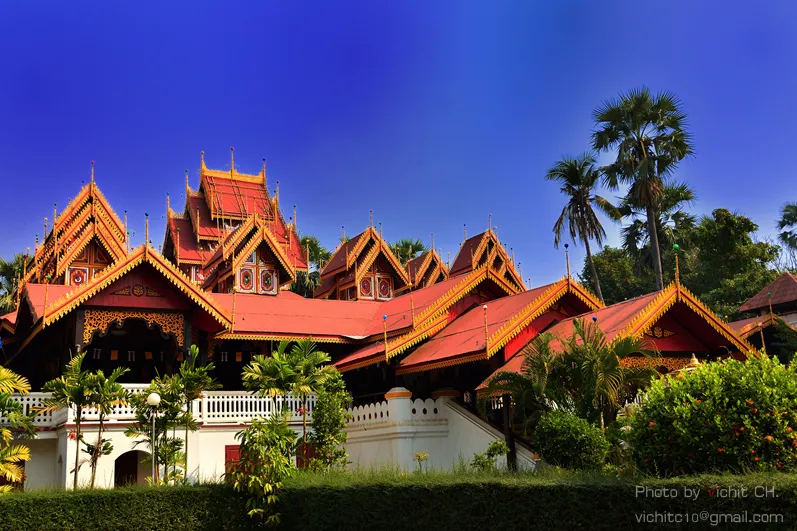
Wat Si Rong Muang is one of the most remarkable Burmese-style temples in Lampang Province. Located in Sop Tui Subdistrict, Mueang Lampang District, the temple stands in the western part of Lampang’s municipal area and represents an important chapter in the city’s teak trade history. It was built during the reign of King Rama 5 by wealthy patrons who became prosperous from the timber industry at a time when Lampang was a major center of teak trading and forestry in northern Thailand.
The temple is best known for its exquisite Burmese wooden viharn. This building is the heart of Wat Si Rong Muang and one of the finest examples of Burmese-influenced temple architecture in Lampang. The viharn features a multi-tiered gabled roof with many small overlapping layers and 9 pointed spires, creating an elegant silhouette that immediately distinguishes it from typical Lanna temples in the city.
Inside the viharn, visitors can admire highly detailed woodcarving, large round pillars, and colorful glass decoration. The ceiling is carved with delicate wooden patterns, while the massive pillars are decorated with intricate motifs and colored glass. When natural light enters the building, the glass reflects softly and gives the interior a calm, sacred, and refined atmosphere. This combination of craftsmanship and religious devotion is the main reason why the temple is highly valued by travelers and art historians.
Wat Si Rong Muang is closely connected with Lampang’s teak logging era. During the late 19th and early 20th centuries, Lampang became one of the most important forestry centers in northern Thailand. Burmese and Tai Yai communities played an important role in the timber trade, and many religious buildings were built by wealthy patrons connected with that industry. Wat Si Rong Muang is one of the temples that clearly reflects this historical background.
The architecture of the temple shows how Burmese Buddhist art was adapted into the cultural landscape of Lampang. Although the viharn follows Burmese design principles, it also belongs naturally to the city’s northern Thai environment. The use of teak wood, carved decoration, glass inlay, and layered roof design shows both imported artistic influence and local adaptation. This makes Wat Si Rong Muang a distinctive cultural site rather than simply a temple built in a foreign style.
The layered roof of the viharn is one of its most memorable features. The 9 spires rising from the roofline create a graceful and sacred appearance. In Burmese Buddhist architecture, tiered roofs and pointed spires often represent spiritual elevation, sacred mountains, and celestial realms. For visitors, the roof is not only beautiful but also symbolic of the religious ideas behind the architecture.
The interior pillars are equally impressive. Their large round forms support the wooden structure while also serving as decorative elements. The carved patterns and colored glass on the pillars create a visual rhythm throughout the hall. Visitors who spend time observing these details will notice the high level of craftsmanship and the care given to every part of the building.
Wat Si Rong Muang is a good destination for travelers interested in Burmese temples in Lampang. The city has several Burmese-style temples built during the teak trade period, but Wat Si Rong Muang is especially admired for its wooden viharn and elaborate interior decoration. It helps visitors understand how religious faith, wealth from forestry, and artisan skill came together to create lasting cultural heritage.
The temple’s atmosphere is peaceful and suitable for slow exploration. Even though it is located within the city area, the temple grounds feel calm and reflective. Visitors can make merit, pay respect to the Buddha image, study the wooden architecture, or simply appreciate the quiet beauty of the site. It is a suitable place for cultural travelers, photographers, students, and anyone interested in northern Thai history.
For photography, Wat Si Rong Muang offers several beautiful angles. The exterior of the viharn is especially striking because of its layered roof and 9 spires. Inside, the carved ceiling, large pillars, and colored glass details make the space visually rich. Morning light is particularly suitable for seeing the texture of the wood and the soft reflection of the colored glass.
The temple also reflects the role of wealthy lay patrons in Buddhist society. In the teak trade period, successful timber merchants and patrons often built temples as acts of merit and as contributions to the community. Wat Si Rong Muang is therefore not only a religious site but also a reminder of how economic prosperity supported Buddhist art and architecture in Lampang.
Getting There is convenient from central Lampang. The temple is located in Sop Tui Subdistrict, not far from Lampang Railway Station, Kad Kong Ta, and Ratsadaphisek Bridge. Visitors can travel by private car, rental car, local transport, or ride-hailing service. Because the temple is within the city area, it can easily be included in a half-day cultural route around Lampang.
Travelers can combine Wat Si Rong Muang with nearby attractions such as Wat Si Chum, Wat Sasana Chotikaram or Wat Pa Fang, Kad Kong Ta, Ratsadaphisek Bridge, and Dhanabadee Ceramic Museum. This route provides a clear view of Lampang’s cultural diversity, including Lanna heritage, Burmese influence, historic trade routes, and local craftsmanship.
Visitors should dress modestly because Wat Si Rong Muang remains an active Buddhist temple. They should walk quietly inside the viharn, avoid touching carved wood or glass decoration unnecessarily, and respect people who come to make merit. This helps preserve the temple’s sacred atmosphere and protects its delicate architectural details.
Wat Si Rong Muang is therefore one of Lampang’s most meaningful cultural attractions. Its Burmese wooden viharn, 9-spired roof, carved ceiling, decorated pillars, and historical connection with the teak trade make it a valuable destination for travelers seeking a deeper understanding of Lampang beyond the usual city highlights.
| Name | Wat Si Rong Muang |
| Location | Sop Tui Subdistrict, Mueang Lampang District, Lampang Province |
| Address | Sop Tui Subdistrict, Mueang Lampang District, Lampang Province 52100, Thailand |
| Highlights | Burmese wooden viharn, 9-spired layered roof, carved wooden ceiling, large decorated pillars, and colored glass details |
| History | Built during the reign of King Rama 5 by wealthy patrons connected with the teak trade, when Lampang was a major forestry and commercial center |
| Name Origin | The name Wat Si Rong Muang has long been used by the local community in Sop Tui and Lampang city |
| Distinctive Features | Burmese-style architecture with a multi-tiered wooden roof, 9 pointed spires, carved ceiling, and colored glass decoration |
| Travel Information | Accessible from central Lampang by private car, rental car, local transport, or ride-hailing service; located near Lampang Railway Station and the old town area |
| Current Status | Open daily for visitors and Buddhist activities |
| Open Days | Daily |
| Opening Hours | 08.00 – 17.00 |
| Fees | No admission fee |
| Facilities | Parking area, worship area, and viharn viewing area |
| Main Areas / Zones | Burmese wooden viharn, main Buddha image, decorated wooden pillars, carved ceiling, and surrounding temple grounds |
| Abbot / Caretaker | Phra Athikan Chonchathit |
| Nearby Tourist Attractions | 1. Wat Si Chum, about 2 km 2. Kad Kong Ta, about 3 km 3. Ratsadaphisek Bridge, about 3 km 4. Wat Sasana Chotikaram (Wat Pa Fang), about 3 km 5. Dhanabadee Ceramic Museum, about 4 km |
| Nearby Restaurants | 1. Krua Chat Sombun, about 1 km 2. Tam Yam @ Lampang, about 1 km 3. Pu Yong Noodle Shop (Niyom Ocha), about 1 km 4. Pla Da Shabu Branch 1 Chat Chai Road, about 1 km 5. Long Jim New York Pizza, about 3 km, Tel. 082-8925009 |
| Nearby Accommodations | 1. Hop Inn Lampang City Center, about 2 km, Tel. 063-2057363 2. The Space Hotel Lampang, about 2 km 3. Lampang Resident, about 2 km 4. The Coconut Hotel Lampang, about 4 km, Tel. 054-821999 5. B2 Lampang Boutique & Budget Hotel, about 4 km, Tel. 052-009161 |
Frequently Asked Questions (FAQ)
Q: Where is Wat Si Rong Muang located?
A: Wat Si Rong Muang is located in Sop Tui Subdistrict, Mueang Lampang District, Lampang Province, within the city area of Lampang.
Q: What is Wat Si Rong Muang famous for?
A: The temple is famous for its Burmese wooden viharn with a multi-tiered roof, 9 pointed spires, carved wooden ceiling, and colored glass decoration.
Q: When was Wat Si Rong Muang built?
A: It was built during the reign of King Rama 5, when Lampang was an important center of the teak trade and forestry industry.
Q: Is Wat Si Rong Muang a Burmese-style temple?
A: Yes. It is an important Burmese-style temple in Lampang, with architecture and interior decoration strongly influenced by Burmese Buddhist art.
Q: Who should visit Wat Si Rong Muang?
A: It is ideal for travelers interested in Burmese temples, wooden architecture, carving, teak trade history, and cultural heritage in Lampang.
Q: What is the best time to visit Wat Si Rong Muang?
A: Morning is a good time to visit because the weather is cooler and natural light brings out the details of the wooden viharn and colored glass decoration.
Q: What nearby attractions can be visited with Wat Si Rong Muang?
A: Nearby attractions include Wat Si Chum, Wat Sasana Chotikaram, Kad Kong Ta, Ratsadaphisek Bridge, and Dhanabadee Ceramic Museum.
 Category: ●Places of Worship
 Group: ●Temple
Last Update : 4 MonthAgo
 Last Update : 4 MonthAgo
 Click to Access the Navigation Map GPS
Wat Si Rong Muang Map
Recommend

 Art, Culture and Heritage
 Historical Sites and Monuments(2)
 Landmarks and Memorials(5)
 Art, Craft Centres, Tradition(10)
 Museums(4)
 Historic Homes and Cities(1)
Temple(86)
Historic Homes and Cities(1)
Temple(86)
 Other Sacred Sites(9)
 Research and Development
 Royal Project(2)
 Suburban Living
 Village, Community(3)
 Local Market(2)
 Nature and Wildlife
 National Parks and Marine Reserves(5)
 Mountain (Doi)(4)
 Dam, Reservoir, Lake(11)
 Waterfalls(15)
 Hot Springs(1)
 Caves(12)
 Flower Field(1)
 River, Canal(1)
 Bays and Beaches(1)
 Other natural attractions(4)
 Entertainment and Agricultural
 Animal camps and shows(1)
 Farms, Parks and Ecotourism(2)
 Outdoor and Adventure Activities(2)
 Shopping
 Shopping and Night Market(2)
 Spas and Wellness
 Spas and Wellness(1)


