
lovethailand home >North Travel Attractions >Lampang Travel Attractions >Mueang Lampang >Suan Dok > Wat Si Chum
TL;DR: Wat Si Chum is located at Thipwan Road / Si Chum-Mae Wa Road Area, Mueang Lampang District, Lampang Province, open Daily, hours 06.00 – 18.00.

Wat Si Chum
Open Days: Daily
Opening Hours: 06.00 – 18.00
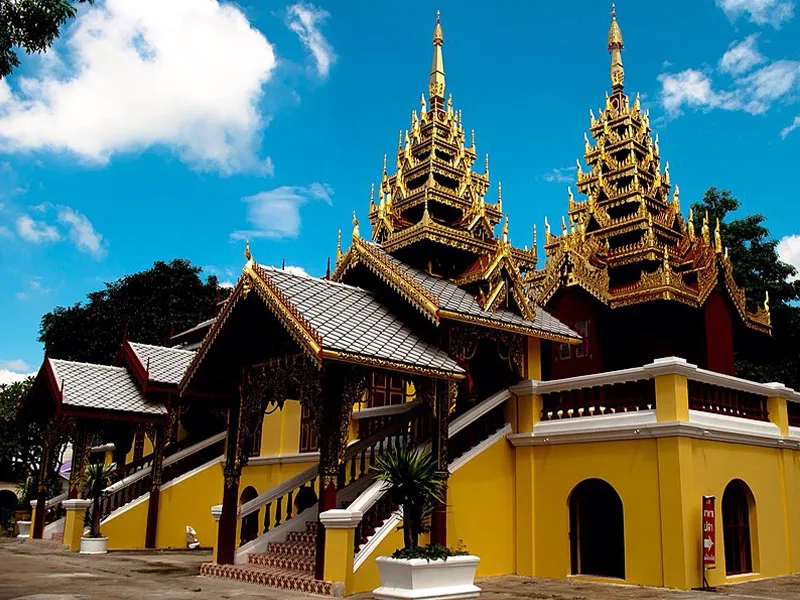
Wat Si Chum in Mueang Lampang District, Lampang Province, is one of the most important Burmese-style temples in Thailand. It is widely recognized as the largest Burmese temple among the 31 Burmese temples found in the country. Built in 1890 by a wealthy Burmese patron named U Yo, who came to Lampang during the teak logging era, the temple reflects the strong historical presence of Burmese communities in northern Thailand.
Wat Si Chum is not only a place of worship but also a valuable historic site that reveals the cultural and economic history of Lampang. During the reign of King Rama 5, Lampang became a major center of the teak industry. Burmese merchants, workers, monks, and patrons settled in the city and built temples that reflected their faith and artistic traditions. Wat Si Chum is one of the most outstanding examples of that period.
The original highlight of the temple was its large viharn, a half-masonry and half-wooden structure decorated with both Lanna and Burmese artistic elements. The roof was made of carved timber with pointed Burmese-style spires, and the wooden details were known for their exceptional beauty. The building once stood as one of the finest examples of Burmese wooden architecture in Lampang.
However, the temple’s history changed dramatically in the early morning of January 16, 1992, when a fire destroyed the original viharn. The loss was a major cultural tragedy because the building had been one of the most valuable Burmese-style wooden structures in Thailand. Today, only some carved wooden elements remain, especially around the entrance area, where delicate openwork floral patterns still show the skill of the original craftsmen.
The temple has since been restored and continues to function as an active Buddhist temple and historic attraction. Behind the restored viharn, visitors can see surviving architectural ornaments and fragments damaged by the fire. These preserved pieces help visitors understand the beauty of the original structure and the importance of conserving Lampang’s Burmese heritage.
Wat Si Chum was registered as a national historic site in 1981, before the fire damaged its original viharn. This official recognition confirms the temple’s national importance in terms of architecture, history, and cultural identity. Even though the original viharn was lost, the temple remains an important record of Burmese settlement, religious patronage, and craftsmanship in Lampang.
Inside the temple compound, one of the key sacred structures is the golden pagoda influenced by Burmese and Mon art. It is an important place of worship and gives the temple its spiritual focus. The golden surface of the pagoda, especially under morning or late afternoon light, creates a peaceful and reverent atmosphere.
Another important structure is the Burmese-style ubosot, or ordination hall. Its form, roof structure, and architectural composition differ from typical Lanna temples. The building reflects the Burmese Buddhist tradition and demonstrates how migrant communities expressed their faith through architecture.
The remaining carved wooden gateway and decorative fragments are among the most meaningful parts of the temple today. Their openwork floral motifs reveal the elegance of Burmese woodcarving. These details are not merely ornamental; they represent religious devotion, artisan skill, and the cultural memory of the original viharn.
Wat Si Chum also represents the relationship between Lanna and Burmese culture in Lampang. Although the temple is strongly Burmese in identity, some details show the influence of local northern Thai craftsmanship. This mixture gives the temple a unique character that distinguishes it from Burmese temples in other regions.
For visitors interested in Lampang’s history, Wat Si Chum is an essential stop. It tells the story of the teak trade, Burmese migration, Buddhist patronage, and heritage preservation after loss. Walking through the temple compound allows visitors to see how one religious site can preserve several layers of local history.
The temple is also suitable for photography and quiet cultural exploration. The golden pagoda, Burmese-style ubosot, carved wooden remains, and restored structures offer several meaningful visual details. Morning and late afternoon are especially good times to visit because the light brings out the texture and form of the architecture.
Visitors who are interested in Burmese temples in Lampang can combine Wat Si Chum with other nearby sites such as Wat Sasana Chotikaram, also known as Wat Pa Fang, as well as Kad Kong Ta, Ratsadaphisek Bridge, Wat Phra Kaew Don Tao Suchadaram, and Dhanabadee Ceramic Museum. This route provides a deeper view of Lampang’s religious, commercial, and artistic history.
Getting There is convenient from central Lampang. The temple is located around Thipwan Road and the Si Chum-Mae Wa Road area in Mueang Lampang District. Travelers can reach the temple by private car, rental car, local transport, or ride-hailing service. It is a short trip from Kad Kong Ta, Ratsadaphisek Bridge, and Lampang Railway Station.
Visitors should dress modestly because Wat Si Chum remains an active Buddhist temple. They should walk quietly, avoid touching historic fragments unnecessarily, and respect the sacred areas. A visit to Wat Si Chum is not only a sightseeing experience but also an opportunity to understand the cultural memory of Lampang’s Burmese community.
Wat Si Chum remains one of Lampang’s most important historic temples. Although the original viharn was lost in the 1992 fire, the restored temple, surviving woodcarvings, golden pagoda, and Burmese-style ordination hall continue to preserve the temple’s identity. For travelers interested in Burmese architecture, historic temples, teak trade history, and northern Thai cultural diversity, Wat Si Chum is a meaningful place to visit.
| Name | Wat Si Chum |
| Location | Thipwan Road / Si Chum-Mae Wa Road Area, Mueang Lampang District, Lampang Province |
| Address | Thipwan Road, Suan Dok Subdistrict, Mueang Lampang District, Lampang Province, Thailand |
| Highlights | Large Burmese temple, golden pagoda, Burmese-style ubosot, and surviving carved wooden fragments from the original viharn |
| History | Built in 1890 by the Burmese patron U Yo, who was connected with the teak logging trade in Lampang |
| Name Origin | The name Wat Si Chum has long been used by the local Lampang community and is associated with one of the city’s major Burmese Buddhist temples |
| Distinctive Features | Burmese and Lanna artistic influences, original half-masonry and half-wooden viharn, pointed timber roof, and openwork floral woodcarvings |
| Travel Information | Accessible from central Lampang by private car, rental car, local transport, or ride-hailing service; only a short distance from Kad Kong Ta and Ratsadaphisek Bridge |
| Current Status | Open daily for visitors and Buddhist activities; restored after the original viharn was destroyed by fire |
| Open Days | Daily |
| Opening Hours | 06.00 – 18.00 |
| Fees | No admission fee for Thai visitors |
| Facilities | Parking area, worship areas, and display area for surviving architectural fragments |
| Main Areas / Zones | Golden pagoda, Burmese-style ubosot, surviving carved wooden gateway, and display area of original architectural ornaments |
| Abbot / Caretaker | Phra Khru Suttachayaphon |
| Main Contact Number | 054-620823 |
| Nearby Tourist Attractions | 1. Kad Kong Ta, about 2 km 2. Ratsadaphisek Bridge, about 2 km 3. Wat Phra Kaew Don Tao Suchadaram, about 3 km 4. Wat Sasana Chotikaram (Wat Pa Fang), about 2 km 5. Dhanabadee Ceramic Museum, about 4 km |
| Nearby Restaurants | 1. Long Jim New York Pizza, about 2 km, Tel. 082-8925009 2. The Riverside Restaurant Lampang, about 2 km, Tel. 054-221861 3. Wiang Lakor Restaurant, about 2 km, Tel. 054-222277 4. Pu Yong Noodle Shop, about 2 km 5. Krua Nuea Hom Lampang, about 3 km, Tel. 081-9516554 |
| Nearby Accommodations | 1. Wienglakor Hotel Lampang, about 2 km, Tel. 054-316430 2. Hop Inn Lampang City Center, about 3 km, Tel. 063-2057363 3. The Coconut Hotel Lampang, about 3 km, Tel. 054-821999 4. Pin Hotel Lampang, about 2 km, Tel. 054-322284 5. B2 Lampang Boutique & Budget Hotel, about 4 km, Tel. 052-009161 |
Frequently Asked Questions (FAQ)
Q: Where is Wat Si Chum in Lampang located?
A: Wat Si Chum is located around Thipwan Road and the Si Chum-Mae Wa Road area in Mueang Lampang District, Lampang Province.
Q: Why is Wat Si Chum important?
A: It is one of Thailand’s most important Burmese-style temples, built in 1890 by the Burmese patron U Yo and registered as a national historic site in 1981.
Q: What is the main highlight of Wat Si Chum?
A: The highlights include Burmese-style architecture, a golden pagoda, a Burmese-style ubosot, and surviving carved wooden fragments from the original viharn.
Q: What happened to the original viharn of Wat Si Chum?
A: The original viharn was destroyed by fire on January 16, 1992. Some carved wooden elements and architectural fragments remain on display inside the temple.
Q: Is there an admission fee?
A: Thai visitors can enter without an admission fee. Visitors should dress modestly and respect the temple grounds.
Q: Who should visit Wat Si Chum?
A: The temple is ideal for travelers interested in Burmese temples, woodcarving, historic architecture, national heritage sites, and Lampang’s teak trade history.
Q: What nearby attractions can be visited with Wat Si Chum?
A: Nearby places include Kad Kong Ta, Ratsadaphisek Bridge, Wat Phra Kaew Don Tao Suchadaram, Wat Sasana Chotikaram, and Dhanabadee Ceramic Museum.
 Category: ●Places of Worship
 Group: ●Temple
Last Update : 6 MonthAgo
 Last Update : 6 MonthAgo
 Click to Access the Navigation Map GPS
Wat Si Chum Map
Recommend

 Art, Culture and Heritage
 Historical Sites and Monuments(2)
 Landmarks and Memorials(5)
 Art, Craft Centres, Tradition(10)
 Museums(4)
 Historic Homes and Cities(1)
Temple(86)
Historic Homes and Cities(1)
Temple(86)
 Other Sacred Sites(9)
 Research and Development
 Royal Project(2)
 Suburban Living
 Village, Community(3)
 Local Market(2)
 Nature and Wildlife
 National Parks and Marine Reserves(6)
 Mountain (Doi)(4)
 Dam, Reservoir, Lake(11)
 Waterfalls(15)
 Hot Springs(1)
 Caves(12)
 Flower Field(1)
 River, Canal(1)
 Bays and Beaches(1)
 Other natural attractions(4)
 Entertainment and Agricultural
 Animal camps and shows(1)
 Farms, Parks and Ecotourism(2)
 Outdoor and Adventure Activities(2)
 Shopping
 Shopping and Night Market(2)
 Spas and Wellness
 Spas and Wellness(1)
 Travel Articles, Recipes
 Travel Review, Food Review(1)


