
lovethailand home >North Travel Attractions >Lampang Travel Attractions >Mueang Lampang >Hua Wiang > Wat Pa Fang
TL;DR: Wat Pa Fang is located at Sanam Bin Road, Hua Wiang Subdistrict, Mueang Lampang District, Lampang Province, open Daily, hours 06.00 – 18.00. Highlights include Golden Burmese-style pagoda, large wooden viharn, and rare Burmese Ruby Buddha.
Wat Pa Fang
Open Days: Daily
Opening Hours: 06.00 – 18.00
Sasana Chotikaram Temple (Wat Pa Fang) on Sanam Bin Road, Hua Wiang Subdistrict, Mueang Lampang District, Lampang Province, is one of the most distinctive Burmese-style Buddhist temples in northern Thailand. Built during the reign of King Rama 5 by Burmese people who came to Lampang for the teak logging trade, the temple stands as an important cultural landmark that reflects the historical connection between Lampang, the Burmese community, and the prosperous teak industry of the late 19th and early 20th centuries.
The temple is especially admired for its large golden pagoda, which glows beautifully under the sunlight and dominates the temple compound with a calm yet majestic presence. This pagoda enshrines sacred relics of the Buddha that were brought from Burma around 1906, making it one of the most spiritually important features of the temple. For local devotees, Thai-Burmese families, and visitors interested in Buddhist heritage, the pagoda remains the heart of Wat Pa Fang.
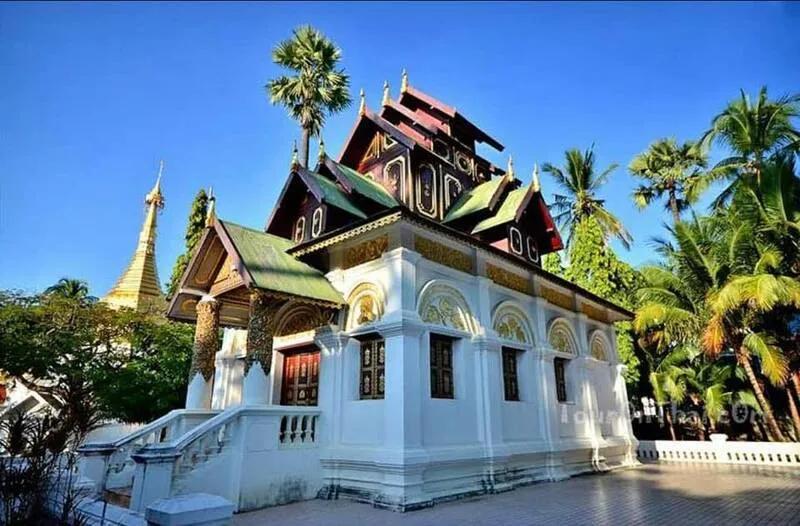
Unlike many Lanna temples in Lampang, Sasana Chotikaram Temple carries a strong Burmese architectural identity. The most striking structure is the large wooden viharn, built almost entirely of timber. Its multi-tiered roof, layered gables, carved wooden details, and decorative elements reflect the refined craftsmanship of Burmese temple architecture. The building gives visitors a rare opportunity to experience a Burmese monastic atmosphere within the cultural landscape of northern Thailand.
Inside the viharn, visitors can find several important Buddhist images, but the most remarkable is the Burmese Ruby Buddha. This rare Buddha image is known for its robe decorated with rubies, a feature that is seldom seen in ordinary Thai temples. The ruby decoration reflects a Burmese devotional tradition in which precious materials are offered to Buddhism as an expression of deep faith, merit, and reverence.
Another important structure within the temple compound is the small ordination hall, or ubosot. Although modest in size, it is rich in artistic detail. The wooden roof follows Burmese design principles, while the stucco floral patterns above the doorway add a delicate and elegant touch. These decorative details show the skill of artisans who combined Burmese aesthetics with local craftsmanship, creating a temple style that is both rare and historically meaningful.
The history of Wat Pa Fang is closely tied to Lampang’s role as a major teak trading center. During the reign of King Rama 5, many Burmese merchants, workers, and monks settled in Lampang because of the booming forestry business. These communities built temples as spiritual and social centers, and Wat Pa Fang became one of the most important Burmese Buddhist temples in the city. Its architecture, rituals, and monastic connections preserve the memory of that historical period.
The name “Wat Pa Fang” is commonly used by local people and is believed to relate to the original landscape of the area, which was once forested and associated with fang trees. The official name, “Sasana Chotikaram,” conveys the idea of a monastery that brings brightness and prosperity to Buddhism. Together, the two names reflect both the physical history of the site and the spiritual intention behind its foundation.
One of the features that makes this temple particularly unique is its continuing connection with Burmese monastic culture. The temple has long been associated with Burmese monks from Mandalay, who have served as abbots or caretakers over time. This connection has helped preserve Burmese Buddhist customs, ritual atmosphere, and architectural identity within the temple compound.
For travelers interested in cultural history, Sasana Chotikaram Temple is more than a place of worship. It is a living record of migration, faith, craftsmanship, and cross-cultural exchange. The temple shows how Lampang was once connected to wider regional networks through the teak trade, and how Burmese communities left a lasting mark on the city’s religious and architectural heritage.
The temple is also rewarding for visitors who enjoy photography. The golden pagoda, wooden viharn, small Burmese-style ubosot, and quiet temple grounds offer many beautiful angles, especially in the morning and late afternoon. The warm tone of the wooden structures contrasts beautifully with the gold of the pagoda, creating a visual character that differs from typical Lanna temples.
Despite being located within Mueang Lampang District, the temple retains a peaceful atmosphere. It is suitable for travelers who prefer calm cultural sites rather than crowded attractions. Visitors can spend time walking slowly through the temple compound, observing the craftsmanship, paying respect to the Buddha images, and learning about the Burmese influence that shaped part of Lampang’s identity.
Getting There is convenient from central Lampang. The temple is located on Sanam Bin Road in Hua Wiang Subdistrict, not far from Lampang Airport and the old town area. Travelers can reach the temple by private car, rental car, local transport, or ride-hailing service. It can easily be included in a half-day cultural route together with Wat Si Chum, Kad Kong Ta Walking Street, Wat Phra Kaeo Don Tao Suchadaram, and other historic sites in Lampang.
| Name | Sasana Chotikaram Temple (Wat Pa Fang) |
| Location | Sanam Bin Road, Hua Wiang Subdistrict, Mueang Lampang District, Lampang Province |
| Address | Sanam Bin Road, Hua Wiang Subdistrict, Mueang Lampang District, Lampang Province 52000, Thailand |
| Coordinates | Approximately 18.2819, 99.4937 |
| Highlights | Golden Burmese-style pagoda, large wooden viharn, and rare Burmese Ruby Buddha |
| History | Built during the reign of King Rama 5 by Burmese people involved in the teak logging trade in Lampang |
| Name Origin | The local name Wat Pa Fang is associated with the former forested character of the area, while Sasana Chotikaram refers to the radiance and prosperity of Buddhism |
| Distinctive Features | Burmese-style architecture, wooden viharn, golden pagoda, stucco floral motifs, and Burmese monastic influence |
| Travel Information | Accessible from central Lampang by private car, rental car, local transport, or ride-hailing service |
| Current Status | Open for visitors and Buddhist activities |
| Open Days | Daily |
| Opening Hours | 06.00 – 18.00 |
| Fees | No admission fee |
| Facilities | Parking area, restrooms, and merit-making areas |
| Main Areas / Zones | Golden pagoda, Burmese wooden viharn, ubosot, and the area housing the Burmese Ruby Buddha |
| Abbot / Caretaker | The temple has traditionally been cared for by Burmese monks from Mandalay |
| Nearby Tourist Attractions | 1. Wat Si Chum, about 1 km 2. Kad Kong Ta Walking Street, about 3 km 3. Wat Phra Kaeo Don Tao Suchadaram, about 4 km 4. Dhanabadee Ceramic Museum, about 5 km 5. Ratsadaphisek Bridge, about 3 km |
| Nearby Restaurants | 1. Aroi Baht Diao Restaurant, about 2 km, Tel. 054-223898 2. Khao Soi O Ma, about 3 km, Tel. 054-218728 3. Wiang Lakor Restaurant, about 3 km, Tel. 054-222277 4. The Riverside Restaurant Lampang, about 4 km, Tel. 054-227521 5. Long Jim New York Pizza, about 3 km, Tel. 095-8515424 |
| Nearby Accommodations | 1. Wienglakor Hotel Lampang, about 2 km, Tel. 054-225666 2. The Coconut Hotel Lampang, about 2 km, Tel. 054-821999 3. Hop Inn Lampang City Center, about 3 km, Tel. 02-6592899 4. Tree Tara Hotel Lampang, about 3 km, Tel. 054-010555 5. B2 Lampang Boutique & Budget Hotel, about 4 km, Tel. 052-009161 |
Frequently Asked Questions (FAQ)
Q: Where is Sasana Chotikaram Temple located?
A: The temple is located on Sanam Bin Road, Hua Wiang Subdistrict, Mueang Lampang District, Lampang Province.
Q: What is Sasana Chotikaram Temple famous for?
A: It is famous for its Burmese-style golden pagoda, large wooden viharn, and the rare Burmese Ruby Buddha.
Q: When was Wat Pa Fang built?
A: The temple was built during the reign of King Rama 5 by Burmese people who came to Lampang for the teak logging trade.
Q: Does the temple enshrine sacred relics of the Buddha?
A: Yes. The large golden pagoda enshrines sacred relics of the Buddha brought from Burma around 1906.
Q: Can visitors enter the temple every day?
A: Yes. Visitors can enter the temple daily from 06.00 to 18.00.
Q: What is the Burmese Ruby Buddha?
A: It is a rare Burmese-style Buddha image whose robe is decorated with rubies, making it one of the most distinctive sacred objects inside the temple.
Q: What kind of travelers should visit Wat Pa Fang?
A: It is ideal for travelers interested in historic temples, Burmese architecture, Lampang’s teak trade history, and cultural heritage.
 Category: ●Places of Worship
 Group: ●Temple
Last Update : 4 MonthAgo
 Last Update : 4 MonthAgo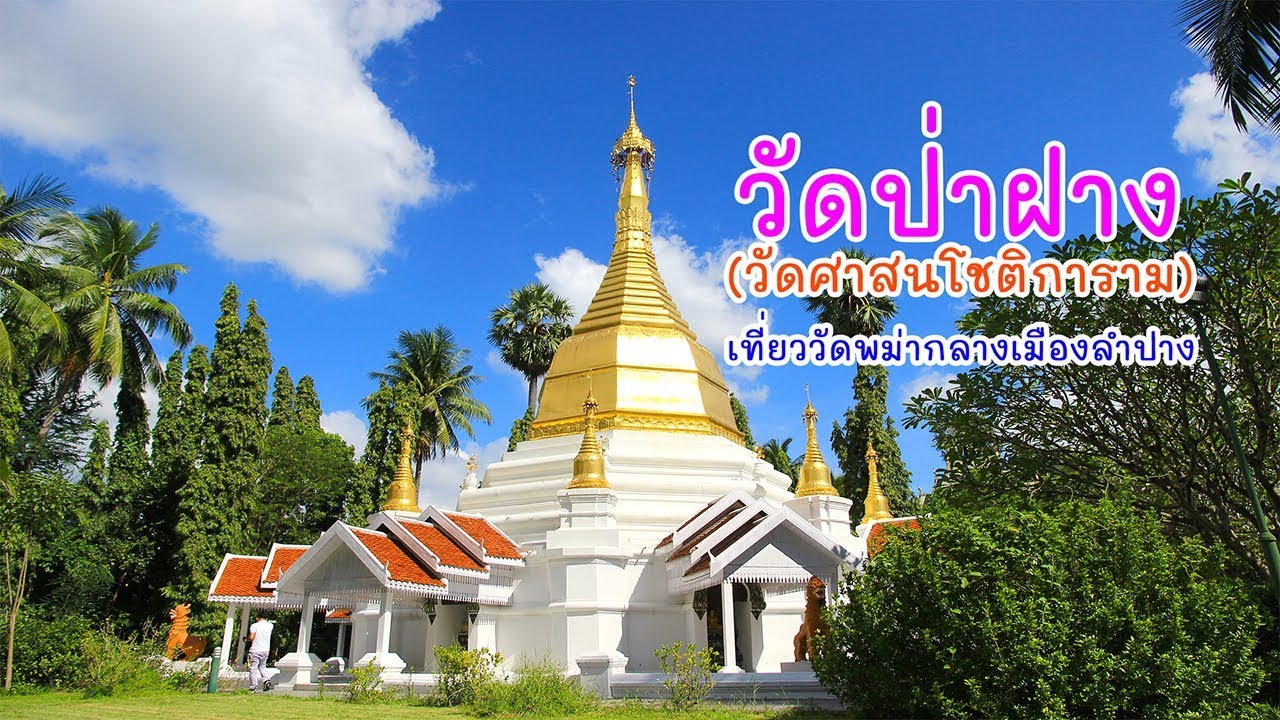
 Click to Access the Navigation Map GPS
Wat Pa Fang Map
Recommend

 Art, Culture and Heritage
 Historical Sites and Monuments(2)
 Landmarks and Memorials(5)
 Art, Craft Centres, Tradition(10)
 Museums(4)
 Historic Homes and Cities(1)
Temple(86)
Historic Homes and Cities(1)
Temple(86)
 Other Sacred Sites(9)
 Research and Development
 Royal Project(2)
 Suburban Living
 Village, Community(3)
 Local Market(2)
 Nature and Wildlife
 National Parks and Marine Reserves(5)
 Mountain (Doi)(4)
 Dam, Reservoir, Lake(11)
 Waterfalls(15)
 Hot Springs(1)
 Caves(12)
 Flower Field(1)
 River, Canal(1)
 Bays and Beaches(1)
 Other natural attractions(4)
 Entertainment and Agricultural
 Animal camps and shows(1)
 Farms, Parks and Ecotourism(2)
 Outdoor and Adventure Activities(2)
 Shopping
 Shopping and Night Market(2)
 Spas and Wellness
 Spas and Wellness(1)


