
lovethailand home >North Travel Attractions >Lampang Travel Attractions >Mueang Lampang >Wiang Nuea > Wat Pratu Pong
TL;DR: Wat Pratu Pong is located at Pa Mai Road, Wiang Nuea Subdistrict, Mueang Lampang District, Lampang Province, open Daily, hours Approximately 06.00 AM – 06.00 PM.

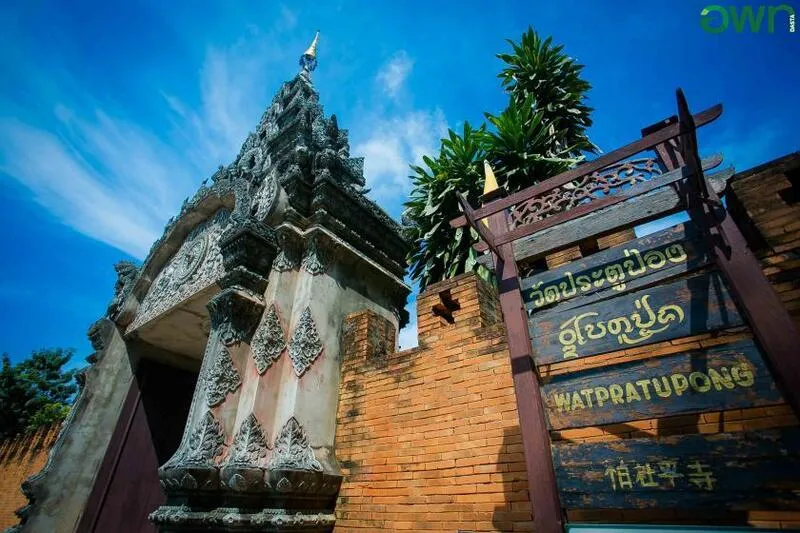
Wat Pratu Pong
Open Days: Daily
Opening Hours: Approximately 06.00 AM – 06.00 PM
Wat Pratu Pong in Lampang Province is an ancient temple of major historical importance closely connected to the history of Lampang City, the defense of the old Lanna Kingdom, and the wars between Lanna and Burma. Located on Pa Mai Road in Wiang Nuea Subdistrict, Mueang Lampang District, the temple is not only a religious center but also a historical site preserving traces of Lampang’s ancient city wall and military fortifications.
The name “Pratu Pong” comes from the ancient city gate once located in this area. In the northern Lanna dialect, the word “Pong” refers to something swollen or expanded, and historians believe the name may have originated from the appearance of the old city wall or the terrain surrounding the gate.
Wat Pratu Pong reflects the prosperity and strategic importance of Lampang during the Lanna period. Lampang once served as a major frontier city and military stronghold that frequently faced invasions and warfare involving Lanna rulers, Siamese kingdoms, and Burmese armies.
The temple’s most historically significant feature is the remains of the ancient city gate and old defensive structures associated with the reign of Phraya Kawila, the ruler of Lampang during the late eighteenth century.
In 1787, Lampang was heavily attacked by Burmese forces attempting to reclaim control over the Lanna region. The northern side of the city near Pratu Pong became one of the main military zones because Burmese troops established camps in this area while surrounding the city.
Phraya Kawila and the people of Lampang fought courageously to defend the city against the Burmese invasion. The successful defense of Lampang became one of the most important events in northern Thai history because it contributed to the restoration of Lanna power and strengthened resistance against Burmese control.
The remaining ruins of the old military watchtower inside the temple grounds therefore represent much more than ordinary archaeological remains. They stand as symbols of bravery, sacrifice, and determination shown by the people of Lampang during a critical period of warfare.
In addition to its historical significance, Wat Pratu Pong is also architecturally remarkable. The temple’s chedi and viharn were constructed in 1866 during the reign of Chao Yanarangsri, ruler of Lampang.
The temple’s architecture demonstrates a beautiful combination of Lanna, Chinese, and Sip Song Panna artistic influences. The ordination hall especially reveals strong influences from craftsmen of Sip Song Panna, an area historically connected to Tai Lue culture in present-day southern China.
The ubosot displays layered Lanna-style roofs combined with decorative Chinese artistic motifs. Carved wooden details, stucco patterns, dragon motifs, floral ornaments, and cloud patterns all contribute to the temple’s distinctive appearance.
Architecture influenced by Sip Song Panna is relatively uncommon in Lampang Province, making Wat Pratu Pong particularly important for scholars and visitors interested in northern Thai art and architecture.
As visitors enter the temple grounds, they immediately notice the peaceful atmosphere created by large trees, historic buildings, and the quiet environment characteristic of old northern Thai temples.
The surrounding area still preserves traces connected to Lampang’s former defensive system, allowing visitors to imagine how the city may have appeared during periods of war and military conflict.
Historically, Wat Pratu Pong served not only as a religious center but also as a gathering place for local communities and a strategically important location connected to the defense of Lampang.
Photographers and history enthusiasts particularly appreciate the temple because it combines traditional Lanna architecture, ancient ruins, military history, and a calm atmosphere rarely found within modern urban areas.
International travelers interested in Lanna history and Burmese-Lanna warfare frequently visit Wat Pratu Pong to study the remains of the old city gate and learn about Lampang’s role in northern Thai history.
As an active Buddhist temple, Wat Pratu Pong continues to serve local residents through religious ceremonies, merit-making activities, and traditional community events.
The beauty of the temple extends beyond its physical structures because every part of the site contains stories connected to war, survival, faith, and the rebuilding of Lampang after periods of conflict.
For students and researchers, Wat Pratu Pong offers valuable insight into the relationship between Lampang and the wider Lanna Kingdom, especially regarding military strategy and urban defense systems during the eighteenth century.
One of the temple’s most appealing qualities is its authenticity. Unlike heavily modernized tourist attractions, Wat Pratu Pong still preserves the atmosphere of a traditional northern Thai temple and historical community area.
The temple is also conveniently located near several important attractions in Lampang, including Baan Sao Nak, Kad Kong Ta Walking Street, Wat Sri Rong Mueang, and Ratsadaphisek Bridge, making it an excellent stop on a cultural and historical travel route.
Even after centuries, Wat Pratu Pong remains one of Lampang’s most meaningful historical and religious landmarks, preserving the spirit of the city’s resistance, cultural heritage, and architectural traditions.
Getting There is convenient because Wat Pratu Pong is located on Pa Mai Road in Mueang Lampang District. Visitors can travel easily by private car, local transportation, or Lampang’s traditional horse carriage service.
Wat Pratu Pong therefore stands as one of Lampang’s most important historical temples, combining military history, Lanna architecture, Sip Song Panna artistic influence, and deep cultural significance in a single remarkable destination.
| Place Name | Wat Pratu Pong Lampang |
| Location | Pa Mai Road, Wiang Nuea Subdistrict, Mueang Lampang District, Lampang Province |
| Main Characteristic | Ancient temple featuring old city gate remains and military watchtower ruins |
| Year of Construction | 1866 |
| Founder | Chao Yanarangsri, ruler of Lampang |
| Architectural Style | Lanna architecture combined with Chinese and Sip Song Panna influences |
| Main Highlights | Ancient city gate remains, military watchtower ruins, and Sip Song Panna-style ubosot |
| Historical Importance | Connected to the defense of Lampang against Burmese invasion in 1787 |
| Important Historical Event | The area served as a Burmese military camp during the siege of Lampang in the era of Phraya Kawila |
| Managed By | Wat Pratu Pong |
| Abbot | Phra Khru Wiboon Thammabhirak |
| Open Days | Daily |
| Opening Hours | 06.00 AM – 06.00 PM |
| Entrance Fee | Free Admission |
| Travel Information | Accessible from central Lampang by car, local transportation, or traditional horse carriage |
| Contact Number | 054-227258 |
| Nearby Tourist Attractions | 1. Baan Sao Nak, About 700 meters 2. Kad Kong Ta Walking Street, About 2 km 3. Ratsadaphisek Bridge, About 2 km 4. Wat Sri Rong Mueang, About 3 km 5. Hor Pum Lakhon Museum, About 3 km |
| Nearby Restaurants | 1. Wiang Lakon Restaurant, About 2 km, Tel. 054-222111 2. Baan Phraya Suren by Madame Musur, About 2 km, Tel. 054-314899 3. Long Jim New York Pizza, About 2 km, Tel. 095-4465959 4. Krua Nuea Hom Lampang, About 3 km, Tel. 054-019899 5. Tik Jaew Hon Lampang, About 3 km, Tel. 054-223799 |
| Nearby Accommodations | 1. Wiang Thong Hotel Lampang, About 2 km, Tel. 054-218561 2. Regent Lodge Lampang, About 2 km, Tel. 054-323111 3. Hop Inn Lampang City Center, About 3 km, Tel. 052-081777 4. The Coconut Hotel, About 4 km, Tel. 054-821999 5. Lampang River Lodge, About 8 km, Tel. 054-209999 |
Frequently Asked Questions (FAQ)
Q: Why is Wat Pratu Pong historically important?
A: The temple is closely connected to the defense of Lampang against Burmese invasion during the late eighteenth century.
Q: What is Pratu Pong?
A: Pratu Pong was an ancient city gate that formed part of Lampang’s old defensive wall system.
Q: What are the temple’s main highlights?
A: The temple features ancient military watchtower ruins, remains of the city gate, and a beautiful Sip Song Panna-style ordination hall.
Q: When were the chedi and viharn constructed?
A: They were built in 1866 during the reign of Chao Yanarangsri.
Q: What architectural style can be seen at the temple?
A: The temple combines Lanna, Chinese, and Sip Song Panna artistic influences.
Q: How is Wat Pratu Pong connected to Phraya Kawila?
A: The surrounding area served as an important military zone during battles against Burmese forces in Phraya Kawila’s era.
Q: Who would enjoy visiting Wat Pratu Pong?
A: The temple is ideal for visitors interested in Lanna history, ancient architecture, and cultural tourism.
Q: How can visitors travel to Wat Pratu Pong?
A: Visitors can travel easily from central Lampang by private car, local transportation, or Lampang’s traditional horse carriage.
 Category: ●Places of Worship
 Group: ●Temple
Last Update : 3 MonthAgo
 Last Update : 3 MonthAgo
 Click to Access the Navigation Map GPS
Wat Pratu Pong Map
Recommend

 Art, Culture and Heritage
 Historical Sites and Monuments(2)
 Landmarks and Memorials(5)
 Art, Craft Centres, Tradition(10)
 Museums(4)
 Historic Homes and Cities(1)
Temple(86)
Historic Homes and Cities(1)
Temple(86)
 Other Sacred Sites(9)
 Research and Development
 Royal Project(2)
 Suburban Living
 Village, Community(3)
 Local Market(2)
 Nature and Wildlife
 National Parks and Marine Reserves(5)
 Mountain (Doi)(4)
 Dam, Reservoir, Lake(11)
 Waterfalls(15)
 Hot Springs(1)
 Caves(12)
 Flower Field(1)
 River, Canal(1)
 Bays and Beaches(1)
 Other natural attractions(4)
 Entertainment and Agricultural
 Animal camps and shows(1)
 Farms, Parks and Ecotourism(2)
 Outdoor and Adventure Activities(2)
 Shopping
 Shopping and Night Market(2)
 Spas and Wellness
 Spas and Wellness(1)


