
lovethailand home >North Travel Attractions >Lampang Travel Attractions >Mueang Lampang >Wiang Nuea > Tha Ma-O Community
TL;DR: Tha Ma-O Community is located at Northern side of the Wang River near Khelang Bridge, Rat Phatthana Road, Wiang Nuea Subdistrict, Mueang Lampang District, Lampang Province, open Daily.

Tha Ma-O Community
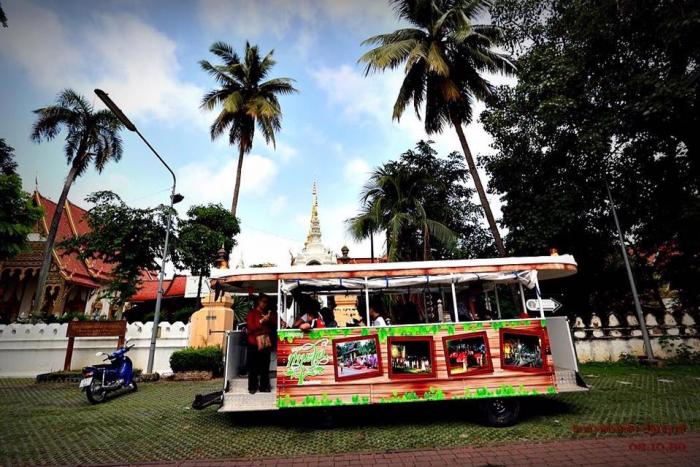
Open Days: Daily
Recommended Visiting Hours: 08.00 – 17.00
Tha Ma-O Community is an old riverside community in Lampang, located on the northern side of the Wang River near Khelang Bridge and Rat Phatthana Road in Wiang Nuea Subdistrict, Mueang Lampang District. It is one of the most meaningful historic neighborhoods in Lampang because it preserves the memory of the city’s teak-trading era, when Burmese merchants, British timber companies, local elites, workers, and river-based communities shaped the economic and cultural life of the city. Walking through Tha Ma-O is not simply a walk through old houses. It is a journey into the period when Lampang was an important northern center of teak, river transport, cross-cultural trade, and architectural exchange.
The charm of Tha Ma-O lies in the fact that it is still a real residential community. Old teak houses, temples, historic lanes, river scenery, and local life remain part of the neighborhood. The community was shaped during the time when teak logging and timber trading brought people from many backgrounds into Lampang. Burmese merchants and British companies played major roles in the timber business, while the Wang River and surrounding roads supported movement, trade, and settlement. As a result, the architecture of Tha Ma-O reflects a layered history of Lanna, Burmese, and Western influence.
One of the most important landmarks in the community is Baan Sao Nak, located on Rat Watthana Road. This historic teakwood house is one of Lampang’s best-known heritage buildings. The name means “house with many pillars” in the local northern language because the house has 116 teak pillars. It was built by Maung Chan Ong Chantharawirot, a Burmese settler connected with Lampang’s teak-trade era. The house is not only an architectural landmark but also a social document of migration, timber wealth, and cross-cultural settlement in Lampang.
Baan Sao Nak combines Burmese and Lanna architectural elements. Its main structure is an elevated teak house with a spacious underfloor area, while its balconies, decorative details, and some spatial features show Burmese influence. The house contains linked sleeping structures, wide verandas, antique furniture, household objects, old photographs, silverware, and collected items that reflect the life of an affluent family during Lampang’s timber boom. Visiting Baan Sao Nak helps travelers understand the wider meaning of Tha Ma-O as a historic neighborhood, not just a collection of old buildings.
Beyond Baan Sao Nak, Tha Ma-O contains other old houses and buildings that preserve traces of the teak era. Some are wooden residences with detailed windows, verandas, eaves, and old structural elements. Others show influence from Western architecture introduced through the timber industry and foreign contact. Many of these houses remain private residences, so visitors should explore the area with respect. The best way to experience the neighborhood is to walk slowly, observe from public paths, and avoid disturbing residents or entering private spaces without permission.
The Wang River is central to the history of Tha Ma-O. In the past, the river was not only a scenic feature but also an economic and transport route. Timber trading depended on networks linking forests, rivers, workers, merchants, and markets. The location of Tha Ma-O near the river made it an important residential and commercial zone during the city’s teak period. Seeing the community today helps visitors understand how water shaped settlement patterns and urban development in old Lampang.
Khelang Bridge provides an important connection between the old town and Tha Ma-O. Crossing toward the community, visitors can feel a slower atmosphere compared with newer commercial districts. The area is suitable for walking because old houses, temples, riverside views, and community lanes are close together. Visitors who want to understand Lampang deeply should spend more time here rather than treating it as a quick photo stop.
Tha Ma-O is also connected with several important temples, including Wat Tha Ma-O, Wat Pratu Pong, and Wat Phra Kaeo Don Tao Suchadaram nearby. These temples help connect the architectural and commercial history of the community with the religious life of old Lampang. A walking route that combines old houses and temples gives visitors a fuller picture of the district: domestic life, faith, trade, and local memory all appear in one compact area.
In contemporary cultural terms, Tha Ma-O is not only a heritage neighborhood. It also maintains local knowledge and community activities such as making Tung Phaya Yo ceremonial flags, making Phang Prathip oil lamps, making Suai Kap offerings, and preserving traditional music. These activities show that cultural heritage does not exist only in buildings. It also lives in hands, skills, songs, rituals, and the memory of local people.
Learning about local crafts in Tha Ma-O helps visitors understand the relationship between Buddhism and Lanna community life. Ceremonial flags, lamps, and handmade offerings are used in temple events and merit-making traditions. They may look simple, but they carry religious meaning, aesthetic value, and community identity. This makes Tha Ma-O especially suitable for travelers who prefer slow cultural learning rather than conventional sightseeing.
A half-day route can begin at Khelang Bridge, continue along Rat Phatthana and Rat Watthana roads, visit Baan Sao Nak, see Wat Tha Ma-O and Wat Pratu Pong, and continue to Wat Phra Kaeo Don Tao Suchadaram or Kad Kong Ta in the evening. A full-day route can add Lampang Museum, Louis House, Dhanabadee Ceramic Museum, local restaurants, and riverside areas. This route allows travelers to understand Lampang through houses, temples, ceramics, food, and the Wang River.
The best time to explore Tha Ma-O is in the morning or late afternoon. The weather is more comfortable, wooden houses look beautiful in natural light, and the lanes are pleasant for walking. Morning is suitable for quiet temple visits and architectural observation. Late afternoon works well for connecting the route with Kad Kong Ta and the old riverside district. If planning to visit Baan Sao Nak, travelers should check current opening conditions before arrival because private heritage houses may adjust visiting hours or access rules.
Tha Ma-O is suitable for several types of travelers. History lovers can learn about Lampang’s teak trade. Architecture enthusiasts can observe teak houses, Burmese-Lanna details, and old residential structures. Cultural travelers can learn about local crafts and rituals. International visitors can understand Lampang as a city shaped by river trade, foreign contact, Buddhist communities, and local identity, not only by horse carriages and temples.
Visitors should remember that Tha Ma-O is a living community. It is not a closed heritage park. People still live, work, pray, and use the area in everyday life. Visitors should walk politely, avoid loud noise, ask permission before photographing people or private houses, and never enter private compounds without consent. Responsible travel helps preserve the dignity and comfort of the community.
Getting There is easy because Tha Ma-O is located in central Lampang. Travelers can set their destination to Khelang Bridge, Wat Tha Ma-O, or Baan Sao Nak. Private cars, local songthaews, taxis, horse carriages, and walking are all possible depending on the starting point. If staying near Kad Kong Ta, Boonyawat Road, or the old town, some parts of the route can be done on foot. Walking is the best way to notice details, because many houses, temples, and small lanes are close together.
Travelers arriving by train or plane can continue into Lampang city and take a local vehicle to Tha Ma-O. Lampang Airport and Lampang Railway Station are not far from the old town. Tha Ma-O can be combined with Kad Kong Ta, Lampang Museum, Wat Phra Kaeo Don Tao Suchadaram, and Dhanabadee Ceramic Museum in one day. Those who prefer a slower trip should stay overnight in Lampang city to enjoy morning and evening atmospheres along the Wang River.
Food options near Tha Ma-O include local restaurants, Thai food shops, coffee shops, and riverside dining. Nearby places include Pohmoo Tha Ma-O, Laab Ui Taeng Tha Ma-O, Jaew Hon S. Song, Baan Kham On Restaurant, Ruen Phae Lampang Restaurant, and The Riverside Restaurant Lampang. Accommodation options include Tha Ma-O Bouteak Homestay, Baan Kham On, Villa Ratsada Nakorn Lampang, Ban Mae Boonthong Hotel, Auangkham Resort Lampang, and The Space Hotel Lampang. These options make the area convenient for both short visits and overnight cultural trips.
Culturally, Tha Ma-O is important because it explains Lampang through three connected layers: the teak-trade economy, cross-cultural settlement, and living riverside community life. Baan Sao Nak represents the timber-merchant era. Temples represent religious continuity. Community crafts and activities show that heritage is still being practiced today. Together, these elements make Tha Ma-O one of Lampang’s most valuable cultural neighborhoods.
Overall, Tha Ma-O Community is worth visiting for anyone who wants to understand Lampang beyond the usual images of horse carriages and famous temples. The neighborhood preserves old teak houses, memories of Burmese and British timber trade, Lanna-Burmese architecture, temples, the Wang River, and local community life. A slow walk through Tha Ma-O reveals Lampang as a city of layered history, quiet beauty, and cultural depth.
| Name | Tha Ma-O Community |
| Location | Northern side of the Wang River near Khelang Bridge, Rat Phatthana Road, Wiang Nuea Subdistrict, Mueang Lampang District, Lampang Province |
| Address | Rat Phatthana Road and Rat Watthana Road area, Wiang Nuea Subdistrict, Mueang Lampang District, Lampang 52000 |
| Highlights | Historic riverside community connected with Lampang’s teak-trade era, old teak houses, Burmese-Lanna architecture, temples, and Baan Sao Nak |
| History | Developed during the period when Lampang prospered from the teak trade, with Burmese merchants and British timber interests contributing to settlement, architecture, and riverside urban growth. |
| Name Origin | The name Tha Ma-O is associated with the old riverside community and former landing area along the Wang River on the Wiang Nuea side of Lampang. |
| Distinctive Features | Old teak houses, Baan Sao Nak, Burmese-Lanna architecture, traditional craft activities such as Tung Phaya Yo, Phang Prathip, Suai Kap, and local music |
| Travel Information | Travel to Khelang Bridge, Rat Phatthana Road, Wat Tha Ma-O, or Baan Sao Nak. Visitors can arrive by private car, local songthaew, taxi, horse carriage, or walking from nearby old-town areas. |
| Current Status | A living residential community and cultural tourism area in central Lampang, suitable for respectful walking tours and heritage learning |
| Open Days | Daily |
| Recommended Visiting Hours | 08.00 – 17.00 for walking around public community areas and exterior photography |
| Fees | No admission fee for general community areas. Privately managed heritage houses or museums may have their own access conditions. |
| Facilities | Walking route, nearby restaurants and cafes, old-town accommodations, local transport, horse carriage access, and parking where permitted |
| Main Areas / Zones | Khelang Bridge, Rat Phatthana Road, Rat Watthana Road, Baan Sao Nak, Wat Tha Ma-O, Wat Pratu Pong, old houses, and Wang River area |
| Caretaker | Tha Ma-O community, local authorities in Lampang City Municipality area, and individual owners or caretakers of each heritage site |
| Main Contact Number | Baan Sao Nak, Tel. 054-227-653 / Tha Ma-O Bouteak Homestay, Tel. 065-916-1479 |
| Visitor Guidelines | Walk politely, avoid disturbing private homes, ask permission before photographing people or private areas, do not block local roads, and follow the guidance of site caretakers. |
| Nearby Tourist Attractions | 1. Baan Sao Nak, about 0.3 km 2. Wat Tha Ma-O, about 0.3 km 3. Wat Pratu Pong, about 0.5 km 4. Wat Phra Kaeo Don Tao Suchadaram, about 1.3 km 5. Kad Kong Ta, about 1.5 km 6. Louis T. Leonowens House, about 1.6 km 7. Lampang Museum, about 2 km |
| Nearby Restaurants | 1. Pohmoo Tha Ma-O, about 0.3 km, Tel. 062-239-5615 2. Laab Ui Taeng Tha Ma-O, about 0.4 km, Tel. 093-140-1587 3. Jaew Hon S. Song, about 0.1 km 4. Baan Kham On Restaurant, about 0.2 km 5. Ruen Phae Lampang Restaurant, about 2 km, Tel. 054-226-979, 081-473-2088 6. The Riverside Restaurant Lampang, about 2 km, Tel. 054-221-861 |
| Nearby Accommodations | 1. Tha Ma-O Bouteak Homestay, about 0.1 km, Tel. 065-916-1479 2. Baan Kham On, about 0.1 km 3. Villa Ratsada Nakorn Lampang, about 1.1 km 4. Ban Mae Boonthong Hotel, about 1.2 km 5. Auangkham Resort Lampang, about 1.5 km 6. The Space Hotel Lampang, about 2.7 km |
Frequently Asked Questions (FAQ)
Q: Where is Tha Ma-O Community located?
A: Tha Ma-O Community is located on the northern side of the Wang River near Khelang Bridge and Rat Phatthana Road in Wiang Nuea Subdistrict, Mueang Lampang District, Lampang Province.
Q: Why is Tha Ma-O Community important?
A: It is an old Lampang community connected with the teak-trade era, Burmese and British timber activity, old teak houses, temples, and the heritage of riverside urban life.
Q: How is Baan Sao Nak connected with Tha Ma-O?
A: Baan Sao Nak is an important historic teakwood house in the Tha Ma-O area. It has 116 teak pillars and was built by Maung Chan Ong during Lampang’s teak-trade period.
Q: What kind of travel is Tha Ma-O best for?
A: It is best for cultural walking tours, heritage architecture, teak-trade history, temple visits, local craft learning, and slow exploration of old Lampang.
Q: Is there an admission fee for Tha Ma-O Community?
A: General community areas have no admission fee. Privately managed heritage houses or museums may have their own visiting conditions.
Q: How can travelers get to Tha Ma-O Community?
A: Travelers can go by private car, local songthaew, taxi, horse carriage, or walking from nearby old-town areas. Good landmarks include Khelang Bridge, Wat Tha Ma-O, and Baan Sao Nak.
Q: What should visitors be careful about?
A: Visitors should remember that Tha Ma-O is a living community. They should avoid disturbing private homes, blocking roads, making loud noise, or photographing people and private areas without permission.
Q: What nearby attractions can be visited after Tha Ma-O?
A: Nearby places include Baan Sao Nak, Wat Tha Ma-O, Wat Pratu Pong, Wat Phra Kaeo Don Tao Suchadaram, Kad Kong Ta, Louis House, and Lampang Museum.
 Category: ●Suburban Living
 Group: ●Village, Community
Last Update : 6 MonthAgo
 Last Update : 6 MonthAgo
 Click to Access the Navigation Map GPS
 Art, Culture and Heritage
 Historical Sites and Monuments(2)
 Landmarks and Memorials(5)
 Art, Craft Centres, Tradition(10)
 Museums(4)
 Historic Homes and Cities(1)
 University
 Public university(1)
 Rajamangala University of Technology(1)
 Rajabhat University(1)
 Private University(1)
 Places of Worship
 Temple(86)
 Other Sacred Sites(9)
 Research and Development
 Royal Project(2)
Village, Community(3)
Royal Project(2)
Village, Community(3)
 Local Market(2)
 Nature and Wildlife
 National Parks and Marine Reserves(6)
 Mountain (Doi)(4)
 Dam, Reservoir, Lake(11)
 Waterfalls(15)
 Hot Springs(1)
 Caves(12)
 Flower Field(1)
 River, Canal(1)
 Bays and Beaches(1)
 Other natural attractions(4)
 Entertainment and Agricultural
 Animal camps and shows(1)
 Farms, Parks and Ecotourism(2)
 Outdoor and Adventure Activities(2)
 Shopping
 Shopping and Night Market(2)
 Spas and Wellness
 Spas and Wellness(1)
 Travel Articles, Recipes
 Travel Review, Food Review(1)


