
lovethailand home >North Travel Attractions >Lampang Travel Attractions >Mae Mo >Ban Dong > Pratu Pha Special Warfare Training Camp
TL;DR: Pratu Pha Special Warfare Training Camp is located at Ban Champui, Ban Dong Subdistrict, Mae Mo District, Lampang Province, open Daily, hours 08.00 – 16.00.

Pratu Pha Special Warfare Training Camp
Open Days: Daily
Opening Hours: 08.00 – 16.00
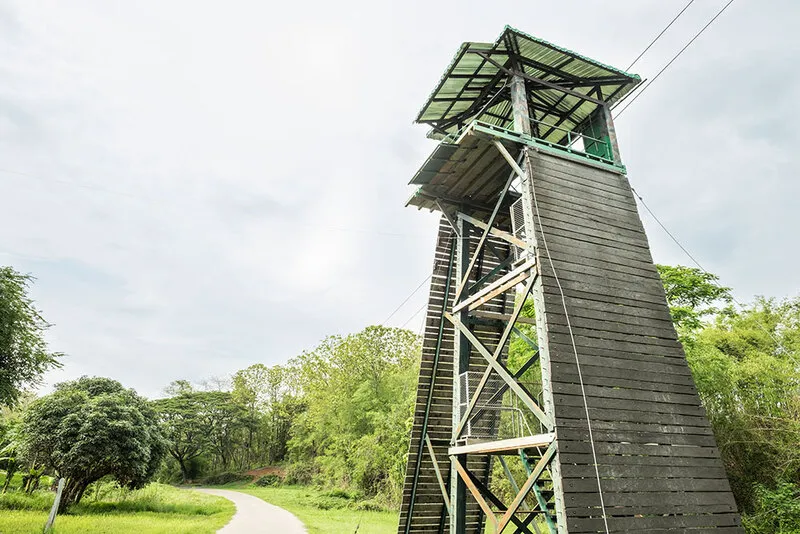
Pratu Pha Special Warfare Training Camp in Lampang Province is a distinctive conservation-based and adventure-oriented destination. It is a military area that provides guided nature activities, forest trekking, basic jungle survival learning, simulated rock climbing, camping practice, mountain-view hiking, and guided visits to the Pratu Pha archaeological rock painting site. Located around kilometer 48 on the Lampang–Ngao road in Ban Champui, Ban Dong Subdistrict, Mae Mo District, Lampang Province, this destination combines limestone cliffs, forest landscapes, military outdoor training, local belief, and prehistoric cultural heritage in one place.
The appeal of Pratu Pha Special Warfare Training Camp is its multi-layered character. Visitors do not come only for photography or scenic views. They come to learn how to move through forest areas safely, understand basic outdoor survival, test their physical and mental endurance, and explore one of northern Thailand’s important prehistoric archaeological sites. The camp is especially suitable for travelers interested in nature, adventure, history, outdoor learning, youth training, and meaningful travel experiences beyond ordinary sightseeing.
The landscape of Pratu Pha is defined by limestone cliffs and mountain terrain along the Lampang–Ngao route. The name “Pratu Pha” evokes the image of a gateway through cliffs and mountains. This natural setting gives the place a solemn, powerful, and memorable atmosphere. When combined with the presence of a special warfare training camp and ancient rock paintings, the overall feeling becomes more intense than a typical nature attraction. It is a place where geography, military training, archaeology, and local memory meet.
One of the main activities at the camp is conservation trekking within the camp area and nearby natural surroundings. Before entering the trail, visitors can learn basic trekking principles, including preparation, route awareness, physical pacing, environmental responsibility, and safety in forest terrain. This type of trekking is not simply walking for scenery. It teaches visitors to move through nature with discipline, respect the rules of the area, understand personal limits, and avoid damaging the environment.
Jungle survival learning is another important part of the Pratu Pha experience. Visitors can learn practical concepts such as campsite preparation, outdoor living, use of basic resources, safety awareness, observation of the environment, and behavior in areas without urban conveniences. These lessons are useful not only for adventure travelers but also for students, youth groups, and visitors who want to develop resilience, teamwork, and self-discipline. The military context gives this learning experience a more structured and serious tone.
Simulated rock climbing adds a more challenging element to the visit. This activity requires strength, balance, concentration, and confidence. Participants must listen carefully to the instructors, follow safety procedures, and use proper equipment. Although it is designed to be exciting, the most important part is safety under the supervision of trained officers. For many visitors, this activity offers a chance to test themselves in a controlled environment while gaining respect for military-style outdoor training.
Camping practice is also part of the camp’s learning value. Staying or training in an outdoor environment helps participants understand the rhythm of nature, including light, wind, temperature, sound, and silence. Camping in this context is not about luxury or comfort. It emphasizes discipline, responsibility, group cooperation, equipment management, and respect for the natural setting. For student groups and organized visitors, camping activities can create a stronger sense of teamwork than ordinary recreational travel.
The camp also offers routes for walking up to mountain viewpoints. These hikes reward visitors with views over Mae Mo’s landscape and surrounding hills. From higher ground, it becomes easier to understand why the Pratu Pha area has long been important geographically and historically. The cliffs, routes, and natural passages create a landscape that has shaped human movement, belief, and settlement over time. The view from the mountain is not only visually rewarding but also helps visitors understand the wider context of the area.
Another major reason to visit Pratu Pha is the archaeological rock painting site located within the camp area near the Pratu Pha Shrine. This site is one of the important prehistoric records of northern Thailand. The paintings appear on limestone cliff surfaces and include handprints, human figures, animal forms, plant-like shapes, and symbolic patterns. These red paintings are not simply old marks on stone. They are evidence of ancient creativity, belief, ritual, and human activity in this area thousands of years ago.
Archaeological evidence from Pratu Pha helps reveal the life of ancient people who used the area. Studies have found rock paintings, burial areas, human skeletons, stone tools, pottery, woven objects, animal bones, rice grains, and objects connected with burial practices. These remains suggest that the area below the cliff was not only a painting surface but also a space connected with ritual, temporary shelter, and human life. A guided visit is therefore important because it helps visitors understand the cultural meaning behind what they see.
The rock paintings at Pratu Pha are dated to approximately 2,900–3,200 years ago. This makes the site highly significant and worthy of careful conservation. Ancient rock paintings cannot be replaced if damaged. Touching the rock surface, scratching, writing, or entering restricted areas can destroy irreplaceable evidence. Visitors should follow official guidance, keep a proper distance from the paintings, avoid touching the cliff surface, avoid leaving any marks, and respect all conservation rules.
The Pratu Pha Shrine is another important element of the area. It is connected with local belief and the memory of Chao Pho Pratu Pha, a revered guardian figure associated with courage and protection. Many travelers and local residents stop to pay respect at the shrine when passing through the Lampang–Ngao route. This local belief exists alongside the archaeological site and military camp, giving Pratu Pha a special cultural identity. It is a place where faith, history, landscape, and community memory overlap.
Visitors planning a trip to Pratu Pha Special Warfare Training Camp should understand that this is both a military area and an archaeological conservation site. Trekking, training activities, group visits, and visits to certain areas should be arranged in advance. Contacting the camp before traveling is recommended so that officers can provide guidance, arrange schedules, and explain safety procedures. Arriving without preparation may limit access to some activities, especially those involving forest routes, climbing, camping, or controlled areas.
Clothing should be suitable for outdoor activity. Visitors should wear comfortable clothes, sports shoes or trekking shoes with good grip, a hat for sun protection, and carry enough drinking water. For trekking or training activities, sandals, loose clothing, and accessories that can catch on branches or equipment should be avoided. Visitors with medical conditions should inform officers before joining activities to ensure proper safety precautions.
The best time to visit is in the morning, when the weather is cooler and more suitable for trekking, outdoor training, and archaeological viewing. The late rainy season to cool season is especially pleasant for outdoor activities. However, visitors should check the weather and contact the camp before traveling because some activities depend on terrain conditions, officer availability, and safety considerations.
Getting There is easiest by private car or rental car. From Lampang city, take the Lampang–Ngao road toward kilometer 48 in Ban Champui, Ban Dong Subdistrict, Mae Mo District. The Pratu Pha Shrine is a useful landmark. The drive from Lampang city generally takes about 45–60 minutes depending on traffic and starting point. Travelers coming from Ngao or Phrae can use the same route in the opposite direction toward Lampang.
A half-day trip can include the training camp, a guided visit to the rock painting site, and a stop at Pratu Pha Shrine. For a full-day itinerary, visitors can continue to Mae Moh Mine Museum, Mae Moh Botanical Garden, the seasonal Mae Moh Mexican sunflower fields, or scenic areas around Mae Moh. This allows the trip to combine adventure, archaeology, local belief, energy education, and landscape viewing in one route.
Mae Moh Mine Museum is a good nearby destination for expanding the learning experience. While Pratu Pha presents forest, cliffs, and ancient human activity, the museum explains geology, lignite coal, mining, energy, and Mae Mo’s development. Combining both places gives travelers a broader understanding of the district, from prehistoric human life to modern energy history.
Mae Moh Botanical Garden and the seasonal Mexican sunflower fields can also be combined with Pratu Pha, especially during the cooler months. In late-year travel periods, Mae Mo attracts visitors who come to see yellow flower fields and enjoy cooler weather. A route that begins with Pratu Pha’s archaeology and adventure activities before continuing to Mae Moh’s gardens can create a balanced day of excitement and relaxation.
Restaurants near Pratu Pha and around Mae Mo include northern Thai food, noodle shops, cafés, and casual local restaurants. Je Ja Northern Food in Ban Champui is one of the closer local options. Restaurants around Mae Mo town such as Khrua Salawin Mae Mo, Kaeng Khae, Mae Moh Eatery, and Coffee Synergy Space are suitable for travelers continuing toward Mae Moh Mine Museum or EGAT areas. Because attractions in Mae Mo are spread out, visitors should plan meal stops according to their route.
Accommodation options are available in Mae Mo District and Lampang city. Travelers focusing on Mae Mo attractions may choose local accommodation such as Huen Mae Moh, Inthanin House, Bang Rak Resort Mae Moh, or other small local stays. Travelers who prefer more hotel choices, restaurants, and city convenience may stay in Lampang city and visit Pratu Pha as a day trip. The best option depends on the travel plan. Those focusing on Pratu Pha and Mae Mo should stay in Mae Mo, while those planning to explore Lampang city should stay in town.
Visitors should strictly respect the rules of the military area. Do not enter restricted zones without permission. Do not photograph prohibited areas. Follow the guidance of officers and interpreters during trekking and archaeological visits. Do not touch the rock paintings. Do not write on cliff surfaces. Do not litter. Do not remove any objects from the area. Conservation travel is meaningful only when visitors help protect both nature and cultural heritage.
Pratu Pha Special Warfare Training Camp is especially suitable as an outdoor learning destination for young people. It offers knowledge of nature, history, discipline, endurance, teamwork, and field experience. Trekking, camping, jungle survival learning, and archaeological interpretation help students learn through direct experience rather than classroom reading alone. Standing in front of rock paintings thousands of years old or walking through the forest with trained officers makes history and nature feel much more real.
For general travelers, Pratu Pha offers a different side of Lampang. Many visitors know Lampang for horse carriages, old temples, Kad Kong Ta, and historic wooden houses. Pratu Pha reveals another identity of the province: mountains, forests, military training, prehistoric art, and the legend of Chao Pho Pratu Pha. A visit here helps travelers understand that Lampang is not only a cultural old town but also a province with dramatic landscapes and adventurous learning routes.
In summary, Pratu Pha Special Warfare Training Camp is one of Lampang’s most distinctive conservation-based attractions. It combines forest trekking, outdoor skill training, camping, mountain viewpoints, and guided archaeological exploration in one area. Travelers interested in nature, history, archaeology, military-style outdoor learning, and adventure can gain a deep and memorable experience here. Before visiting, it is best to contact the camp in advance to make sure the trip is safe, properly arranged, and aligned with the regulations of both the military area and the archaeological site.
| Name | Pratu Pha Special Warfare Training Camp |
| Location | Ban Champui, Ban Dong Subdistrict, Mae Mo District, Lampang Province |
| Address | Pratu Pha Special Warfare Training Camp, Lampang–Ngao Road, Kilometer 48, Ban Champui, Ban Dong Subdistrict, Mae Mo District, Lampang 52000, Thailand |
| Coordinates | 18.513287, 99.820302 |
| Highlights | Conservation trekking, jungle survival learning, simulated rock climbing, camping practice, mountain viewpoints, and guided visits to the ancient Pratu Pha rock paintings |
| History | The Pratu Pha area contains prehistoric rock paintings and archaeological evidence dated to approximately 2,900–3,200 years ago, associated with the Neolithic period and later traces of use during the late Lanna period |
| Name Origin | The name Pratu Pha reflects the cliff and mountain gateway landscape along the Lampang–Ngao route and is connected with the revered Pratu Pha Shrine |
| Distinctive Features | A military-managed conservation tourism area combining adventure activities, forest landscapes, field training, local belief, and archaeology |
| Travel Information | From Lampang city, take the Lampang–Ngao road to kilometer 48 in Ban Champui, Ban Dong Subdistrict, Mae Mo District. The drive usually takes about 45–60 minutes from Lampang city |
| Current Status | Open as a conservation tourism and outdoor learning area under military supervision. Advance contact is recommended, especially for group visits and outdoor activities |
| Open Days | Daily |
| Opening Hours | 08.00 – 16.00 |
| Facilities | Guided visits, military instructors, archaeological interpretation, outdoor training areas, trekking routes, camping areas, and viewpoints |
| Main Areas / Zones | Training camp area, trekking routes, simulated climbing area, camping area, mountain viewpoint route, Pratu Pha Shrine, and Pratu Pha rock painting archaeological site |
| Caretaker | 3rd Special Warfare Training Company, Pratu Pha Camp, 3rd Army Region |
| Main Contact Number | 054-247712, 054-225441 |
| Official Website / Official Page | Pratu Pha Special Warfare Training Camp |
| Nearby Tourist Attractions | 1. Pratu Pha Shrine, about 0.3 km 2. Pratu Pha Rock Painting Archaeological Site, about 0.5 km 3. Kad Pratu Pha, about 1 km 4. Mae Moh Mine Museum, about 28 km 5. Mae Moh Botanical Garden, about 30 km 6. Mae Moh Mexican Sunflower Field, about 32 km 7. Huai Sai Reservoir, about 35 km |
| Nearby Restaurants | 1. Je Ja Northern Food, Ban Champui, about 5 km, Tel. 065-869-1873, 085-850-2186 2. Khrua Salawin Mae Mo, about 27 km, Tel. 083-472-2081 3. Kaeng Khae Mae Mo, about 28 km, Tel. 081-027-1812 4. Mae Moh Eatery, about 29 km, Tel. 054-254-365 5. Coffee Synergy Space, about 29 km, Tel. 081-603-8193 6. Maruey Cafe Mae Mo, about 30 km, Tel. 081-154-5516 |
| Nearby Accommodations | 1. Huen Mae Moh, about 28 km, Tel. 090-656-6056, 089-261-2856 2. Inthanin House Mae Mo, about 29 km, Tel. 054-340-229, 080-857-3471, 086-728-5320, 092-278-4199 3. Bang Rak Resort Mae Mo, about 29 km, Tel. 085-723-3735 4. U Kaew Resort Mae Mo, about 30 km, Tel. 086-069-6918 5. U Thong Garden Resort Lampang, about 45 km 6. Lampang Vintage, about 47 km |
Frequently Asked Questions (FAQ)
Q: Where is Pratu Pha Special Warfare Training Camp located?
A: It is located around kilometer 48 on the Lampang–Ngao road in Ban Champui, Ban Dong Subdistrict, Mae Mo District, Lampang Province.
Q: What activities are available at Pratu Pha Special Warfare Training Camp?
A: Activities include conservation trekking, jungle survival learning, simulated rock climbing, camping practice, mountain-view hiking, and guided visits to the ancient rock painting site.
Q: Should visitors contact the camp before visiting?
A: Yes. Advance contact is recommended, especially for trekking, training activities, archaeological visits, or group trips, because the area is under military supervision.
Q: What is the contact number for Pratu Pha Special Warfare Training Camp?
A: Visitors can contact the camp at 054-247712 or 054-225441.
Q: Why is the Pratu Pha rock painting site important?
A: It is a prehistoric rock painting site dated to approximately 2,900–3,200 years ago, with archaeological evidence related to ancient life, ritual, and use of the cliff area.
Q: What should visitors wear when visiting Pratu Pha?
A: Visitors should wear comfortable outdoor clothing, sports shoes or trekking shoes, and bring a hat and drinking water. Sandals are not recommended for outdoor activities.
Q: What nearby attractions can be visited with Pratu Pha?
A: Nearby places include Pratu Pha Shrine, the rock painting site, Kad Pratu Pha, Mae Moh Mine Museum, Mae Moh Botanical Garden, and the seasonal Mae Moh Mexican sunflower field.
Q: Who is Pratu Pha Special Warfare Training Camp suitable for?
A: It is suitable for adventure travelers, families, students, educational groups, and visitors interested in nature, trekking, archaeology, and outdoor learning.
Tel : 054247712, 054225441
 Tel : 054247712, 054225441
 Category: ●Entertainment and Agricultural
 Group: ●Outdoor and Adventure Activities
Last Update : 3 MonthAgo
 Last Update : 3 MonthAgo
 Click to Access the Navigation Map GPS
Pratu Pha Special Warfare Training Camp Map
Recommend

 Art, Culture and Heritage
 Historical Sites and Monuments(2)
 Landmarks and Memorials(5)
 Art, Craft Centres, Tradition(10)
 Museums(4)
 Historic Homes and Cities(1)
 Places of Worship
 Temple(86)
 Other Sacred Sites(9)
 Research and Development
 Royal Project(2)
 Suburban Living
 Village, Community(3)
 Local Market(2)
 Nature and Wildlife
 National Parks and Marine Reserves(5)
 Mountain (Doi)(4)
 Dam, Reservoir, Lake(11)
 Waterfalls(15)
 Hot Springs(1)
 Caves(12)
 Flower Field(1)
 River, Canal(1)
 Bays and Beaches(1)
 Other natural attractions(4)
 Animal camps and shows(1)
 Farms, Parks and Ecotourism(2)
Outdoor and Adventure Activities(2)
Farms, Parks and Ecotourism(2)
Outdoor and Adventure Activities(2)
 Shopping
 Shopping and Night Market(2)
 Spas and Wellness
 Spas and Wellness(1)


