
lovethailand home >North Travel Attractions >Lampang Travel Attractions >Mueang Lampang >Wiang Nuea > Baan Sao Nak
TL;DR: Baan Sao Nak is located at 86 Pa Mai Road, Mueang Lampang District, Lampang Province, open Daily, hours 09.00 AM – 05.00 PM.

Baan Sao Nak
Open Days: Daily
Opening Hours: 09.00 AM – 05.00 PM
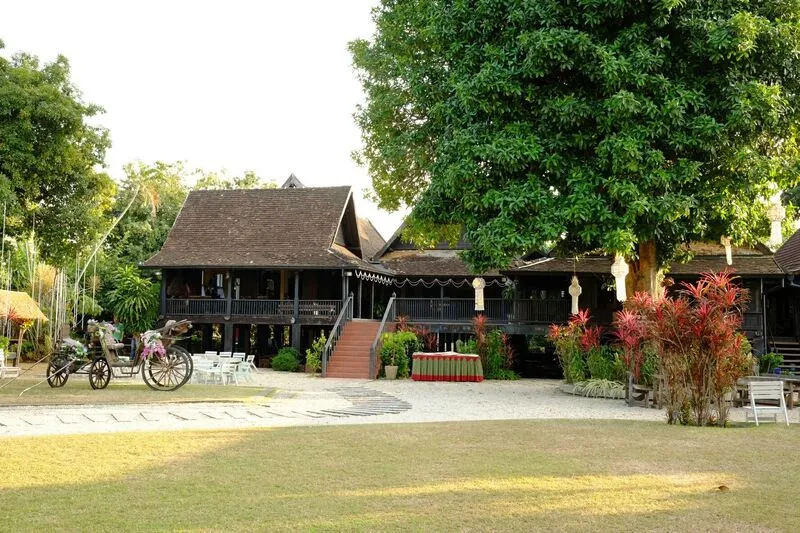
Baan Sao Nak in Lampang Province is one of the most remarkable historic teakwood houses in northern Thailand and one of Lampang’s most important architectural heritage attractions. Located at 86 Pa Mai Road in Mueang Lampang District, the house is famous for having as many as 116 teakwood pillars supporting the structure, which is the origin of the name “Baan Sao Nak.” In the local Lanna dialect, the word “Nak” means “many,” referring to the unusually large number of wooden pillars used in the construction.
Baan Sao Nak was built in 1895 by Maung Chan Ong, the ancestor of the Chan Chawirot family. He was an influential businessman during Lampang’s prosperous teak concession era, when the province became one of the most important centers of the teak trade in northern Thailand. During that period, many foreign teak companies operated in Lampang, bringing economic prosperity and cultural influences from neighboring regions, especially Burma.
As a result of these cultural interactions, Baan Sao Nak was designed in a unique Burmese-Lanna architectural style. The house beautifully combines the elegance of Burmese decorative elements with the traditional craftsmanship and spatial arrangement of northern Thai wooden houses.
The most distinctive feature of the house is the large cluster-style main building supported by 116 massive teakwood pillars. Each pillar was crafted from durable teakwood, a material highly valued for its strength and resistance to weather. Even after more than a century, the structure remains impressively beautiful and well preserved.
Beyond its architectural significance, Baan Sao Nak also reflects the lifestyle and social status of wealthy families during the teak trading era. In the past, the house was used to welcome important guests and host traditional Khantoke dinners, ceremonies, and social events attended by elite members of Lampang society.
In front of the house stands a large Sarapee tree estimated to be more than 133 years old. This ancient tree contributes greatly to the peaceful atmosphere of the property and has become another symbolic feature of Baan Sao Nak.
As visitors walk into the house, they immediately experience the nostalgic atmosphere of old Lanna architecture through the teakwood floors, staircases, carved wooden details, and spacious open-air design. Every section of the house demonstrates the exceptional woodworking skills of craftsmen from the late nineteenth century.
Inside the house, visitors can also explore collections of antiques and traditional household items representing the lifestyle of wealthy northern Thai families during the teak concession period. Furniture, utensils, decorative objects, and everyday items provide insight into life in old Lampang.
Architecture enthusiasts often spend a long time exploring the details of the house because every corner contains unique features, including carved wooden windows, wide verandas, elevated floors, and traditional ventilation systems designed for the tropical climate.
Another important characteristic of Baan Sao Nak is its cluster-house layout, a traditional feature of Lanna residential design. Multiple connected sections create functional living spaces suitable for large extended families, reflecting the social structure of northern Thai society in the past.
During its golden years, Baan Sao Nak functioned as an important social center for Lampang’s upper-class community. Traditional Khantoke dinners and ceremonial events held inside the house represented the hospitality, elegance, and cultural refinement of Lanna society.
The house also serves as an important historical reminder of Lampang’s teak concession era, a period of extraordinary economic growth linked to forestry and international trade. Its Burmese-Lanna architectural style clearly illustrates the cultural exchange that occurred during that time.
Today, Baan Sao Nak has been carefully preserved and opened to the public as both a tourist attraction and a cultural learning center. Visitors can study traditional northern architecture while also gaining insight into Lampang’s history and social development.
Both Thai and international tourists frequently visit Baan Sao Nak because it offers a rare opportunity to experience the atmosphere of an authentic northern Thai aristocratic residence from the teak trading period.
Photography enthusiasts especially enjoy the house because natural light passing through the wooden structure creates beautiful textures and shadows. The rows of teakwood pillars provide unique visual perspectives rarely seen elsewhere in Thailand.
In addition to its architectural beauty, the house also helps visitors understand traditional lifestyles in old Lanna society, including family structure, hospitality customs, interior organization, and the relationship between architecture and climate.
One reason Baan Sao Nak feels particularly special is because the house still retains the atmosphere of a real residence rather than functioning purely as a modern museum. Visitors often feel as though they have stepped back into another era.
Baan Sao Nak is also occasionally used for cultural activities, photography sessions, traditional events, and weddings, allowing the historic property to remain connected to community life even today.
For those interested in woodworking and traditional construction, the house serves as an outstanding example of historical teakwood craftsmanship, including structural design, wood joining techniques, and the use of natural materials suited to northern Thailand’s environment.
The architecture also reflects traditional Lanna concepts of harmony with nature, such as elevated floors for ventilation, wide verandas for relaxation, and durable teakwood construction adapted to the local climate.
Because of its convenient location near central Lampang, visitors can easily combine their visit with nearby attractions such as Kad Kong Ta Walking Street, Wat Sri Rong Mueang, Dhanabadee Ceramic Museum, and Ratsadaphisek Bridge.
Even after more than a century, Baan Sao Nak continues to be carefully maintained and remains one of Lampang’s most recognizable historical landmarks, representing both the prosperity of the teak concession era and the beauty of Lanna architecture.
Getting There is convenient because Baan Sao Nak is located at 86 Pa Mai Road in central Lampang. Visitors can travel easily by private car, local transportation, or Lampang’s traditional horse carriage service.
Baan Sao Nak therefore stands as one of northern Thailand’s most valuable architectural and cultural heritage sites, offering visitors an authentic experience of historic teakwood architecture and the fascinating history of Lampang during the teak trading era.
| Place Name | Baan Sao Nak Lampang |
| Location | 86 Pa Mai Road, Mueang Lampang District, Lampang Province |
| Main Characteristic | Historic teakwood house supported by 116 teak pillars |
| Year Built | 1895 |
| Founder | Maung Chan Ong, ancestor of the Chan Chawirot family |
| Architectural Style | Burmese-Lanna Architecture |
| Number of Teak Pillars | 116 Pillars |
| Main Highlights | 133-year-old Sarapee tree and antique collections inside the house |
| Historical Importance | Represents the prosperity of Lampang during the teak concession era |
| Managed By | Chan Chawirot Family |
| Open Days | Daily |
| Opening Hours | 09.00 AM – 05.00 PM |
| Entrance Fee | 30 THB Including Beverage |
| Travel Information | Accessible by car, local transportation, or traditional Lampang horse carriage |
| Contact Number | 054-227653 |
| Nearby Tourist Attractions | 1. Kad Kong Ta Walking Street, About 2 km 2. Ratsadaphisek Bridge, About 2 km 3. Wat Sri Rong Mueang, About 1 km 4. Dhanabadee Ceramic Museum, About 3 km 5. Hor Pum Lakhon Museum, About 3 km |
| Nearby Restaurants | 1. Wiang Lakon Restaurant, About 2 km, Tel. 054-222111 2. Baan Phraya Suren by Madame Musur, About 2 km, Tel. 054-314899 3. Long Jim New York Pizza, About 2 km, Tel. 095-4465959 4. Krua Nuea Hom Lampang, About 3 km, Tel. 054-019899 5. Tik Jaew Hon Lampang, About 3 km, Tel. 054-223799 |
| Nearby Accommodations | 1. Wiang Thong Hotel Lampang, About 2 km, Tel. 054-218561 2. Regent Lodge Lampang, About 2 km, Tel. 054-323111 3. Hop Inn Lampang City Center, About 3 km, Tel. 052-081777 4. The Coconut Hotel, About 4 km, Tel. 054-821999 5. Lampang River Lodge, About 8 km, Tel. 054-209999 |
Frequently Asked Questions (FAQ)
Q: What is Baan Sao Nak?
A: It is a historic teakwood house in Lampang supported by 116 teak pillars and recognized as an important example of Lanna architecture.
Q: Why is it called “Baan Sao Nak”?
A: In the Lanna dialect, the word “Nak” means “many,” referring to the house’s 116 teakwood pillars.
Q: When was Baan Sao Nak built?
A: The house was built in 1895 by Maung Chan Ong, ancestor of the Chan Chawirot family.
Q: What can visitors see inside the house?
A: Visitors can explore antique collections, traditional furniture, and household objects reflecting aristocratic Lanna lifestyle during the teak trading era.
Q: What makes Baan Sao Nak special?
A: Its Burmese-Lanna architecture, 116 teak pillars, and the ancient 133-year-old Sarapee tree make it unique.
Q: Who would enjoy visiting Baan Sao Nak?
A: It is ideal for visitors interested in history, traditional architecture, cultural tourism, and photography.
Q: What are the opening hours?
A: Baan Sao Nak is open daily from 09.00 AM to 05.00 PM.
Q: How can visitors travel to Baan Sao Nak?
A: Visitors can travel easily from central Lampang by car, local transportation, or traditional Lampang horse carriage.
Tel : 054227653
 Tel : 054227653
Mobile : 0869107408
 Mobile : 0869107408
 Category: ●Art, Culture and Heritage
 Group: ●Historic Homes and Cities
Last Update : 6 MonthAgo
 Last Update : 6 MonthAgo
 Click to Access the Navigation Map GPS
Baan Sao Nak Map
Recommend

 Historical Sites and Monuments(2)
 Landmarks and Memorials(5)
 Art, Craft Centres, Tradition(10)
 Museums(4)
Historic Homes and Cities(1)
Museums(4)
Historic Homes and Cities(1)
 Places of Worship
 Temple(86)
 Other Sacred Sites(9)
 Research and Development
 Royal Project(2)
 Suburban Living
 Village, Community(3)
 Local Market(2)
 Nature and Wildlife
 National Parks and Marine Reserves(6)
 Mountain (Doi)(4)
 Dam, Reservoir, Lake(11)
 Waterfalls(15)
 Hot Springs(1)
 Caves(12)
 Flower Field(1)
 River, Canal(1)
 Bays and Beaches(1)
 Other natural attractions(4)
 Entertainment and Agricultural
 Animal camps and shows(1)
 Farms, Parks and Ecotourism(2)
 Outdoor and Adventure Activities(2)
 Shopping
 Shopping and Night Market(2)
 Spas and Wellness
 Spas and Wellness(1)
 Travel Articles, Recipes
 Travel Review, Food Review(1)


