
lovethailand home >North Travel Attractions >Lampang Travel Attractions >Mueang Lampang >Sop Tui > Thai Bank Museum
TL;DR: Thai Bank Museum is located at Siam Commercial Bank Lampang Branch, Chat Chai Road, Mueang Lampang District, Lampang Province, open Advance Group Reservation Required, hours According to Bank Operating Hours and Appointment Schedule.

Thai Bank Museum
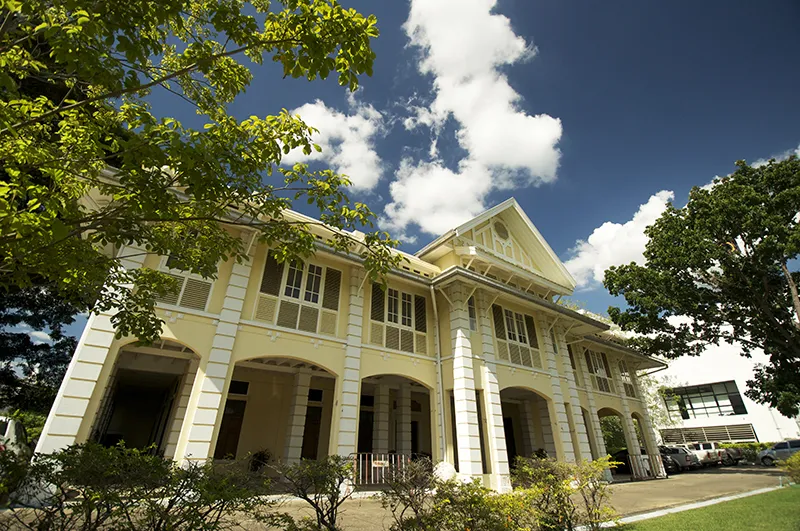
Open Days: Advance Group Reservation Required
Opening Hours: According to Bank Operating Hours and Appointment Schedule
The Thai Bank Museum in Lampang Province is one of northern Thailand’s most important historical learning centers related to finance and banking history. Located inside the historic Siam Commercial Bank building on Chat Chai Road in Mueang Lampang District, the museum serves not only as a place displaying the development of Thai banking but also as a valuable architectural and cultural landmark reflecting the economic growth of Lampang in the past.
Originally, this building served as the Lampang branch of the “Book Club” style banking institution known as the Siam Commercial Bank Company Limited during the early years of modern Thai banking. The establishment of a branch in Lampang reflected the province’s importance as a major economic center in northern Thailand, especially during the teak trading era when foreign companies and Thai merchants conducted extensive business throughout the region.
During the late reign of King Rama V and the early reign of King Rama VI, Thailand began modernizing its economic and financial systems. Expanding domestic and international trade created increasing demand for organized financial institutions. Siam Commercial Bank therefore became one of the country’s most influential banking organizations and played a significant role in Thailand’s economic development.
Lampang itself was one of the wealthiest northern cities during that period because of the booming teak industry and transportation links connecting northern Thailand with Bangkok. The presence of an important bank branch in the city symbolized Lampang’s prosperity and commercial significance.
The museum building was designed using a Western architectural style blended with elements suitable for Thailand’s tropical climate. Its windows, ventilation openings, balconies, and interior layout clearly reflect European colonial influences that became popular in Siam during the early twentieth century.
Because of its outstanding historical and architectural value, the Association of Siamese Architects under Royal Patronage selected the building as an Outstanding Conservation Building in 1997. This recognition confirmed the structure’s importance as part of Thailand’s architectural heritage.
Siam Commercial Bank later renovated the building and transformed it into the Thai Bank Museum in order to preserve the history of Thai banking and create a learning center for the public, students, researchers, and visitors interested in finance and history.
The ground floor of the museum displays many original banking tools and historical items used during the early banking era, including savings account books, bank counters, accounting machines, safes, typewriters, and financial documents. These exhibits help visitors understand how banking operations functioned before the arrival of computers and digital systems.
Visitors can observe how financial transactions were once handled manually, from handwritten accounting records to mechanical printing devices and large steel safes used to protect important financial documents. Every object reflects an era when banking depended heavily on careful human work and precision.
One of the museum’s most historically significant sections is located upstairs, where the former residence of M.R. Kukrit Pramoj is preserved. Before becoming one of Thailand’s most influential intellectuals, writers, and prime ministers, M.R. Kukrit Pramoj once served as the branch manager of this bank.
Parts of his former living quarters remain preserved, allowing visitors to imagine the daily life of one of Thailand’s most respected public figures during his years in Lampang. His connection to the building adds even greater cultural and historical importance to the museum.
Beyond banking history, the museum also reflects the transformation of Lampang itself throughout different historical periods. Visitors gain insight into how banking influenced urban growth, trade expansion, and regional economic development, especially during the peak years of the northern teak trade.
One of the museum’s greatest charms is the atmosphere of the preserved historical building itself. Wooden floors, staircases, windows, and original architectural details still maintain the feeling of the early twentieth century, creating a nostalgic and immersive experience for visitors.
For people interested in Thailand’s financial history, the Thai Bank Museum is especially valuable because few museums in the country focus specifically on the development of banking systems and economic modernization. The museum helps visitors understand how Thailand’s financial infrastructure evolved over time.
The museum is also highly valuable for architecture students and conservation enthusiasts because it demonstrates how historic buildings can be preserved and adapted successfully for educational and tourism purposes while maintaining their original identity.
As a tourist destination, the museum is conveniently located near several other important attractions in Lampang’s old town district. Visitors can easily combine a museum visit with trips to Kad Kong Ta Walking Street, Ratsadaphisek Bridge, Wat Sri Rong Mueang, and other historic landmarks nearby.
The surrounding Chat Chai Road area still preserves much of old Lampang’s atmosphere. Historic shop houses and traditional buildings line the streets, giving visitors a chance to experience the charm of one of northern Thailand’s best-preserved historical cities.
Photography enthusiasts particularly enjoy visiting the museum because of its elegant architecture. The building’s wooden windows, entrance arches, balconies, and colonial-era decorative details create excellent opportunities for historical and architectural photography.
Although modern banking has fully entered the digital age, the Thai Bank Museum continues serving as a bridge connecting present generations with the past. The museum allows younger visitors to appreciate the long development of Thailand’s financial systems and the important role banks played in national modernization.
Visitors interested in touring the museum should contact Siam Commercial Bank Lampang Branch in advance because entry is generally arranged for groups through appointment scheduling. This system helps staff provide proper guidance and preserve the exhibits carefully.
Getting There is convenient because the museum is located on Chat Chai Road in central Lampang. Visitors can travel by private car, local transportation, or traditional Lampang horse carriage, which remains one of the city’s most iconic cultural attractions.
The Thai Bank Museum in Lampang therefore represents an exceptional combination of financial history, architectural heritage, and cultural memory. It remains one of the most fascinating historical attractions in northern Thailand for visitors interested in economics, architecture, and the story of Thailand’s modernization.
| Place Name | Thai Bank Museum Lampang |
| Location | Siam Commercial Bank Lampang Branch, Chat Chai Road, Mueang Lampang District, Lampang Province |
| Main Characteristic | Historical banking museum inside a preserved heritage building |
| Historical Background | Originally the Lampang branch of Siam Commercial Bank Company Limited before conversion into a museum |
| Important Recognition | Outstanding Conservation Building Award 1997 |
| Main Exhibits | Savings books, accounting machines, safes, bank counters, and early banking equipment |
| Important Historical Figure | M.R. Kukrit Pramoj once served as branch manager here |
| Managed By | Siam Commercial Bank Public Company Limited |
| Open Days | Advance Reservation Required |
| Opening Hours | According to Bank Hours and Appointment Schedule |
| Entrance Fee | Not Specified |
| Travel Information | Located in central Lampang and accessible by car, local transportation, or traditional horse carriage |
| Contact Number | 054-225062 ต่อ 3 |
| Nearby Tourist Attractions | 1. Kad Kong Ta Walking Street, About 500 m 2. Ratsadaphisek Bridge, About 700 m 3. Wat Sri Rong Mueang, About 2 km 4. Dhanabadee Ceramic Museum, About 4 km 5. Wat Phra Kaew Don Tao, About 3 km |
| Nearby Restaurants | 1. Wiang Lakon Restaurant, About 1 km, Tel. 054-222111 2. Baan Phraya Suren by Madame Musur, About 800 m, Tel. 054-314899 3. Long Jim New York Pizza, About 900 m, Tel. 095-4465959 4. Krua Nuea Hom Lampang, About 2 km, Tel. 054-019899 5. Tik Jaew Hon Lampang, About 2 km, Tel. 054-223799 |
| Nearby Accommodations | 1. Wiang Thong Hotel Lampang, About 1 km, Tel. 054-218561 2. Regent Lodge Lampang, About 1 km, Tel. 054-323111 3. Hop Inn Lampang City Center, About 2 km, Tel. 052-081777 4. The Coconut Hotel, About 3 km, Tel. 054-821999 5. Lampang River Lodge, About 7 km, Tel. 054-209999 |
Frequently Asked Questions (FAQ)
Q: What is the Thai Bank Museum in Lampang?
A: It is a historical museum displaying the development of Thai banking and finance inside a preserved heritage bank building.
Q: Why is the building historically important?
A: It originally served as the Lampang branch of Siam Commercial Bank during the early development of Thailand’s banking system.
Q: What can visitors see inside the museum?
A: Visitors can see savings books, accounting machines, safes, bank counters, and early financial equipment.
Q: How is M.R. Kukrit Pramoj connected to the museum?
A: He once served as the branch manager of the bank, and his former residence remains preserved upstairs.
Q: Is advance reservation required?
A: Yes. Visitors should contact the bank in advance because the museum is usually open for scheduled group visits.
Q: Who would enjoy visiting this museum?
A: The museum is ideal for people interested in history, finance, architecture, and heritage tourism.
Q: How can visitors travel to the museum?
A: The museum is accessible by car, local transportation, or Lampang’s traditional horse carriage service.
Tel : 054225062-3
 Tel : 054225062-3
 Category: ●Art, Culture and Heritage
 Group: ●Museums
Last Update : 4 MonthAgo
 Last Update : 4 MonthAgo
 Click to Access the Navigation Map GPS
 Historical Sites and Monuments(2)
 Landmarks and Memorials(5)
 Art, Craft Centres, Tradition(10)
Museums(4)
Art, Craft Centres, Tradition(10)
Museums(4)
 Historic Homes and Cities(1)
 Places of Worship
 Temple(86)
 Other Sacred Sites(9)
 Research and Development
 Royal Project(2)
 Suburban Living
 Village, Community(3)
 Local Market(2)
 Nature and Wildlife
 National Parks and Marine Reserves(5)
 Mountain (Doi)(4)
 Dam, Reservoir, Lake(11)
 Waterfalls(15)
 Hot Springs(1)
 Caves(12)
 Flower Field(1)
 River, Canal(1)
 Bays and Beaches(1)
 Other natural attractions(4)
 Entertainment and Agricultural
 Animal camps and shows(1)
 Farms, Parks and Ecotourism(2)
 Outdoor and Adventure Activities(2)
 Shopping
 Shopping and Night Market(2)
 Spas and Wellness
 Spas and Wellness(1)


